Artwork
The Guitar Player
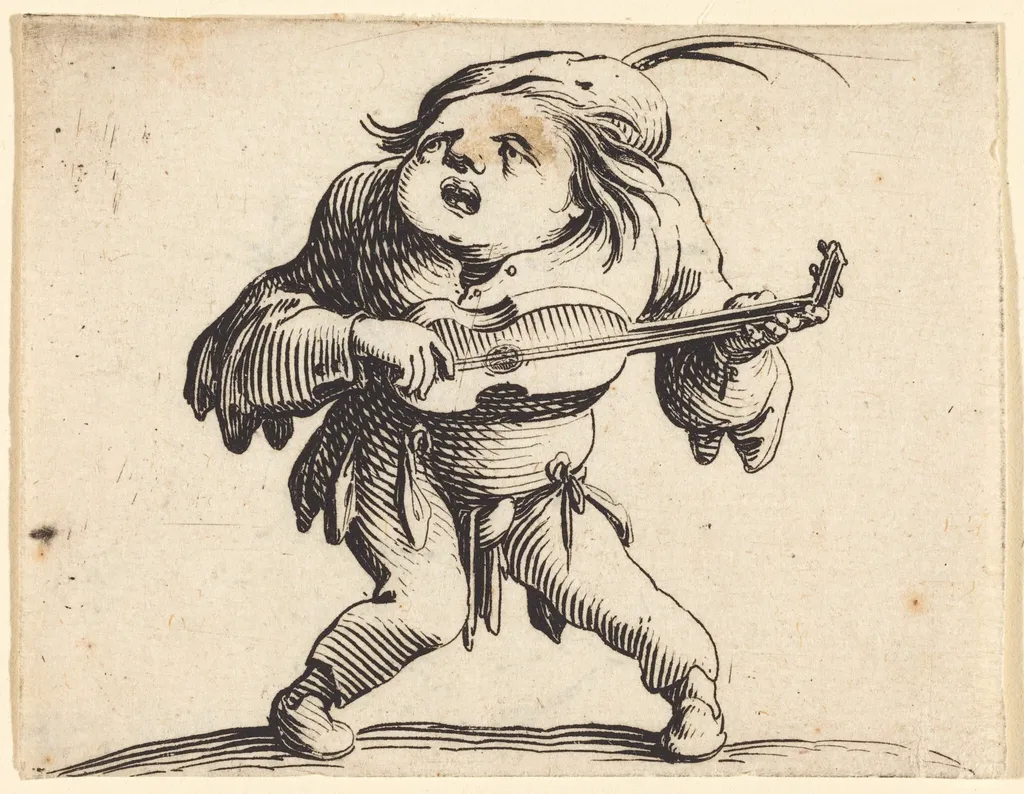
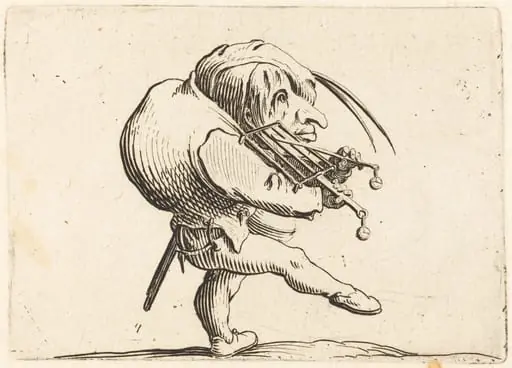
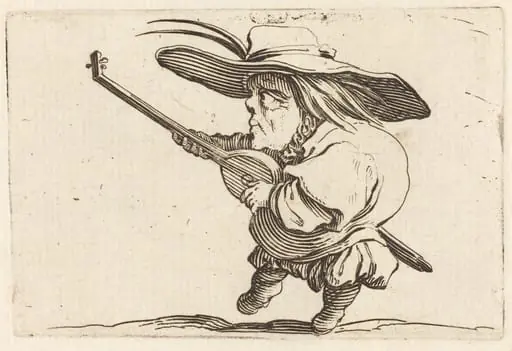
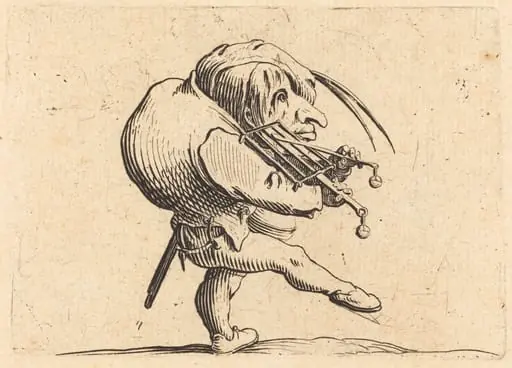
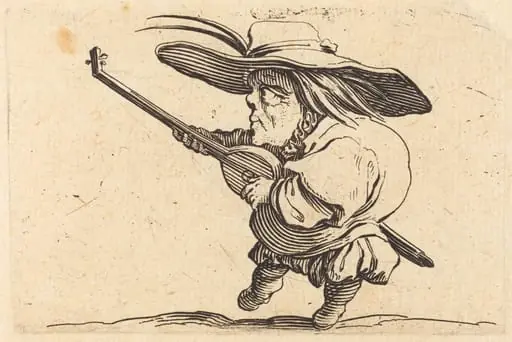
The Guitar Player is an ink print by the Baroque artist Jacques Callot. It dates from 1622 and is held in the collection of the National Gallery of Art.
About this work
Overview
Created circa 1622 by Jacques Callot, *The Guitar Player* is an etching and engraving on laid paper that captures a whimsical, winged figure absorbed in music.
Created circa 1622 by Jacques Callot, *The Guitar Player* is an etching and engraving on laid paper that captures a whimsical, winged figure absorbed in music. Though produced within Callot’s broader practice of documenting daily life, this piece diverges into fantasy, blending the mundane with the surreal. Its small scale and intimate composition reflect the artist’s interest in character-driven subjects, rendered with precision despite their playful tone.
Subject & Meaning
The figure is a chubby, airborne musician with oversized, drooping wings, dressed in a loose shirt and stockings, playing a small guitar with both hands. Its wide-eyed expression suggests delight or astonishment, evoking a mischievous spirit rather than a solemn angel. The hybrid form—part human, part mythic—hints at allegory or satire, possibly commenting on the irrationality of artistic inspiration or the folly of celestial beings engaged in earthly pastimes.
Technique & Style
Callot employed fine etching lines and delicate engraving to define the figure’s soft contours and textured clothing. The wings are rendered with loose, fluid strokes, contrasting with the tighter detailing of the guitar and footwear. The paper’s laid texture subtly enhances the sketchlike quality, lending the image a spontaneous feel while preserving the precision characteristic of his printmaking. The composition’s economy of line suggests rapid execution, yet every element serves visual and narrative purpose.
History & Provenance
This print emerged during Callot’s mature period in Florence, where he produced hundreds of etchings for private collectors and patrons. Though not part of a known series, it aligns with his broader interest in eccentric figures and theatrical subjects. Its survival in multiple institutional collections indicates early recognition of its technical and imaginative merit, though its exact provenance before the 19th century remains undocumented.
Context
In early 17th-century Europe, printmaking flourished as a medium for both artistic expression and social commentary. Callot’s work stood apart for its focus on marginalized figures and fantastical hybrids, diverging from grand historical or religious themes. *The Guitar Player* reflects a growing appetite for intimate, imaginative scenes among collectors, alongside broader cultural fascination with music, myth, and the grotesque in Baroque visual culture.
Legacy
Though less celebrated than Callot’s war scenes or courtly engravings, *The Guitar Player* exemplifies his ability to infuse everyday subjects with unexpected symbolism. Its blend of realism and fantasy influenced later generations of printmakers who explored the boundaries between the real and the imagined. The work remains a quiet testament to his versatility and his enduring curiosity about human—and otherworldly—behavior.
Artist & collection
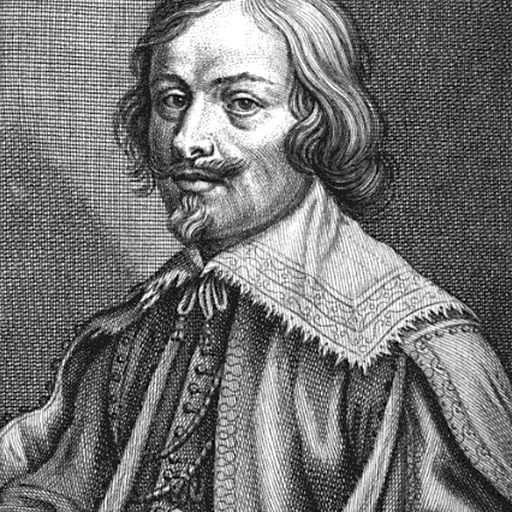
Artist
Jacques Callot was a baroque printmaker and draftsman from the Duchy of Lorraine.

 Holy Family at supper
 Restoration of the Aqueduct at Pisa
 Restoration of the Aqueduct at Pisa
 Square in Paris with Many Figures
 Square in Paris with Many Figures
 Horsemen Attacked by Robbers
 HOW WILL A COVERED PART BE CORRECTED?HOW WIKA A COVERED HEART DEED CORRECTED?
![Christ Walking on the Water [second plate], by Jacques Callot](https://artifactworldgallery.com/img/jacques-callot--christ-walking-on-the-water-second-plate--2069f3bfe4cb2126-w320.webp) Christ Walking on the Water [second plate]
Christ Walking on the Water [second plate]