Artwork
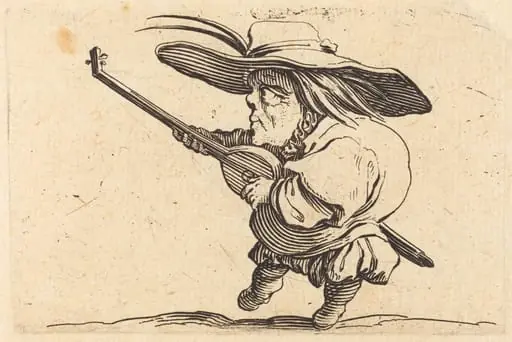
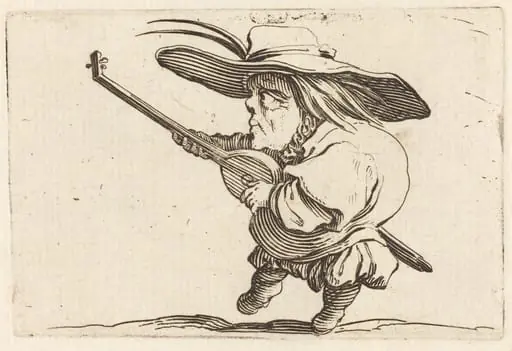
Hunchback Playing a Lute
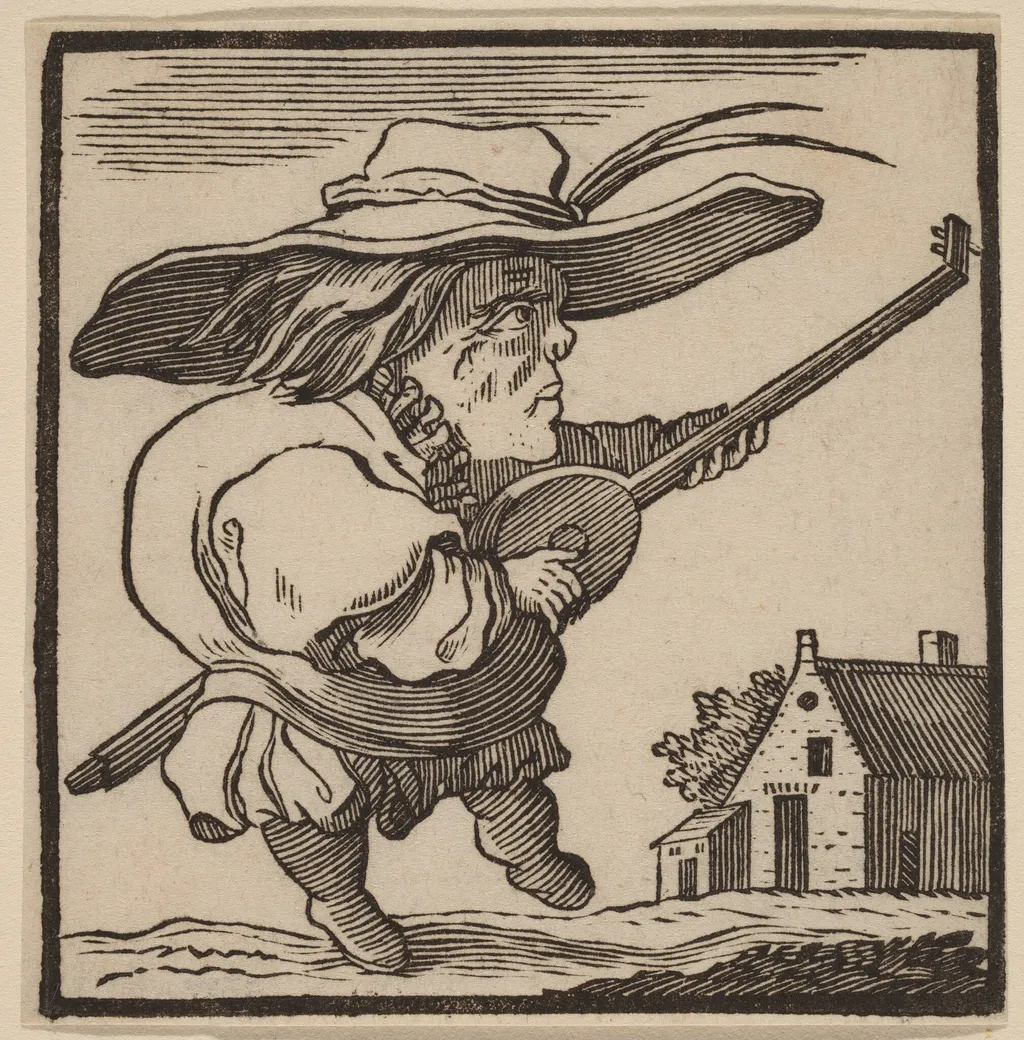
Hunchback Playing a Lute is an ink print by the Romanticist artist H. Numan. It dates from 1770 and is held in the collection of the National Gallery of Art.
About this work
Overview
Hunchback Playing a Lute is a woodcut print created by H. Numan in 1770, depicting a figure with a physical disability engaged in music.
Subject & Meaning
The print portrays a hunched, staff-dependent individual playing a lute, conveying a sense of resilience or everyday life despite physical challenges. The figure's attire (wide-brimmed hat, baggy clothes) and strained posture add to the scene's emotional depth.
Technique & Style
Executed in woodcut, the piece features sharp, manually carved lines that emphasize the figure's struggle, characteristic of the medium's inherent expressiveness. The simple, flat landscape and wavy sky provide a subdued backdrop.
History & Provenance
Created in 1770 by H. Numan, specific provenance details are not provided, highlighting the work within the context of late 18th-century printmaking.
Context
Reflective of 18th-century societal views on disability, the work may also touch on themes of perseverance. The choice of a lute, an instrument often associated with elegance and refinement, contrasts with the figure's portrayal.
Artist & collection