Artwork
The Holy Family
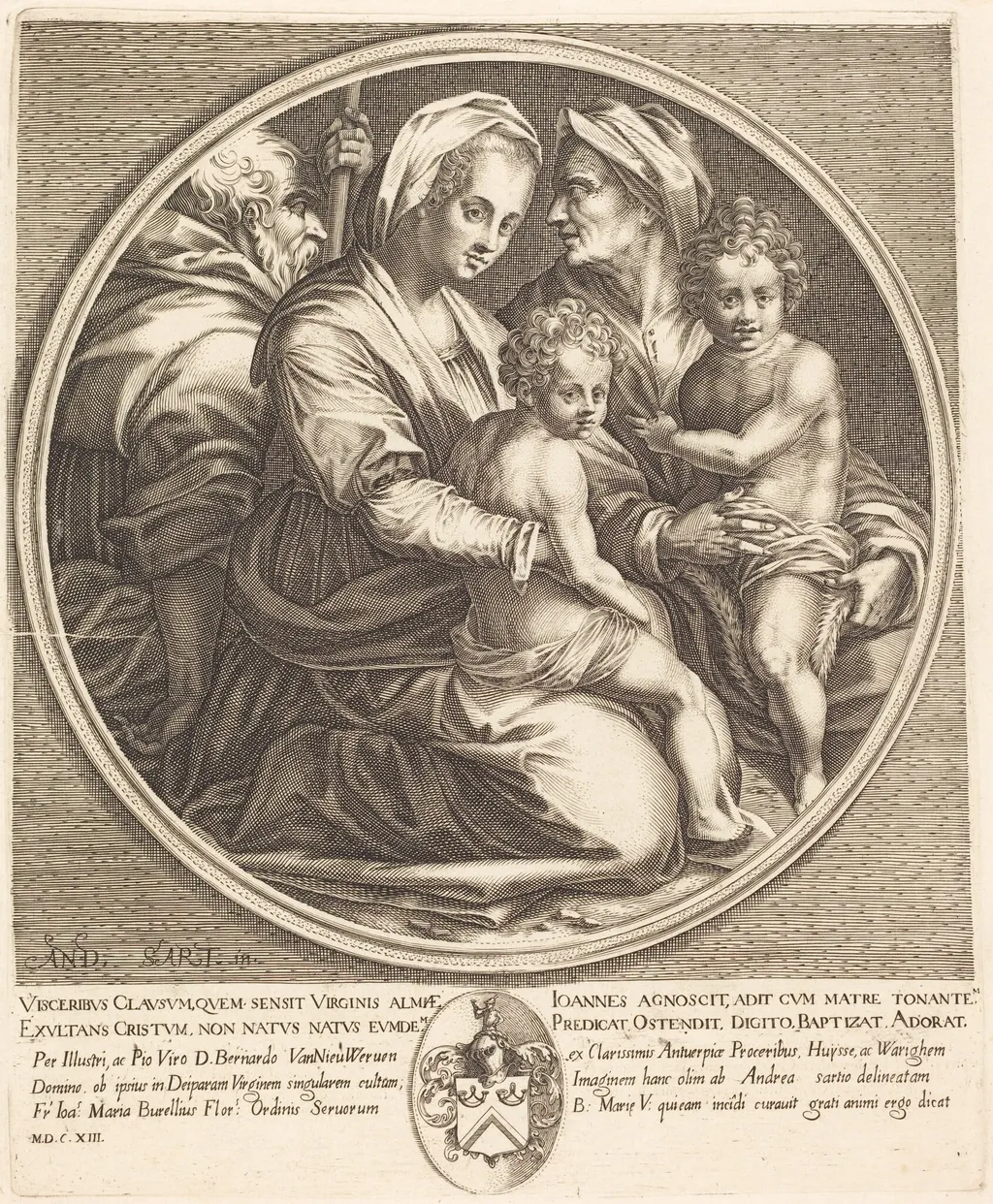
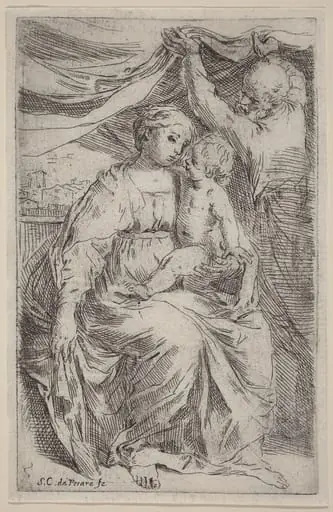
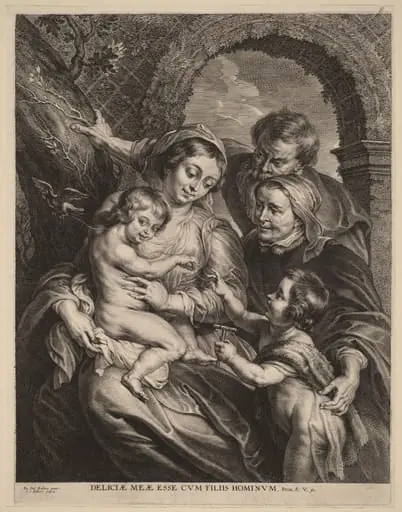
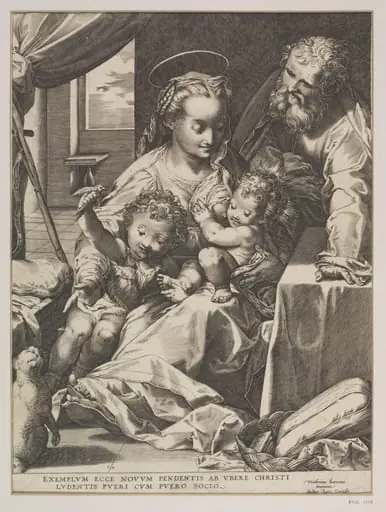
The Holy Family is an ink print by the Baroque artist Jacques Callot. It dates from 1613 and is held in the collection of the National Gallery of Art.
About this work
Overview
Created in 1613 by Jacques Callot, *The Holy Family* is an engraving on laid paper that exemplifies early 17th-century Northern printmaking.
Created in 1613 by Jacques Callot, *The Holy Family* is an engraving on laid paper that exemplifies early 17th-century Northern printmaking. Callot, from the Duchy of Lorraine, was known for his technical precision and prolific output, producing over 1,400 prints. This work belongs to his religious subjects, distinguished by fine linear detail and atmospheric depth, reflecting his mastery of engraving as a medium for intimate narrative.
Subject & Meaning
The composition depicts the Virgin Mary, Joseph, and the infant Jesus in a domestic setting. The child interacts with a small ball, a subtle allusion to the earthly sphere and perhaps the future burden of redemption. The figures are rendered with quiet dignity, their simple garments grounding the sacred in everyday life. The scene avoids grandeur, emphasizing tenderness and human connection within a biblical narrative.
Technique & Style
Callot employed fine, controlled engraving lines to model form and texture, creating soft shadows and intricate surface details in fabric, hair, and landscape. The use of cross-hatching and delicate stippling enhances spatial depth, while the background reveals a carefully rendered countryside. His technique, rooted in the Northern tradition, prioritizes clarity and precision over dramatic contrast, allowing the viewer to absorb the scene’s quiet intimacy.
History & Provenance
Produced during Callot’s early career in Florence, the print reflects his exposure to Italian art and the influence of Mannerist draftsmanship. Though no specific early ownership records are documented, the work circulated widely among collectors and artists in Europe. Its survival in multiple impressions suggests it was valued for its technical skill and devotional resonance during the Baroque period.
Context
In early 17th-century Europe, religious imagery remained central to print culture, even as secular themes gained ground. Callot’s work responded to both devotional needs and the rising market for prints among educated patrons. His integration of landscape and domestic detail aligned with broader trends in Northern art, where sacred stories were rendered with observational realism rather than idealized grandeur.
Legacy
Callot’s *The Holy Family* exemplifies how engraving could convey spiritual themes with nuance and restraint. His influence extended to later printmakers who adopted his linear precision and compositional balance. Though less celebrated than his military scenes, this work remains a quiet testament to his ability to elevate modest subjects through technical mastery and empathetic observation.
Artist & collection
Artist
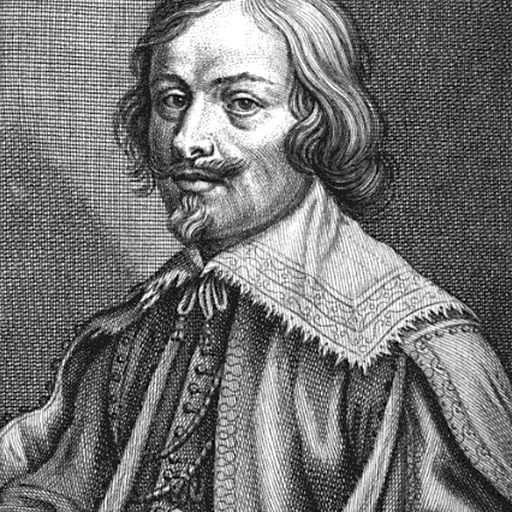
Jacques Callot was a baroque printmaker and draftsman from the Duchy of Lorraine.

 Holy Family at supper
 Restoration of the Aqueduct at Pisa
 Restoration of the Aqueduct at Pisa
 Square in Paris with Many Figures
 Square in Paris with Many Figures
 Horsemen Attacked by Robbers
 HOW WILL A COVERED PART BE CORRECTED?HOW WIKA A COVERED HEART DEED CORRECTED?
![Christ Walking on the Water [second plate], by Jacques Callot](https://artifactworldgallery.com/img/jacques-callot--christ-walking-on-the-water-second-plate--2069f3bfe4cb2126-w320.webp) Christ Walking on the Water [second plate]
Christ Walking on the Water [second plate]