Artwork
The Mystic Marriage of Saint Catherine
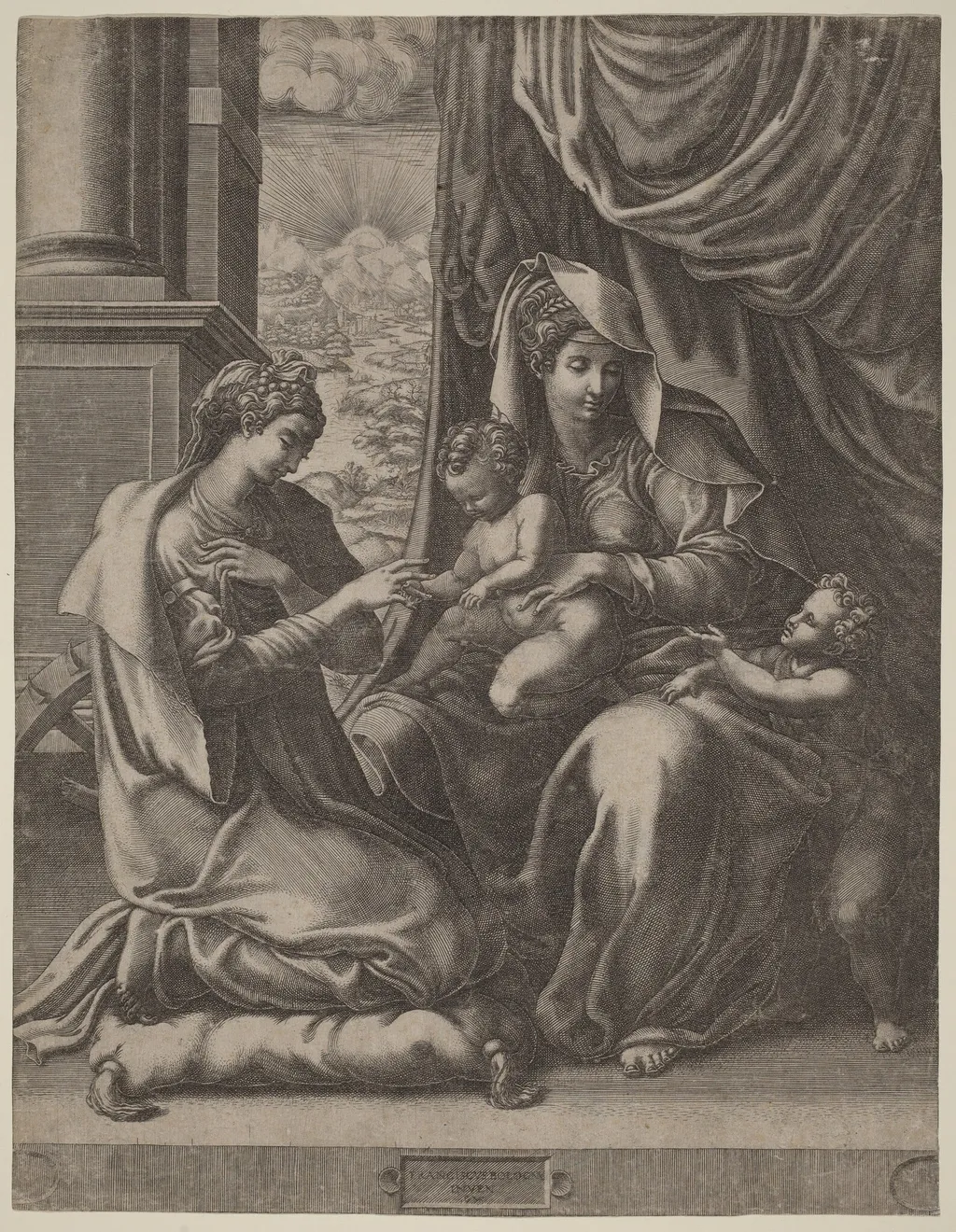
The Mystic Marriage of Saint Catherine is an ink print by the Renaissance artist Giorgio Ghisi. It dates from 1555 and is held in the collection of the National Gallery of Art.
About this work
Overview
Giorgio Ghisi, an Italian engraver active in Mantua, Antwerp, and France, produced this engraving on laid paper circa 1555. The work belongs to his mature period, marked by refined line work and a Mannerist sensibility. As a printmaker, Ghisi was known for technical precision, and this piece exemplifies his ability to translate complex compositions into intricate monochrome imagery.
Subject & Meaning
A second child, likely the infant John the Baptist, reaches toward her, while a kneeling figure—possibly Saint Joseph—touches her hand.
The scene illustrates the mystical union of Saint Catherine with the Christ Child, who places a wedding ring on her finger. A second child, likely the infant John the Baptist, reaches toward her, while a kneeling figure—possibly Saint Joseph—touches her hand. The moment symbolizes spiritual betrothal to Christ, a theme popular in late medieval and Renaissance devotion, rendered here with quiet intimacy rather than grandeur.
Technique & Style
Ghisi employed fine, controlled engraving lines to model form and texture, particularly in the folds of fabric and the soft contours of faces. Light is carefully modulated to create volume, with distinct illumination falling on each figure, enhancing their three-dimensionality. The background opens to a luminous landscape through a window, contrasting the dim interior and deepening spatial depth.
History & Provenance
The engraving survives in a limited number of impressions, consistent with Ghisi’s small output of printed works. While no definitive early ownership records are known, its technical quality suggests it was circulated among collectors of prints in mid-16th-century Europe. Ghisi’s reputation as a master engraver ensured its preservation in institutional collections over time.
Context
In the mid-1500s, religious prints were widely disseminated across Europe, serving both devotional and artistic purposes. Ghisi’s work responds to the influence of Raphael and Parmigianino, adapting their compositional grace into the medium of engraving. His time in Antwerp exposed him to Northern printmaking traditions, which may have sharpened his attention to detail and tonal gradation.
Legacy
Ghisi’s engravings, though few in number, were admired for their craftsmanship and influenced later printmakers in Italy and the Low Countries. *The Mystic Marriage of Saint Catherine* stands as a testament to his skill in translating painterly effects into the linear discipline of engraving, bridging Italian Mannerism and the emerging print culture of the late Renaissance.
Artist & collection
Artist
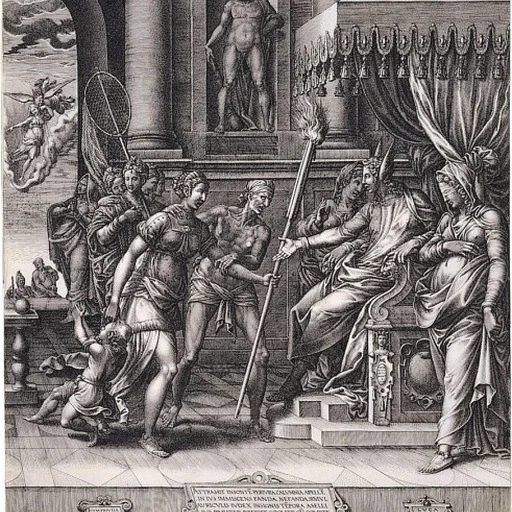
Giorgio Ghisi (1520 — 15 December 1582) was an Italian engraver from Mantua who also worked in Antwerp and in France.

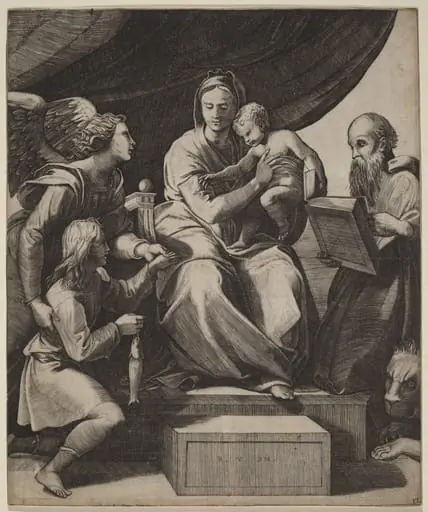 The Virgin with a Fish
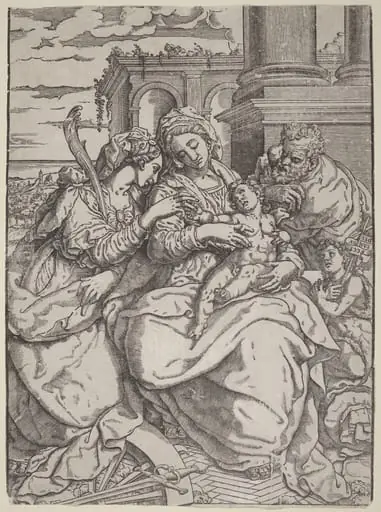 Madonna and Child with Saint Catherine
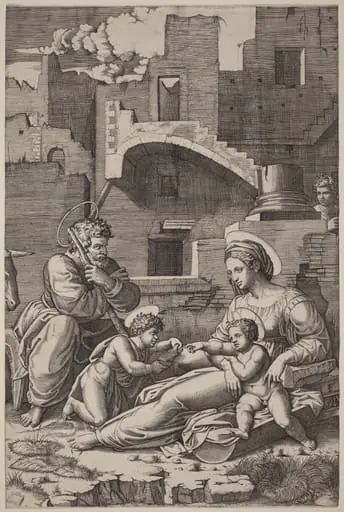 The Holy Family with the Young Saint John the Baptist (The Madonna of the Long Thigh)
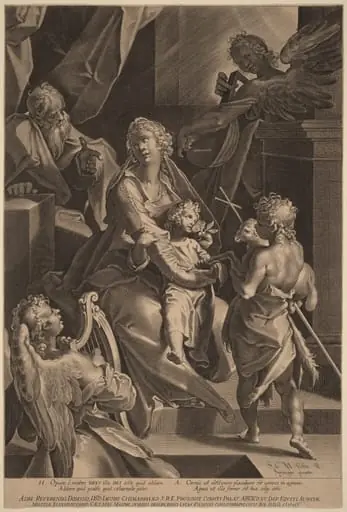 The Holy Family and Two Angels
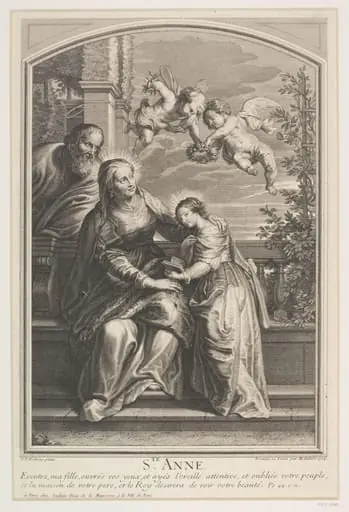 St. Anne
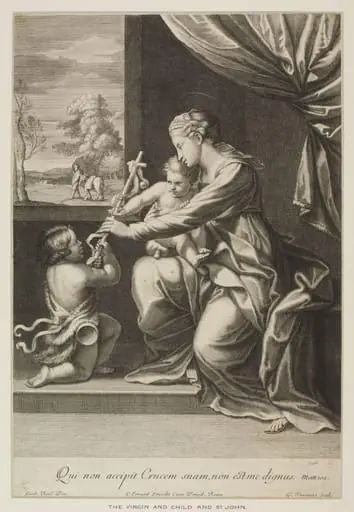 The Virgin and Child and St. John
 Untitled
 Virgin and Child with the Infant St. John
 The Madonna of the Swallow
 The Holy Family with Two Angels