Artwork
The Martyrdom of Saint John the Evangelist
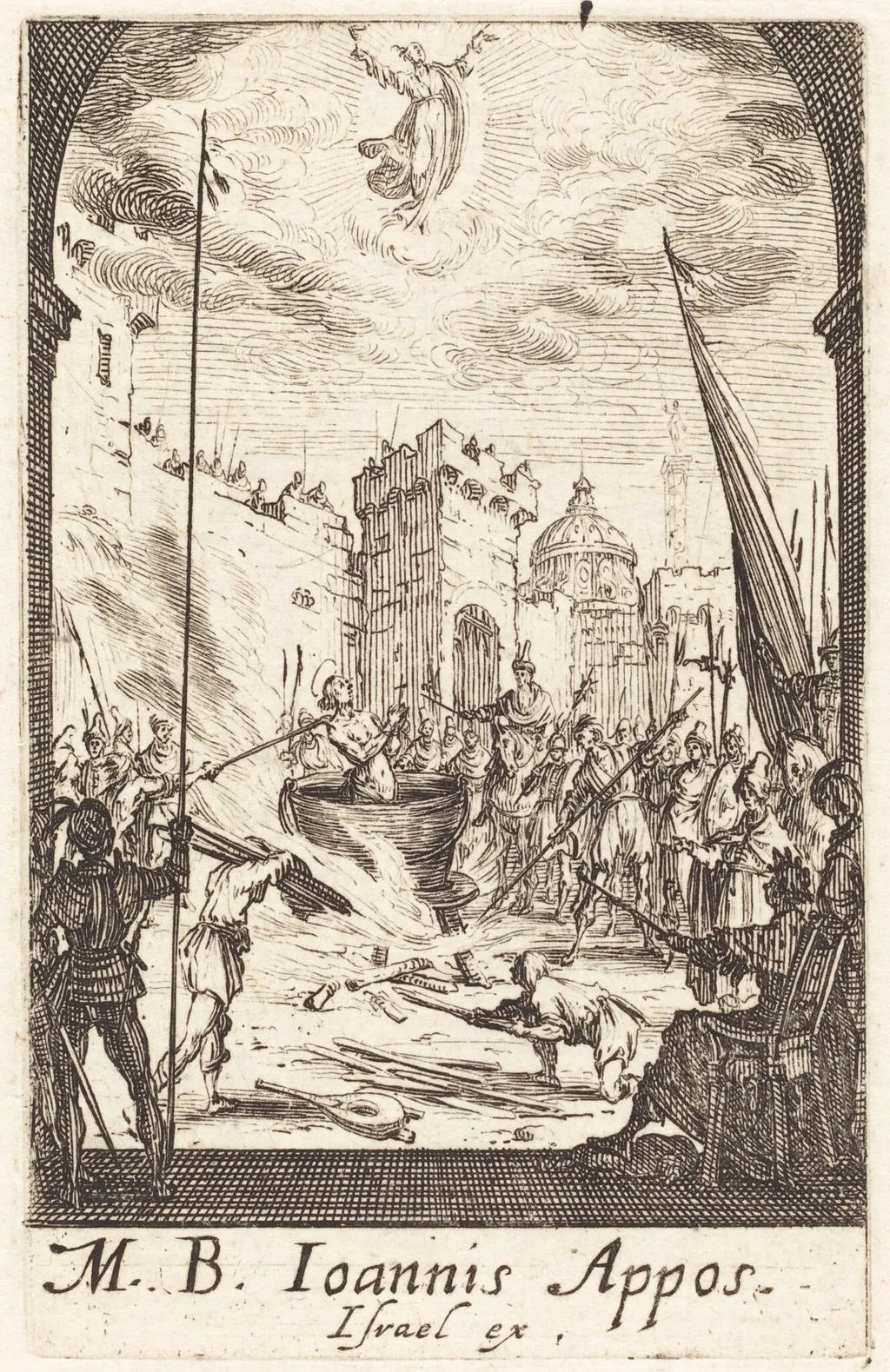
The Martyrdom of Saint John the Evangelist is an ink print by the Baroque artist Jacques Callot. It dates from 1634 and is held in the collection of the National Gallery of Art.
About this work
Overview
Executed on laid paper, the work belongs to a prolific body of over 1,400 prints produced by the French artist during his time in the Duchy of Lorraine.
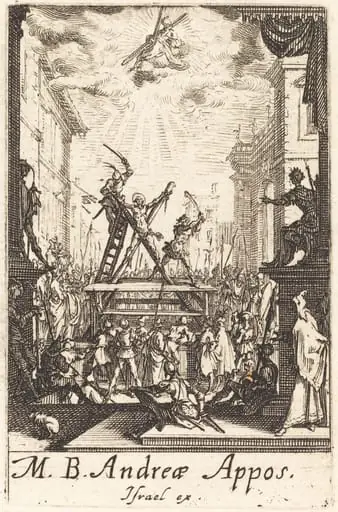
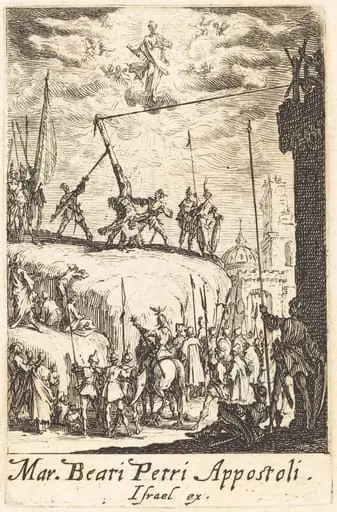
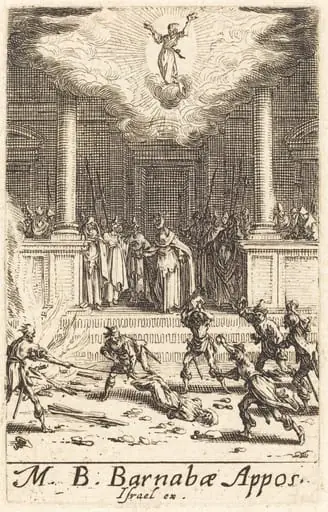
Created around 1634, this etching by Jacques Callot captures a dramatic moment from the legend of Saint John the Evangelist’s martyrdom. Executed on laid paper, the work belongs to a prolific body of over 1,400 prints produced by the French artist during his time in the Duchy of Lorraine. Callot’s technique emphasizes intricate detail and dynamic composition, characteristic of Baroque printmaking.
Subject & Meaning
The scene illustrates the attempted execution of Saint John by immersion in boiling oil, a legend not found in the Bible but widely circulated in medieval hagiography. Figures scramble in panic around a boat, while a divine presence hovers above—symbolizing divine intervention. The saint, though not clearly identifiable, is implied as the focal point of spiritual endurance amid chaos.
Technique & Style
Callot employed fine, incised lines to convey motion and emotional intensity, exploiting the etching process to achieve sharp contrasts and layered textures. Overlapping contours and swirling forms heighten the sense of turmoil. The precision of his needlework allowed for minute detail in clothing, architecture, and gesture, reflecting his mastery of the medium and Baroque sensibilities.
History & Provenance
The print was made during Callot’s mature period, after years of refining his etching technique in Italy and Lorraine. While specific early ownership records are sparse, the work aligns with his broader output intended for collectors and religious patrons. Its survival in multiple institutional collections suggests its recognition among contemporaries and later connoisseurs.
Context
Produced during the Thirty Years’ War, Callot’s religious scenes often mirrored the violence and upheaval of his time. His depictions of martyrdom resonated with audiences familiar with conflict and suffering. The inclusion of architectural elements and crowd scenes reflects a broader trend in Northern European printmaking to ground sacred narratives in recognizable, lived environments.
Legacy
Callot’s technical innovations in etching influenced generations of printmakers across Europe. His ability to compress complex narratives into single plates set a standard for narrative clarity in print. Though less celebrated than his war scenes, works like this demonstrate his range and enduring contribution to the expressive potential of the medium.
Artist & collection

Artist
Jacques Callot was a baroque printmaker and draftsman from the Duchy of Lorraine.

 Holy Family at supper
 Restoration of the Aqueduct at Pisa
 Restoration of the Aqueduct at Pisa
 Square in Paris with Many Figures
 Square in Paris with Many Figures
 Horsemen Attacked by Robbers
 HOW WILL A COVERED PART BE CORRECTED?HOW WIKA A COVERED HEART DEED CORRECTED?
![Christ Walking on the Water [second plate], by Jacques Callot](https://artifactworldgallery.com/img/jacques-callot--christ-walking-on-the-water-second-plate--2069f3bfe4cb2126-w320.webp) Christ Walking on the Water [second plate]
Christ Walking on the Water [second plate]