Artwork
Christ Carrying the Cross
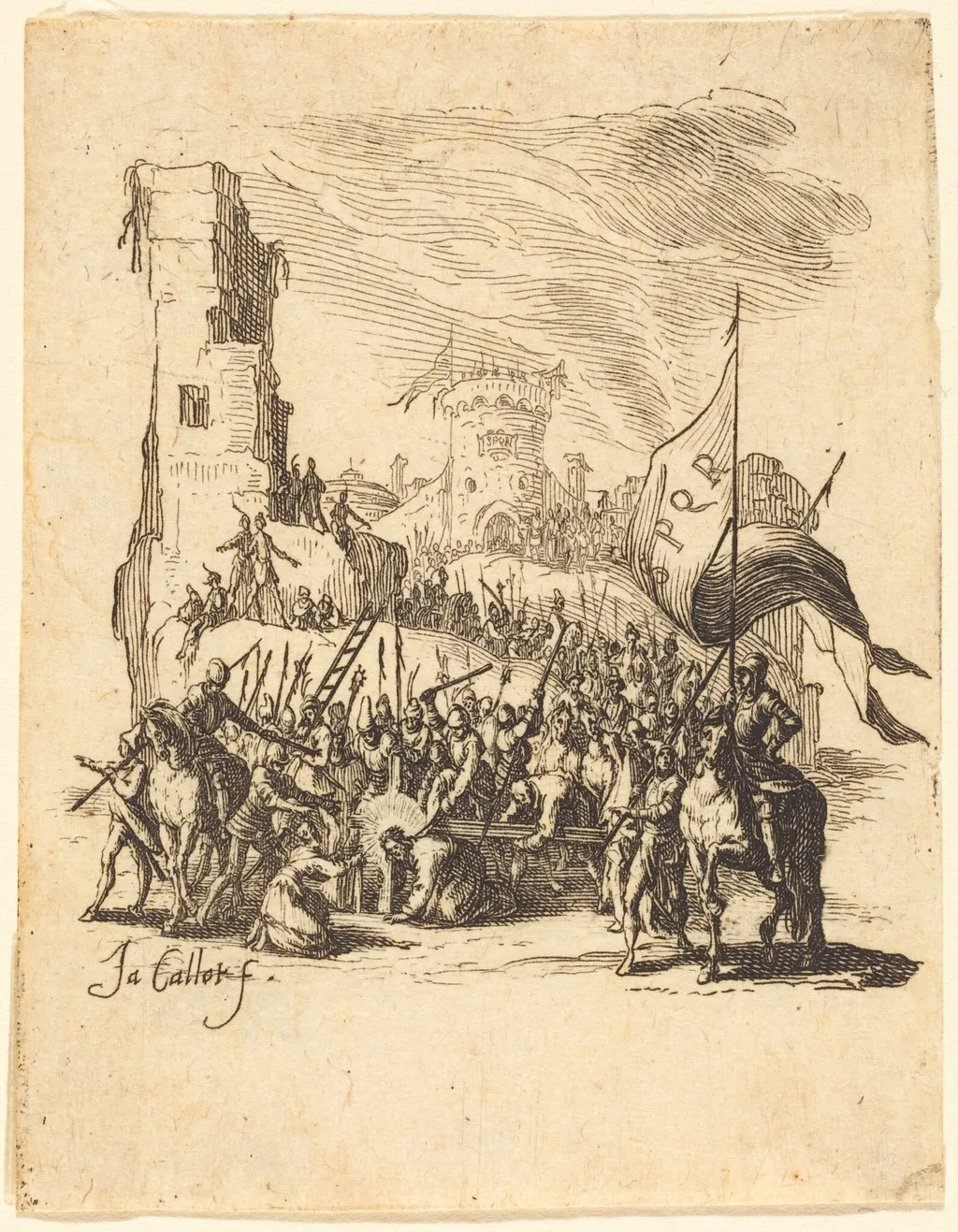
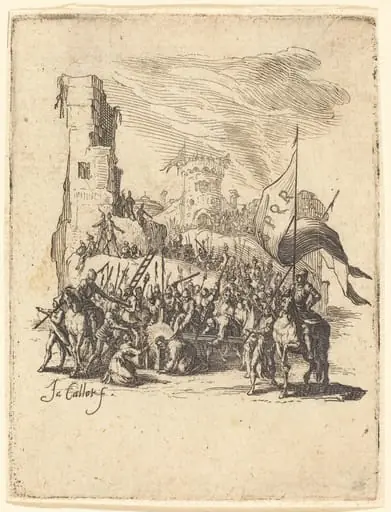
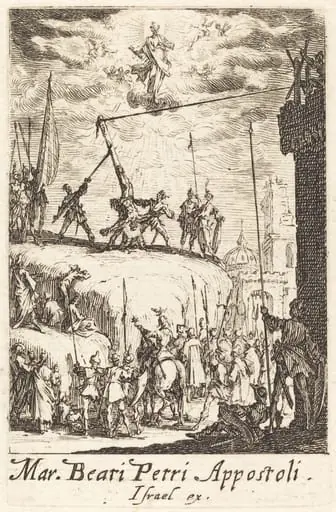
Christ Carrying the Cross is an ink print by the Baroque artist Jacques Callot. It dates from 1624 and is held in the collection of the National Gallery of Art.
About this work
Overview
Jacques Callot produced this etching around 1624, capturing a moment from the Passion of Christ with intense narrative detail.
Jacques Callot produced this etching around 1624, capturing a moment from the Passion of Christ with intense narrative detail. Executed on laid paper, the work is one of over 1,400 prints he made during his career. Though rooted in religious subject matter, Callot’s approach fused spiritual themes with keen observation of contemporary movement and social dynamics, reflecting his broader interest in human behavior under pressure.
Subject & Meaning
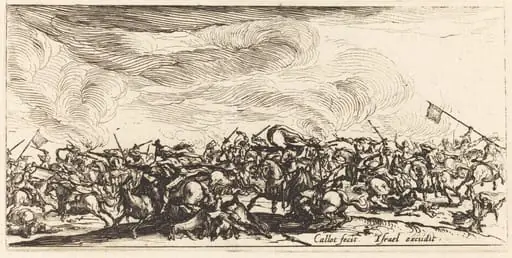
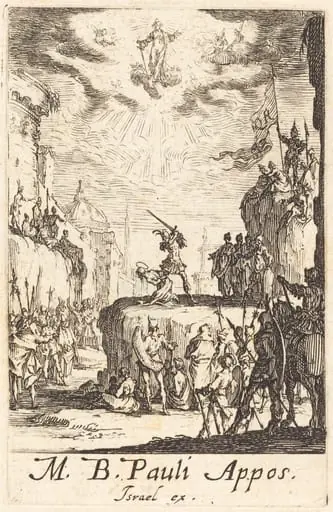
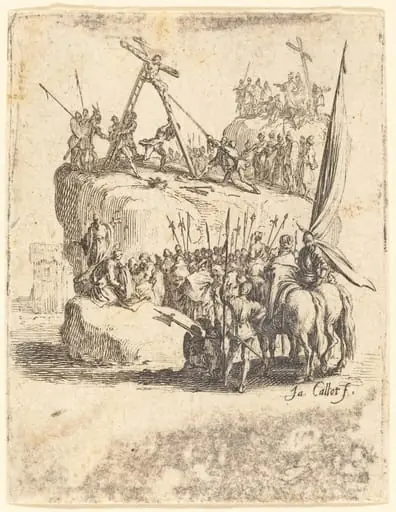
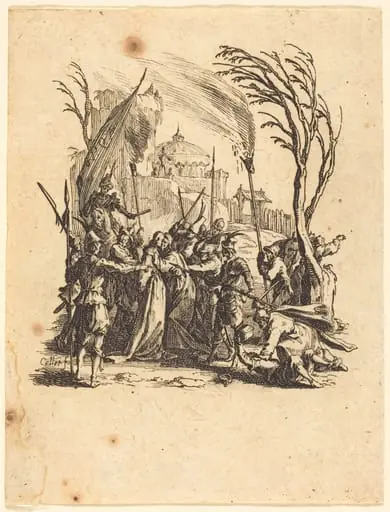
The scene depicts Christ burdened by the cross, surrounded by a dense, advancing crowd of soldiers, onlookers, and officials. The composition emphasizes collective motion rather than individual piety, suggesting the weight of the event as a public spectacle. The presence of banners, armor, and architectural elements grounds the sacred narrative in a recognizable, bustling world, reinforcing the tension between divine suffering and earthly chaos.
Technique & Style
Callot employed fine, controlled etching lines to build depth and movement across the composition. His use of dense hatching and varying line weights creates a sense of crowded space and turbulent energy. The background, rendered with subtle gradations, suggests distant buildings and a brooding sky, enhancing the drama without overt symbolism. His precision in rendering textures—from fabric to stone—demonstrates his technical command of the etching medium.
History & Provenance
The print emerged during Callot’s mature period in Nancy, where he worked under the patronage of the Dukes of Lorraine. Though specific early ownership records are sparse, the work aligns with his known series of religious etchings circulated among collectors and religious institutions in early 17th-century France and the Low Countries. Its survival in multiple museum collections attests to its enduring presence in print collections of the period.
Context
Created during the Thirty Years’ War, the image resonates with contemporary anxieties about violence, displacement, and public order. Callot’s detailed depictions of soldiers and urban landscapes mirror his earlier series on military life, suggesting a continuity between his secular and sacred subjects. The crowded, chaotic procession reflects broader cultural preoccupations with suffering and authority in a fractured Europe.
Legacy
Callot’s etching influenced later artists through its narrative density and technical innovation. His ability to convey complex scenes with fine lines became a model for printmakers seeking to merge realism with emotional gravity. Though not widely reproduced in his lifetime, the work remains a key example of Baroque printmaking’s capacity to translate spiritual themes into vivid, human-centered compositions.
Artist & collection
Artist
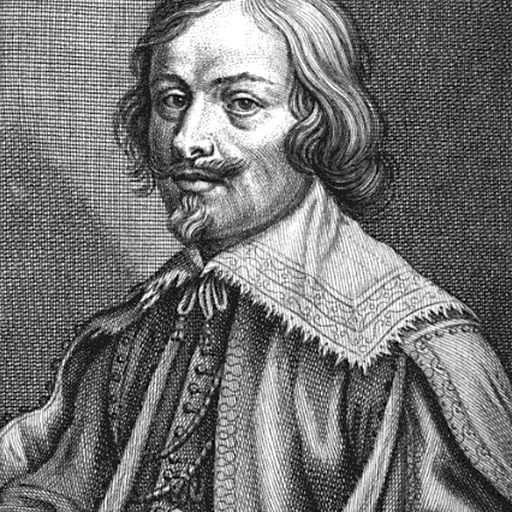
Jacques Callot was a baroque printmaker and draftsman from the Duchy of Lorraine.

 Holy Family at supper
 Restoration of the Aqueduct at Pisa
 Restoration of the Aqueduct at Pisa
 Square in Paris with Many Figures
 Square in Paris with Many Figures
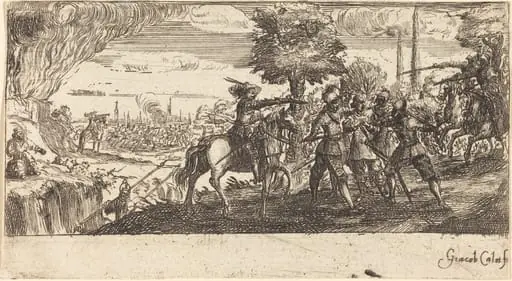
 Horsemen Attacked by Robbers
 HOW WILL A COVERED PART BE CORRECTED?HOW WIKA A COVERED HEART DEED CORRECTED?
![Christ Walking on the Water [second plate], by Jacques Callot](https://artifactworldgallery.com/img/jacques-callot--christ-walking-on-the-water-second-plate--2069f3bfe4cb2126-w320.webp) Christ Walking on the Water [second plate]
Christ Walking on the Water [second plate]