Artwork
Scene of Pillage
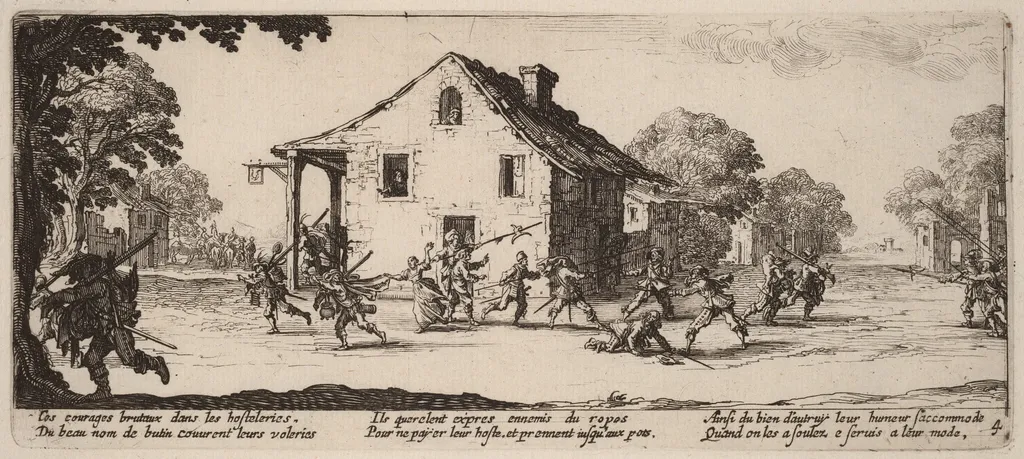
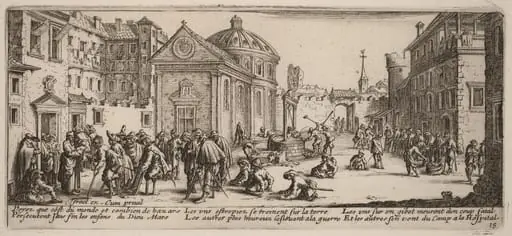
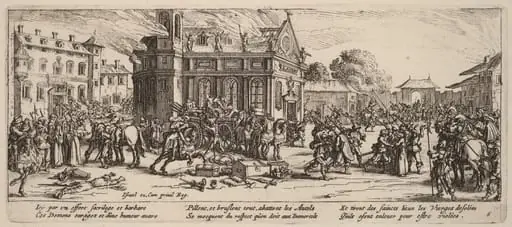
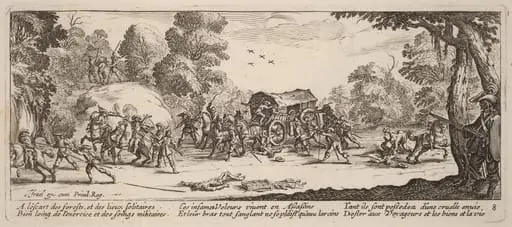
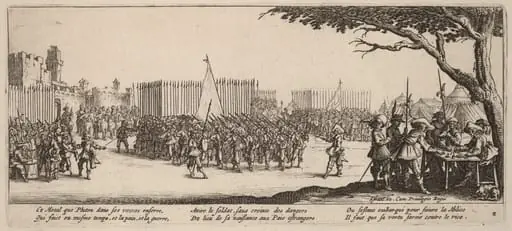
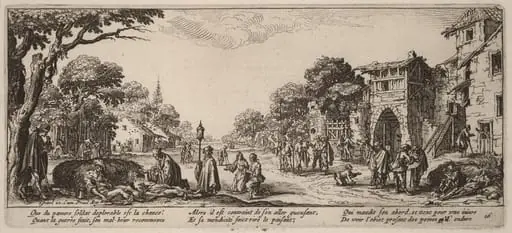
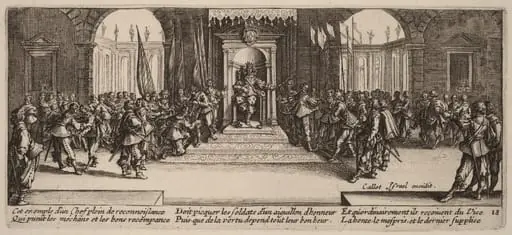
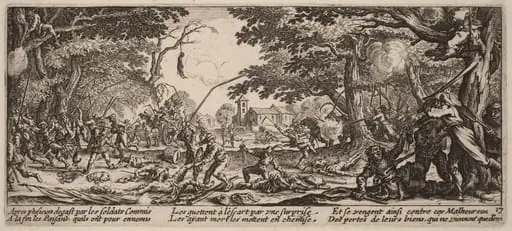
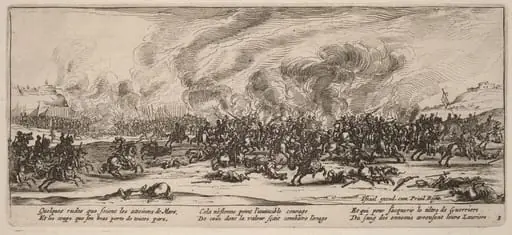
Scene of Pillage is an ink print by the Baroque artist Gerrit van Schagen. It dates from 1642 and is held in the collection of the National Gallery of Art.
About this work
Overview
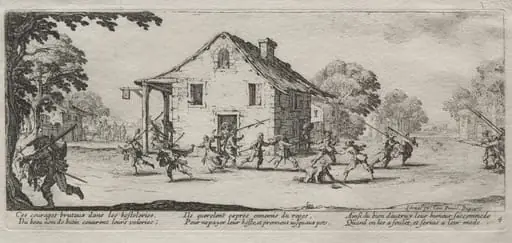
Beneath the image, a French inscription condemns the brutality, anchoring the scene in moral critique rather than mere spectacle.
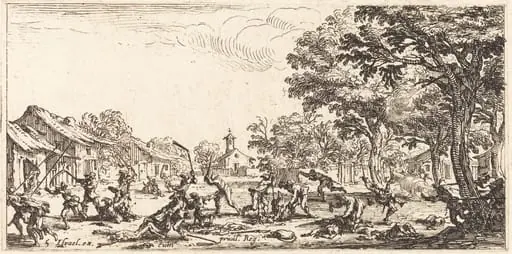
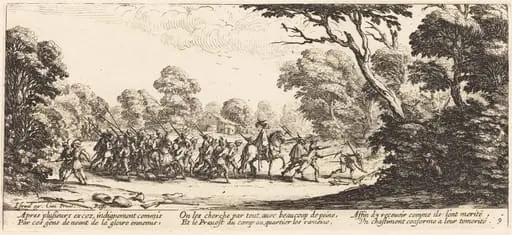
Scene of Pillage is a 1642 print by Gerrit van Schagen, executed in etching and engraving on laid paper. It depicts a violent urban disturbance, capturing a moment of domestic intrusion and physical aggression. The composition is tightly framed, focusing on a group of assailants in period dress overwhelming a household. Beneath the image, a French inscription condemns the brutality, anchoring the scene in moral critique rather than mere spectacle.
Subject & Meaning
The print portrays a raid on a modest dwelling, with figures engaged in assault, dragging a fallen person, and threatening a woman who shields herself. The attackers, dressed in coarse, 17th-century attire, embody lawlessness. The accompanying French text explicitly denounces their actions, transforming the image into a moral warning against unchecked violence. The scene reflects contemporary anxieties about social disorder and the vulnerability of the domestic sphere.
Technique & Style
Van Schagen employs fine, incised lines typical of engraving to render texture and motion, while etching adds tonal depth to shadows and drapery. Figures are rendered with exaggerated gestures, heightening emotional tension. The background, with sparse architecture and trees, recedes into muted detail, directing focus to the central violence. The contrast between sharp foreground action and blurred surroundings enhances the drama, aligning with Baroque conventions of emotional intensity.
History & Provenance
Created in 1642, the print emerged during a period of heightened social unrest in the Dutch Republic. Van Schagen, active in Amsterdam, produced works often responding to current events or moral themes. While specific early ownership records are sparse, the print’s survival in institutional collections suggests it was circulated among educated audiences familiar with its ethical message and artistic conventions of the time.
Context
The image reflects broader Baroque trends in Northern Europe, where artists used dramatic narratives to engage viewers emotionally and morally. Similar scenes of urban violence appeared in prints by contemporaries like Rembrandt and his circle, often tied to civic concerns. The use of French text indicates an international audience, while the subject matter resonated with fears of crime and disorder in rapidly growing cities during the mid-17th century.
Legacy
Scene of Pillage remains a documented example of Dutch printmaking’s engagement with social critique. Though not widely reproduced today, it contributes to understanding how visual media was used to articulate moral boundaries in early modern society. Its preservation in public collections underscores its role as a historical artifact reflecting both artistic skill and civic consciousness of its era.
Artist & collection