Artwork
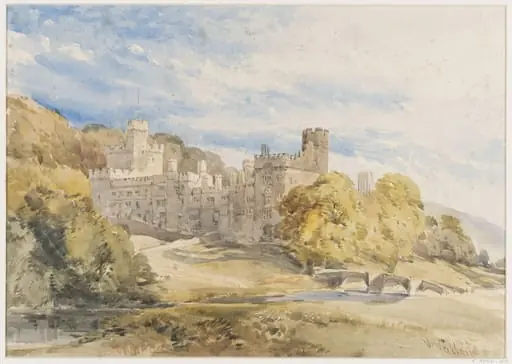
Easby Abbey, Yorkshire
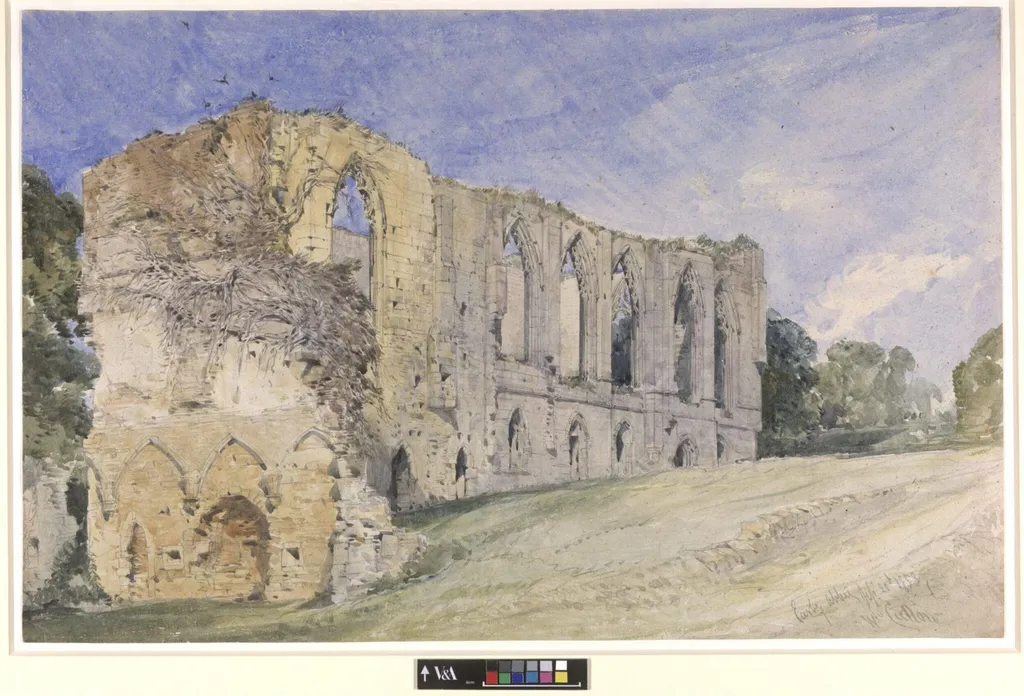
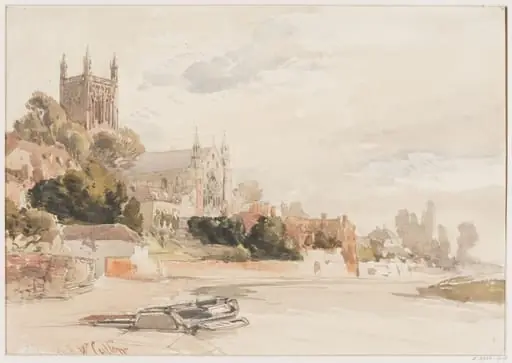
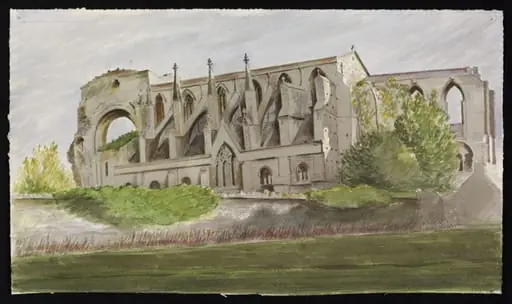
Easby Abbey, Yorkshire is a watercolor work on paper by the British Romanticist artist Callow. It dates from 1853 and is held in the collection of the Victoria and Albert Museum.
About this work
Overview
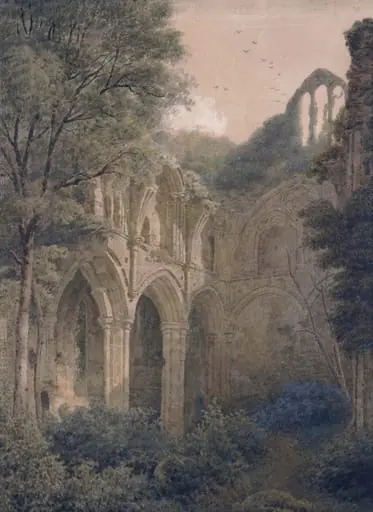
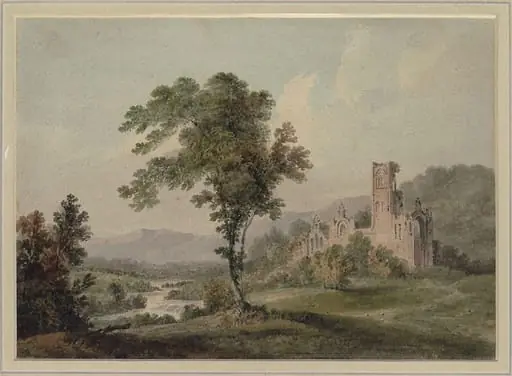
Painted in 1853 by William Callow, this watercolour captures the ruins of Easby Abbey in North Yorkshire. The work is signed and dated by the artist, reflecting his practice of documenting historic sites with precision and care. Executed in transparent washes, the piece balances topographical detail with atmospheric mood, characteristic of mid-19th-century British landscape watercolours.
Subject & Meaning
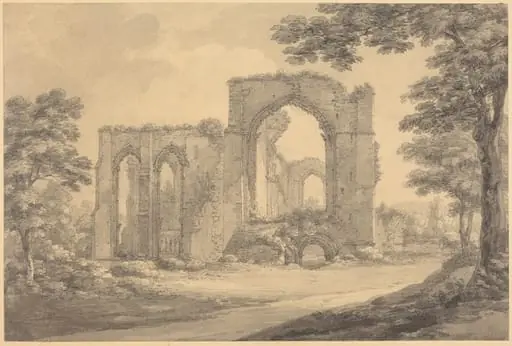
The painting portrays the remains of a 12th-century Augustinian monastery, its stonework softened by time and vegetation. Ivy clings to broken arches and crumbling walls, suggesting nature’s quiet reclamation of human structures. The scene evokes contemplation of decay and endurance, without overt sentimentality, aligning with Victorian interests in medieval heritage and the passage of time.
Technique & Style
Callow employed loose, fluid brushwork and layered washes to suggest texture and light. The stones are rendered with subtle shifts in tone—warm ochres where sunlight strikes, cooler grays in shadow—creating a sense of depth without heavy outline. The sky, softly graded in pale blue with scattered cloud forms, enhances the tranquil, ephemeral quality of the scene.
History & Provenance
The painting was created during a period when Callow traveled extensively across Britain, recording architectural ruins for both private patrons and public audiences. It entered the Victoria and Albert Museum’s collection as part of its broader effort to preserve examples of British watercolour art from the 19th century, though its specific provenance prior to acquisition remains undocumented.
Context
In the 1850s, interest in medieval monastic ruins surged among artists and antiquarians, fueled by Romantic ideals and the Gothic Revival.
In the 1850s, interest in medieval monastic ruins surged among artists and antiquarians, fueled by Romantic ideals and the Gothic Revival. Callow’s work fits within this trend, offering a quiet, observational alternative to dramatic reconstructions. His focus on natural light and weathered surfaces reflects the influence of contemporary watercolour societies and the growing appreciation for topographical accuracy in art.
Legacy
Callow’s watercolours of Easby Abbey contributed to a visual record of Britain’s architectural heritage at a time when many ruins were vulnerable to neglect or demolition. While not widely exhibited in his lifetime, his works remain valued for their technical restraint and sensitivity to place, offering insight into how 19th-century viewers engaged with historical landscapes.
Artist & collection
Artist
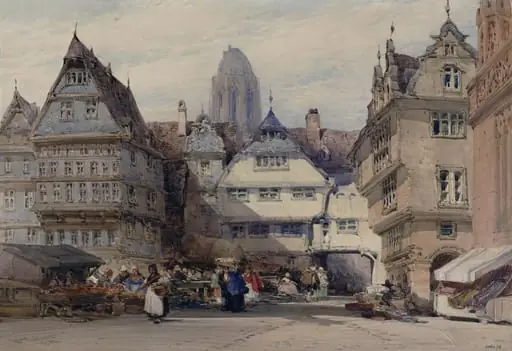
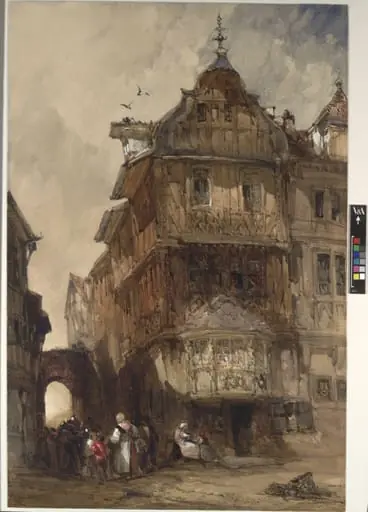
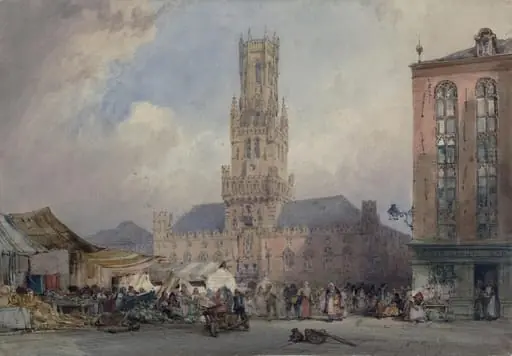
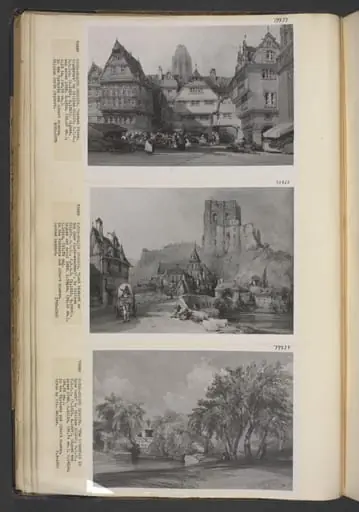
These watercolours capture towns and buildings in Europe through the 1800s. Look at the lively pencil lines and soft washes in Market Place, Frankfort (1863) or the warm brick tones of Old Houses, Berncastel, on the…