Artwork
The waterfall in Hyde Park
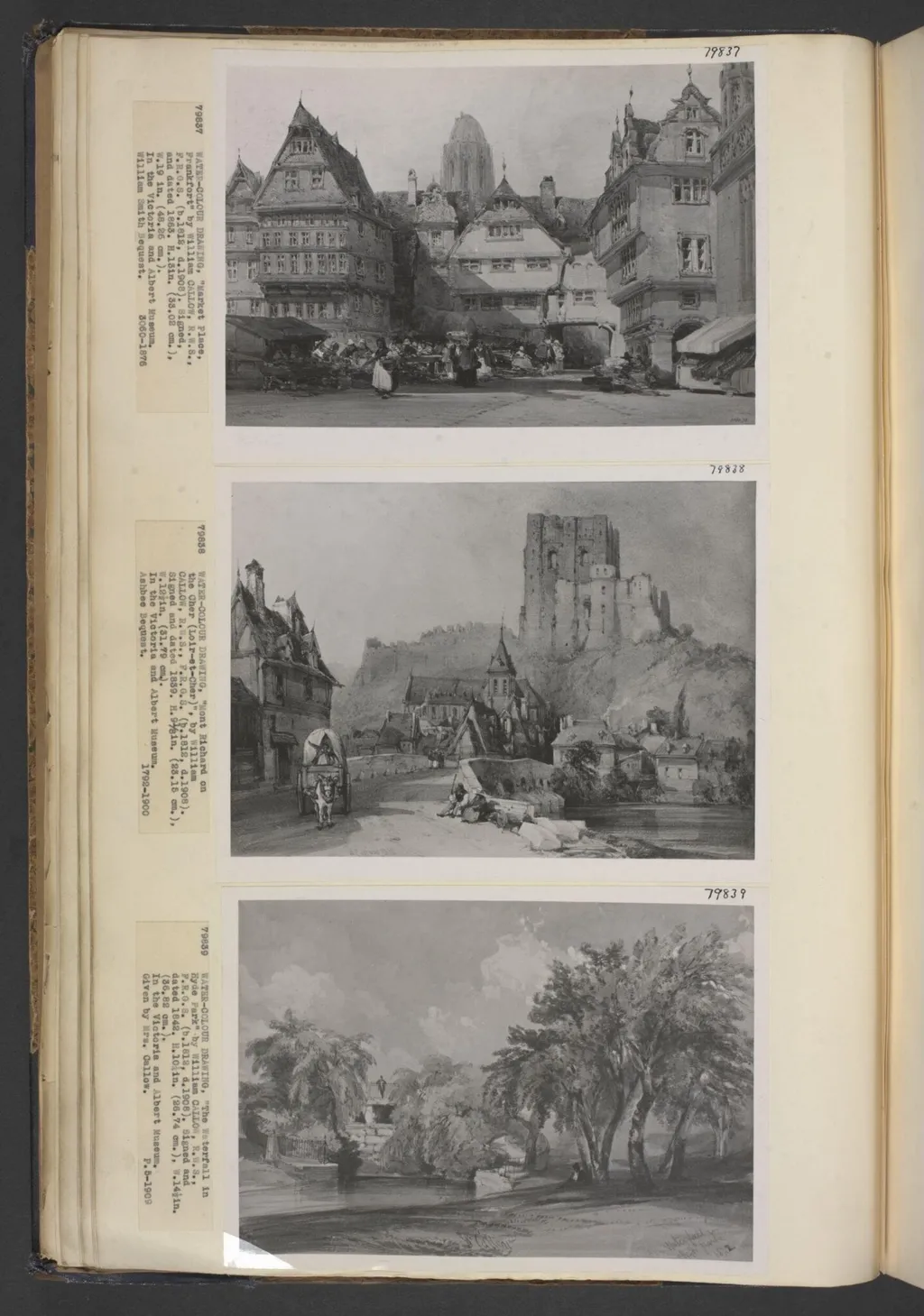
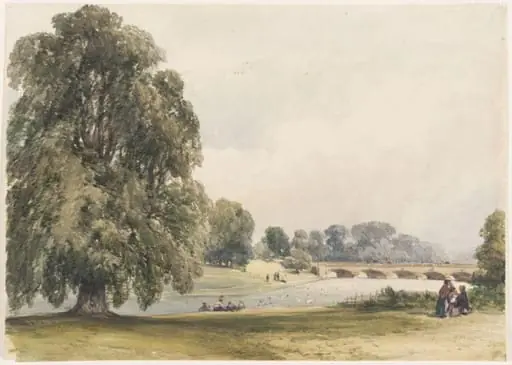
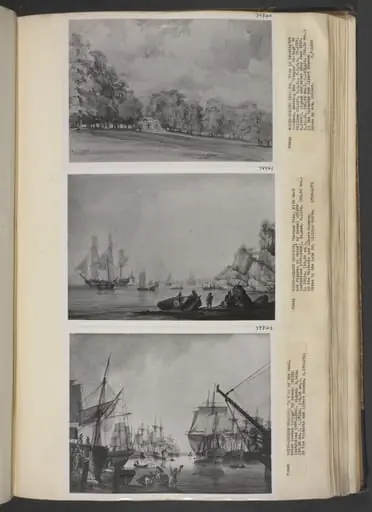
The waterfall in Hyde Park is a watercolor work on paper by the British Romanticist artist Callow. It dates from 1842 and is held in the collection of the Victoria and Albert Museum.
About this work
Overview
The Waterfall in Hyde Park is a watercolour painting created by Callow in 1842, featuring a serene natural scene centered around a waterfall in London's Hyde Park.
Subject & Meaning
The painting captures a moment of natural dynamism, emphasizing the interplay of water, foliage, and architecture. The waterfall's energy, surrounded by swaying trees and a tranquil river, highlights the beauty and power of the natural world within an urban park setting.
Technique & Style
Executed in muted earthy greens and blues, the watercolour conveys a cool, dreamy atmosphere. The soft, cloudy sky and misty waterfall effects showcase Callow's use of watercolour to achieve a sense of calm vitality.
History & Provenance
Signed and dated by the artist in 1842, the painting's provenance is not detailed here, though its creation reflects the early 19th-century interest in depicting natural landscapes.
Context
Part of a broader Victorian-era fascination with nature and urban green spaces, The Waterfall in Hyde Park reflects the period's aesthetic appreciation for harmonizing the natural and the man-made.
Artist & collection
Artist
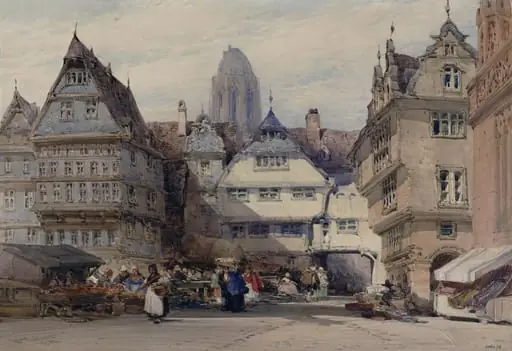
These watercolours capture towns and buildings in Europe through the 1800s. Look at the lively pencil lines and soft washes in Market Place, Frankfort (1863) or the warm brick tones of Old Houses, Berncastel, on the…

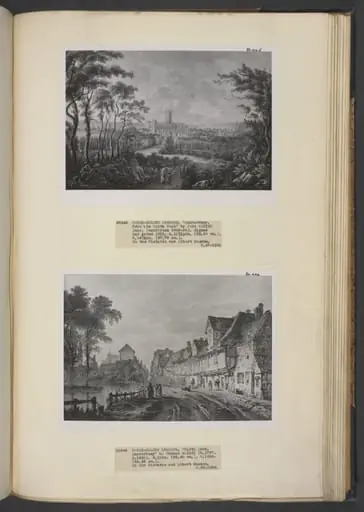 Canterbury
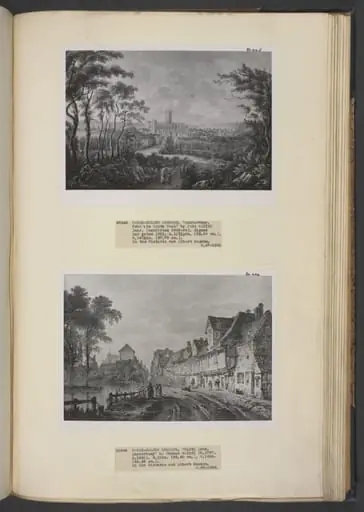 North Lane, Canterbury
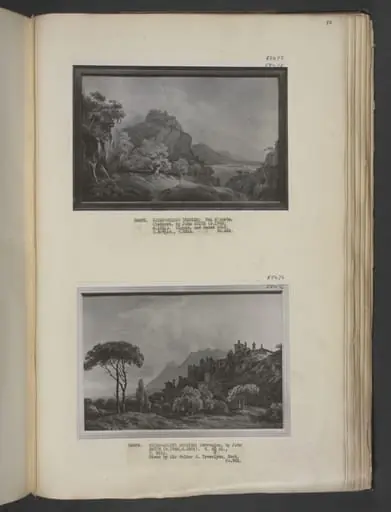 Val d'Aosta, Piedmont
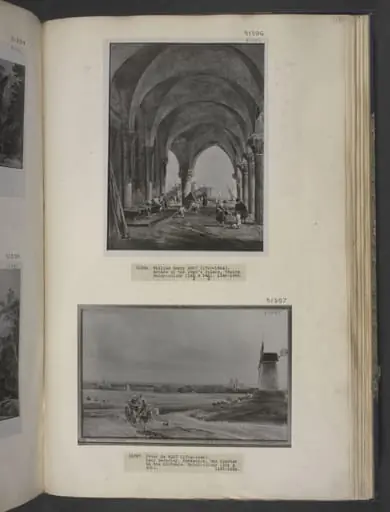 Near Beverley, Yorkshire, the Minster in the Distance
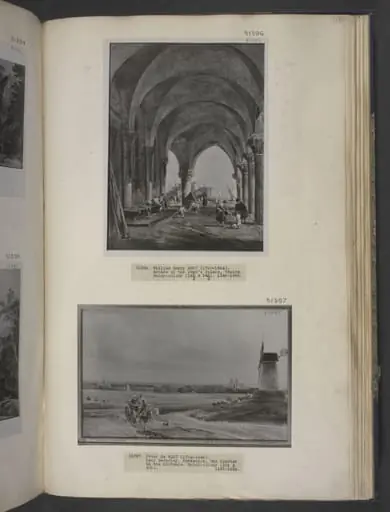 Arcade, Doge's Palace, Venice
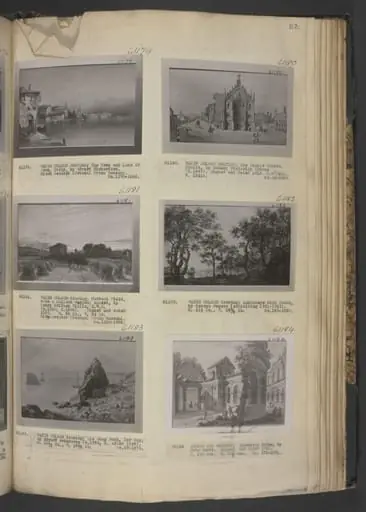 Town and lake of Como, Italy
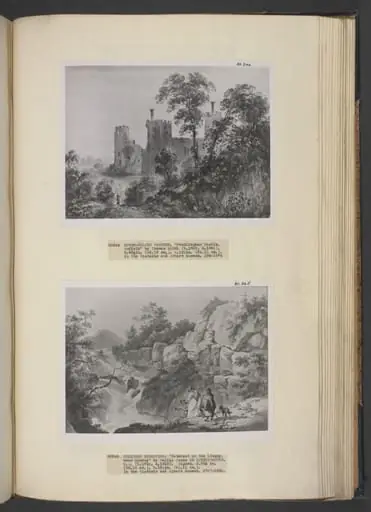 Framlingham Castle
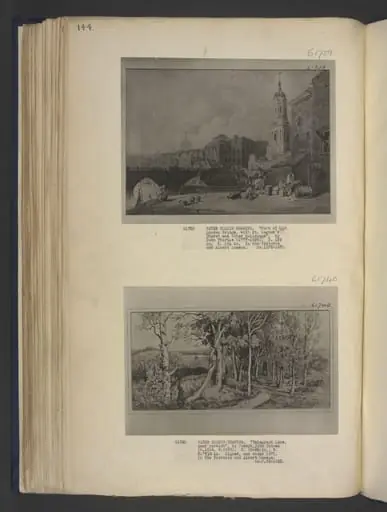 Telegraph Lane, near Norwich
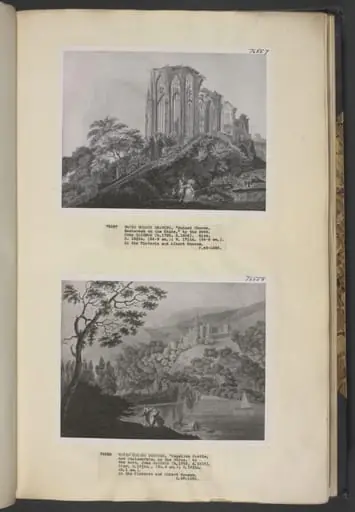 Ruins of a church, Bacharach on the Rhine
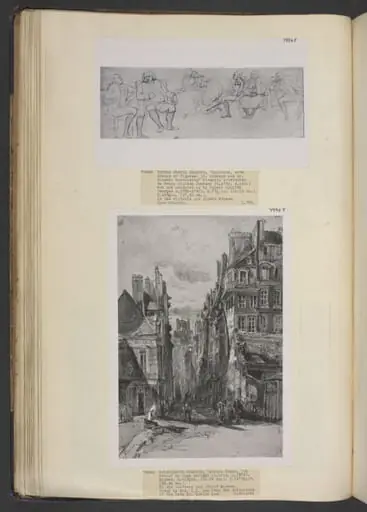 Street Scene, Old Paris
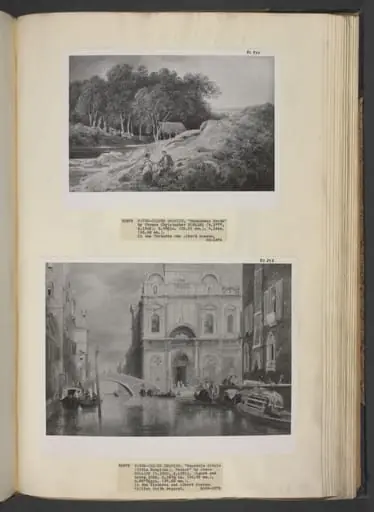 Hampstead Heath
 Clubbington in Warwickshire