Artwork
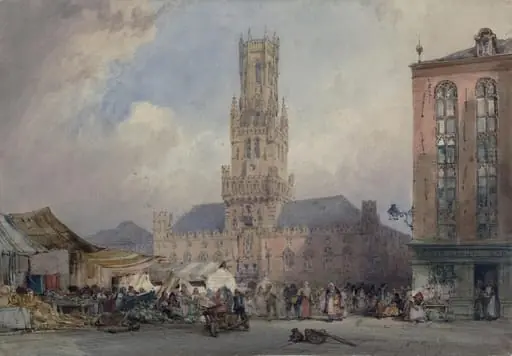
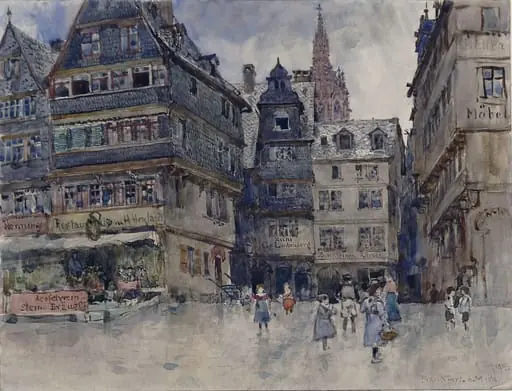
Market Place, Frankfort
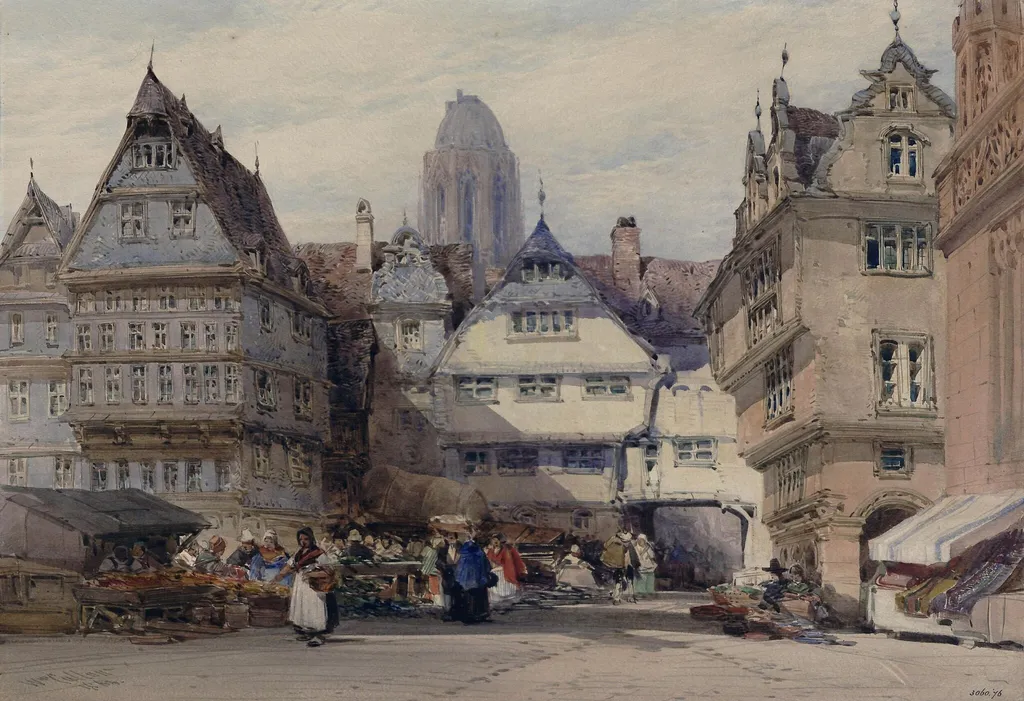
Market Place, Frankfort is a watercolor work on paper by the Impressionist artist Callow. It dates from 1863 and is held in the collection of the Victoria and Albert Museum.
About this work
Overview
Soft, diffused tones suggest daylight, and the composition focuses on the rhythm of daily life rather than dramatic action.
Painted in 1863, *Market Place, Frankfort* is a watercolour depicting a bustling urban market in a German town. The work is signed and dated by the artist, capturing a moment of ordinary commerce. Soft, diffused tones suggest daylight, and the composition focuses on the rhythm of daily life rather than dramatic action. The medium’s transparency lends a delicate clarity to the scene, emphasizing texture and atmosphere over detail.
Subject & Meaning
The scene portrays a typical market square with vendors operating from wooden stalls under cloth canopies. Figures in period attire move among the stalls, some carrying goods, others pausing to converse. The presence of a horse-drawn cart and well-maintained architecture implies a functioning, modestly prosperous community. The painting avoids idealization, instead offering a quiet observation of routine economic activity in mid-19th century urban life.
Technique & Style
The artist employed watercolour with restrained washes to build form and depth, allowing the paper’s whiteness to suggest light on walls and pavement. Buildings are rendered with precise, narrow lines and steeply pitched roofs, their surfaces differentiated by subtle shifts in hue. Shadows are minimal, and details like window frames and awning ropes are suggested rather than fully defined, reflecting a preference for atmospheric suggestion over precision.
History & Provenance
The work is dated and signed, indicating it was completed by the artist in 1863, likely during a period of travel or residence in Frankfurt. No documented exhibition history or early ownership is known. Its survival as a standalone watercolour suggests it was kept as a personal record or study rather than commissioned. The piece remains in private hands, with no public institutional record of acquisition.
Context
Created during the height of Realism in European art, the painting aligns with a broader interest in depicting everyday life without romanticism. Frankfurt, as a commercial hub, offered abundant subject matter for artists observing urban routines. While not part of a major movement’s manifesto, the work reflects the period’s shift toward secular, observational art grounded in the visible world rather than historical or mythological narratives.
Legacy
Though not widely exhibited or reproduced, *Market Place, Frankfort* contributes to a quieter tradition of 19th-century topographical watercolours. It stands as an example of how artists captured local character through modest means, preserving the texture of daily life before industrialization transformed European towns. Its value lies in its unembellished record of a moment, rather than in formal innovation.
Artist & collection
Artist
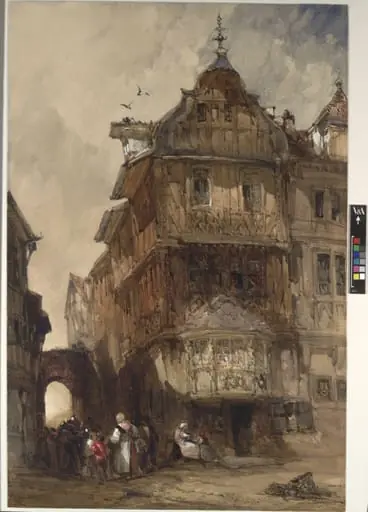
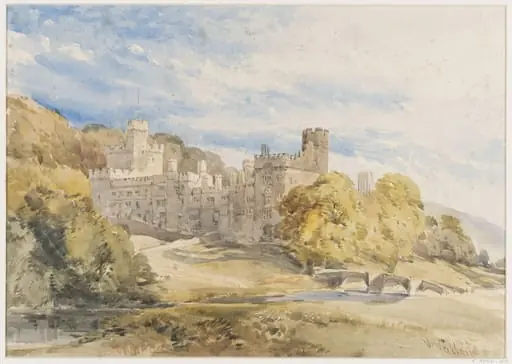
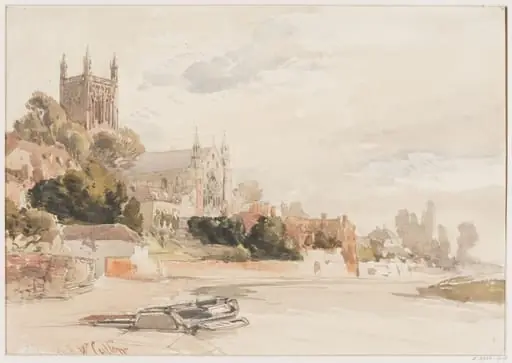
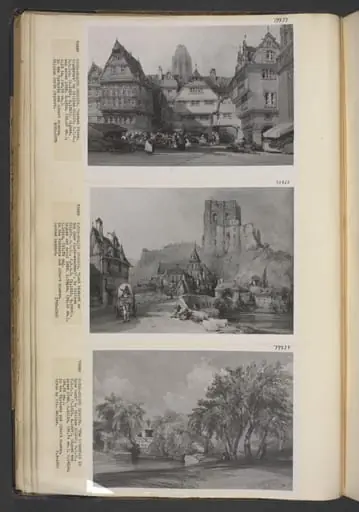
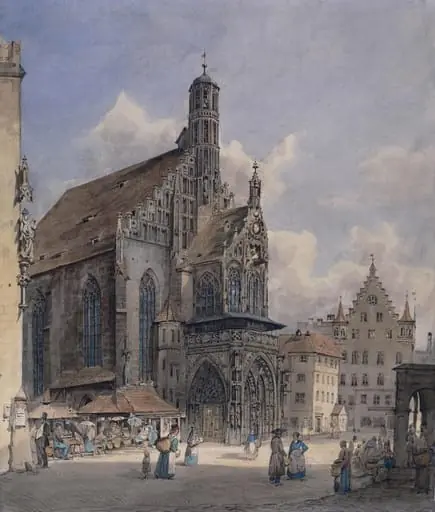
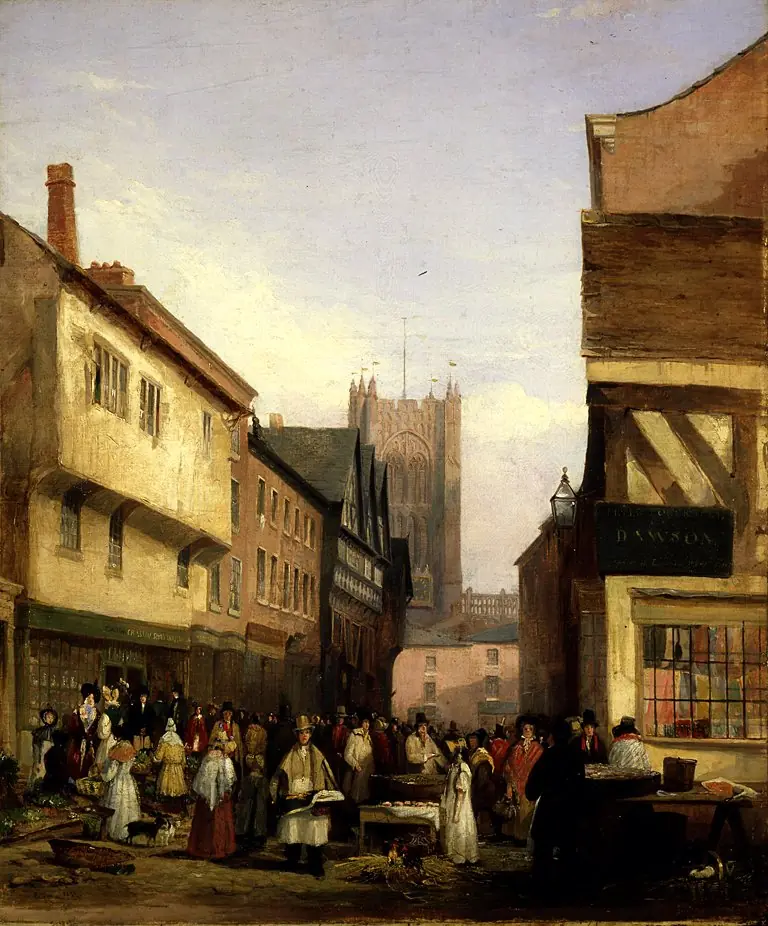
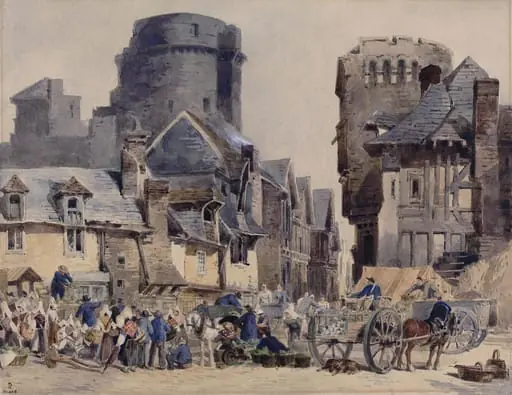
These watercolours capture towns and buildings in Europe through the 1800s. Look at the lively pencil lines and soft washes in Market Place, Frankfort (1863) or the warm brick tones of Old Houses, Berncastel, on the…