Artwork
The Town Hall, Bruges
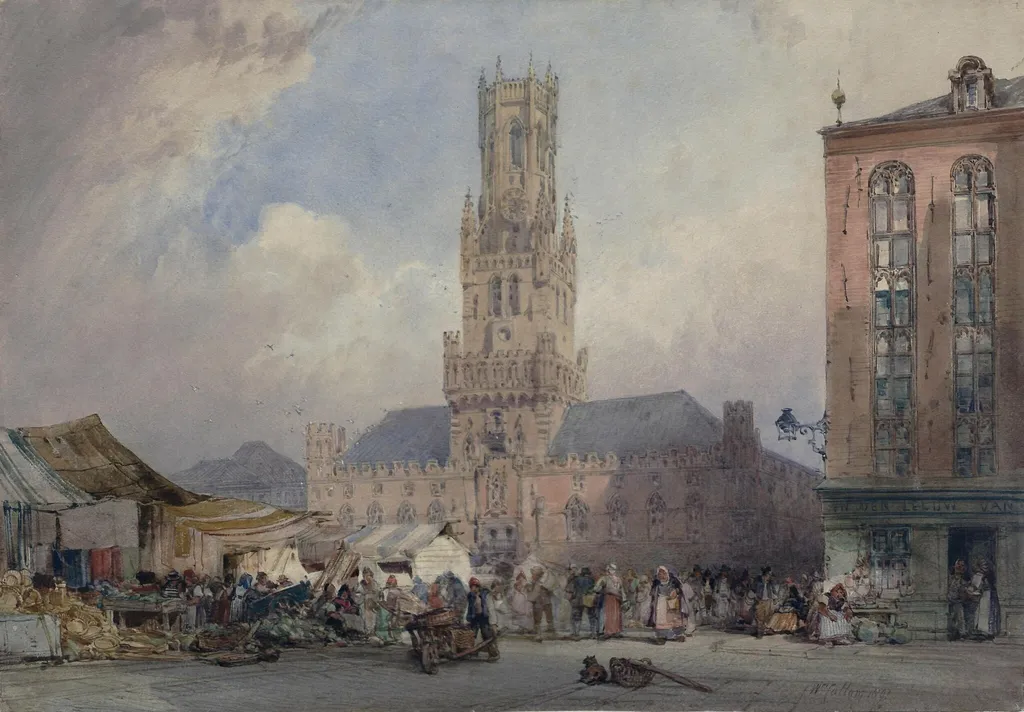
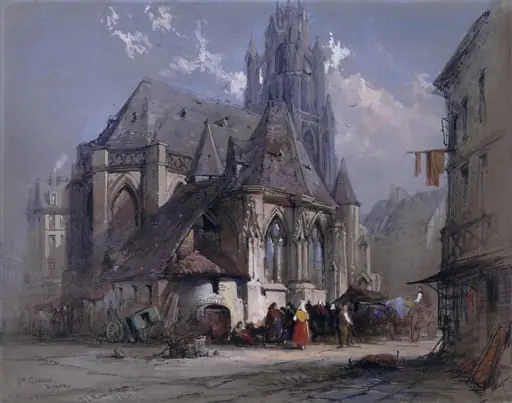
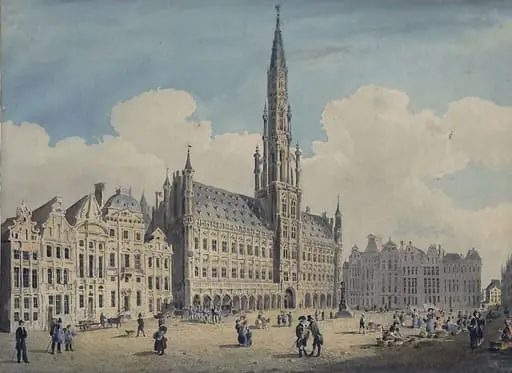
The Town Hall, Bruges is a watercolor work on paper by the Impressionist artist Callow. It dates from 1887 and is held in the collection of the Victoria and Albert Museum.
About this work
Overview
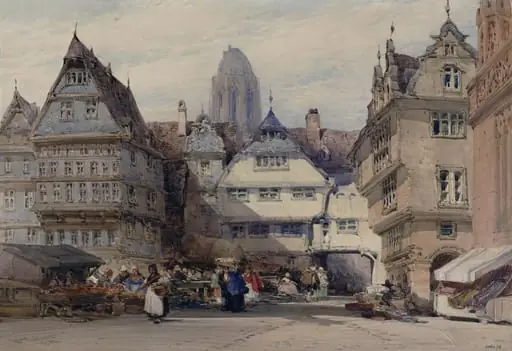
Painted in 1887 by William Callow, this watercolour captures the central square of Bruges, Belgium, with its prominent civic tower.
Painted in 1887 by William Callow, this watercolour captures the central square of Bruges, Belgium, with its prominent civic tower. The scene is alive with casual human activity—figures stroll, rest, and trade beneath temporary canopies. Callow’s loose brushwork and muted yet vivid tones convey the texture of sunlight on stone and dust, emphasizing the quiet rhythm of daily life rather than architectural grandeur.
Subject & Meaning
The tower depicted is the Belfry of Bruges, a symbol of municipal authority and civic pride. Surrounding it, market stalls and seated townspeople suggest a routine market day. Callow’s focus on ordinary moments—shoppers, idle observers, shaded corners—transforms the scene into a quiet testament to urban community life, avoiding overt monumentality in favor of lived experience.
Technique & Style
Callow employed transparent watercolour washes to suggest atmospheric depth and diffuse light. Delicate strokes define the tower’s ornate stonework, while broader, wet-in-wet applications render the sky and ground with softness. The composition balances architectural detail with spontaneous figures, using colour not for realism but to evoke mood: warm ochres against cool shadows, all held together by fluid, unforced brushwork.
History & Provenance
Created during Callow’s later years, this work reflects his sustained interest in European urban landscapes. It entered the Victoria and Albert Museum’s collection in the early 20th century, likely through acquisition or bequest. Its preservation there underscores its value as an example of 19th-century British watercolour practice focused on continental travel subjects.
Context
In the late 19th century, British artists frequently traveled to Belgium and the Netherlands, drawn by historic towns and accessible watercolour techniques. Callow’s depiction aligns with a broader trend of topographical painting that valued observation over idealization. Bruges, though romanticized in literature, was here rendered as a functioning, unidealized civic space.
Legacy
The painting remains a quiet example of how British watercolourists documented European urban life with sensitivity and restraint. It contributes to a genre that prioritized everyday authenticity over spectacle, influencing later generations interested in the social texture of historic cities. Its presence in the V&A ensures continued access for study and quiet contemplation.
Own this work as a print
Artist & collection
Artist
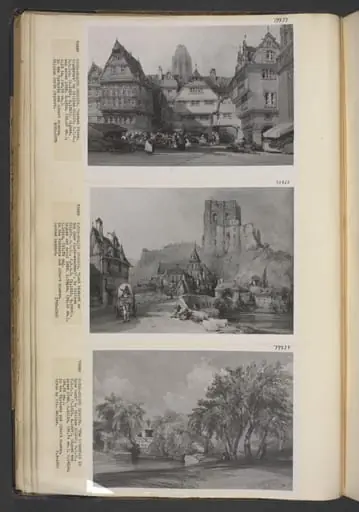
These watercolours capture towns and buildings in Europe through the 1800s. Look at the lively pencil lines and soft washes in Market Place, Frankfort (1863) or the warm brick tones of Old Houses, Berncastel, on the…