Artwork
Willows in winter, Eragny
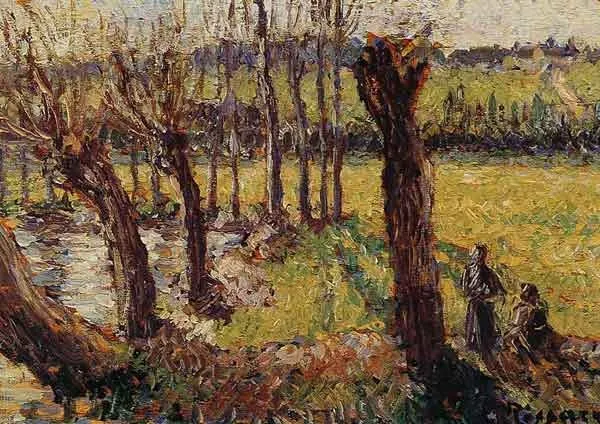
Willows in winter, Eragny is an oil painting by the Impressionist artist Camille Pissarro. It dates from 1896 and is held in the collection of the Chilean National Museum of Fine Arts.
About this work
Overview
The scene captures a quiet rural landscape near his home in Eragny, France, reflecting his sustained interest in seasonal changes and rural labor.
Painted in 1896, *Willows in Winter, Eragny* is an oil on canvas work by Camille Pissarro, created during his mature period when he integrated Neo-Impressionist methods into his practice. The scene captures a quiet rural landscape near his home in Eragny, France, reflecting his sustained interest in seasonal changes and rural labor. The painting is part of the permanent collection at the National Museum of Fine Arts in Santiago, Chile.
Subject & Meaning
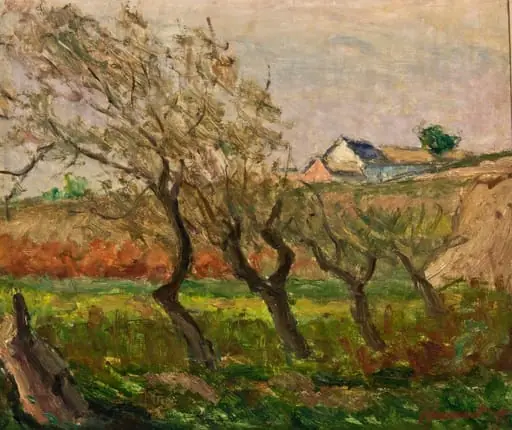
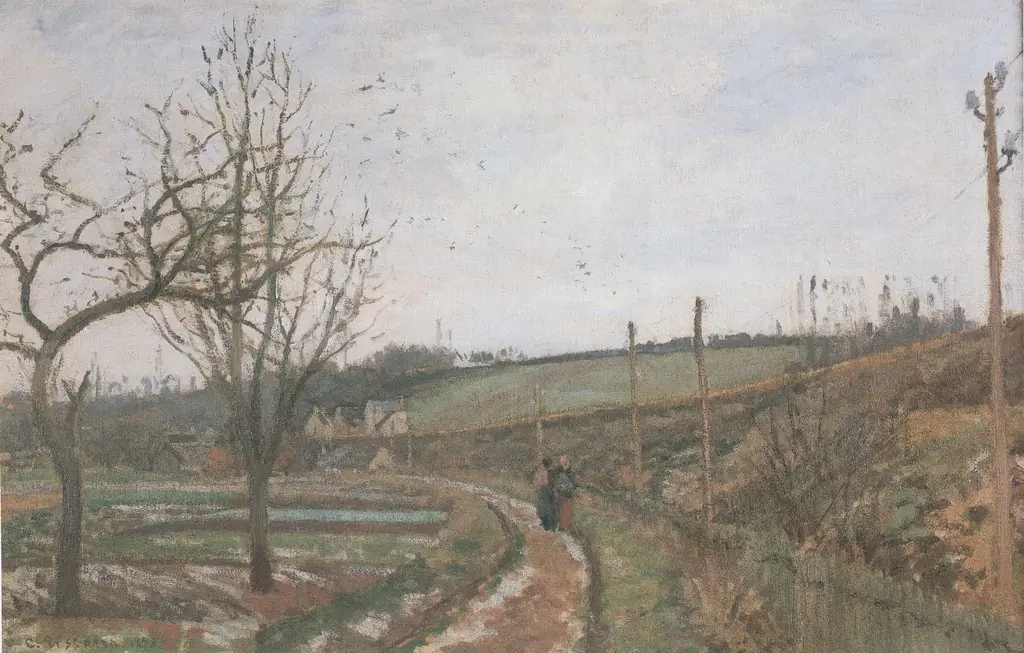
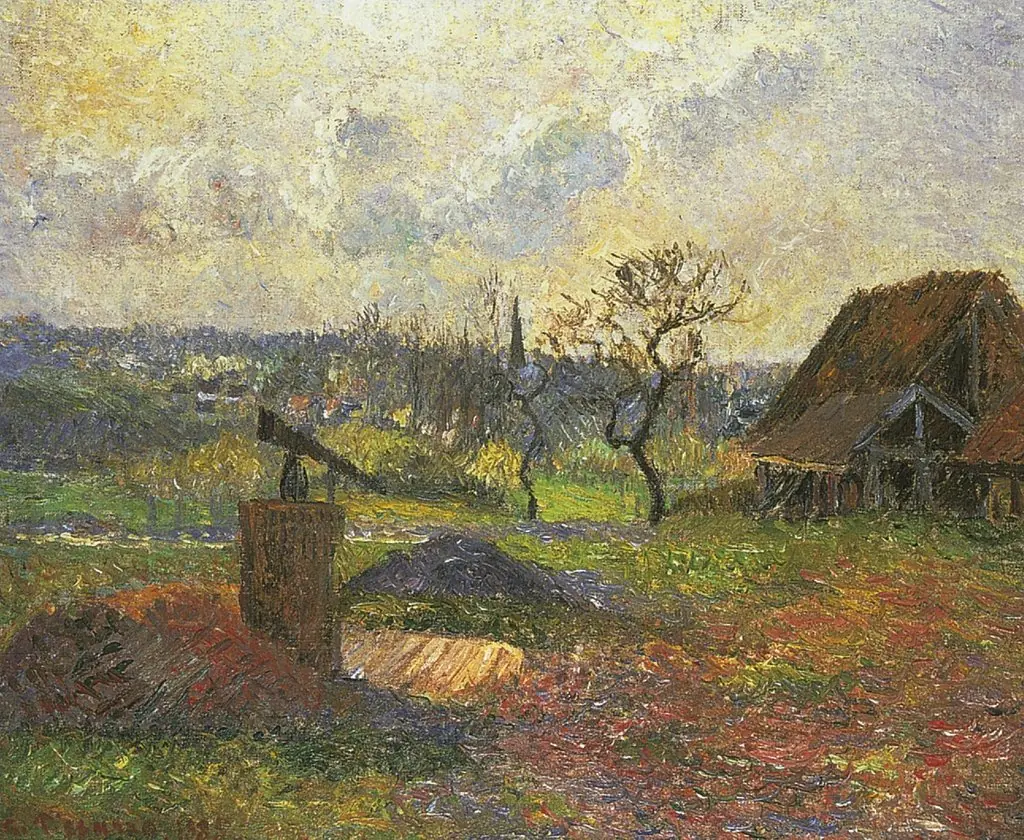
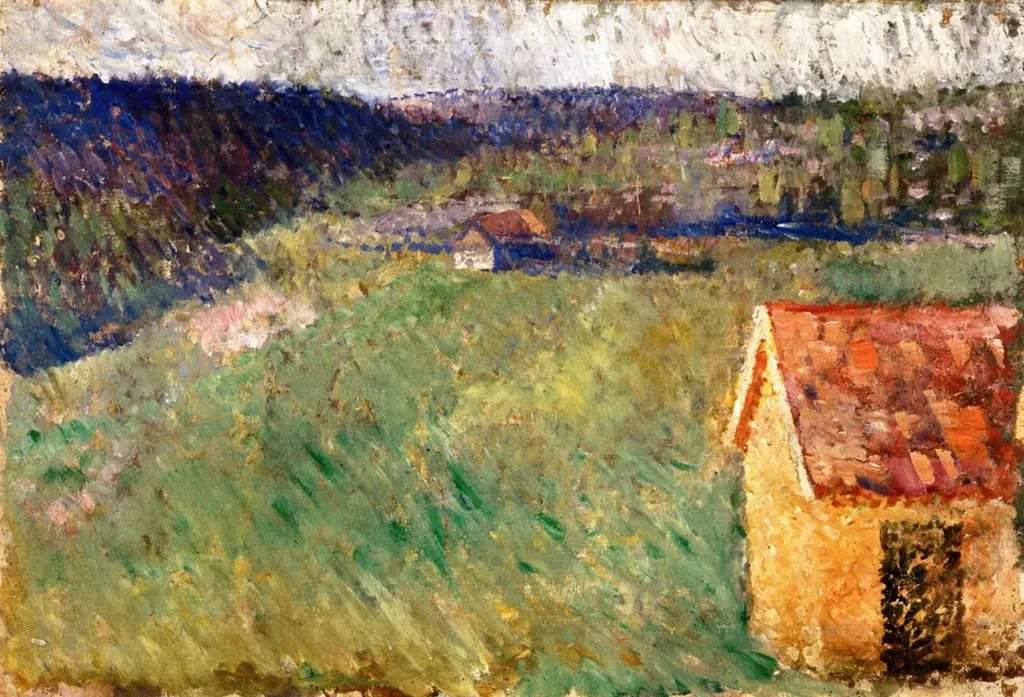
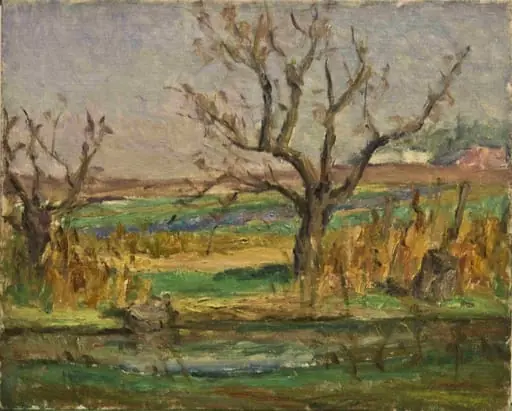
The painting depicts a winter riverside with bare willow trees lining the bank, their twisted branches extending into a muted sky. A snow-dusted field recedes into the distance, suggesting stillness and the pause of nature in cold weather. There is no human presence, emphasizing solitude and the quiet rhythm of the seasons. The composition invites contemplation rather than narrative, aligning with Pissarro’s interest in the dignity of ordinary landscapes.
Technique & Style
Pissarro employs a restrained palette of dark browns, grays, and cool blues to convey winter’s subdued tones. Brushwork is deliberate yet fluid, with layered strokes that build texture without overt divisionism. While influenced by Pointillist principles, he retains a looser, more intuitive handling of paint, blending observational precision with emotional restraint. The surface reveals the physicality of paint, enhancing the tactile sense of frost and bare bark.
History & Provenance
Pissarro painted this work during his final decade, after decades of participation in Impressionist exhibitions and experimentation with Neo-Impressionism. It was likely created in his garden at Eragny, where he frequently observed seasonal shifts. The painting entered the Chilean national collection in the 20th century, possibly through acquisition or donation, though its exact path from France to Santiago remains undocumented in public records.
Context
In the 1890s, Pissarro was refining his approach to landscape, balancing scientific color theory with personal perception. While younger artists embraced abstraction or symbolism, he remained committed to depicting rural life with honesty. *Willows in Winter* reflects his belief in art as a record of lived experience, rooted in the French countryside and the quiet endurance of nature through seasonal cycles.
Legacy
The painting stands as a testament to Pissarro’s evolving vision—neither fully Impressionist nor strictly Neo-Impressionist, but a synthesis of observation and technique. It influenced later generations who valued subtle tonal harmony and emotional restraint in landscape painting. Its presence in a Latin American museum underscores the international reach of his work beyond the French art scene.
Artist & collection
Artist
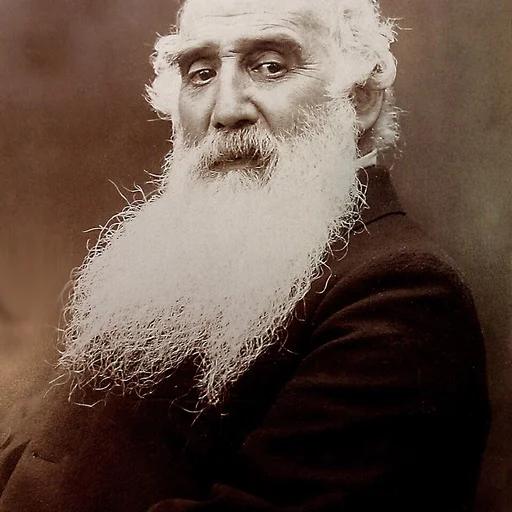
Jacob Abraham Camille Pissarro ( piss-AR-oh; French: ; 10 July 1830 – 13 November 1903) was a Danish-French Impressionist and Neo-Impressionist painter born on the island of Saint Thomas (now in the US Virgin Islands, but then in the…