Artwork
The Transfiguration
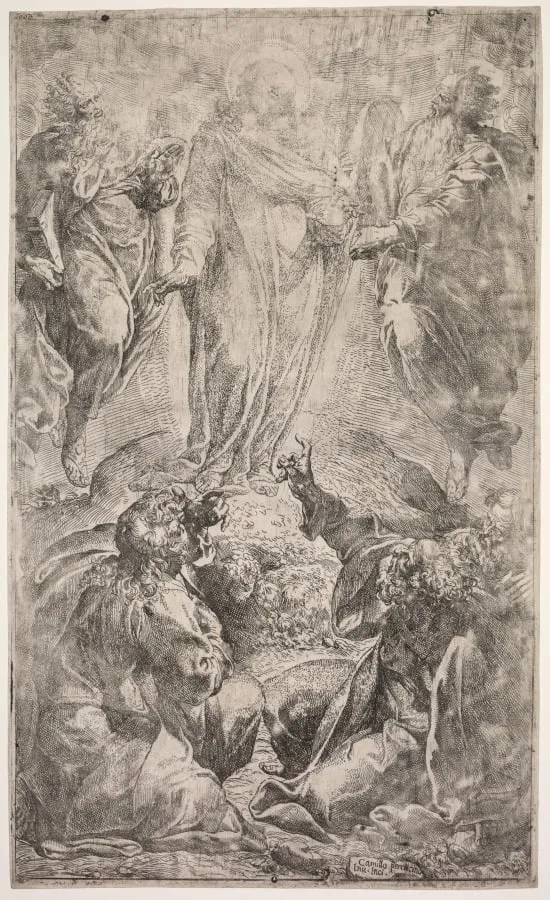
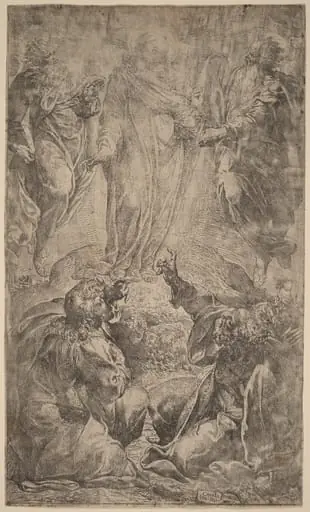
The Transfiguration is a print by the Renaissance artist Camillo Procaccini. It dates from 1588 and is held in the collection of the Cleveland Museum of Art. The print depicts the biblical episode in which Christ is transformed on a high mountain, accompanied by Peter, James and John.
About this work
Overview
The print depicts the biblical episode in which Christ is transformed on a high mountain, accompanied by Peter, James and John. In the scene, Jesus radiates intense light and his robes appear luminous, while the three disciples witness a fleeting vision that includes the prophets Elijah and Moses and a divine voice.
Subject & Meaning
The narrative is understood as a foretelling of the Resurrection, presenting a moment when the disciples perceive Christ in a glorified state beyond his earthly form. The appearance of the Old Testament figures underscores continuity between the law, the prophets, and the new covenant, while the heavenly voice affirms Jesus’ divine sonship.
Technique & Style
The artist employs the sfumato method, softening edges and blending tones to create a hazy, atmospheric effect that enhances the ethereal glow surrounding the central figure. This gradual transition of light and shadow gives the composition a sense of depth and spiritual ambiguity, mirroring the transient nature of the vision.
Context
The episode derives from the Gospel of Matthew (17:1‑9) and has been a frequent subject in Christian art, serving both devotional and didactic purposes. By rendering the Transfiguration in print, the work made this theological theme accessible to a broader audience, reinforcing its role in liturgical teaching and personal meditation.
Artist & collection

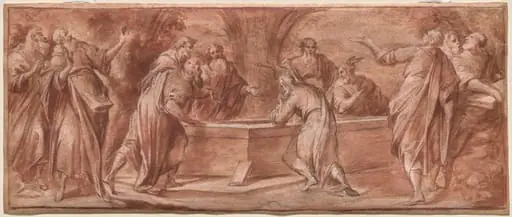
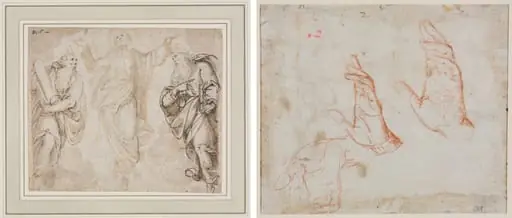
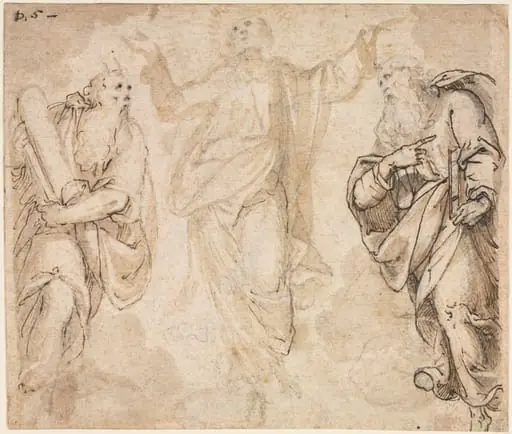
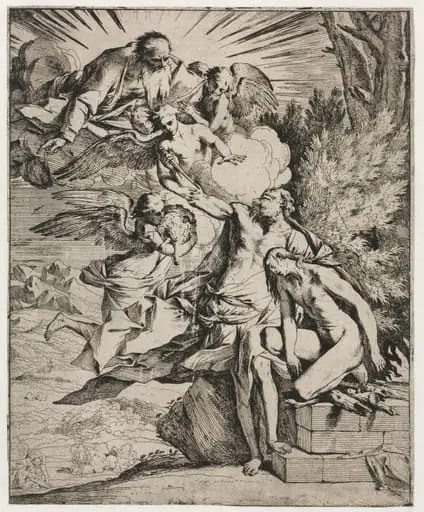 The Sacrifice of Abraham
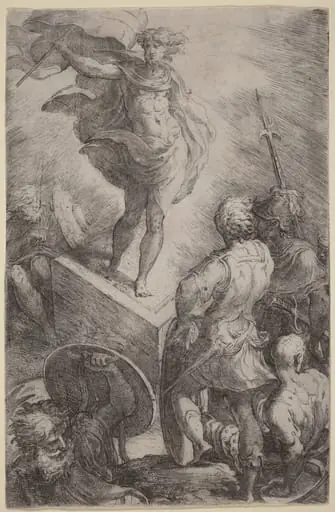 The Resurrection of Christ
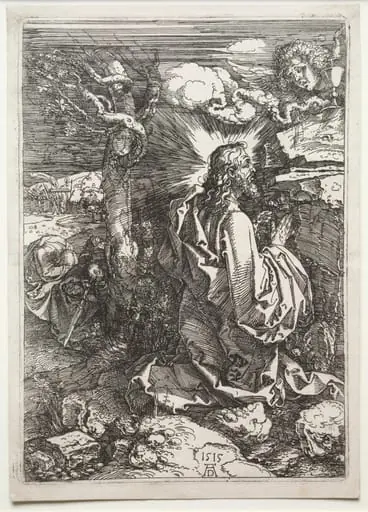 Christ on the Mount of Olives
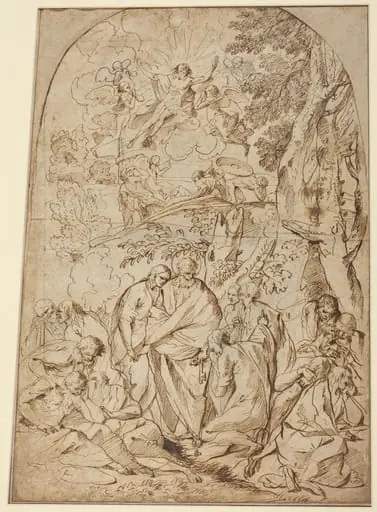 The Resurrection
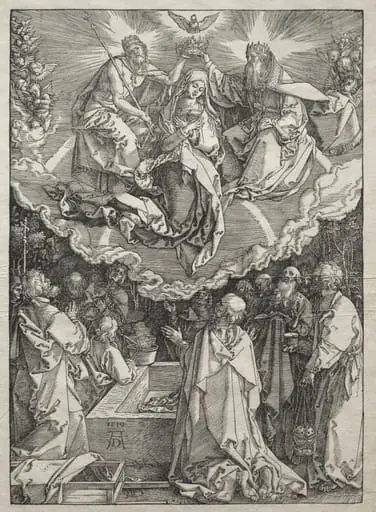 Life of the Virgin: Assumption of the Virgin
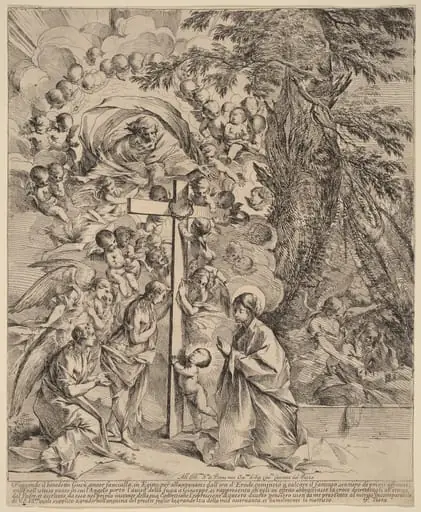 The Infant Christ Embracing the Cross (The Dream of Joseph)
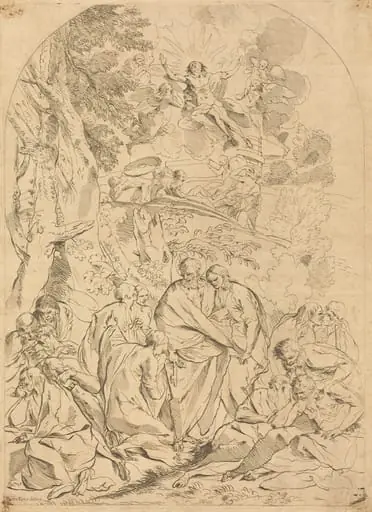 The Resurrection
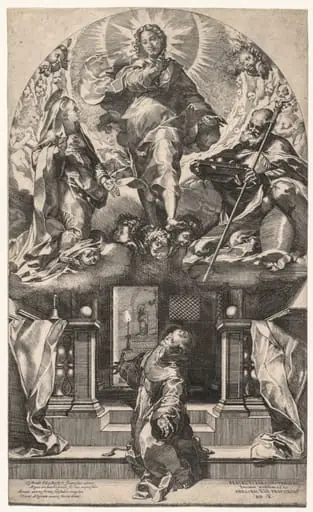 The Vision of St. Francis
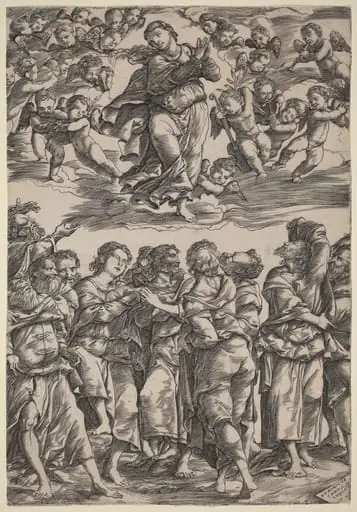 The Assumption of the Virgin
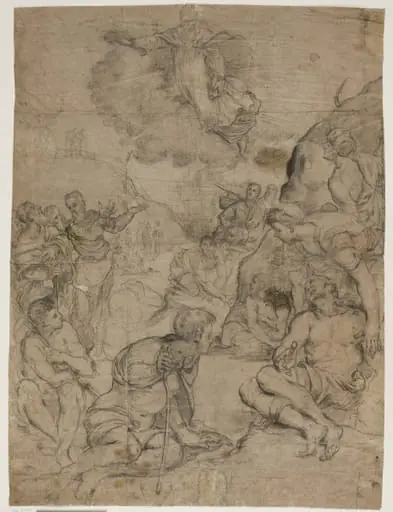 St Augustine healing the paralytics, after Tintoretto’s painting in the Museo Civico, Vicenza
 The Raising of Lazarus
 The Transfiguration