Artwork
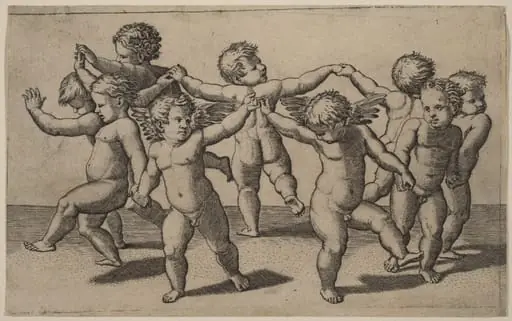
Twelve naked children dancing
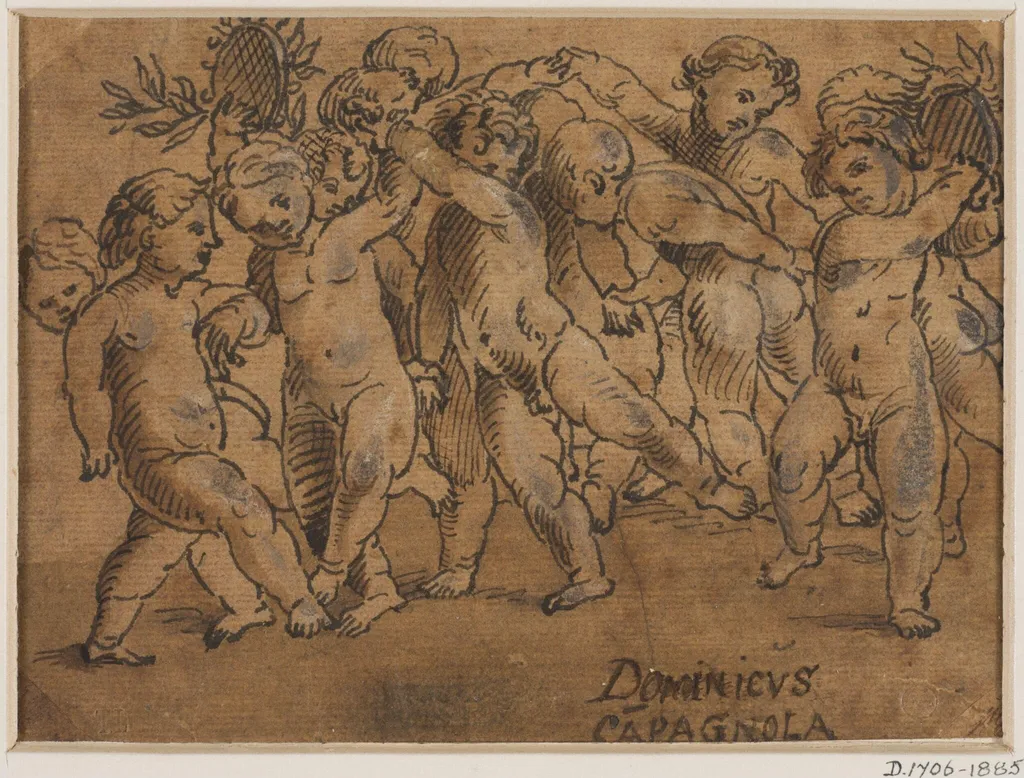
Twelve naked children dancing is a drawing by Domenico Campagnola. It dates from 1550 and is held in the collection of the Victoria and Albert Museum. The drawing is a pen‑and‑ink work on brown paper, reproducing an earlier engraving.
About this work
Overview
The drawing is a pen‑and‑ink work on brown paper, reproducing an earlier engraving. It presents a circle of twelve unclothed children in motion, their bodies intertwined as they dance. The artist’s signature, "Domenicus Capagnola," appears on the sheet, identifying the hand that rendered the lively scene.
Subject & Meaning
The composition captures a moment of exuberant play, with the youngsters’ round faces and plump forms suggesting youthful innocence. Their tangled limbs and occasional grasp of leaves or vines convey a spontaneous, communal celebration rather than a formal, idealised tableau, emphasizing the vitality of childhood group activity.
Technique & Style
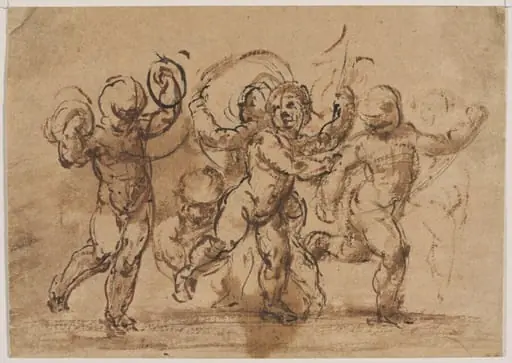
Executed with pen and ink, the drawing features irregular, scratchy lines that convey immediacy. The hatching is uneven, giving texture to flesh and foliage alike, while the rapid, sketch‑like strokes suggest a copyist’s quick translation of the original engraving rather than a polished finished piece.
History & Provenance
The piece is a later copy of an earlier print, a common practice for disseminating popular images in the period. The presence of Capagnola’s name indicates his role either as the original engraver or as the copyist, though the exact relationship to the source engraving remains undocumented.
Artist & collection
Artist
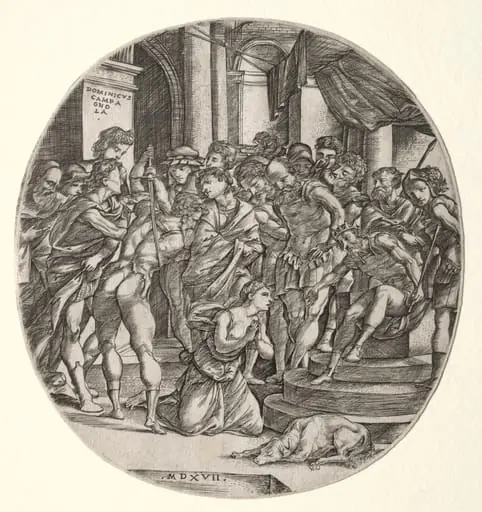
Domenico Campagnola (c. 1500–1564) was an Italian painter and printmaker in engraving and woodcut of the Venetian Renaissance, but whose most influential works were his drawings of landscapes.