Artwork
Children Harvesting Grapes
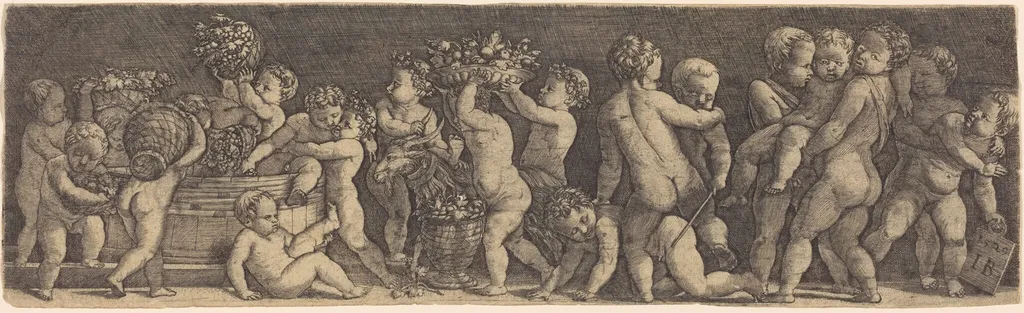
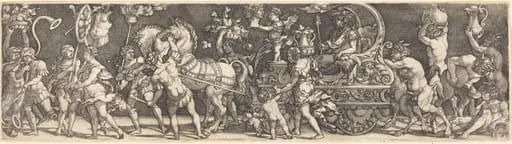
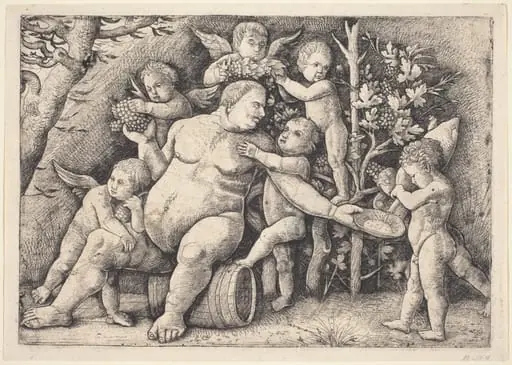
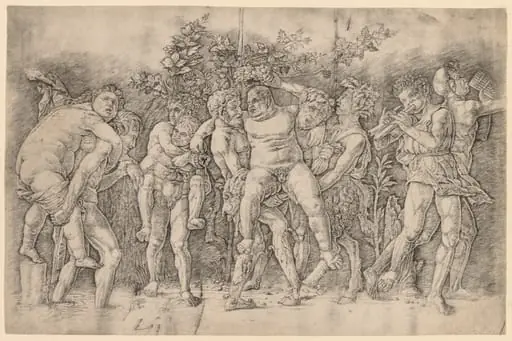
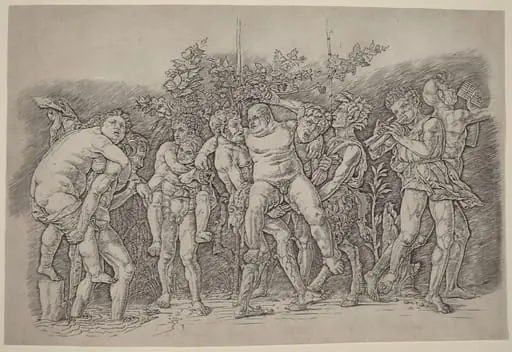
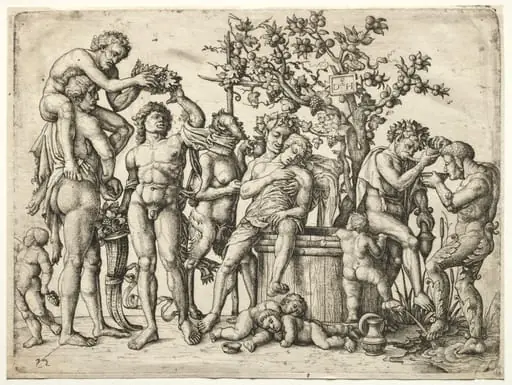
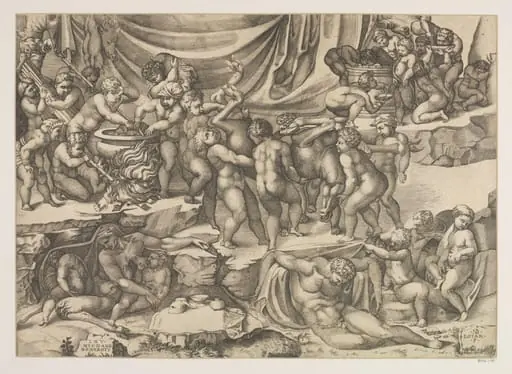
Children Harvesting Grapes is an ink print by the Renaissance artist Master IB. It dates from 1516 and is held in the collection of the National Gallery of Art.
About this work
Overview
Created in 1516, this engraving by Master IB depicts two children at work in a vineyard, gathering grapes during harvest. Rendered in fine lines on a metal plate, the print captures a moment of quiet labor rather than grand spectacle. Its small scale and detailed technique reflect the Renaissance interest in prints as accessible, reproducible images for private contemplation.
Subject & Meaning
The children, dressed in plain tunics, are shown in a moment of cooperative effort—one balancing on a ladder, the other holding it steady.
The children, dressed in plain tunics, are shown in a moment of cooperative effort—one balancing on a ladder, the other holding it steady. Their focused expressions and physical coordination suggest an unidealized view of rural life. The scene carries no religious or mythological symbolism, instead valuing the dignity of everyday labor, a subtle shift in subject matter common in early 16th-century Northern European art.
Technique & Style
The artist used a burin to incise precise lines into a copper plate, creating sharp contrasts through cross-hatching and fine parallel strokes. Shadows are built layer by layer, giving depth to the figures and vines without relying on tone or wash. The meticulous handling of texture—leaves, wood, fabric—demonstrates the engraver’s control and the medium’s capacity for delicate realism.
History & Provenance
The print is attributed to Master IB, an anonymous engraver active in the early 1500s, likely in the Netherlands or Germany. Few works are securely linked to this hand, making this piece a key example of his output. It entered the collection of the National Gallery of Art in Washington, D.C., where it remains among the few surviving impressions of his work.
Context
During the early Renaissance, engraved prints became popular among educated collectors for their clarity and portability. Unlike paintings, they could be reproduced in multiples, spreading visual ideas across regions. Scenes of rural labor, though uncommon in religious art, appeared in secular prints as interest grew in observing ordinary life with precision and empathy.
Legacy
Master IB’s engraving contributes to a growing tradition of depicting non-elite figures with quiet dignity. Its technical refinement influenced later printmakers who sought to elevate genre scenes through detailed line work. Though little is known of the artist, this work endures as a quiet testament to the artistic value placed on humble, observed moments.
Artist & collection