Artwork
A Domed Church seen through a ruined Arch
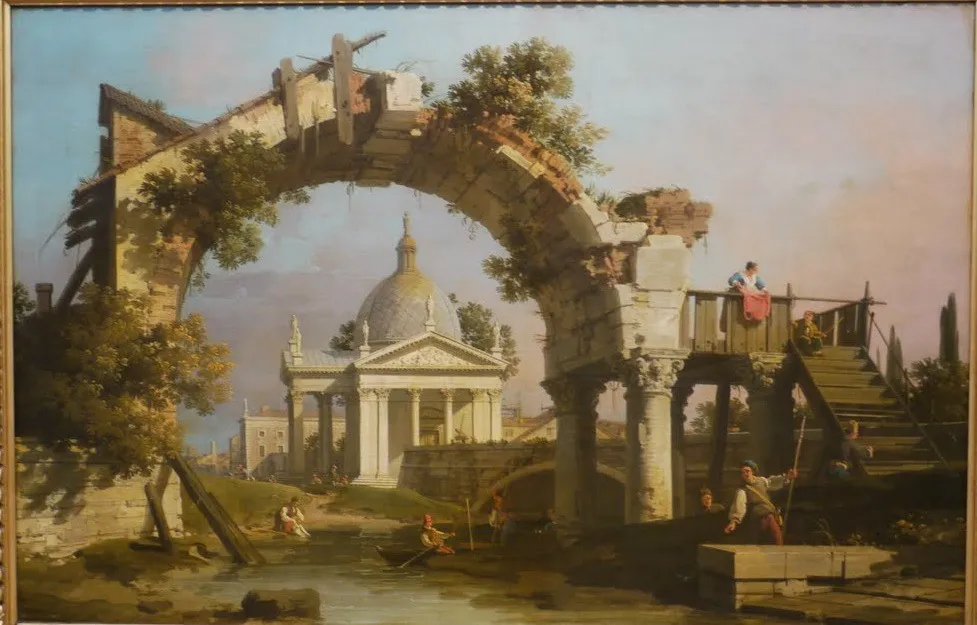
A Domed Church seen through a ruined Arch is an oil painting by the Rococo painting artist Canaletto. It dates from 1754 and is held in the collection of the Ashmolean Museum.
About this work
Overview
A Domed Church seen through a ruined Arch is a 1754 oil painting by Canaletto, depicting a Venetian cityscape that juxtaposes decay and serenity. The composition frames a pristine domed church through a vine-covered, ruined arch, with everyday life unfolding in the foreground.
Subject & Meaning
The painting contrasts the natural overgrowth of a crumbling arch with the intact, bright domed church behind it, suggesting the coexistence of decline and enduring structure in an urban setting. Figures engaged in daily activities add a sense of normalcy.
Technique & Style
Executed in the Rococo style, the work showcases Canaletto's Venetian school hallmark: meticulous architectural detail combined with expressive use of light and shadow, achieving a three-dimensional effect through chiaroscuro.
History & Provenance
Painted in 1754, during Canaletto's period of work in England, this painting reflects his consistent focus on urban vedute, blending observation of architecture with his characteristic lighting techniques.
Context
As a leading figure of the Venetian school, Canaletto's work, including this painting, contributed to the popularity of vedute, capturing the essence of Venetian landscapes for both local and international audiences.
Legacy
This painting, like much of Canaletto's oeuvre, has influenced the depiction of urban landscapes in art, emphasizing the interplay of light, architecture, and everyday life, leaving a lasting impact on the genre of vedute.
Artist & collection
Artist
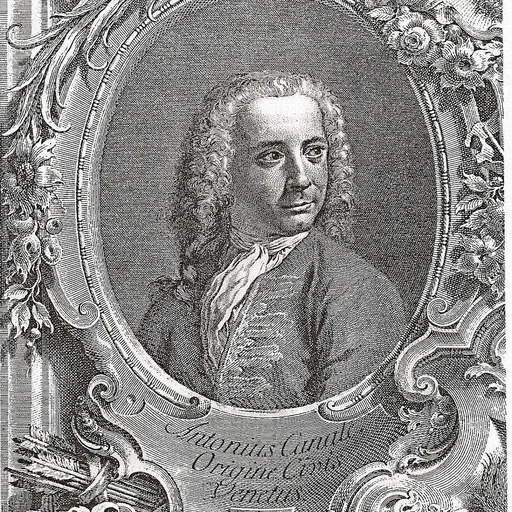
Giovanni Antonio Canal (18 October 1697 – 19 April 1768), commonly known as Canaletto (Italian: ), was an Italian painter from the Republic of Venice, considered an important member of the 18th-century Venetian school.

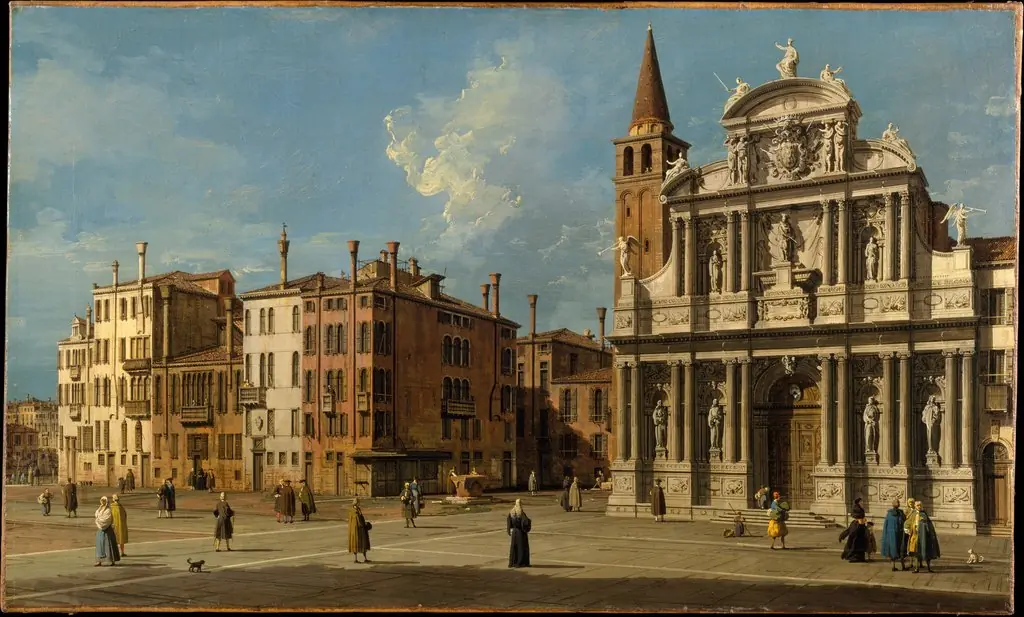
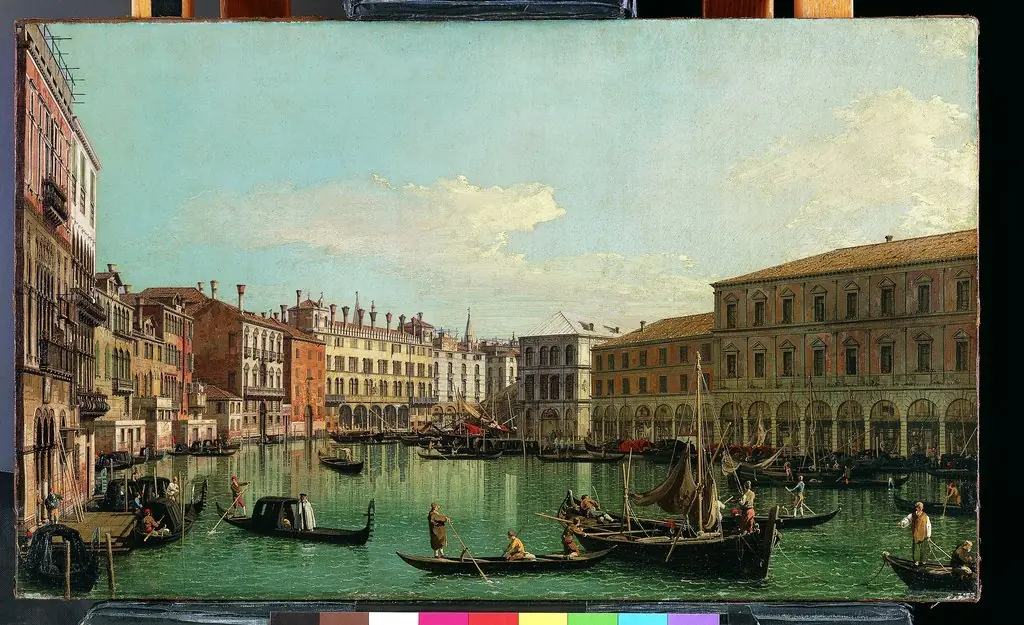
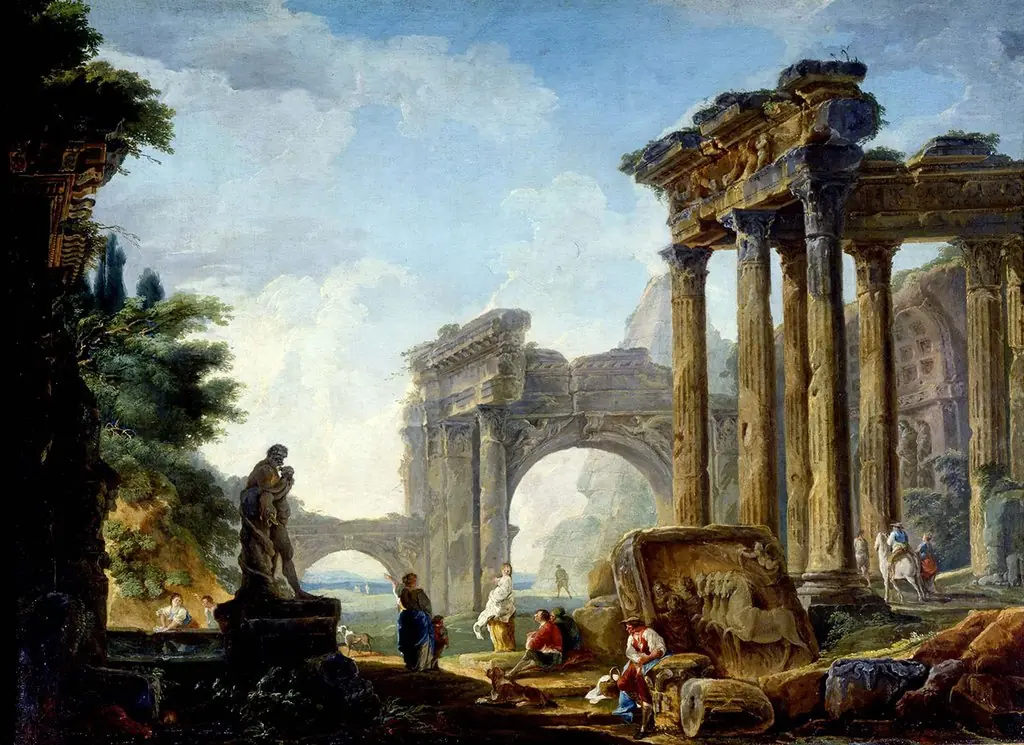 Paysage avec ruines romaines
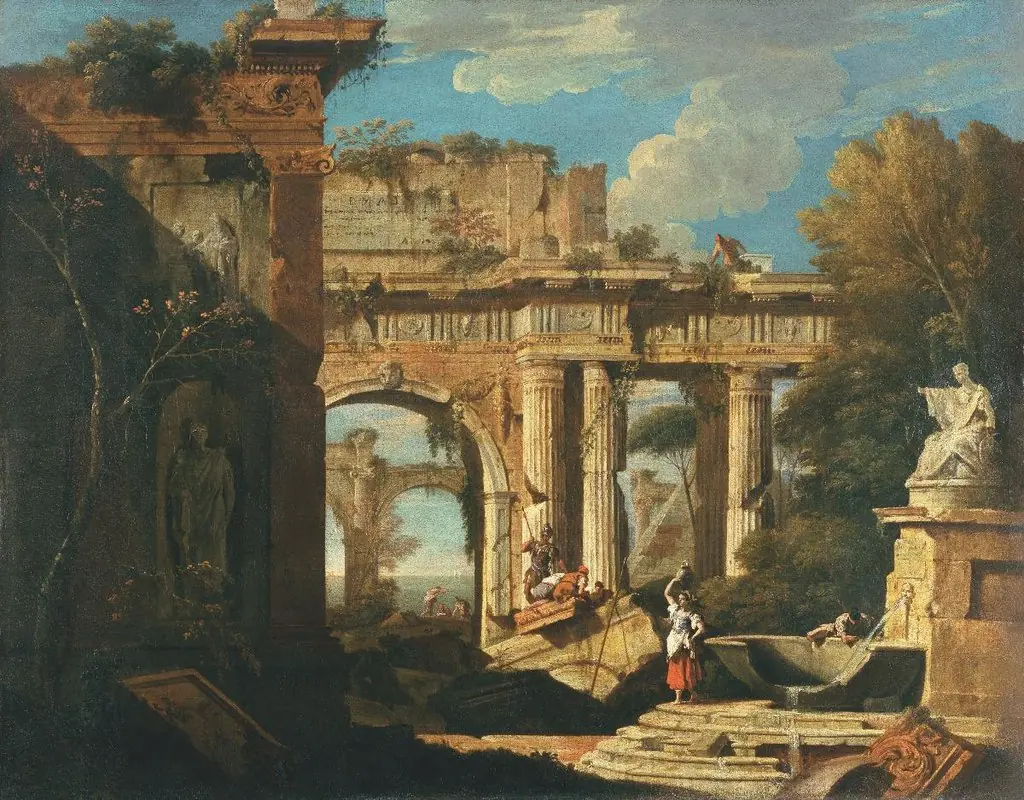 Capriccio con rovine romane
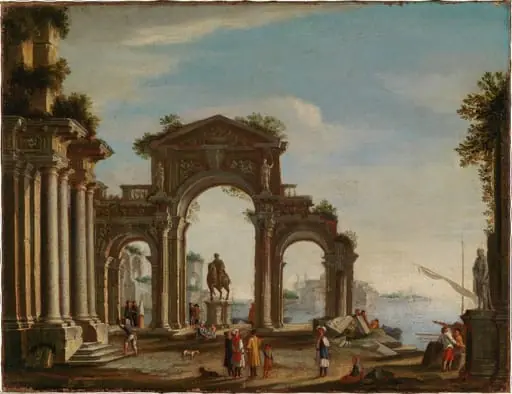 Rauniofantasia
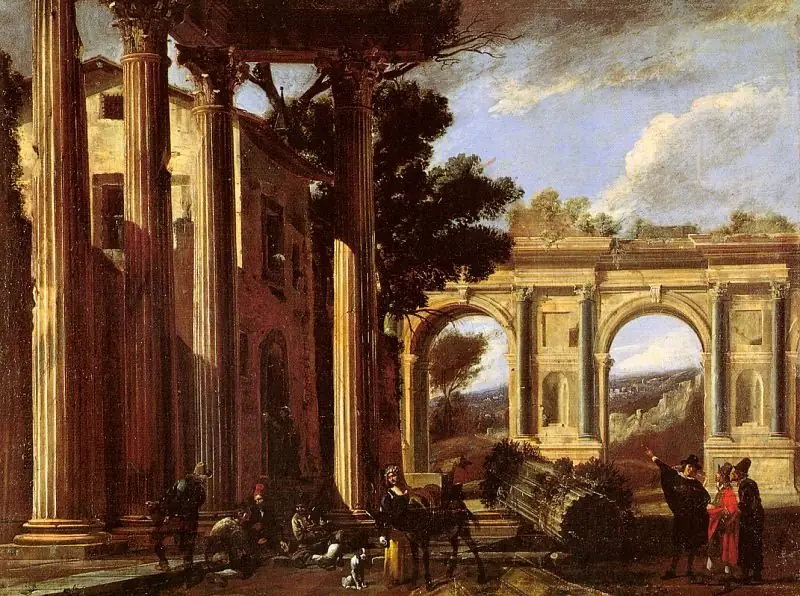 Architectural View
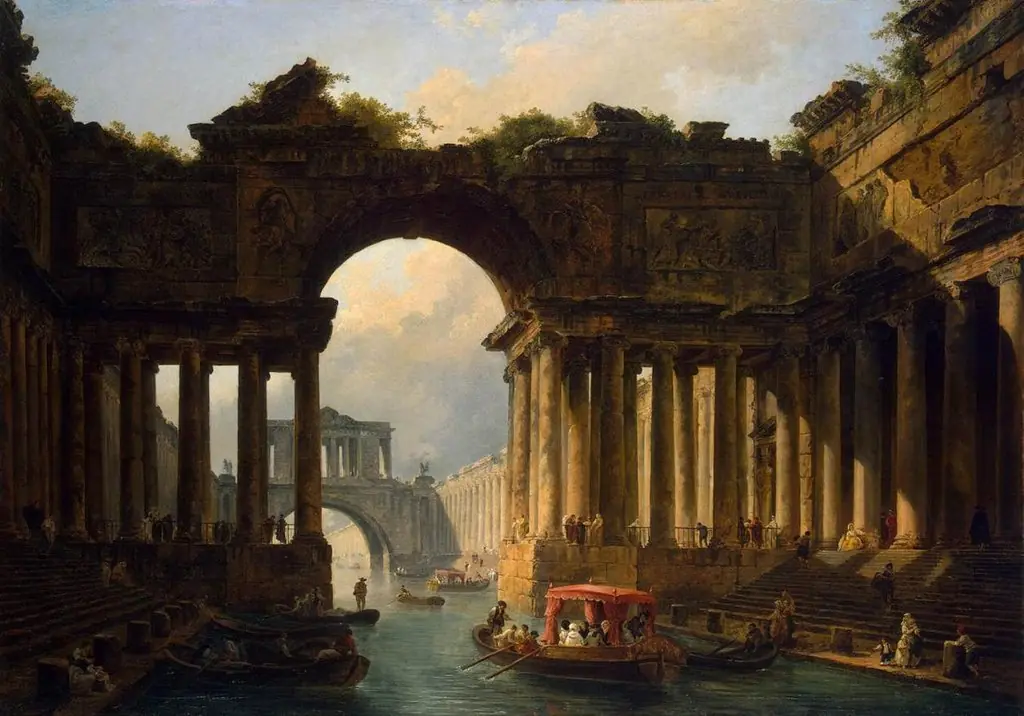 Architectural Landscape with a Canal
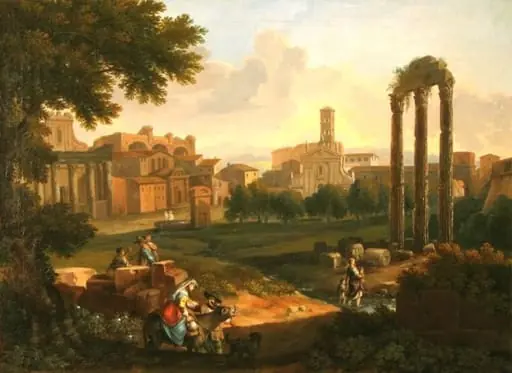 Vedere din Roma Veche (Roma cu columnele templului lui Jupiter)
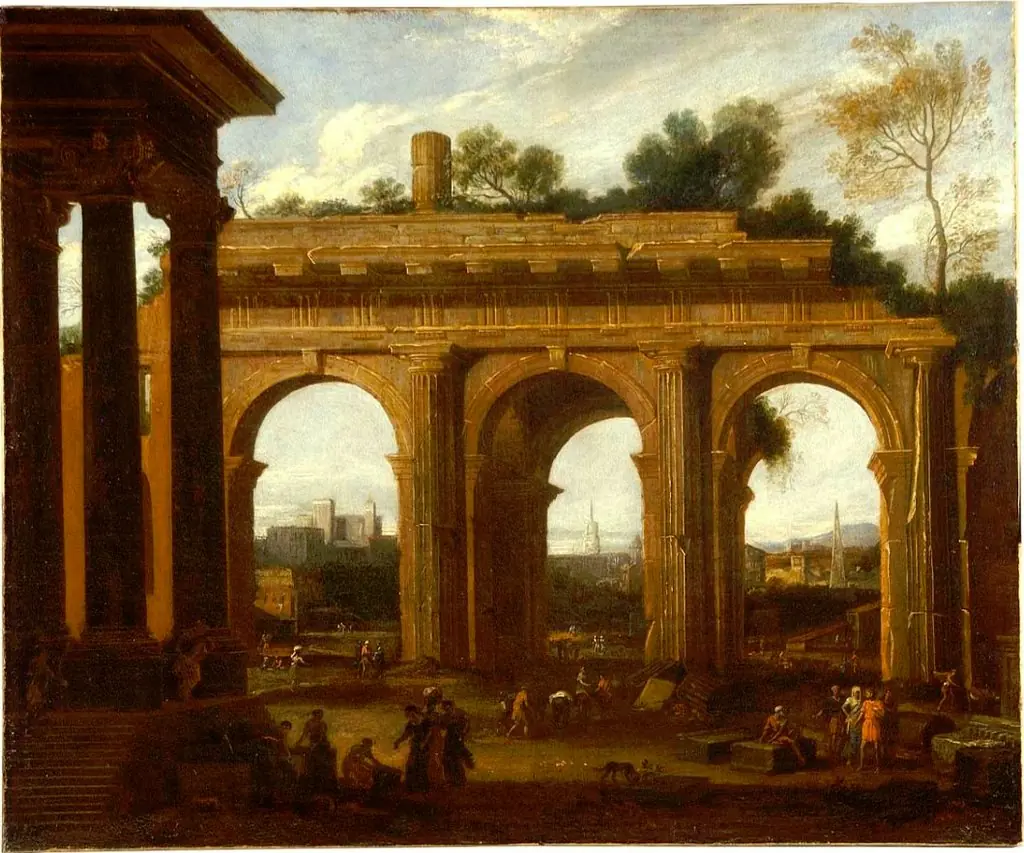 Landscape with ruins and figure
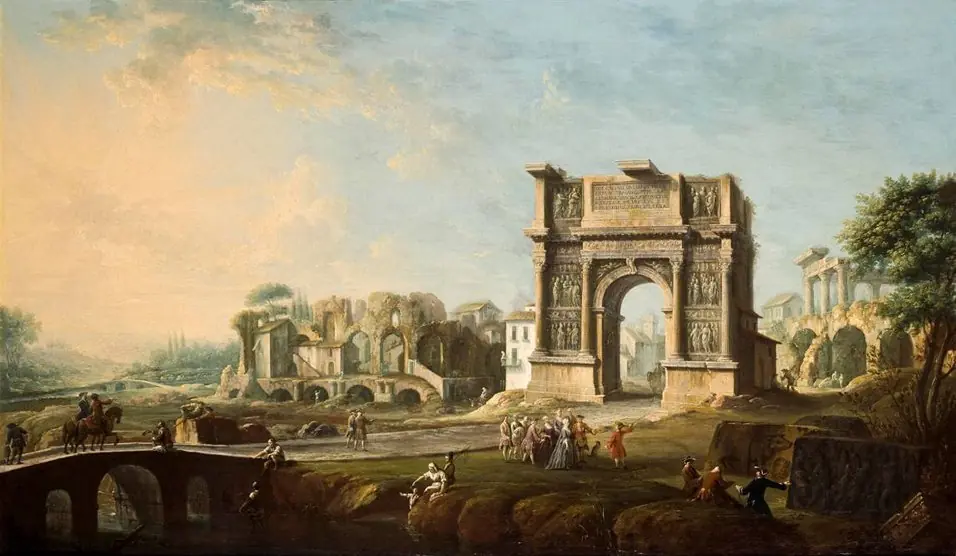 The Arch of Trajan at Benevento
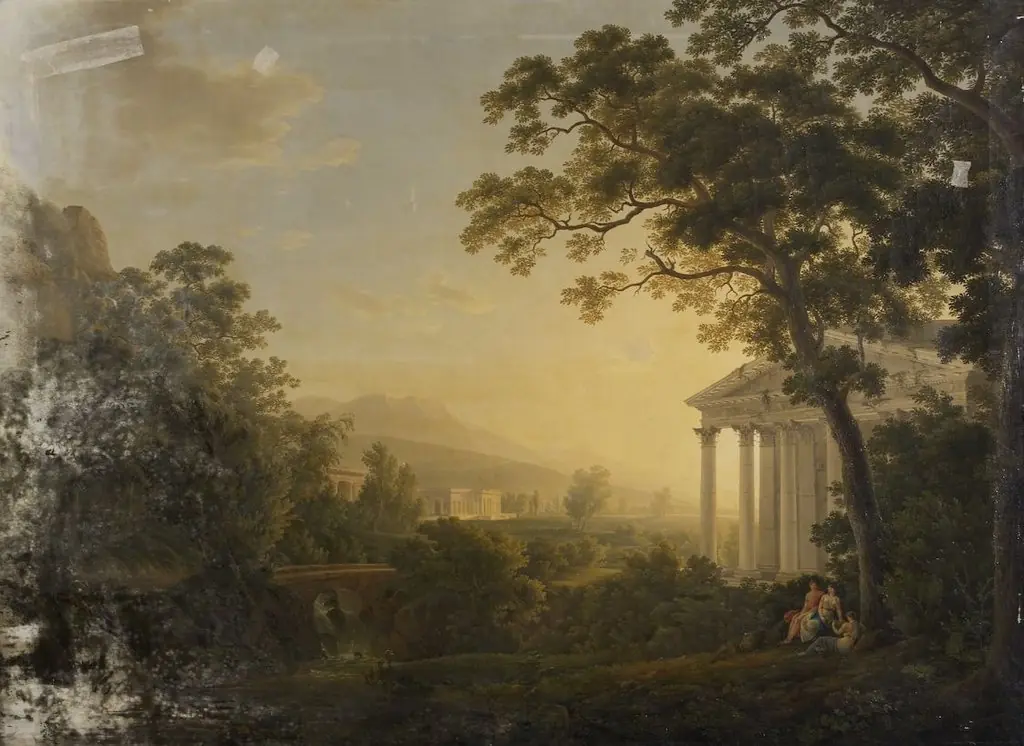 Ideal Landscape with Temple Buildings
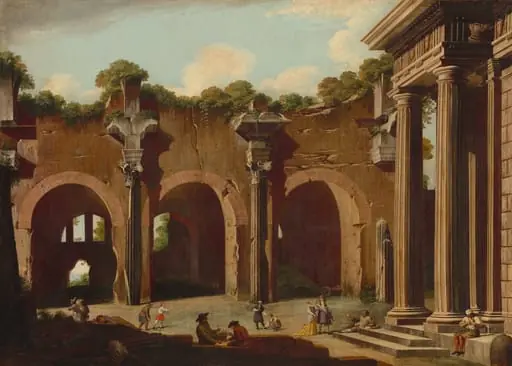 The Basilica of Constantine with a Doric Colonnade
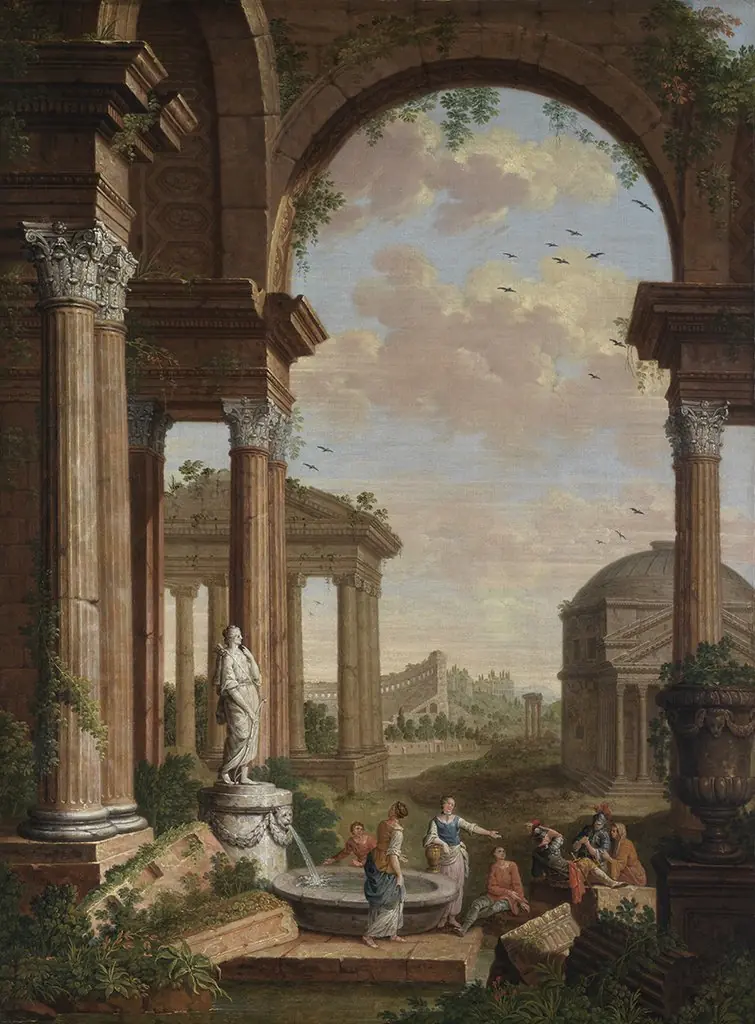 Landscape with Roman Ruins
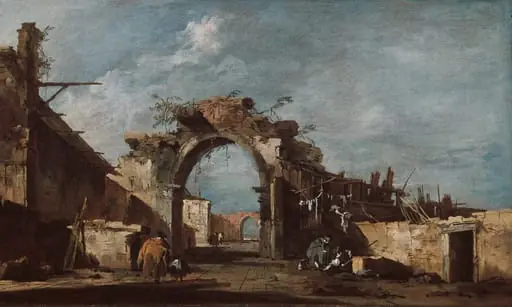 Ruined Archway