Artwork
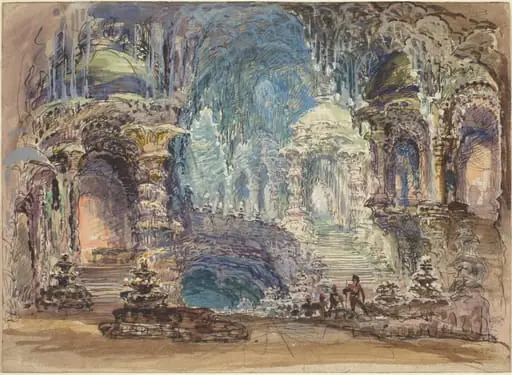
A Fantastic Underground Temple (Aladdin's Cave?)
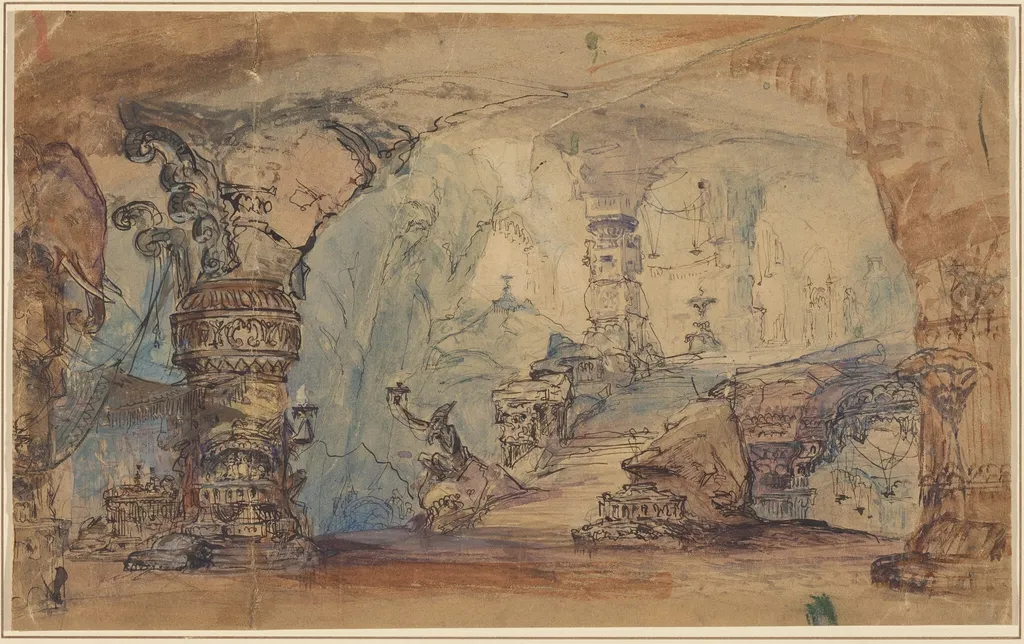
A Fantastic Underground Temple (Aladdin's Cave?) is a gouache drawing by the Renaissance artist Robert Caney. It dates from 1584 and is held in the collection of the National Gallery of Art.
About this work
Overview
Created in 1584, this drawing by Robert Caney combines pen and ink with watercolor and gouache over graphite on a rigid board.
Created in 1584, this drawing by Robert Caney combines pen and ink with watercolor and gouache over graphite on a rigid board. It presents a fantastical subterranean structure, blending architectural elements with imaginative detail. The work is not a finished painting but a layered, carefully constructed drawing, reflecting Renaissance-era practices in preliminary and experimental composition. Its title, possibly later assigned, evokes literary tropes of hidden realms.
Subject & Meaning
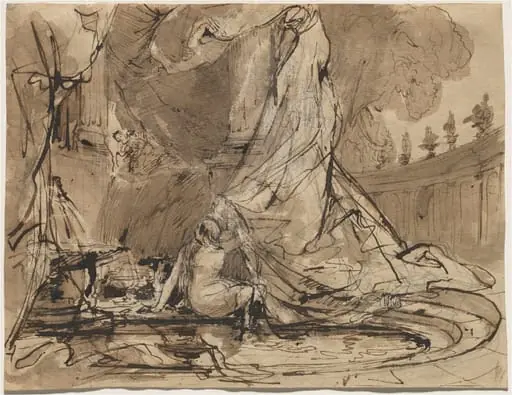
The scene depicts an underground space dominated by stone columns, arched recesses, and carved statuary. A solitary figure in simple robes stands before a massive pillar, gazing upward in quiet reverence. The absence of narrative action or symbolic markers leaves the meaning ambiguous—perhaps an allegory of discovery, spiritual awe, or the human encounter with the unknown. The figure’s scale emphasizes the monumentality of the architecture over individual identity.
Technique & Style
Caney employed glazing techniques with watercolor and gouache to build translucent layers, enhancing depth and luminosity in shadowed areas. Pen lines define structural details, while graphite underdrawing guides the composition. The reflective floor is rendered with minimal washes, suggesting still water or polished stone. The intricate carvings on walls and columns are rendered with fine, controlled strokes, demonstrating precision and patience in execution.
History & Provenance
The work’s early history is undocumented; it survives as a single known piece by Caney, whose broader oeuvre is largely lost. It entered institutional collections in the 20th century, likely through private acquisitions or estate sales. The attribution to Robert Caney is based on stylistic analysis and a single documented signature from a related sketch. No contemporary records confirm its original commission or ownership.
Context
Made during the late Renaissance, the drawing reflects contemporary fascination with antiquity, exotic architecture, and imagined spaces. While not tied to a specific literary source, its atmosphere echoes emerging tales of hidden treasures and subterranean wonders, later popularized in Orientalist literature. Unlike religious or mythological scenes common in the period, this work prioritizes atmosphere over story, aligning with growing interest in the sublime and the mysterious.
Legacy
Though Caney’s name remains obscure, this drawing stands as a rare example of 16th-century speculative architecture in graphic form. It influenced later artists exploring fantastical interiors, particularly in the 18th and 19th centuries. Its preservation offers insight into how Renaissance draftsmen used layered media to evoke mood and scale without full-color finish, bridging technical study and imaginative expression.
Artist & collection


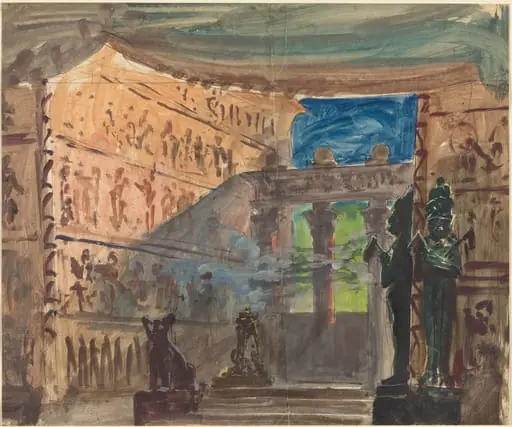 Interior of an Ancient Egyptian Temple
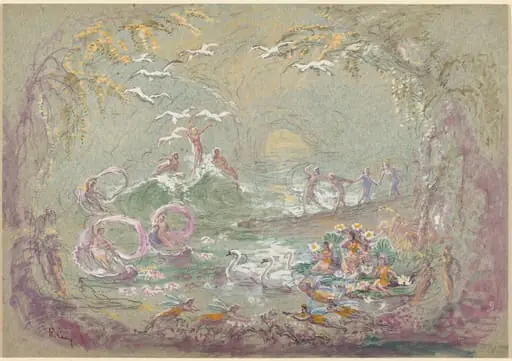 Lake Scene with Fairies and Swans
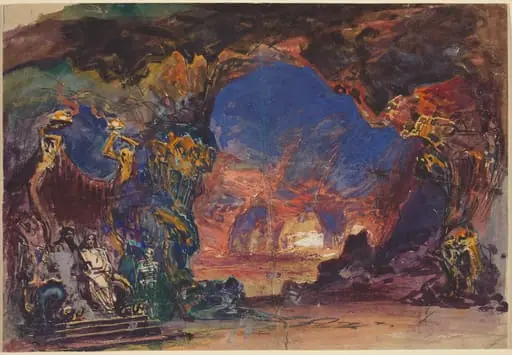 Underworld Scene with a Man and Woman Enthroned and Death Standing Guard
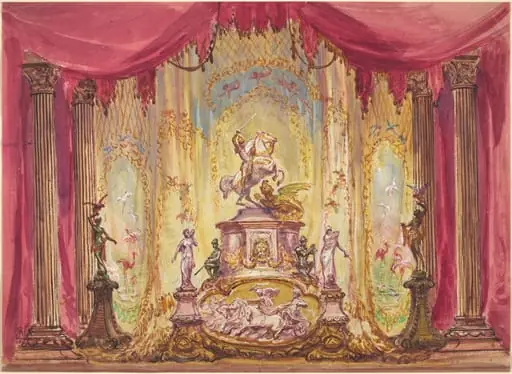 Stage Set with a Statue Of Saint George Slaying the Dragon
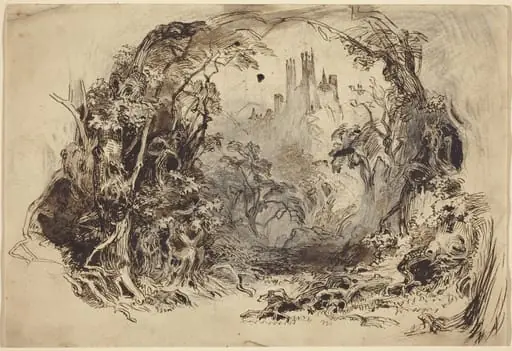 Castle On A Hill (Set for "Sleeping Beauty and the Beast"?)
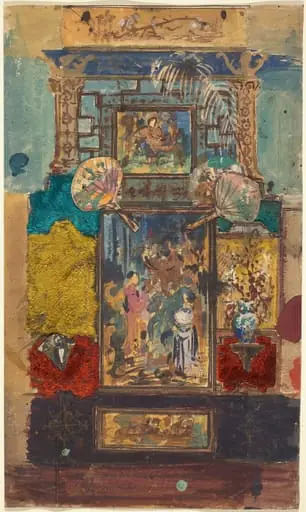 Stage Set Consisting Of Painted Panels, Fabrics, And Fans
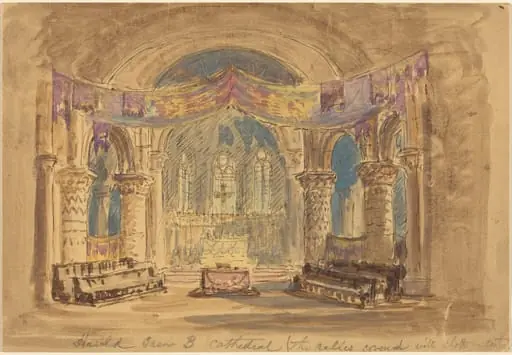 "Harold Scene 3 Cathedral (The relics covered with cloth at centre)"
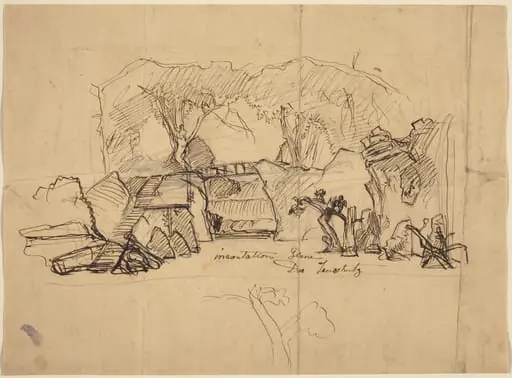 Incantation Scene from "Der Freischutz"