Artwork
Fantastic Pavilions in a Grotto
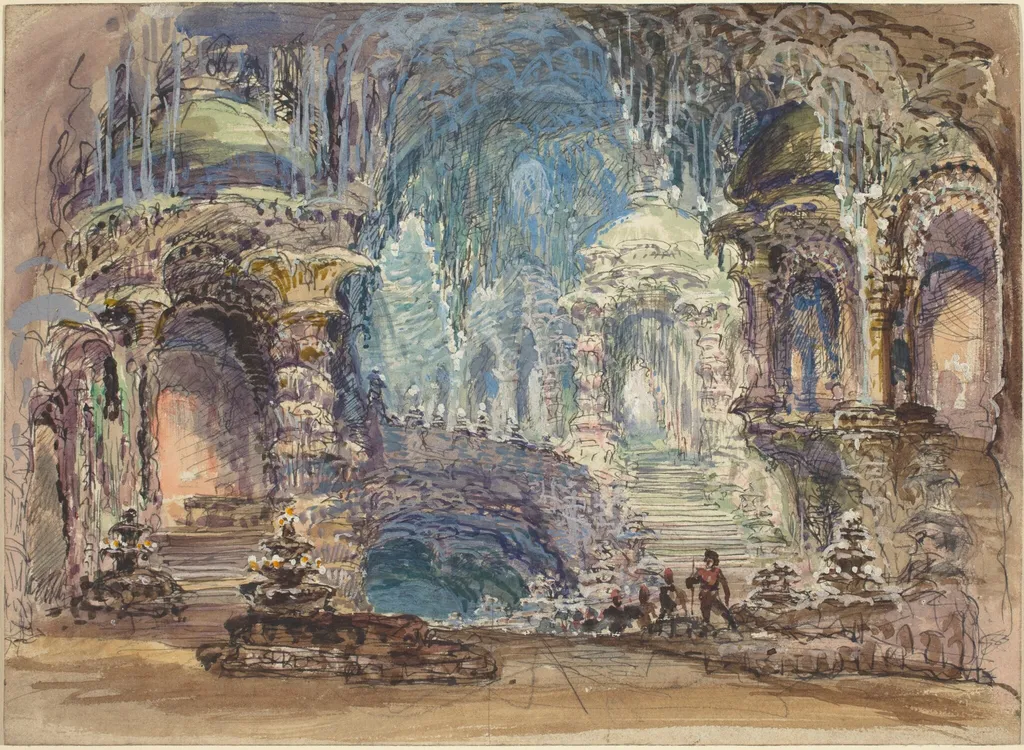
Fantastic Pavilions in a Grotto is an ink drawing by the Renaissance artist Robert Caney. It dates from 1584 and is held in the collection of the National Gallery of Art.
About this work
Overview
Fantastic Pavilions in a Grotto is a drawing by Robert Caney, executed in 1584, combining pen and black ink, watercolor, gouache, and graphite on wove paper.
Subject & Meaning
The drawing depicts an ethereal, cavernous grotto with curvilinear walls, textured surfaces, and an muted, luminous color palette dominated by pale blues and greens. A winding staircase ascends to a concealed entrance, while water drips into a shallow pool below, where diminutive figures are set against the massive, towering rock formations.
Technique & Style
Characterized by quick, expressive lines, the work employs watercolor and glazing techniques to evoke a sense of light and shadow, blending realism with a dreamlike, magical ambiance. The soft, bright hues suggest the filtering effect of sunlight through water.
History & Provenance
Created in 1584 by Robert Caney, specific details regarding the drawing's historical ownership or exhibition history are not provided in the available information.
Context
While the exact context of its creation is unclear, the piece reflects the Renaissance interest in grottos as symbolic, often fantastical, spaces, blending nature and architecture.
Legacy
The drawing's influence or reception over time is not specified in the provided information, leaving its impact on subsequent artistic movements or works uncertain.
Own this work as a print
Artist & collection


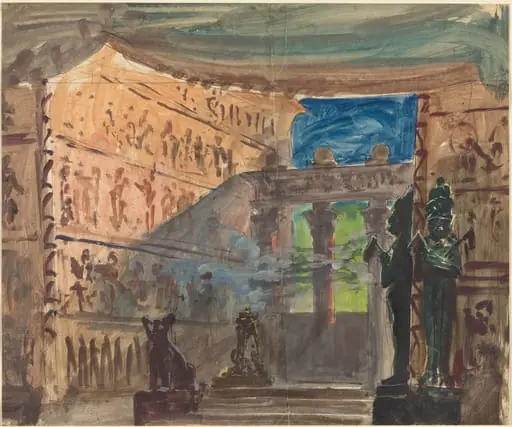 Interior of an Ancient Egyptian Temple
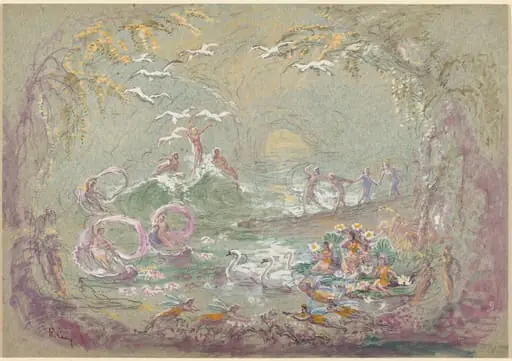 Lake Scene with Fairies and Swans
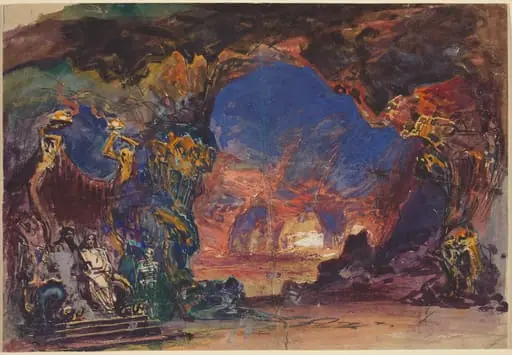 Underworld Scene with a Man and Woman Enthroned and Death Standing Guard
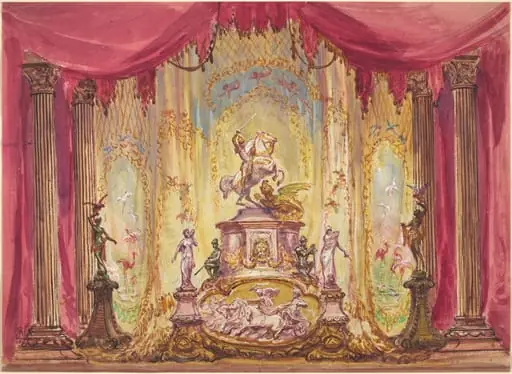 Stage Set with a Statue Of Saint George Slaying the Dragon
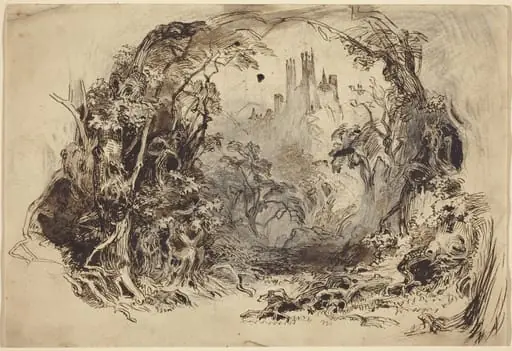 Castle On A Hill (Set for "Sleeping Beauty and the Beast"?)
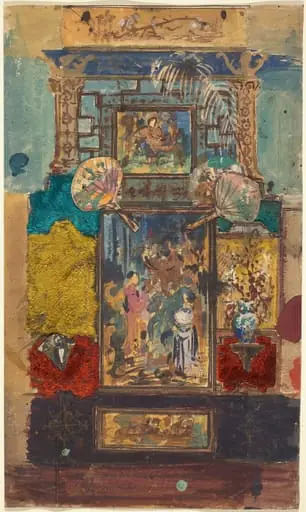 Stage Set Consisting Of Painted Panels, Fabrics, And Fans
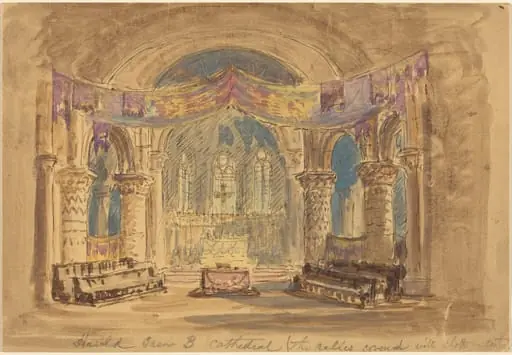 "Harold Scene 3 Cathedral (The relics covered with cloth at centre)"
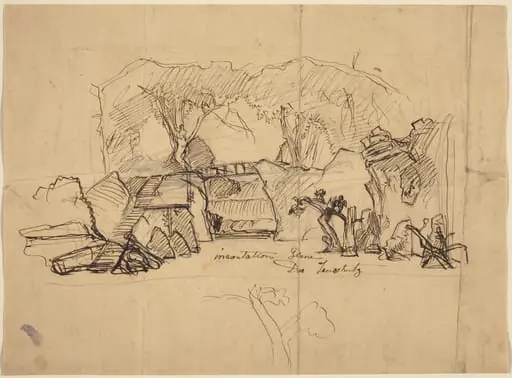 Incantation Scene from "Der Freischutz"
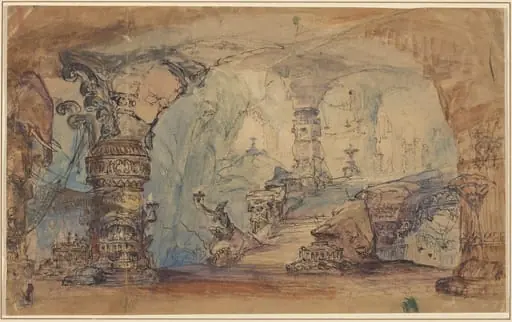 A Fantastic Underground Temple (Aladdin's Cave?)
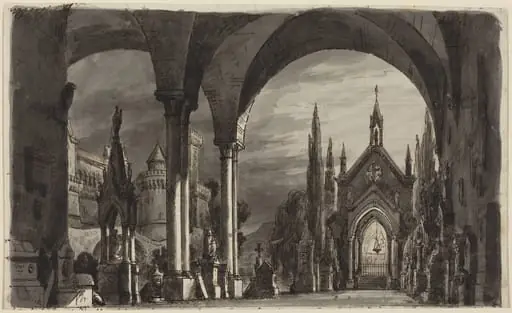 Graveyard of the Ravenswoods, from "Lucia di Lammermoor"
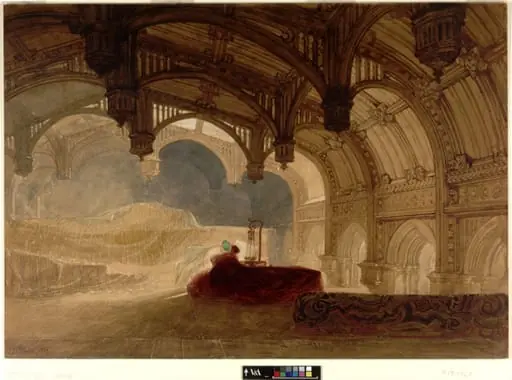 Interior of Crosby Hall, Bishopsgate
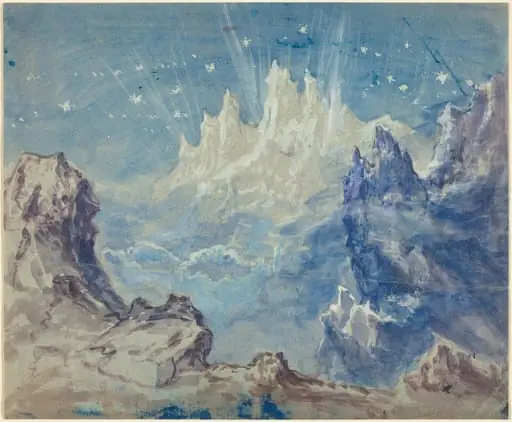 Fantastic Mountainous Landscape with a Starry Sky
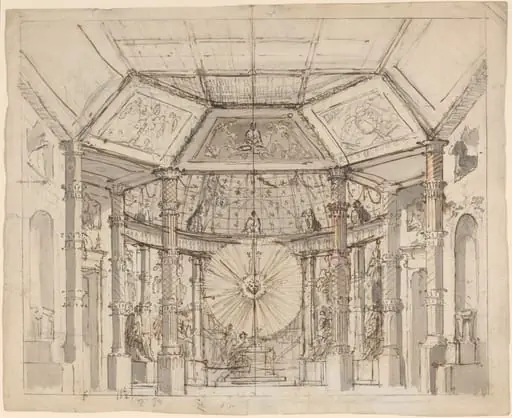 Stage Design for a Domed Temple Interior with a Sun Disk above the Altar
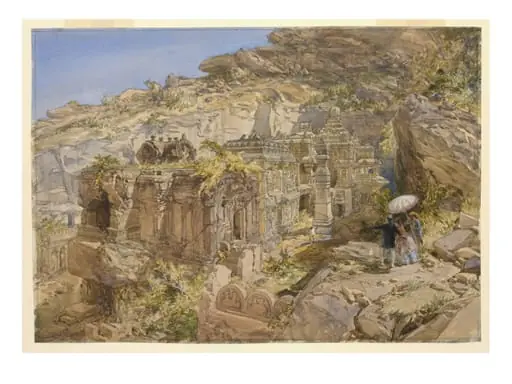 Kailasanatha temple, Ellora
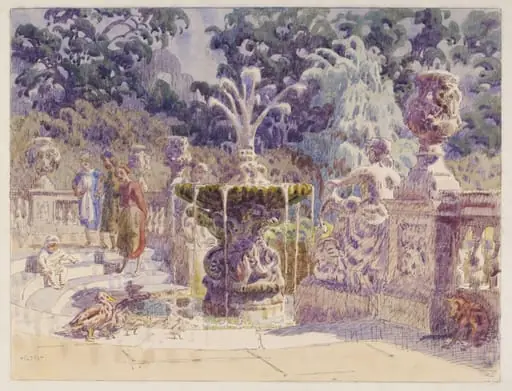 Fountain in Kensington Gardens