Artwork
"Harold Scene 3 Cathedral (The relics covered with cloth at centre)"
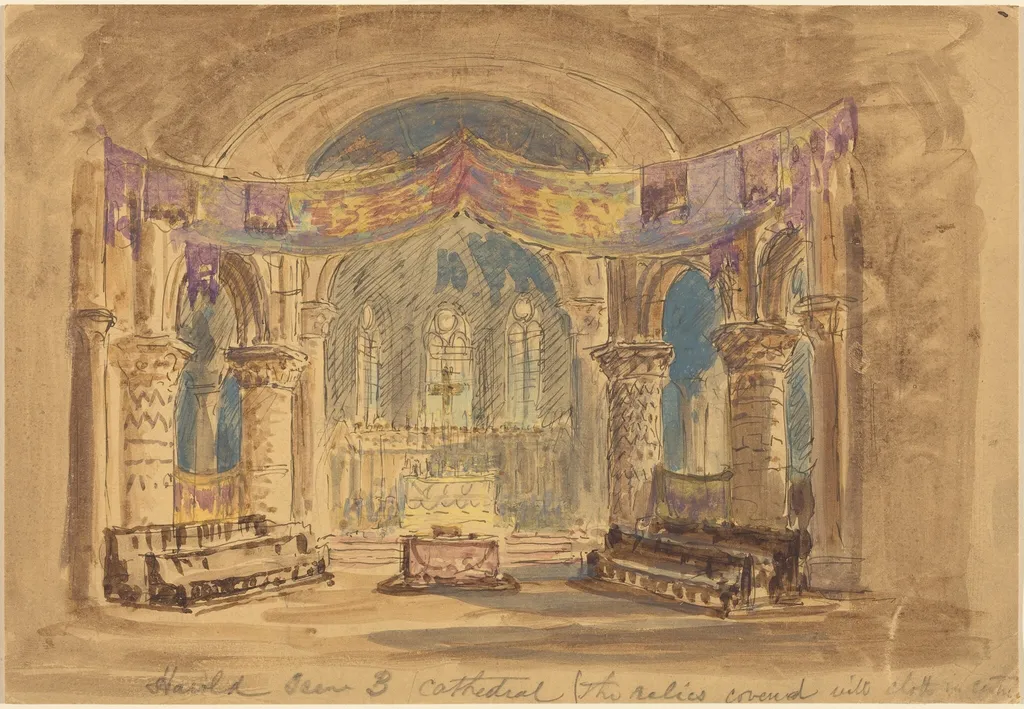
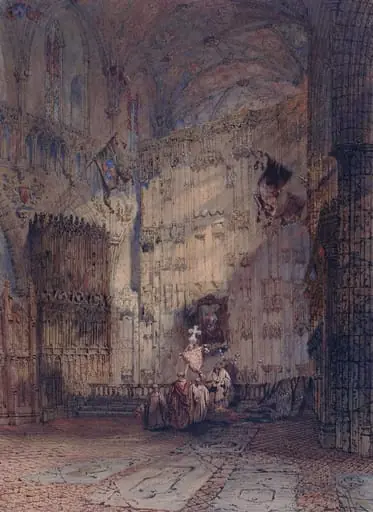
"Harold Scene 3 Cathedral (The relics covered with cloth at centre)" is an ink drawing by the Renaissance artist Robert Caney. It dates from 1584 and is held in the collection of the National Gallery of Art.
About this work
Overview
Robert Caney’s 1584 drawing, titled “Harold Scene 3 Cathedral (The relics covered with cloth at centre),” records an interior view of a medieval‑style church.
Robert Caney’s 1584 drawing, titled “Harold Scene 3 Cathedral (The relics covered with cloth at centre),” records an interior view of a medieval‑style church. Executed on a light tan board, the work combines pen and black ink with watercolor washes applied over a graphite underdrawing. The composition focuses on an empty nave, vaulted ceiling and a modest altar draped in cloth, suggesting a moment of concealed significance.
Subject & Meaning
The central motif is an altar shrouded in fabric, implying that relics or sacred objects lie hidden beneath. The surrounding space—bare stone walls, tall arched windows admitting muted light, and a stepped platform—creates a solemn atmosphere that emphasizes the ritual importance of what is concealed rather than what is visible.
Technique & Style
Caney employed loose, gestural ink lines to outline architectural elements, then layered translucent watercolor washes of brown, blue and yellow to model depth. The graphite base provides a faint structural guide, while the watercolor glazing softens edges, giving the scene a sketch‑like immediacy that balances detail with atmospheric suggestion.
History & Provenance
The drawing is dated 1584 and bears a marginal note identifying it as “Harold Scene 3 Cathedral,” indicating it may belong to a series of related studies. Its provenance prior to museum acquisition is not documented in the available record, and no further contextual information about the series has been published.
Context
Created in the late sixteenth century, the work reflects contemporary interest in architectural documentation and devotional imagery. The use of watercolor over ink aligns with practices of the period for quick yet expressive renderings of interior spaces, often used by artists preparing larger compositions or serving patrons interested in ecclesiastical design.
Artist & collection


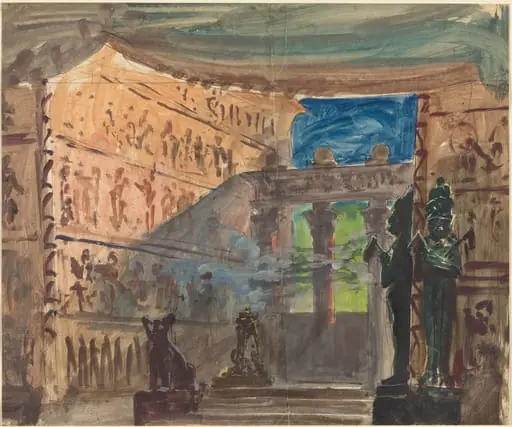 Interior of an Ancient Egyptian Temple
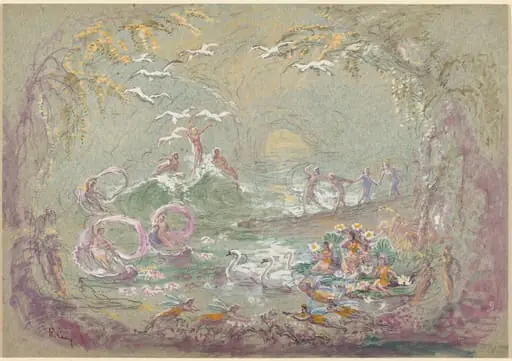 Lake Scene with Fairies and Swans
 Underworld Scene with a Man and Woman Enthroned and Death Standing Guard
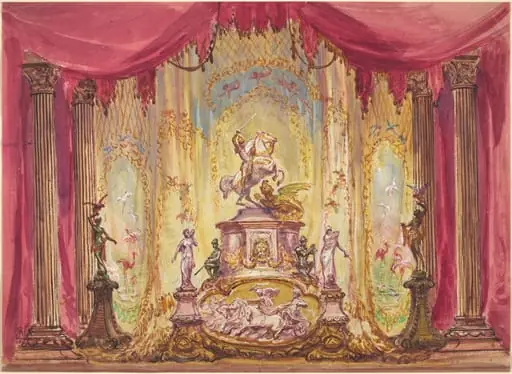 Stage Set with a Statue Of Saint George Slaying the Dragon
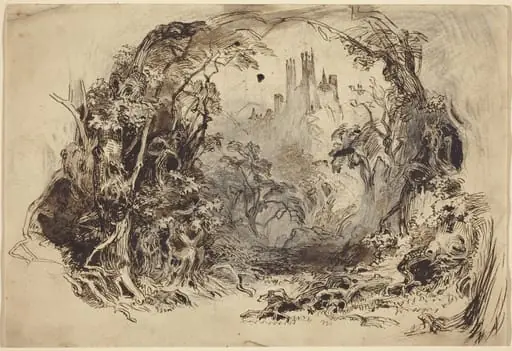 Castle On A Hill (Set for "Sleeping Beauty and the Beast"?)
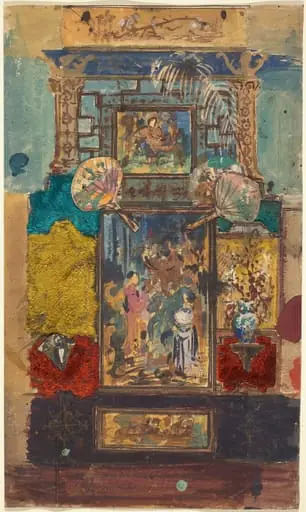 Stage Set Consisting Of Painted Panels, Fabrics, And Fans
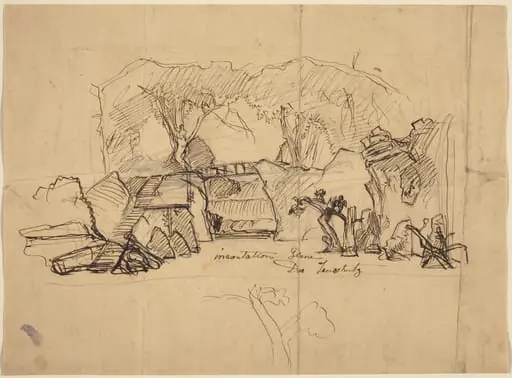 Incantation Scene from "Der Freischutz"
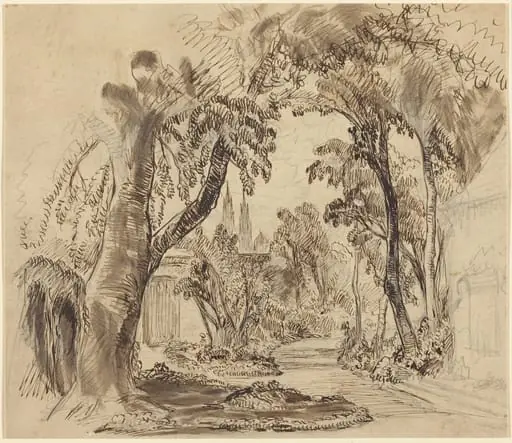 A Tree-lined Garden Path (Preliminary Sketch for "Sleeping Beauty and the Beast"?)
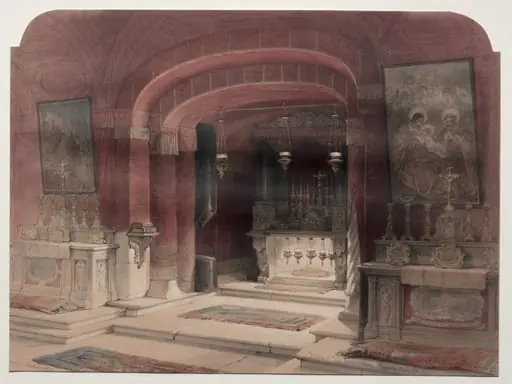 Shrine of the Annunciation, Nazareth
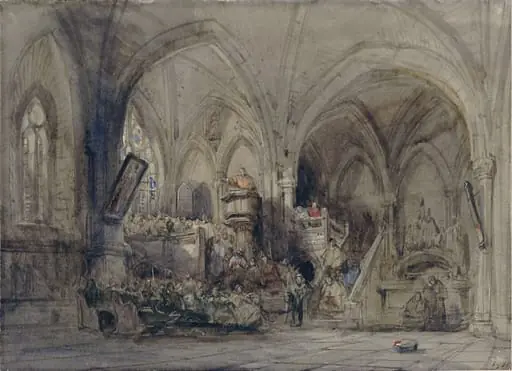 Interior of a church, Spain
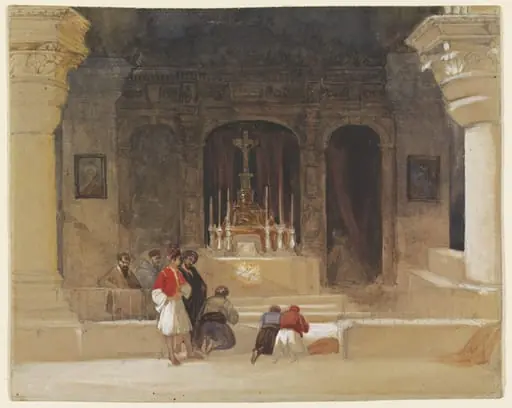 Chapel of St. Helena, Crypt of the Holy Sepulchre, Jerusalem
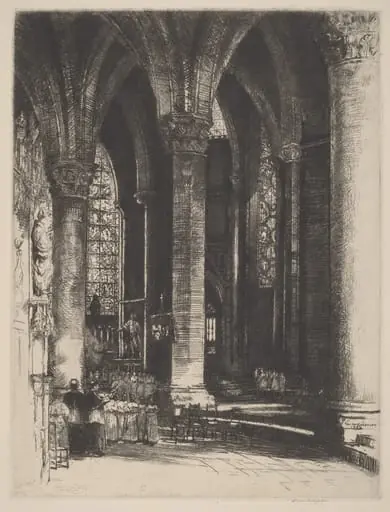 Interior of Chartres
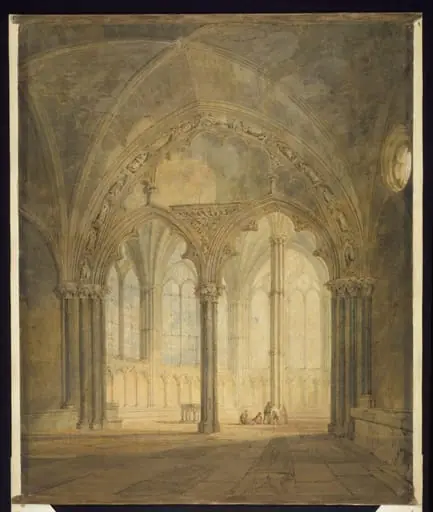 Entrance to the Chapter House, Salisbury Cathedral
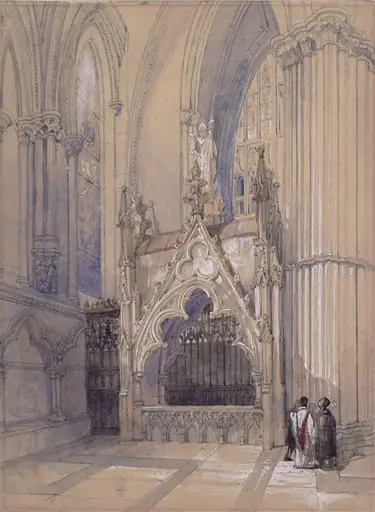 Monument of Archbishop Greenfield in the Eastern Aisle of the North Transept of York Minster
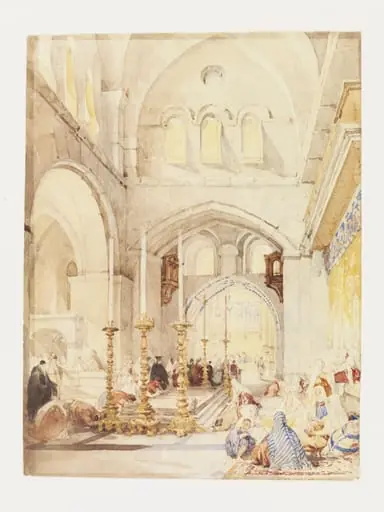 Entrance to the Church of the Holy Sepulchre
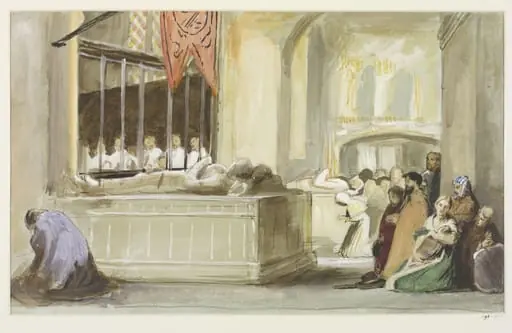 Untitled
 The High Altar Screen, St Albans Abbey
![Interior of the Mosque of Aya Sofya, Istanbul [Interior of Hagia Sophia, Constantinople], by John Frederick Lewis](https://artifactworldgallery.com/img/john-frederick-lewis--interior-of-the-mosque-of-aya-sofya-istanbul-interior-of-hag--f81f7cc6554fed68-w320.webp) Interior of the Mosque of Aya Sofya, Istanbul [Interior of Hagia Sophia, Constantinople]
Interior of the Mosque of Aya Sofya, Istanbul [Interior of Hagia Sophia, Constantinople]