Artwork
Flying Monster
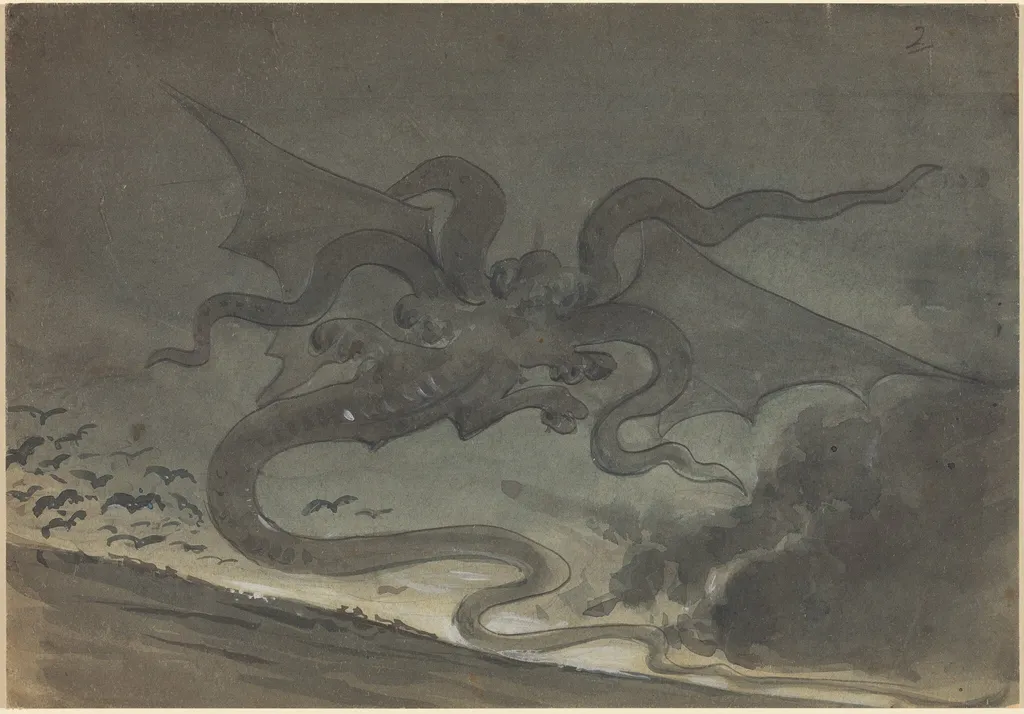
Flying Monster is a watercolor drawing by the Renaissance artist Robert Caney. It dates from 1584 and is held in the collection of the National Gallery of Art.
About this work
Overview
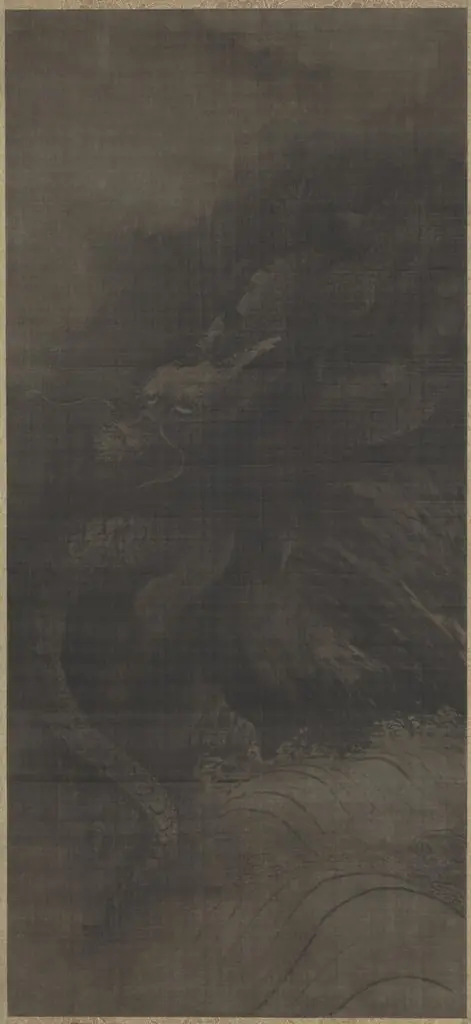
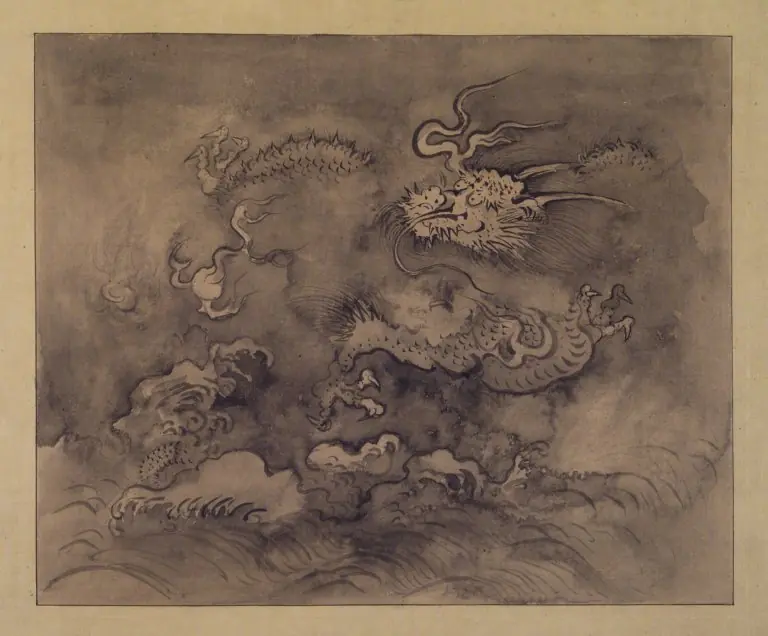
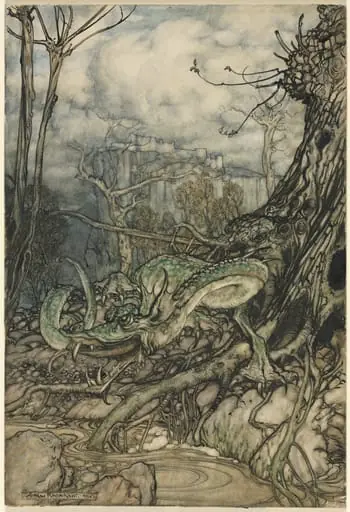
Created in 1584, this drawing by Robert Caney is executed in watercolor, gray and gray-brown washes, graphite, and white gouache on light tan board. It depicts a sinuous, reptilian form moving across a rugged terrain, rendered with delicate transparency and subtle tonal shifts. The medium’s fluidity supports an ethereal quality, suggesting movement and ambiguity rather than rigid definition.
Subject & Meaning
The central figure resembles a hybrid creature—part serpent, part beast—with a coiled tail and elevated head, evoking mythic or allegorical associations.
The central figure resembles a hybrid creature—part serpent, part beast—with a coiled tail and elevated head, evoking mythic or allegorical associations. Its integration with the landscape, rather than dominance over it, implies a symbiotic or naturalized presence. Tiny birds and a winding path ground the scene in a terrestrial world, contrasting the creature’s otherworldly form without clarifying its symbolic role.
Technique & Style
Caney employed layered watercolor washes to achieve soft transitions and muted depth, allowing the board’s tone to contribute to the overall atmosphere. Gray-brown tones unify the creature with the hills, while white gouache adds faint highlights. Graphite outlines are lightly drawn, suggesting preliminary structure without rigid definition, characteristic of Renaissance sketching practices.
History & Provenance
The work is attributed to Robert Caney, a lesser-known figure in late 16th-century English art. Its survival as a standalone drawing, rather than a study for a larger composition, suggests personal or experimental intent. No documented ownership history precedes its modern acquisition, leaving its original context—whether private collection or artistic exercise—uncertain.
Context
In the late Renaissance, watercolor was often used for topographical or natural studies, but this piece diverges into imaginative terrain. Contemporary European art increasingly explored fantastical creatures in manuscripts and emblem books; Caney’s work aligns with this trend, reflecting a fascination with the unseen or the liminal within a landscape framework.
Legacy
Though not widely circulated in its time, the drawing offers insight into the boundaries of Renaissance draftsmanship—where observation met invention. Its quiet, atmospheric handling of watercolor influenced later British artists who valued tonal subtlety over bold line. It remains a quiet example of how fantasy was rendered with restraint in an era dominated by religious and classical themes.
Artist & collection


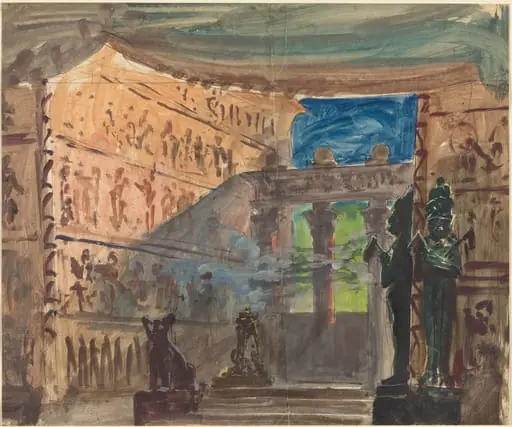 Interior of an Ancient Egyptian Temple
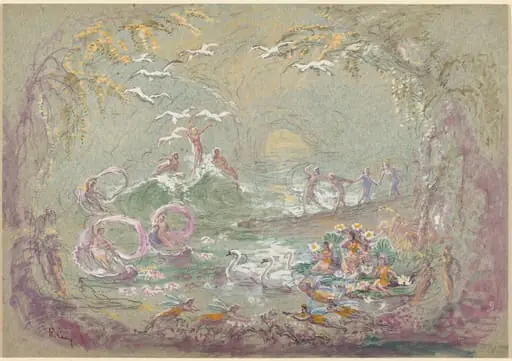 Lake Scene with Fairies and Swans
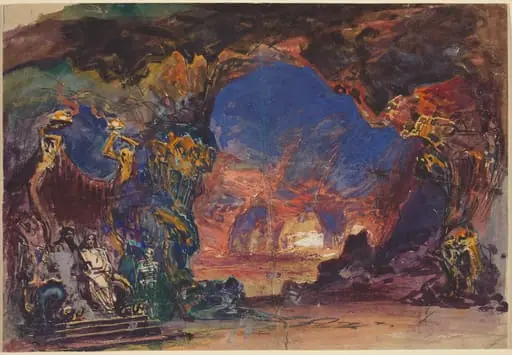 Underworld Scene with a Man and Woman Enthroned and Death Standing Guard
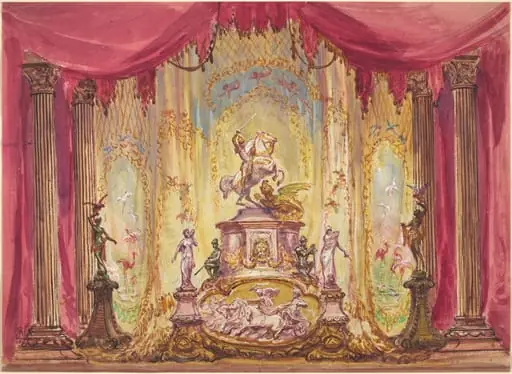 Stage Set with a Statue Of Saint George Slaying the Dragon
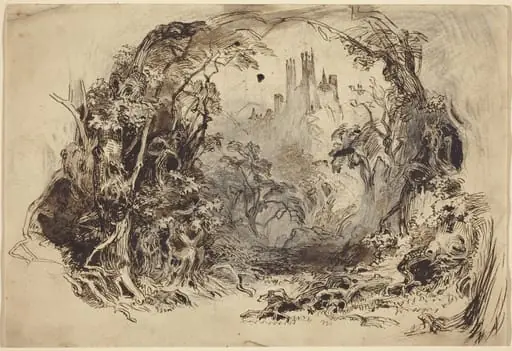 Castle On A Hill (Set for "Sleeping Beauty and the Beast"?)
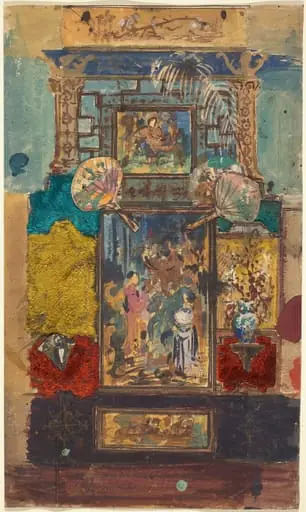 Stage Set Consisting Of Painted Panels, Fabrics, And Fans
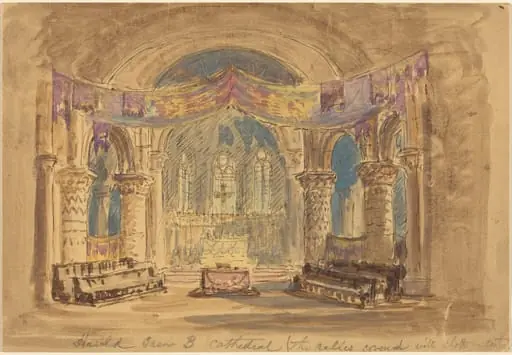 "Harold Scene 3 Cathedral (The relics covered with cloth at centre)"
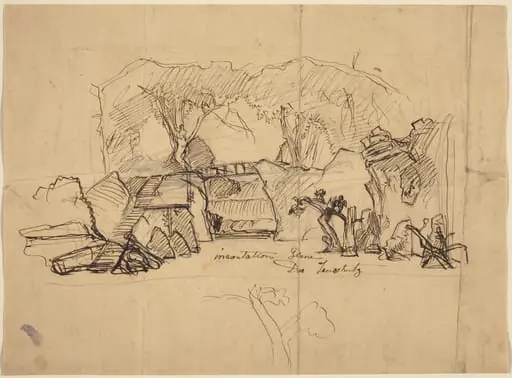 Incantation Scene from "Der Freischutz"