Artwork
The Rest on the Flight into Egypt
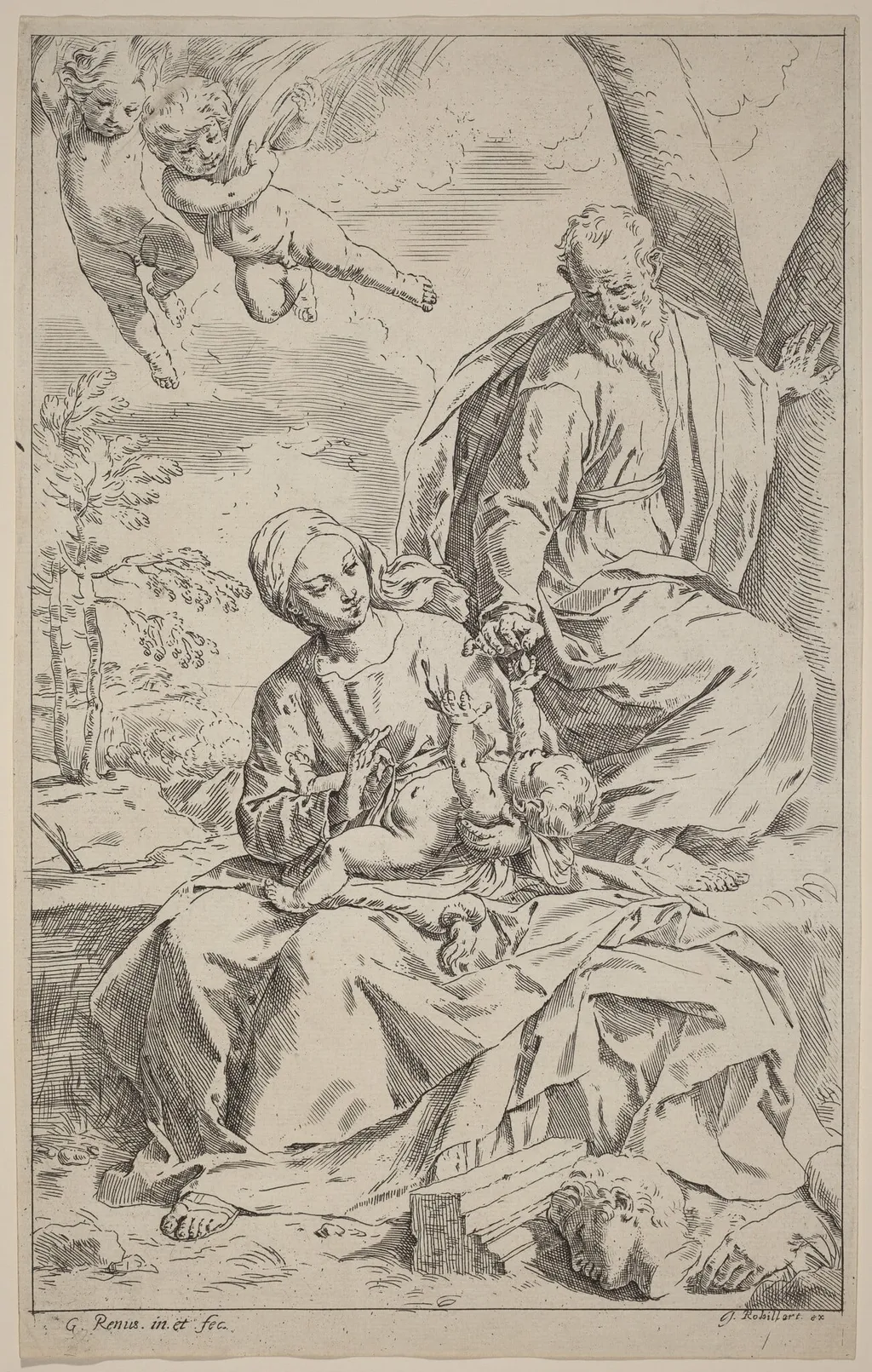
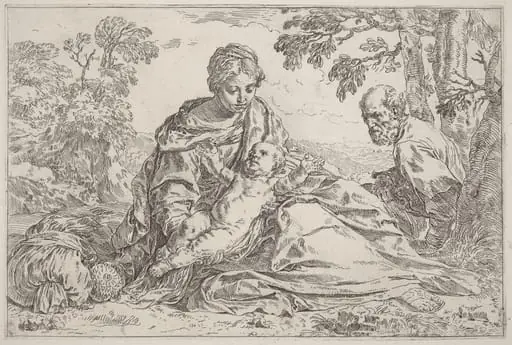
The Rest on the Flight into Egypt is an ink print by the Baroque artist Simone Cantarini. It dates from 1630 and is held in the collection of the National Gallery of Art.
About this work
Overview
Created around 1630, *The Rest on the Flight into Egypt* is an etching by Simone Cantarini, an Italian artist from Pesaro.
Created around 1630, *The Rest on the Flight into Egypt* is an etching by Simone Cantarini, an Italian artist from Pesaro. Executed on laid paper, the work belongs to a small but significant body of prints he produced during his early career. Cantarini, trained in Bologna, brought a refined sensitivity to printmaking, using the etching technique to capture quiet, intimate moments with subtle tonal gradations.
Subject & Meaning
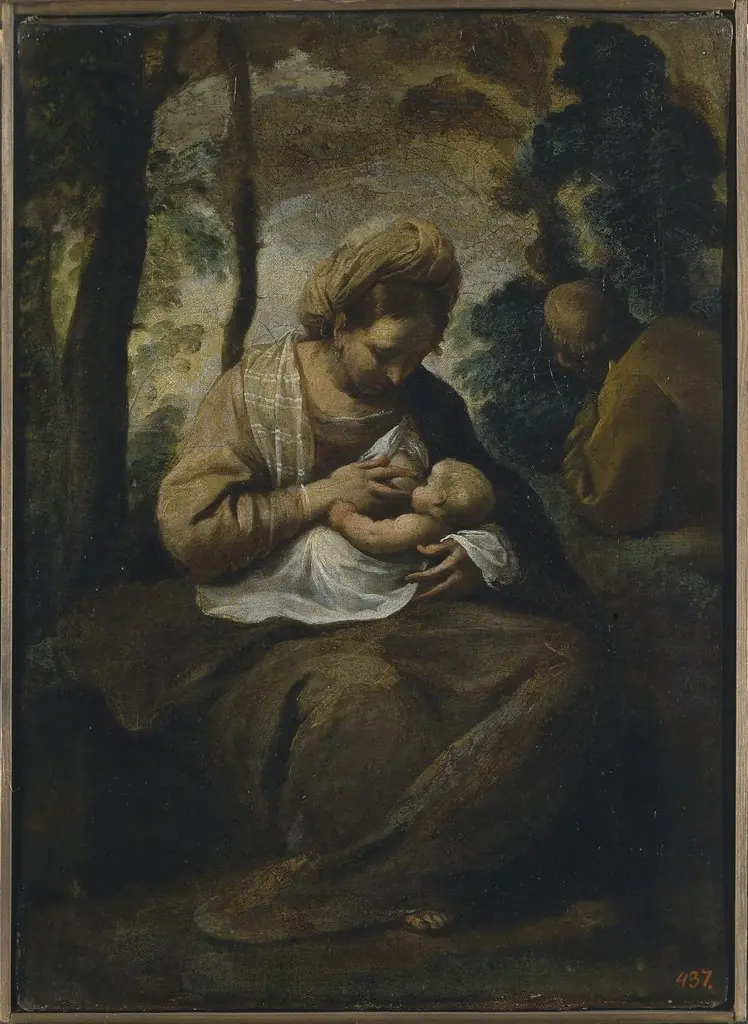
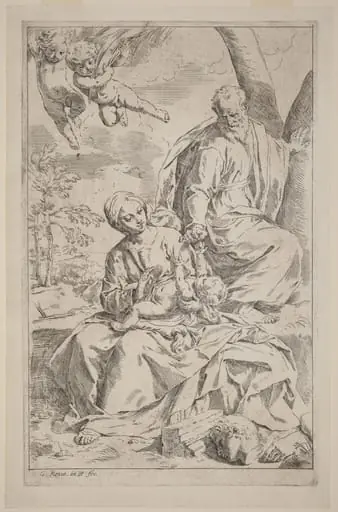
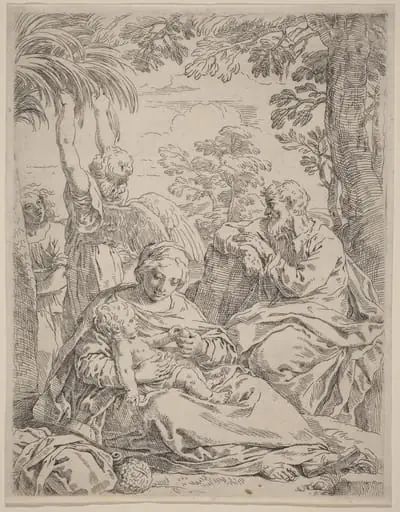
The scene depicts the Holy Family paused during their journey to Egypt, as described in the Gospel of Matthew. Mary, Joseph, and the infant Jesus are shown in a moment of rest, surrounded by the quiet of the landscape. Cantarini emphasizes tenderness and stillness rather than drama, aligning the image with devotional contemplation common in Counter-Reformation Italy, where such scenes encouraged personal piety.
Technique & Style
Cantarini employed fine, controlled lines to model form and texture, particularly in the folds of Mary’s garments and the soft contours of the figures. His use of hatching and cross-hatching creates delicate shifts in light and shadow, evoking a luminous atmosphere. The etching’s precision reflects his training in Bolognese classicism, while the naturalistic rendering of the figures reveals an affinity for Caravaggisti observation.
History & Provenance
The print was made during Cantarini’s formative years in Bologna, where he studied under Guido Reni and absorbed the city’s artistic traditions. Few of his etchings survive in large numbers, and this work is among the more widely recognized. It entered institutional collections in the 19th century, likely through European print dealers who valued his technical finesse and emotional restraint.
Context
In early 17th-century Italy, religious subjects dominated print culture, especially those suited to private devotion. Etching allowed artists to reach wider audiences beyond painted commissions. Cantarini’s work emerged alongside other Bolognese printmakers who balanced idealized composition with naturalistic detail, responding to both ecclesiastical demands and growing interest in intimate, humanized biblical narratives.
Legacy
Cantarini’s etchings, though not numerous, influenced later printmakers through their lyrical clarity and technical discipline. His ability to convey emotion through minimal line work set a standard for narrative printmaking in the Baroque period. While less celebrated than his paintings, his prints remain studied for their synthesis of classical grace and quiet realism.
Artist & collection
Artist
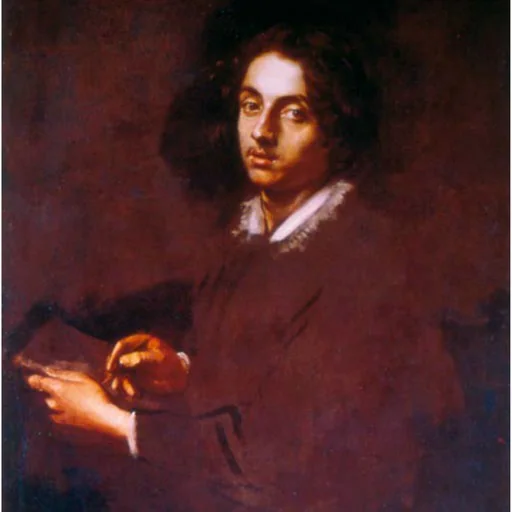
Simone Cantarini or Simone da Pesaro, called il Pesarese (Baptized on 21 August 1612 – 15 October 1648) was an Italian painter and etcher.

 The Rest on the Flight into Egypt
 The Rest on the Flight into Egypt
 The Rest on the Flight into Egypt
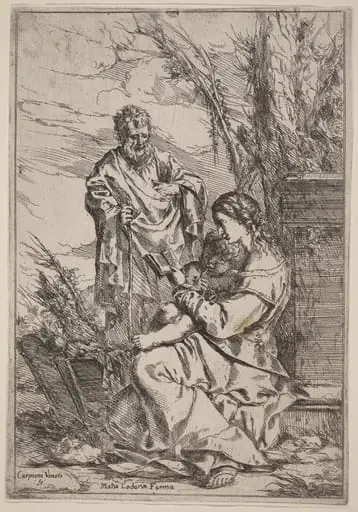 Holy Family with the Virgin Reading
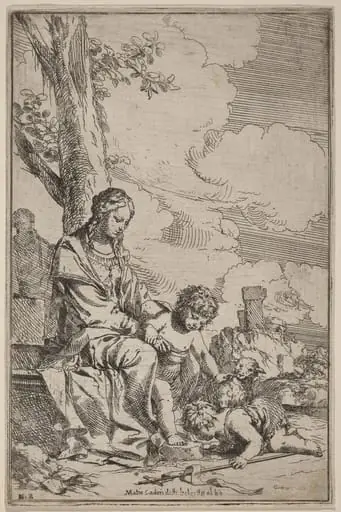 The Virgin and Child with Saint John the Baptist
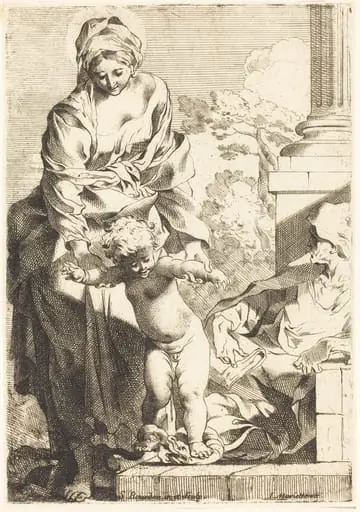 Virgin and Child Trampling on Sin
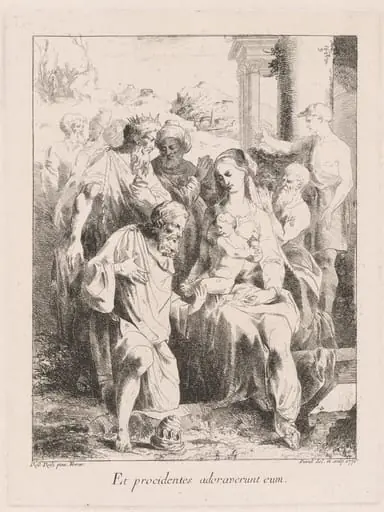 Adoration of the Magi
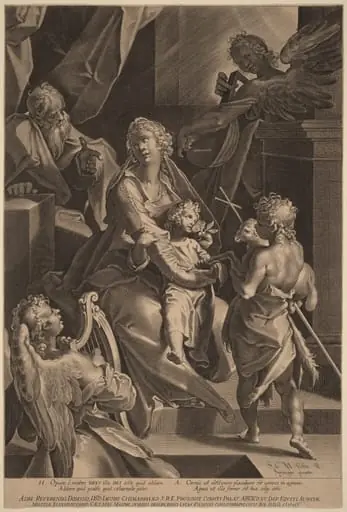 The Holy Family and Two Angels
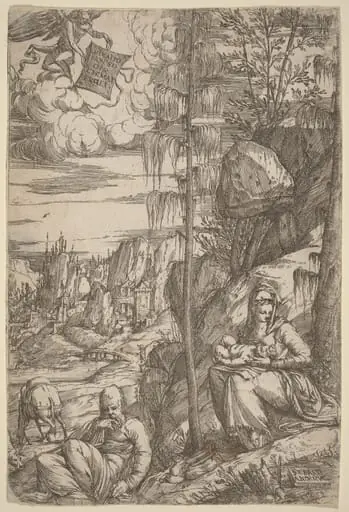 Landscape with the Rest on the Flight into Egypt