Artwork
The Virgin and Child
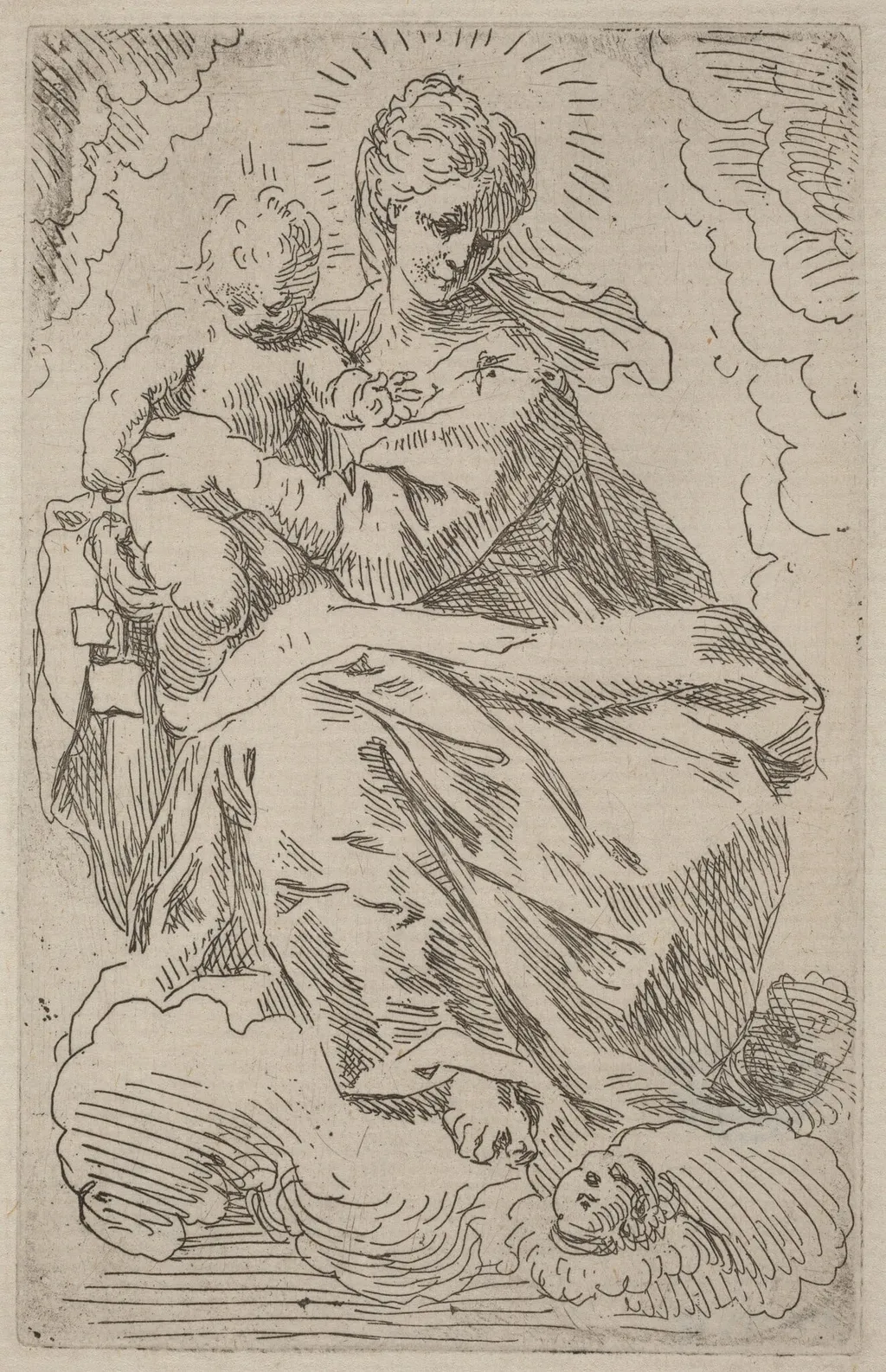
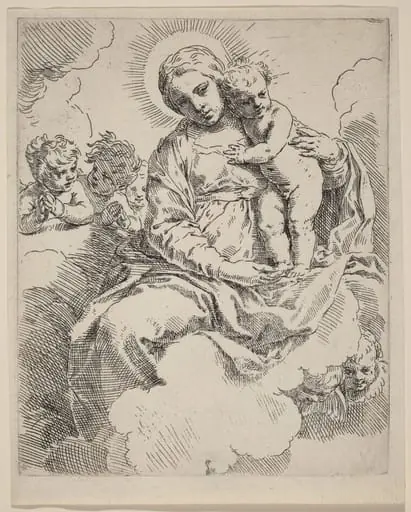
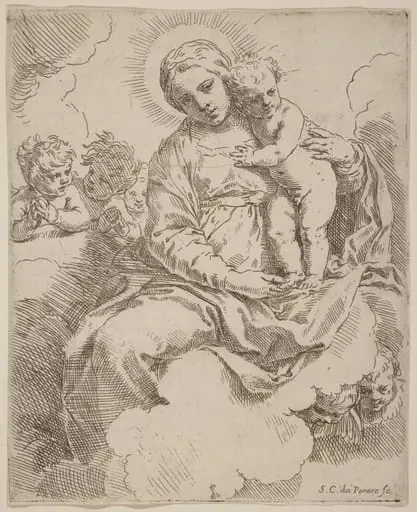
The Virgin and Child is an ink print by the Baroque artist Simone Cantarini. It dates from 1630 and is held in the collection of the National Gallery of Art.
About this work
Overview
This small-scale work exemplifies his mastery of etching as a medium for intimate religious imagery, capturing tenderness through controlled line and tone.
Simone Cantarini, an Italian artist born in Pesaro in 1612, produced this etching of the Virgin and Child circa 1630. Known for his work in both painting and printmaking, he brought a refined balance of classical form and observed detail to his prints. This small-scale work exemplifies his mastery of etching as a medium for intimate religious imagery, capturing tenderness through controlled line and tone.
Subject & Meaning
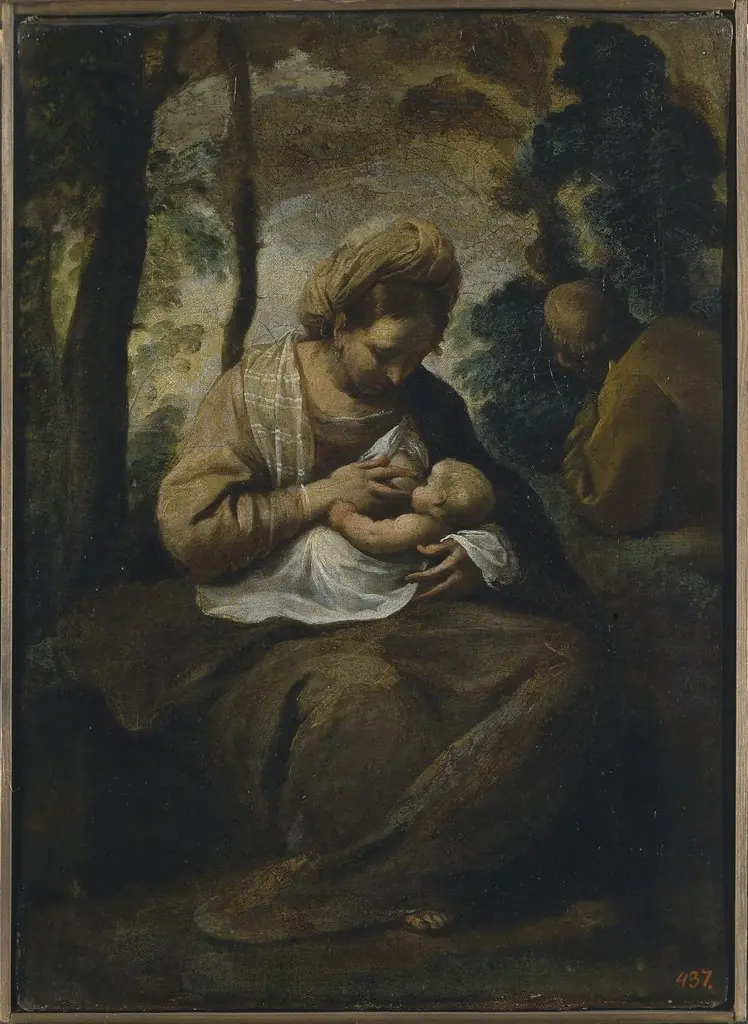
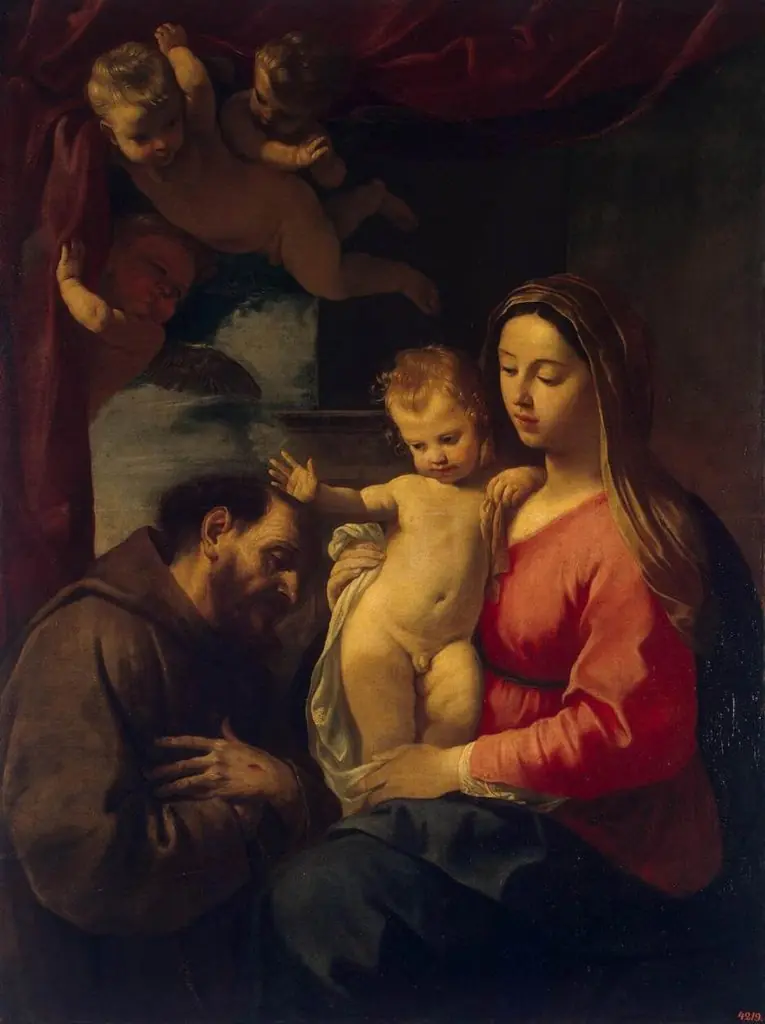
The composition depicts the Virgin Mary cradling the infant Jesus, a traditional devotional subject in Christian art. The figures are rendered with quiet intimacy, their gestures emphasizing maternal care rather than grandeur. The child’s stillness and the Virgin’s gentle hold suggest serenity and spiritual presence, aligning with Counter-Reformation ideals that promoted personal, emotional engagement with sacred figures.
Technique & Style
Cantarini used etching to build texture through fine, layered lines and cross-hatching, creating depth in the folds of the garments. The surface is marked by deliberate, slightly irregular strokes that suggest fabric’s weight and movement. Delicate tonal gradations emerge from the acid-bitten plate, while the Virgin’s face is softened by blurred contours, enhancing the sense of quiet reverence over detailed realism.
History & Provenance
The etching was made during Cantarini’s formative years in Bologna, where he absorbed the influence of Guido Reni and other Bolognese masters. Though few of his prints survive in large numbers, this work is among the more recognized examples of his printmaking output. Its early date places it within a period of intense experimentation in religious print culture across Italy.
Context
In early 17th-century Italy, etching became a favored medium for artists seeking to disseminate religious imagery beyond large-scale paintings. Cantarini’s work reflects the broader trend of combining devotional clarity with technical precision. His approach diverged from the theatricality of some contemporaries, favoring subdued emotion and tactile rendering suited to private contemplation.
Legacy
Cantarini’s etchings, including this one, influenced later printmakers through their restrained expressiveness and technical discipline. Though less celebrated than his paintings, his prints contributed to the evolution of Italian printmaking by demonstrating how subtle line work could convey spiritual depth without overt drama.
Artist & collection
Artist
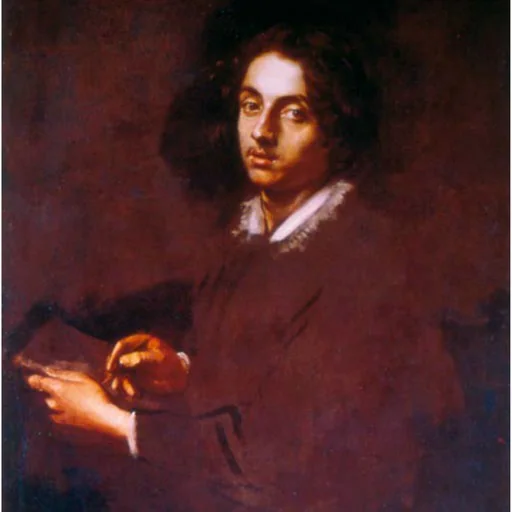
Simone Cantarini or Simone da Pesaro, called il Pesarese (Baptized on 21 August 1612 – 15 October 1648) was an Italian painter and etcher.

 The Virgin and Child
 The Virgin and Child
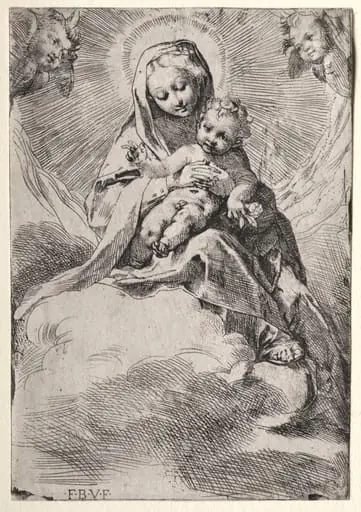 Madonna in the Clouds
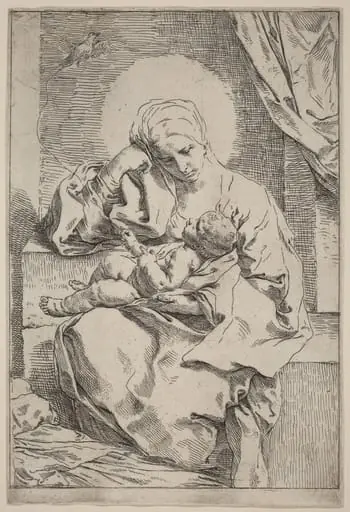 The Virgin and Child with a Bird
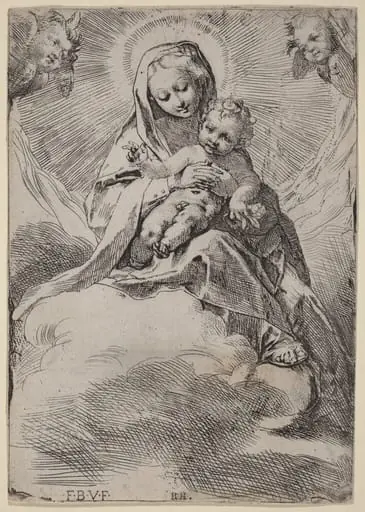 Madonna in the Clouds
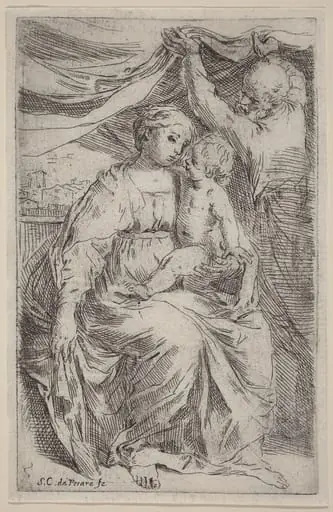 The Holy Family
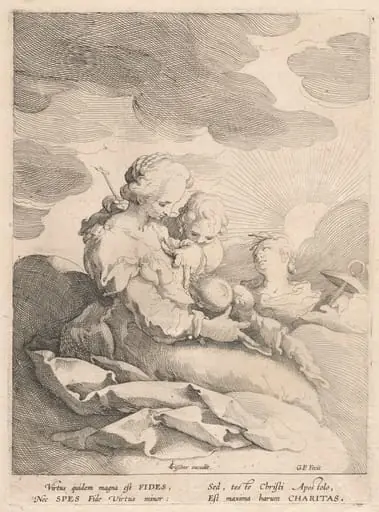 Charity with Faith and Hope
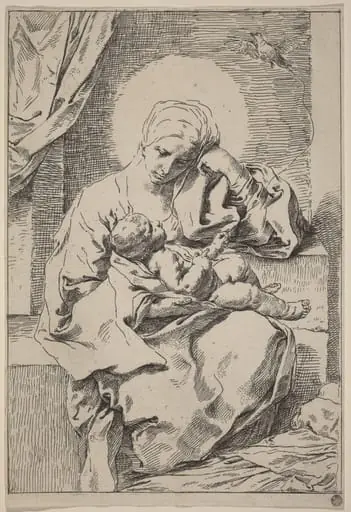 The Virgin and Child with a Bird
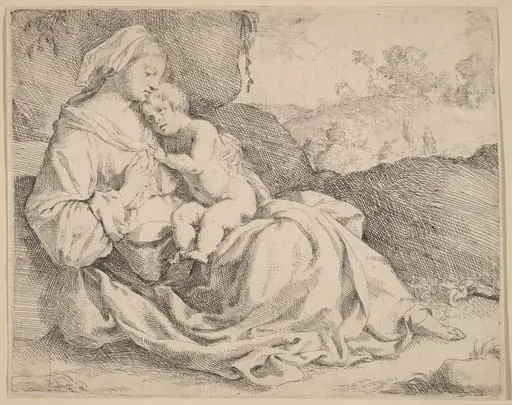 The Virgin and Child on a Grassy Bank
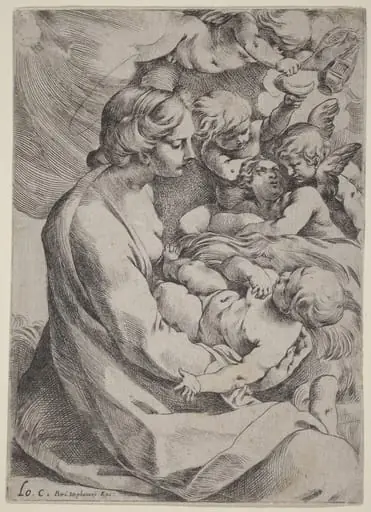 Madonna and Child with Angels
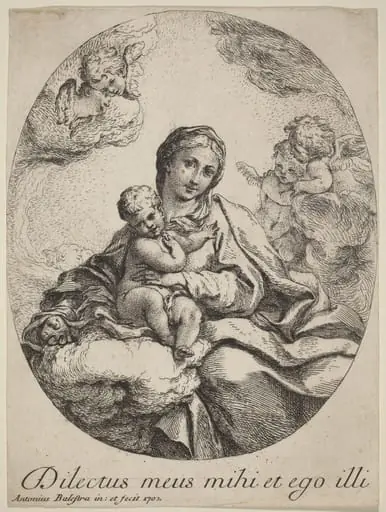 Virgin and Child on a Cloud
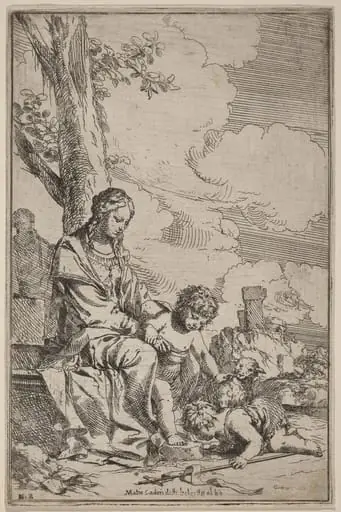 The Virgin and Child with Saint John the Baptist