Artwork
Venus and Adonis
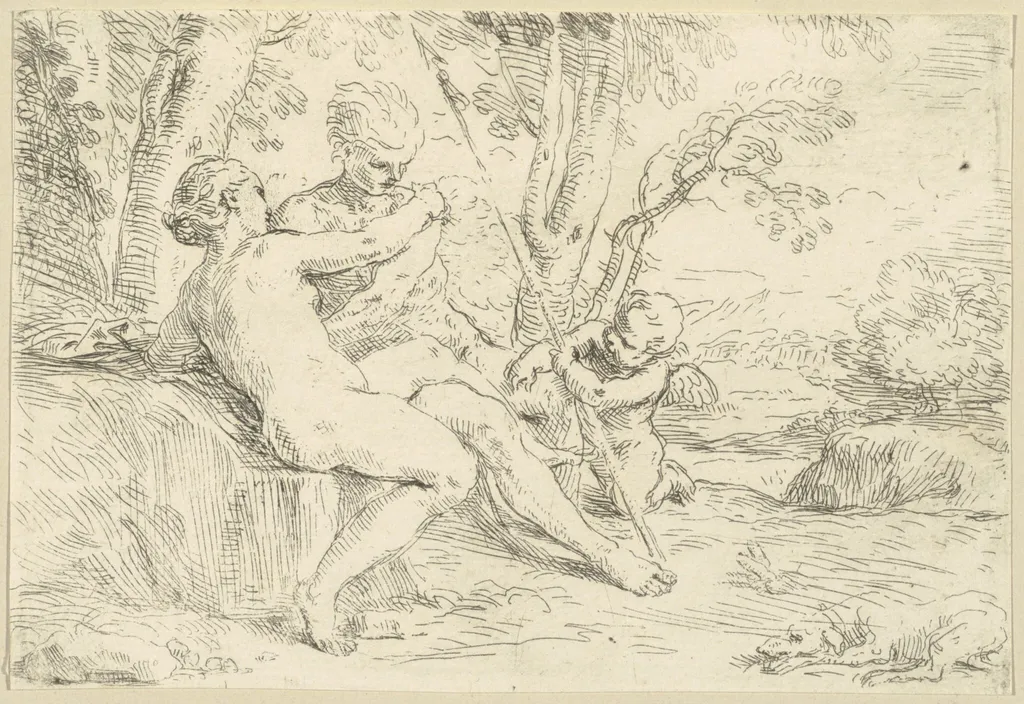
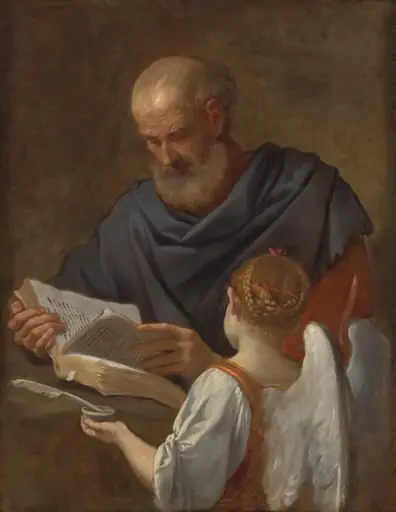
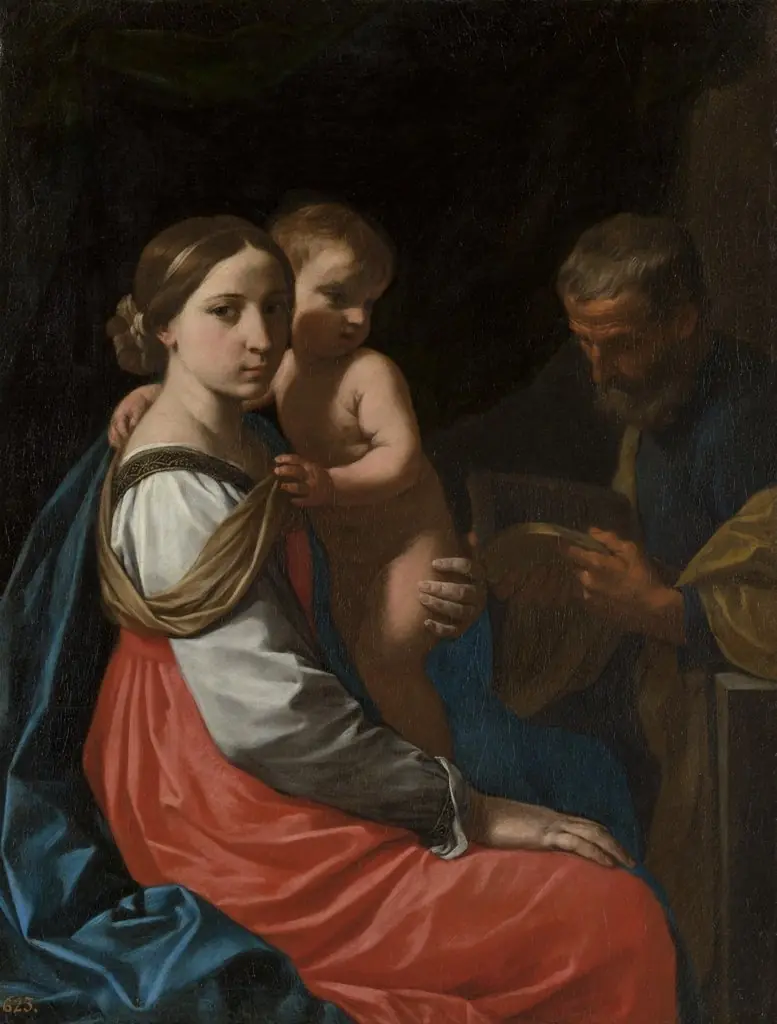
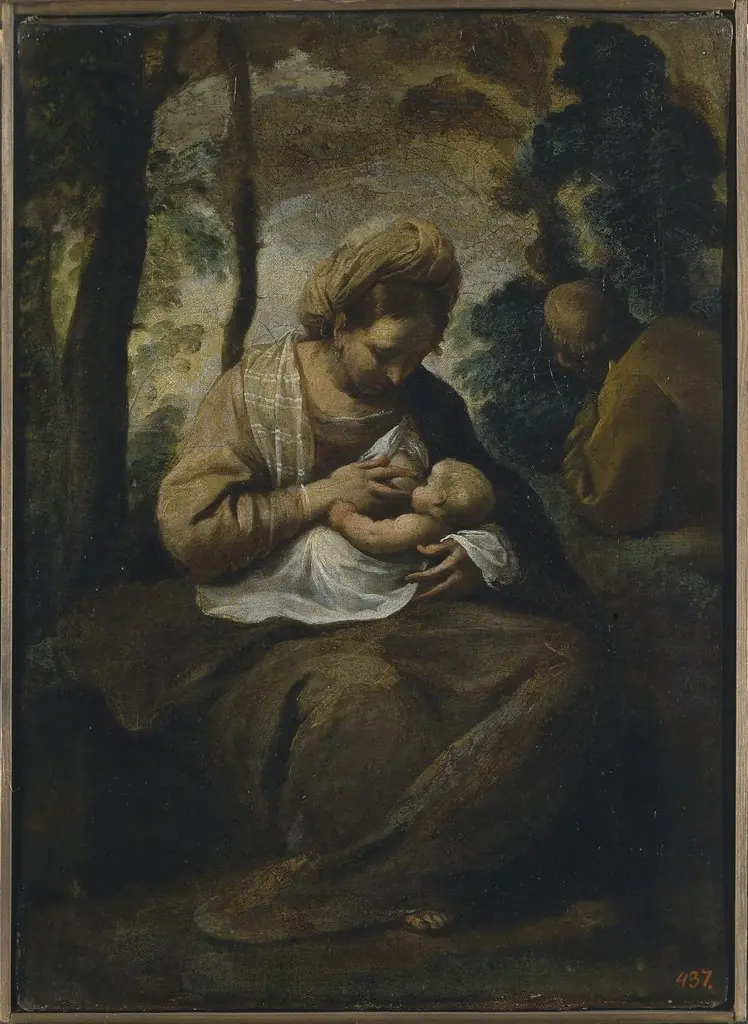
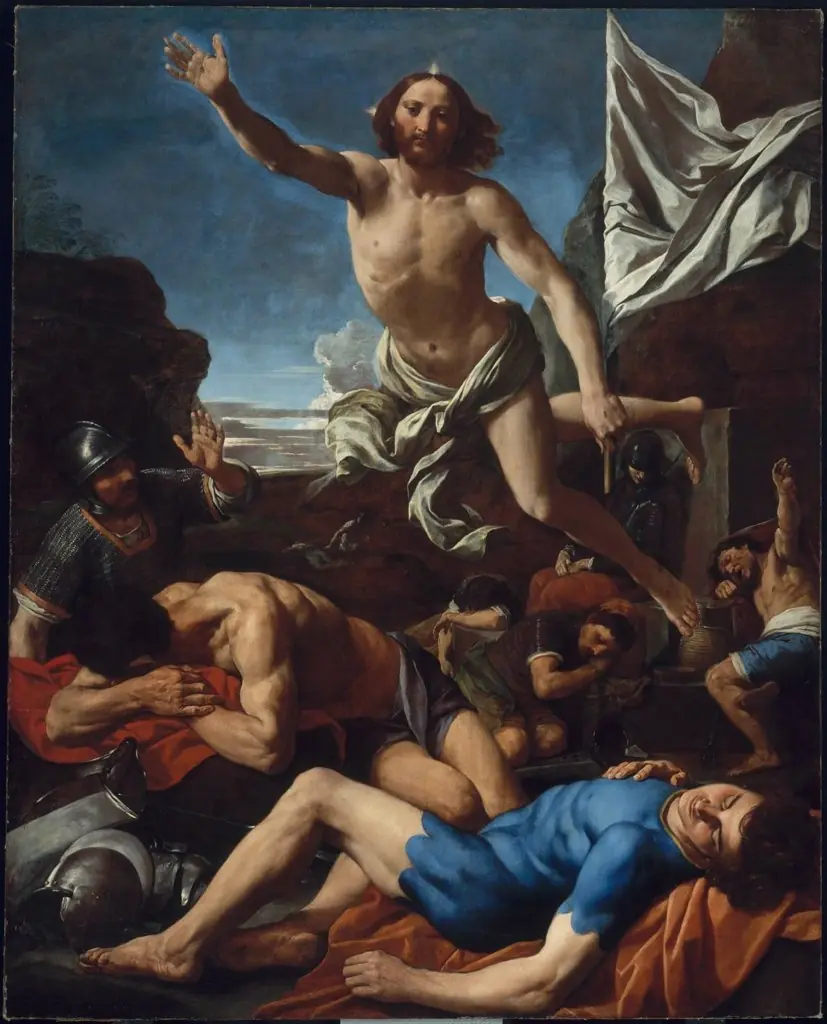
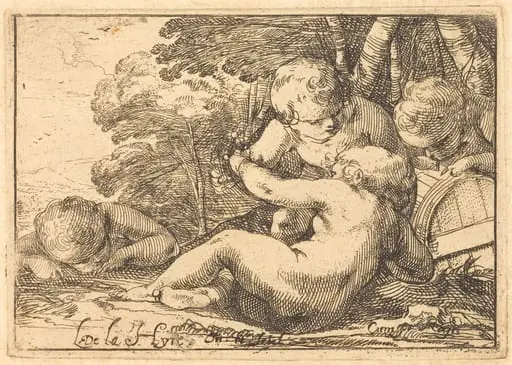
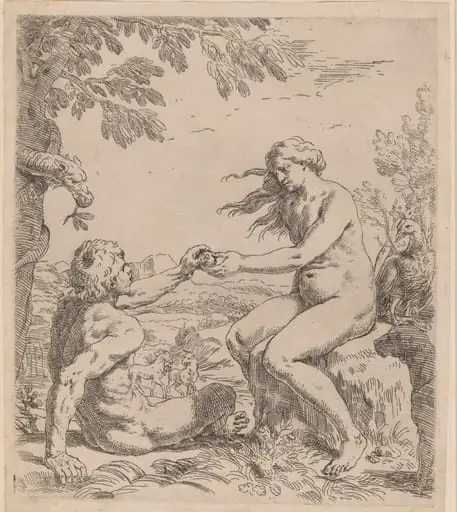
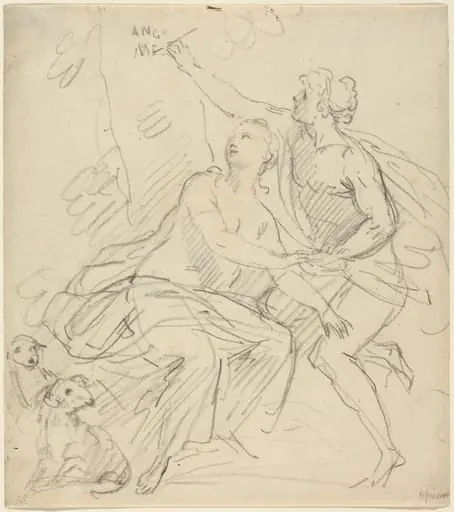
Venus and Adonis is an ink print by the Baroque artist Simone Cantarini. It dates from 1644 and is held in the collection of the National Gallery of Art.
About this work
Overview
The work reflects his training within the Bolognese tradition, where classical themes were rendered with heightened emotional clarity and technical precision.
Created around 1644 by Simone Cantarini, this etching on laid paper captures a moment from the myth of Venus and Adonis. Cantarini, active in Bologna and known for his refined graphic work, employed the etching medium to convey narrative tension with subtle tonal gradations. The work reflects his training within the Bolognese tradition, where classical themes were rendered with heightened emotional clarity and technical precision.
Subject & Meaning
The scene illustrates Venus attempting to restrain Adonis as he prepares to hunt, a moment before his fatal encounter with a boar. Their intertwined forms convey urgency and emotional conflict—Venus’s pleading gesture contrasts with Adonis’s determined stride. The myth, drawn from Ovid’s Metamorphoses, underscores themes of love, fate, and inevitable loss, rendered here with psychological immediacy rather than idealized serenity.
Technique & Style
Cantarini used loose, agile etching lines to suggest motion and texture, particularly in the tangled foliage and drapery. The laid paper’s subtle grid enhances the tactile quality of the surface, while varying line weights create depth and rhythm. His approach favors expressive spontaneity over rigid definition, aligning with Baroque sensibilities that valued dynamic composition and emotional resonance over static perfection.
History & Provenance
The print entered the collection of the National Gallery of Art in Washington, D.C., where it remains part of its holdings of European graphic art. While specific ownership prior to the 20th century is not documented, Cantarini’s prints circulated among collectors in Italy and beyond during the mid-17th century, valued for their delicate execution and literary subject matter.
Context
Cantarini worked in a period when Bolognese artists sought to reconcile the idealism of Raphael with the naturalism of Caravaggio. His etchings, including this one, reflect that synthesis—mythological narratives rendered with lifelike gesture and atmospheric detail. The work aligns with broader Baroque trends in printmaking, where artists used etching to explore movement, emotion, and dramatic lighting with unprecedented freedom.
Legacy
Though less widely known than his contemporaries, Cantarini’s etchings influenced later generations of graphic artists through their lyrical line and emotional nuance. His ability to convey complex narratives with minimal yet precise strokes set a standard for narrative printmaking in the 17th century, contributing to the evolution of the medium beyond mere reproduction toward expressive autonomy.
Artist & collection
Artist
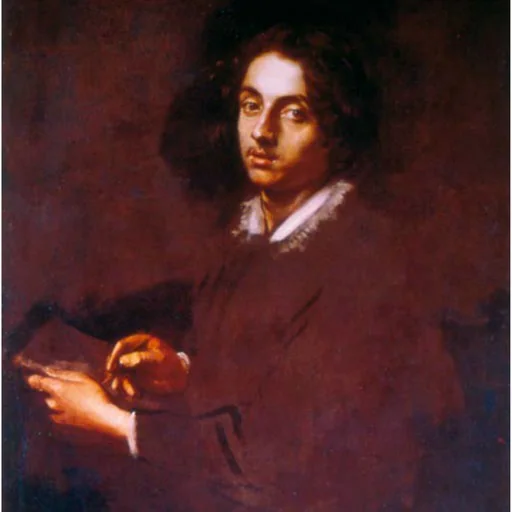
Simone Cantarini or Simone da Pesaro, called il Pesarese (Baptized on 21 August 1612 – 15 October 1648) was an Italian painter and etcher.