Artwork
Angelica and Medoro
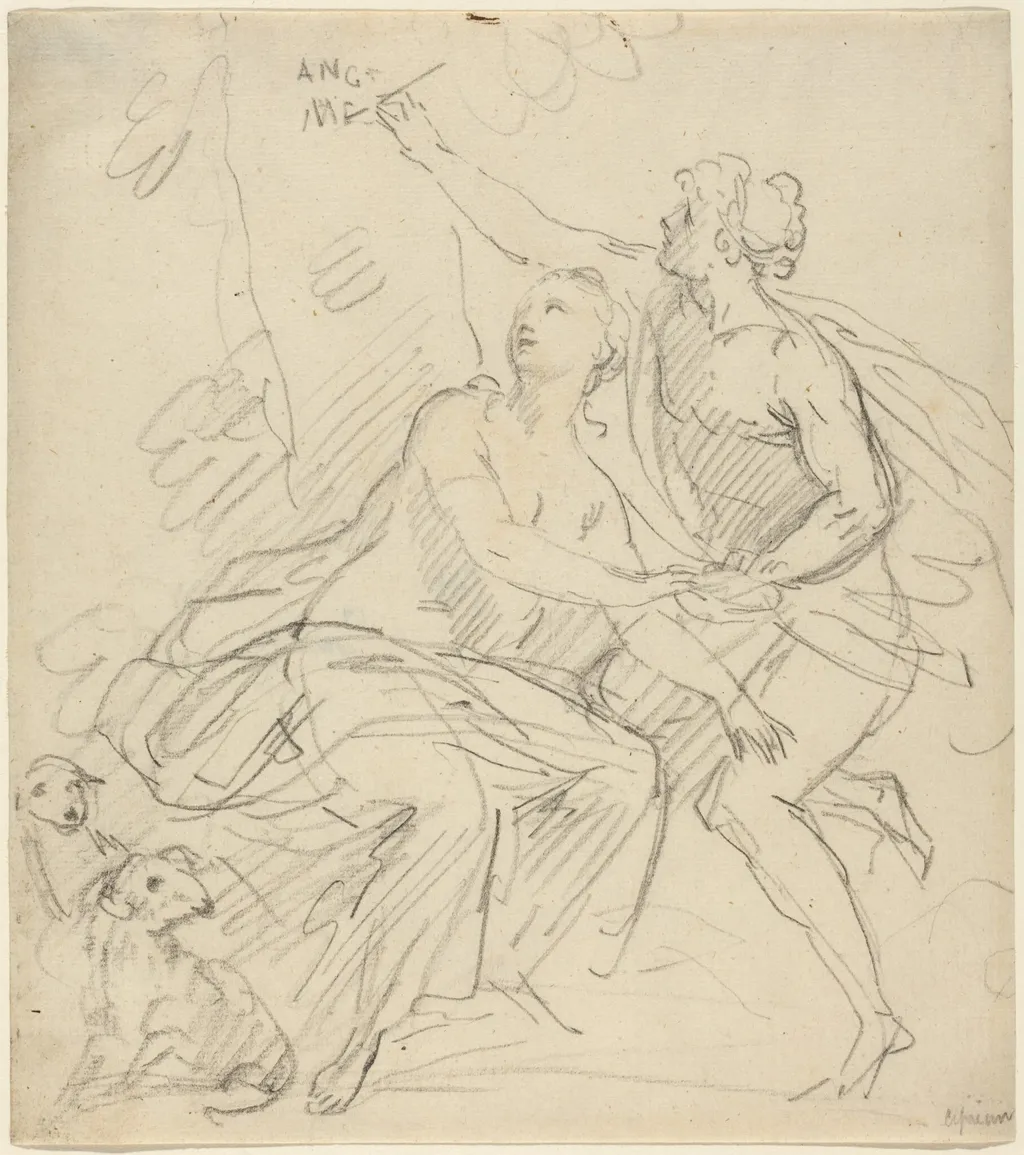
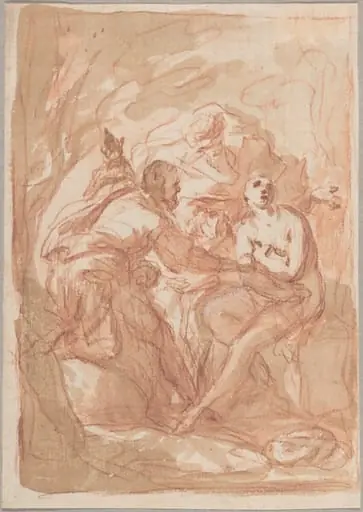
Angelica and Medoro is a graphite drawing by the Baroque artist Giovanni Battista Cipriani. It dates from 1756 and is held in the collection of the National Gallery of Art.
About this work
Overview
Angelica and Medoro is a graphite drawing on laid paper created by Italian artist Giovanni Battista Cipriani in 1756, shortly after his relocation to England.
Subject & Meaning
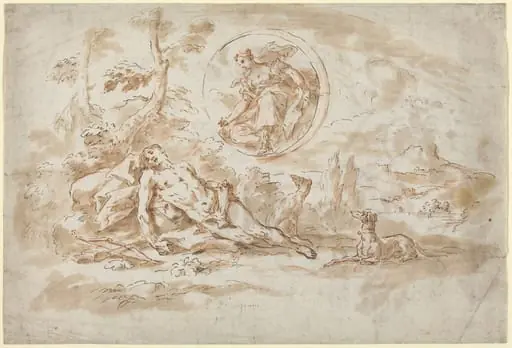
The drawing illustrates a poignant scene from Ludovico Ariosto’s epic poem Orlando Furioso, capturing the intimate moment when Medoro, a knight, carves his and Princess Angelica’s names into a tree, symbolizing their love.
Technique & Style
Characterized by loose, swirling lines and quick, uneven pencil strokes, the sketch conveys a sense of spontaneity, resembling a preliminary draft rather than a polished work. The rough texture of the laid paper complements the hasty execution.
History & Provenance
Typical of Cipriani’s practice, this drawing likely served as a design for a print, potentially intended for engraving by his collaborator, Francesco Bartolozzi. Faint, illegible writing in the corner may include the title or the artist’s signature.
Context
Emerging from the mid-18th century European artistic landscape, Angelica and Medoro reflects the enduring influence of literary themes in art, while its style hints at the transitional period between Baroque dramatics and the emerging Neoclassical sensibilities.
Legacy
While not a finished piece, the drawing offers insight into Cipriani’s creative process and his contribution to the popularization of literary illustrations through print designs during his English period.
Artist & collection
Artist
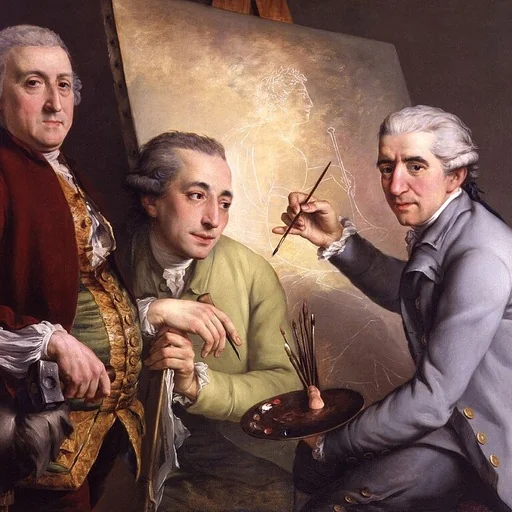
Giovanni Battista Cipriani (1727 – 14 December 1785) was an Italian painter and engraver, who lived in England from 1755.

![Reclining Woman [verso], by Giovanni Battista Cipriani](https://artifactworldgallery.com/img/giovanni-battista-cipriani--reclining-woman-verso--00754221290578f9-w320.webp)
![A Turk [recto], by Giovanni Battista Cipriani](https://artifactworldgallery.com/img/giovanni-battista-cipriani--a-turk-recto--12cde5f9bac9a966-w320.webp)
![Mythological Composition with Chronos and Harpies [recto], by Giovanni Battista Cipriani](https://artifactworldgallery.com/img/giovanni-battista-cipriani--mythological-composition-with-chronos-and-harpies-recto--23e4197a1ba0ae7e-w320.webp)
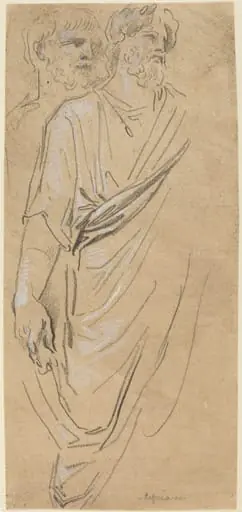
![Figure Studies [recto], by Giovanni Battista Cipriani](https://artifactworldgallery.com/img/giovanni-battista-cipriani--figure-studies-recto--32b47b1a71716a78-w320.webp)