Artwork
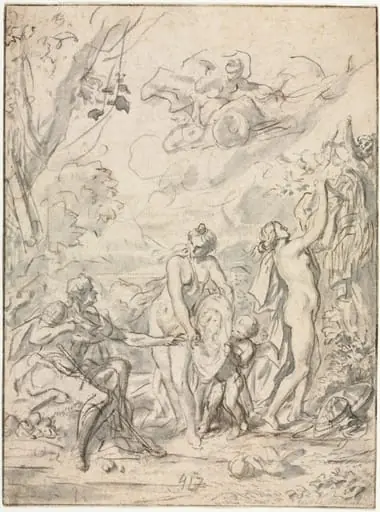
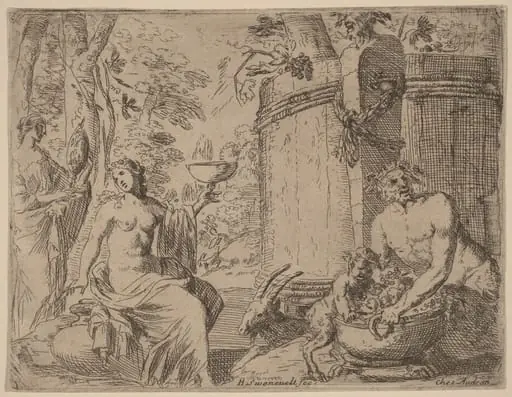
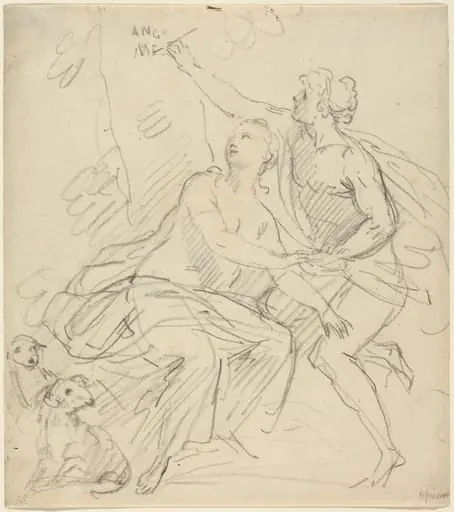
Diana and Two Nymphs Receiving Gifts from a Satyr (recto)
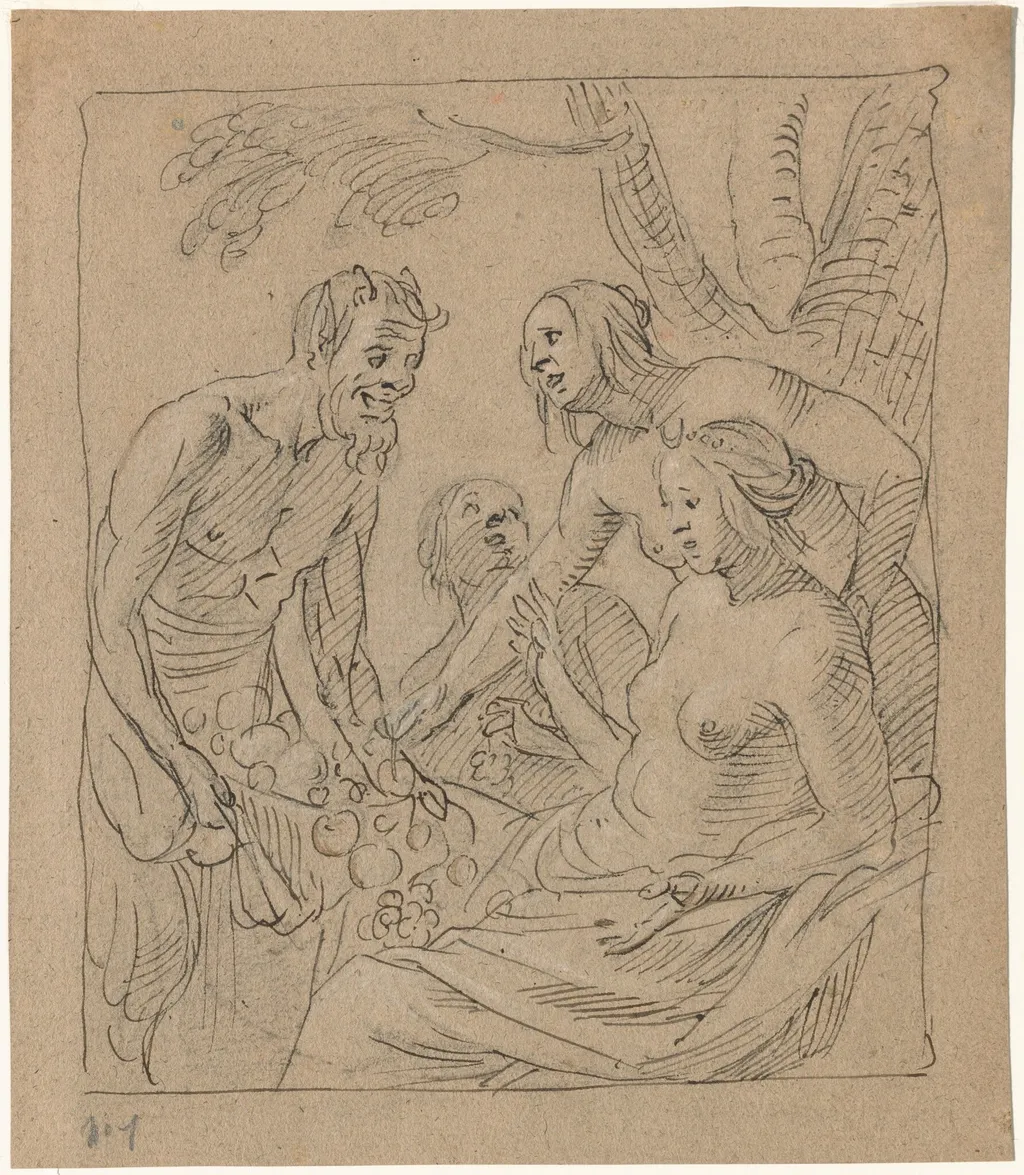
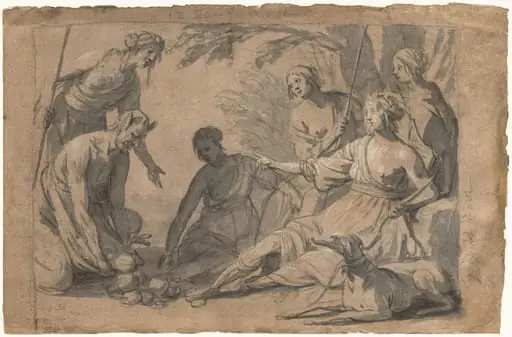
Diana and Two Nymphs Receiving Gifts from a Satyr (recto) is a chalk drawing by the Baroque artist Gerrit van Honthorst. It dates from 1624 and is held in the collection of the National Gallery of Art.
About this work
Overview
The loose, energetic lines suggest it was made rapidly, likely as a compositional sketch rather than a finished work.
This drawing, dated around 1624, is a preparatory study by Gerrit van Honthorst depicting a mythological scene. Executed in pen and brown ink over black chalk, with selective white highlights on brown laid paper, it captures a moment of interaction between Diana, two nymphs, and a satyr. The loose, energetic lines suggest it was made rapidly, likely as a compositional sketch rather than a finished work.
Subject & Meaning
The scene illustrates Diana, goddess of the hunt, accompanied by two nymphs, receiving offerings from a satyr—a forest spirit associated with wildness and revelry. The figures are entwined with vines, suggesting a natural, untamed setting. The gesture implies a ritual exchange, possibly symbolizing the harmony or tension between the divine and the primal forces of nature.
Technique & Style
Honthorst employed swift, irregular pen strokes and layered black chalk to define form and movement. White heightening adds luminosity to skin and foliage, contrasting with the warm brown paper. The sketchy quality, with minimal detail and visible revisions, reflects an artist working out spatial relationships and dynamic poses, prioritizing gesture over finish.
History & Provenance
The drawing is part of a known group of Honthorst’s preparatory studies from his early career in Utrecht. Its survival suggests it was valued by the artist or his circle as a working document. No documented ownership before the 19th century is recorded, but its condition and medium align with typical studio practices of Dutch artists in the 1620s.
Context
Created during Honthorst’s return to the Netherlands after training in Rome, the work reflects his engagement with Caravaggisti themes and classical mythology. While his paintings often emphasized dramatic lighting, this sketch reveals a more intimate, exploratory side—showing how he translated Italian influences into personal, tactile studies of form and movement.
Legacy
This drawing exemplifies the importance of preparatory sketches in 17th-century Dutch art, where rapid studies were essential for composing complex narratives. Though less known than his finished canvases, such works illuminate Honthorst’s process and contribute to understanding how mythological subjects were visually negotiated in studio practice.
Artist & collection