Artwork
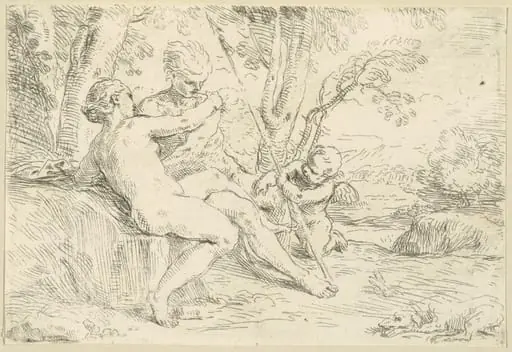
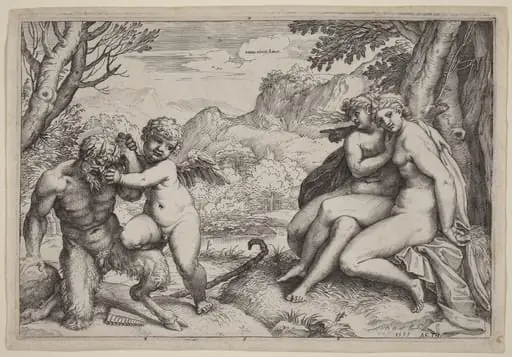
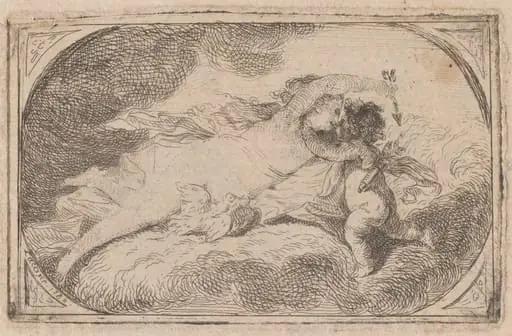
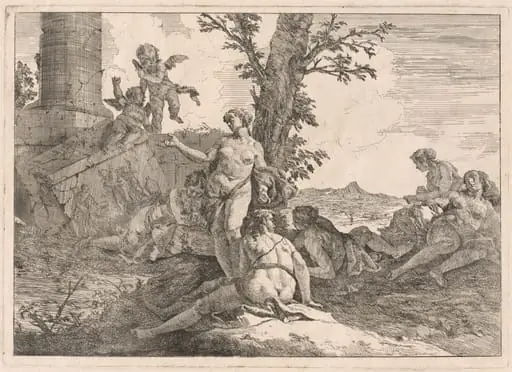
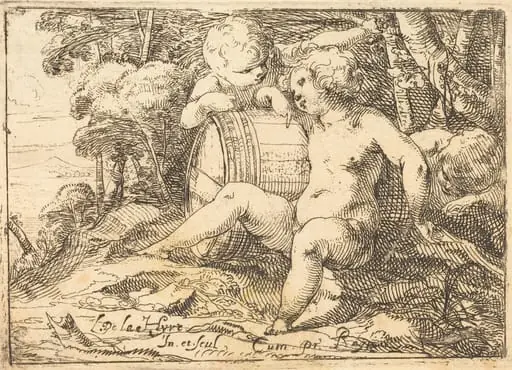
Four Bacchic Children
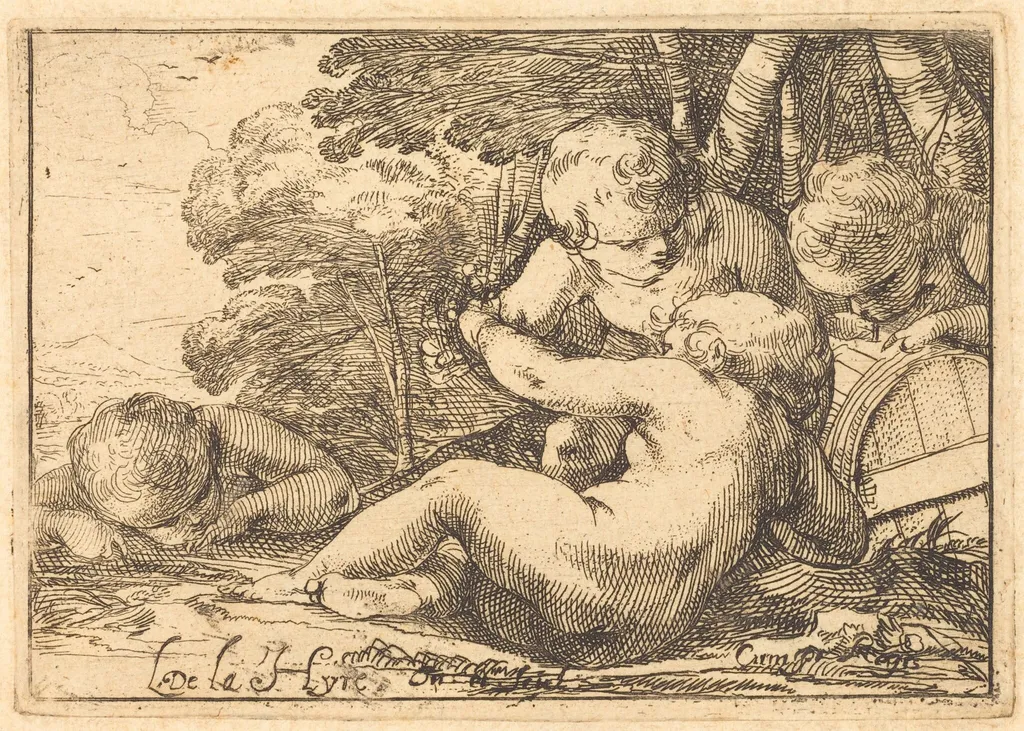
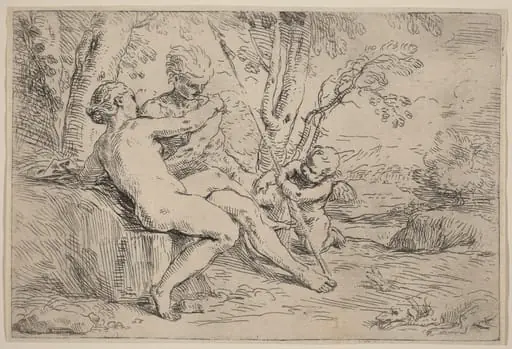
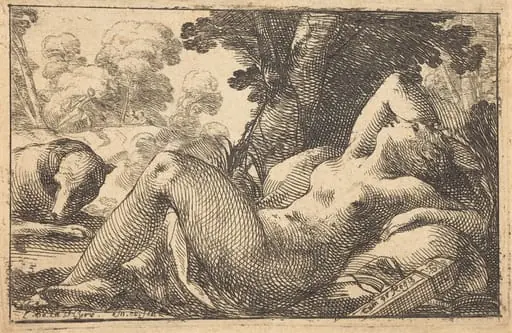
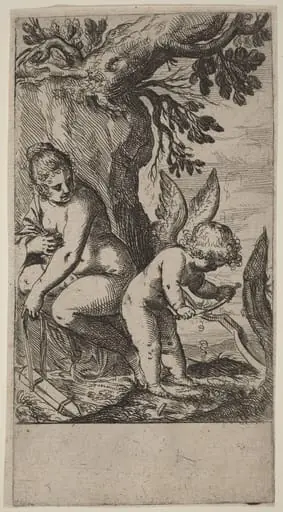
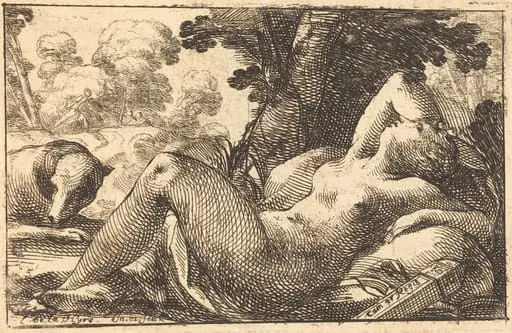
Four Bacchic Children is an ink print by the Baroque artist Laurent de La Hyre. It dates from 1624 and is held in the collection of the National Gallery of Art.
About this work
Overview
Four Bacchic Children is an etching on laid paper created by French Baroque painter Laurent de La Hyre around 1624. Characteristic of the Parisian Atticism style, the work embodies the era's classical influences and compositional restraint.
Subject & Meaning
The etching portrays four youthful figures in a lively Bacchic scene, alluding to themes of revelry and Roman mythological associations with Bacchus. The children, dressed in loose robes, engage in a festive setting, carrying wine cups and leaves.
Technique & Style
Executed in the early 17th-century etching technique, the piece features thin lines that achieve nuanced shading, imparting a sense of volume and realism to the depicted children. This method was popular at the time for reproducing paintings.
History & Provenance
Created in the 1620s, during the infancy of etching as a novel means of replicating artworks, Four Bacchic Children reflects La Hyre's adaptation of this emerging technique within his neoclassical oeuvre.
Context
Emerging within the Parisian Atticism movement, the work aligns with the period's fascination with classical motifs and restrained artistic expression, distinguishing La Hyre as a leading figure of this style.
Legacy
As a representative of early 17th-century French etching and Parisian Atticism, Four Bacchic Children contributes to the understanding of the development of Baroque printmaking and the enduring influence of classical themes in European art.
Artist & collection
Artist
Laurent de La Hyre (French pronunciation: ; 27 February 1606 – 28 December 1656) was a French Baroque painter, born in Paris. He was a leading exponent of the neoclassical style of Parisian Atticism.