Artwork
St Peter healing the lame man
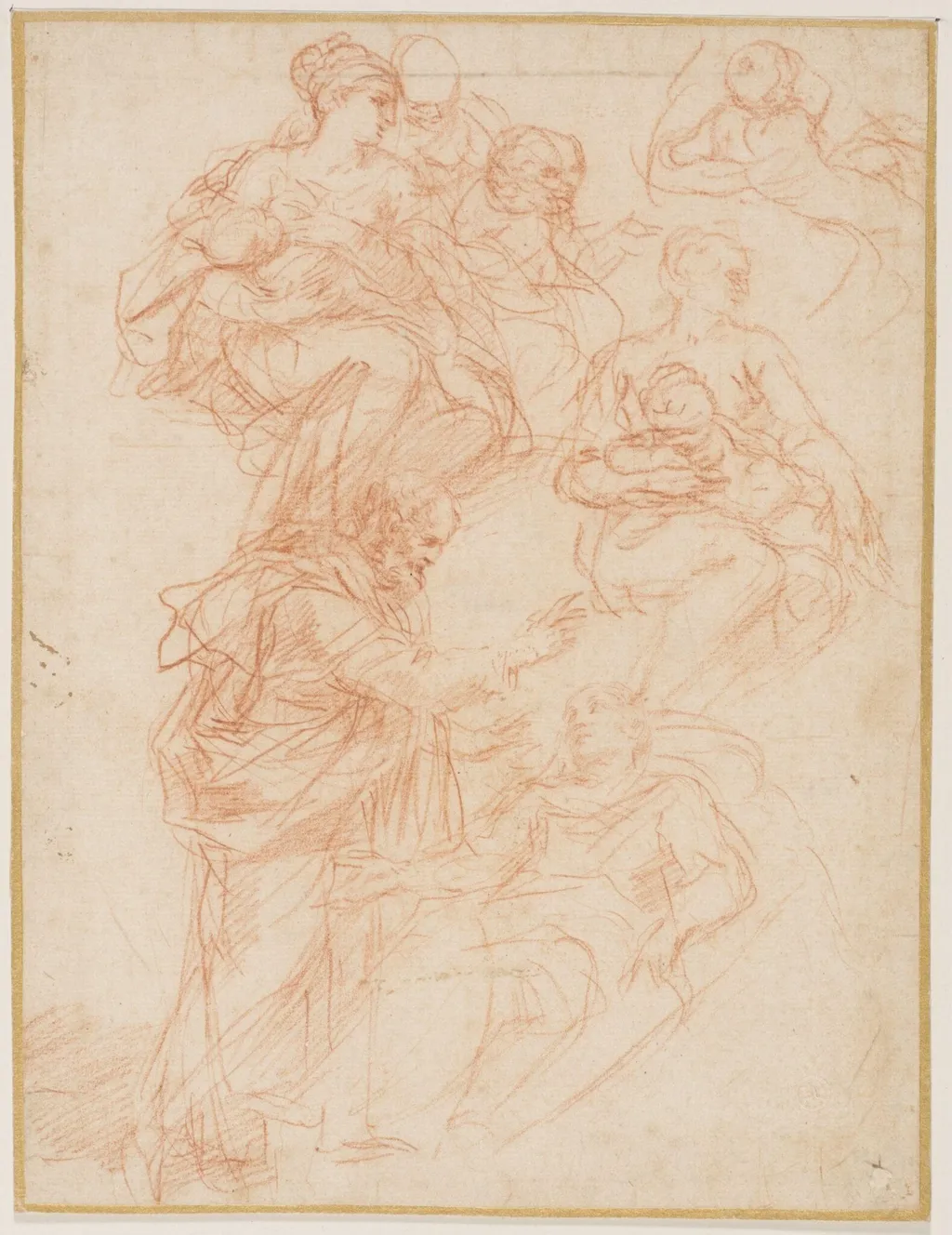
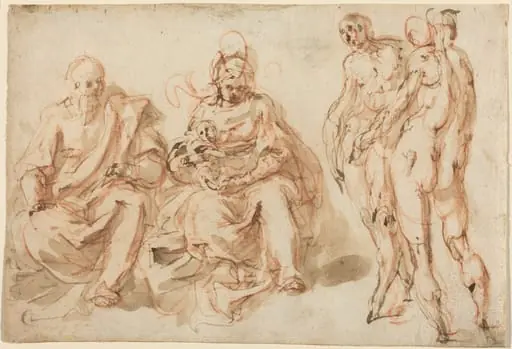
St Peter healing the lame man is a drawing by the Baroque artist Simone Cantarini. It dates from 1639 and is held in the collection of the Victoria and Albert Museum.
About this work
Overview
Created in 1639, this red chalk drawing by Simone Cantarini is a preparatory study for a larger painted composition. It captures a moment from the Acts of the Apostles, in which Saint Peter restores mobility to a beggar at the Temple gate. The work’s spontaneous, energetic lines suggest it was made quickly to test compositional dynamics before committing to oil paint.
Subject & Meaning
The drawing focuses on gesture and reaction rather than narrative detail, underscoring the spiritual immediacy of the moment.
The scene illustrates Saint Peter performing a miracle, as described in Acts 3:6–8. The apostle extends his hand toward a kneeling, disabled man, while onlookers react with surprise and awe. The grouping of figures conveys a sense of communal witness, emphasizing the divine nature of the act. The drawing focuses on gesture and reaction rather than narrative detail, underscoring the spiritual immediacy of the moment.
Technique & Style
Cantarini employed red chalk with loose, overlapping strokes to suggest form and movement. Shadows and drapery are built through layered, uneven lines rather than solid shading. The lack of finish and the fluid, almost restless contours give the drawing a sense of urgency and life. This approach reflects the Baroque interest in dynamic expression and the artist’s focus on capturing motion over polished detail.
History & Provenance
The drawing was made during Cantarini’s time in Bologna, where he was influenced by the Carracci tradition and the expressive drawing practices of his contemporaries. It remained in private collections for centuries before entering a public museum. Its survival as a standalone study highlights its value as a window into the artist’s working method, rather than merely a step toward a lost painting.
Context
In early 17th-century Italy, preparatory drawings were essential tools for painters planning complex religious scenes. Cantarini’s work aligns with Bolognese academic practices that prioritized anatomical accuracy and emotional expression. This drawing reflects a broader trend among Baroque artists to use quick studies to explore gesture and composition before executing monumental altarpieces.
Legacy
Though the final painting for which this study was made is no longer extant, the drawing endures as a testament to Cantarini’s skill in translating spiritual narrative into dynamic form. It exemplifies how Baroque artists relied on drawing not just for planning, but as a medium of expressive inquiry—valued for its vitality even without color or finish.
Artist & collection
Artist
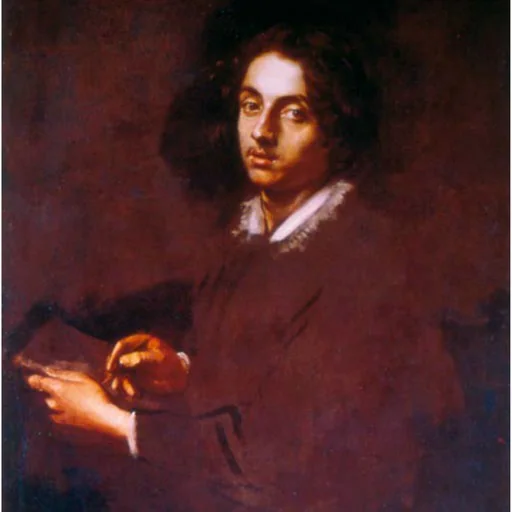
Simone Cantarini or Simone da Pesaro, called il Pesarese (Baptized on 21 August 1612 – 15 October 1648) was an Italian painter and etcher.

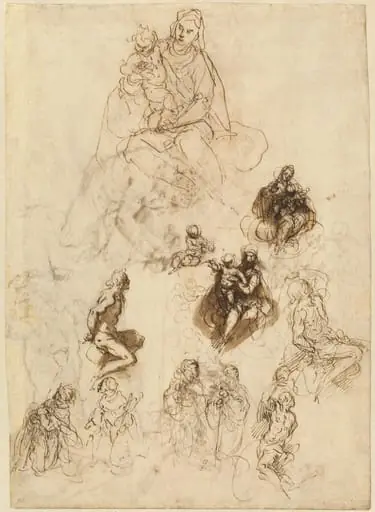 Studies of the Virgin and Child with Saints
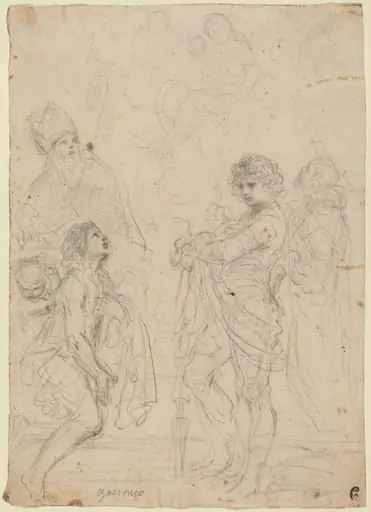 Madonna and Child with Saints Gimignano, John the Baptist, George and Peter Martyr
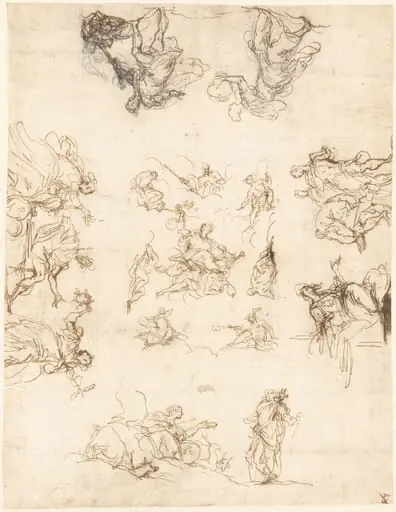 A Compartmented Ceiling with Allegories and Myths
![Studies for Judith and Holofernes, David and Goliath, The Finding of Moses, and Others [recto], by Veronese](https://artifactworldgallery.com/img/veronese--studies-for-judith-and-holofernes-david-and-goliath-the-find--e7509a7c8dd48fbb-w320.webp) Studies for Judith and Holofernes, David and Goliath, The Finding of Moses, and Others [recto]
Studies for Judith and Holofernes, David and Goliath, The Finding of Moses, and Others [recto]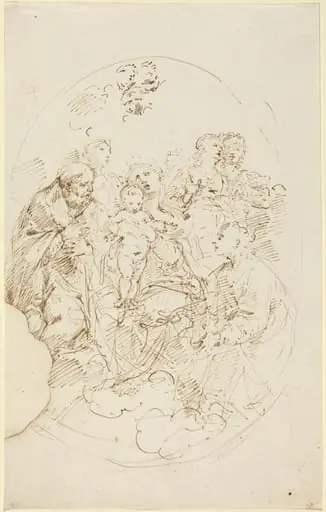 Virgin and Child with Five Saints
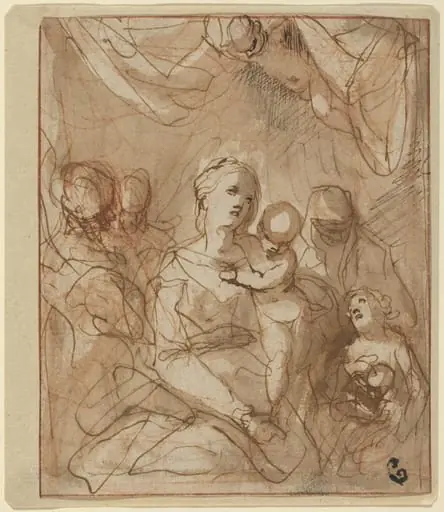 The Virgin and Infant Jesus with Saints
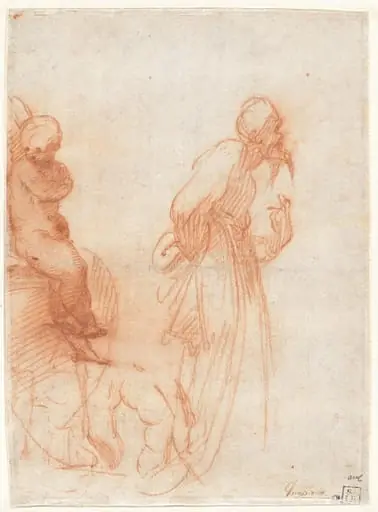 a) Studies of Figures and a Hand (recto); b) Studies of a Bull (verso)
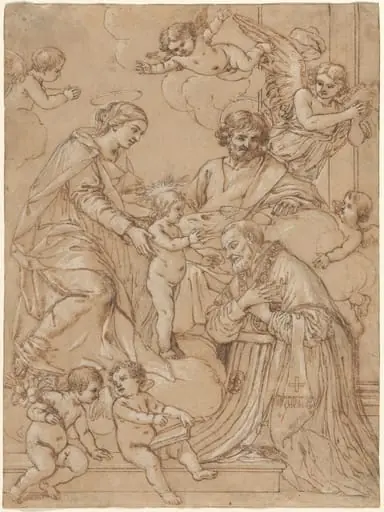 The Holy Family with Saint Philip Neri in Adoration, an Angel, and Putti
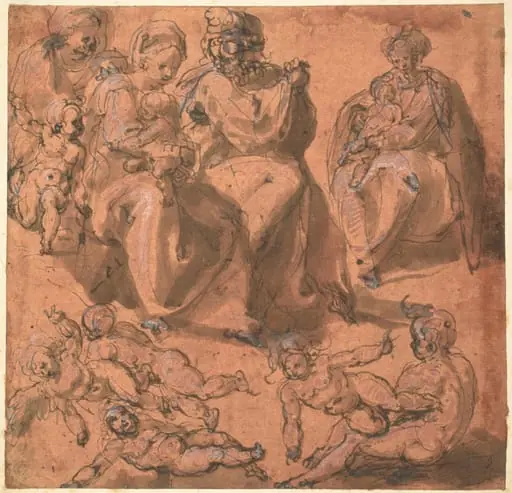 Studies of a Holy Family
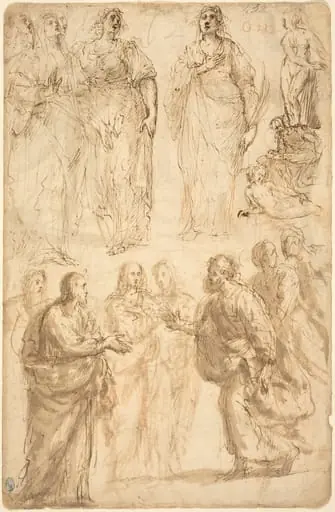 Scenes from the Life of Saint Peter
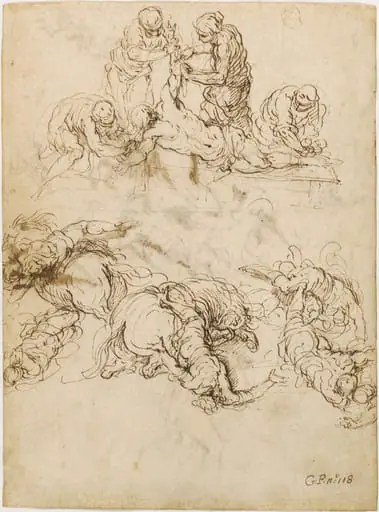 The Martyrdom of Saint Bartholomew; The Conversion of Saint Paul
 The Adoration of the Shepherds