Artwork
The Adoration of the Shepherds
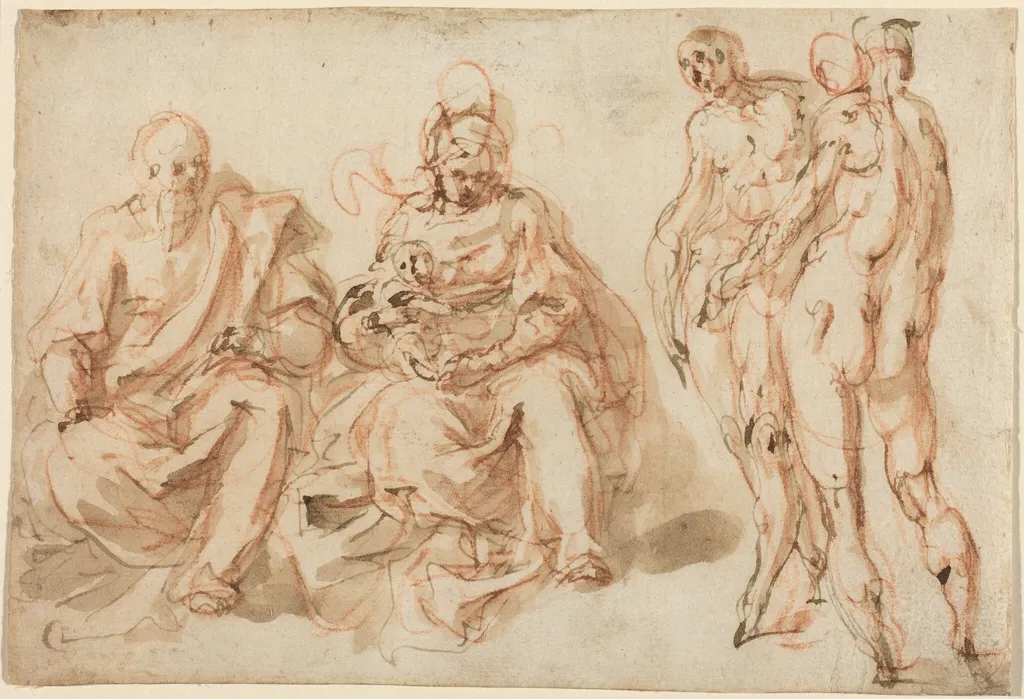
The Adoration of the Shepherds is an ink drawing by the Renaissance artist Cesare Pollini. It dates from 1595 and is held in the collection of the National Gallery of Art.
About this work
Overview
Created in 1595 by Cesare Pollini, this drawing captures a moment from the Nativity narrative using minimal yet expressive means.
Created in 1595 by Cesare Pollini, this drawing captures a moment from the Nativity narrative using minimal yet expressive means. Executed in pen and brown ink with light wash over red chalk on laid paper, it presents a compact, intimate scene. The work’s unfinished appearance and rapid brushwork suggest it was a preparatory study, not a polished composition, reflecting the artist’s focus on gesture and atmosphere over detail.
Subject & Meaning
The scene depicts shepherds approaching the infant Christ, though figures are rendered with minimal identification. A central seated figure, likely the Virgin, is enveloped in heavy folds, while two others kneel in reverence—one with arms extended, the other leaning forward. The lack of overt symbolism or setting shifts emphasis to quiet devotion, aligning with contemplative devotional practices of the late Renaissance rather than dramatic storytelling.
Technique & Style
Pollini employed loose, fluid pen strokes layered over faint red chalk underdrawing to suggest volume and shadow. The ink wash creates subtle tonal gradations, while areas of untouched paper serve as highlights. The sketchy, economical lines convey movement and emotion without definition, emphasizing spontaneity. This approach reveals a focus on capturing the essence of form and light rather than precise rendering.
History & Provenance
The drawing’s early ownership is undocumented, but its material and technique align with Florentine and Roman draftsmanship of the late 16th century. It likely circulated among artists or patrons interested in preparatory studies. Its survival as a standalone sheet suggests it was valued for its expressive quality, even in an unfinished state, rather than as a step toward a larger work.
Context
Pollini worked during a period when drawing was increasingly seen as an independent art form. His approach echoes contemporaries like Annibale Carracci and Federico Zuccaro, who used rapid sketches to explore composition and emotion. Unlike more polished religious panels, this work reflects a shift toward personal, intimate meditation on sacred themes through direct, unembellished mark-making.
Legacy
Though Pollini is not widely known today, this drawing exemplifies the quiet rigor of late Mannerist draftsmanship. Its emphasis on emotional resonance over narrative clarity influenced later artists who valued the expressive potential of the sketch. As a surviving example of a working study, it offers insight into how religious subjects were internally processed by artists before being rendered in final form.
Artist & collection


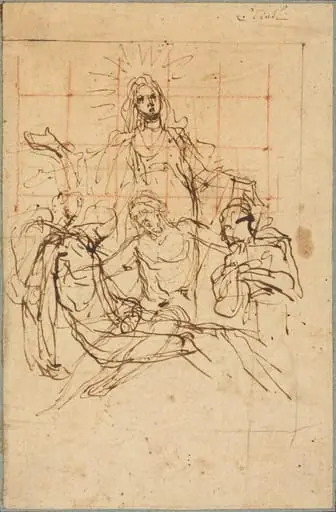 The Pietà (recto)
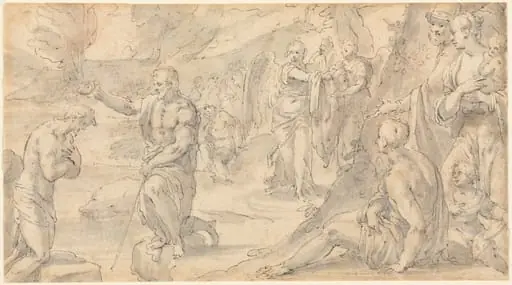 The Baptism of Christ
![Biblical Scene [verso], by Sebastiano Ricci](https://artifactworldgallery.com/img/sebastiano-ricci--biblical-scene-verso--d33f1e2abb3d29f7-w320.webp) Biblical Scene [verso]
Biblical Scene [verso]![Female Saint Carrying a Banner [recto], by Baldassare Franceschini](https://artifactworldgallery.com/img/baldassare-franceschini--female-saint-carrying-a-banner-recto--7b0a38585a5ad76d-w320.webp) Female Saint Carrying a Banner [recto]
Female Saint Carrying a Banner [recto]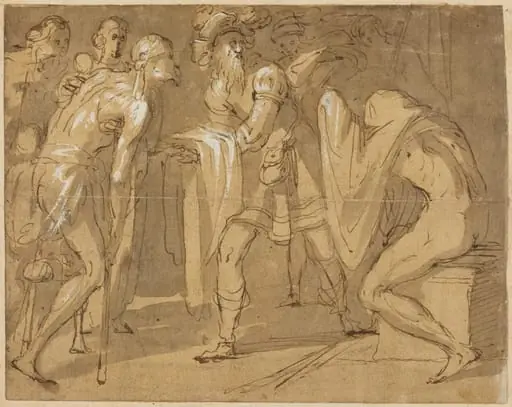 Saint Homobono
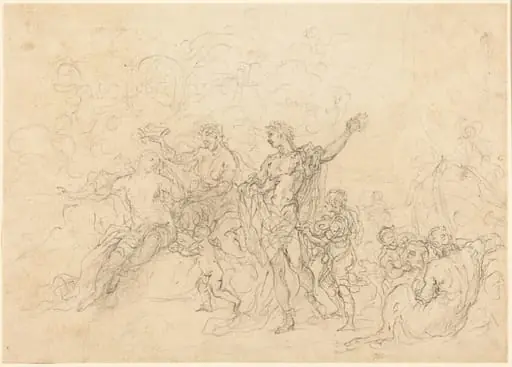 The Marriage of Bacchus and Ariadne
![The Adoration of the Magi [recto], by Donato Creti](https://artifactworldgallery.com/img/donato-creti--the-adoration-of-the-magi-recto--2cfd5d76b55e821e-w320.webp) The Adoration of the Magi [recto]
The Adoration of the Magi [recto]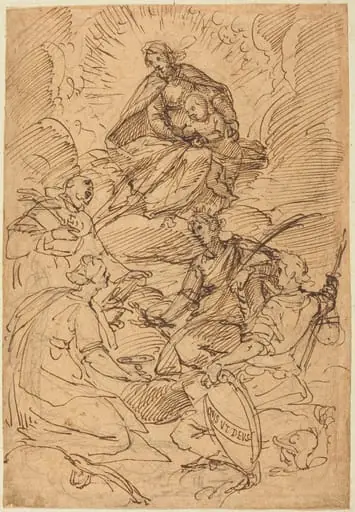 The Madonna and Child in Glory Adored by Saints
![Mythological Composition with Chronos and Harpies [recto], by Giovanni Battista Cipriani](https://artifactworldgallery.com/img/giovanni-battista-cipriani--mythological-composition-with-chronos-and-harpies-recto--23e4197a1ba0ae7e-w320.webp) Mythological Composition with Chronos and Harpies [recto]
Mythological Composition with Chronos and Harpies [recto]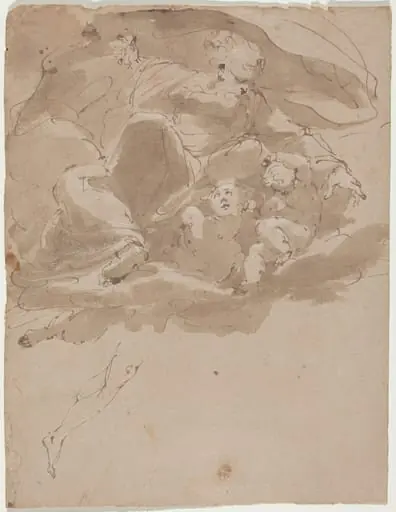 God the Father with Angels
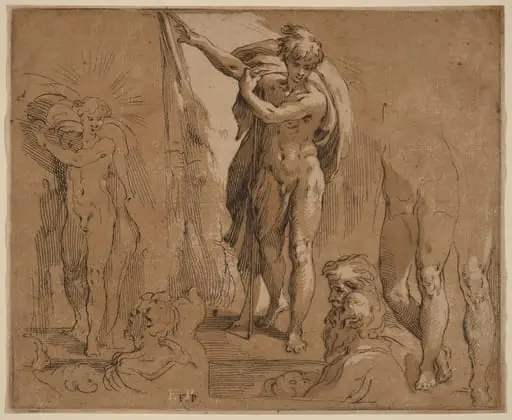 Saint John the Baptist
![Studies for an Annunciation [recto], by Jacopo Palma il Giovane](https://artifactworldgallery.com/img/jacopo-palma-il-giovane--studies-for-an-annunciation-recto--a15d0411b7678b1e-w320.webp) Studies for an Annunciation [recto]
Studies for an Annunciation [recto]