Artwork
A Compartmented Ceiling with Allegories and Myths
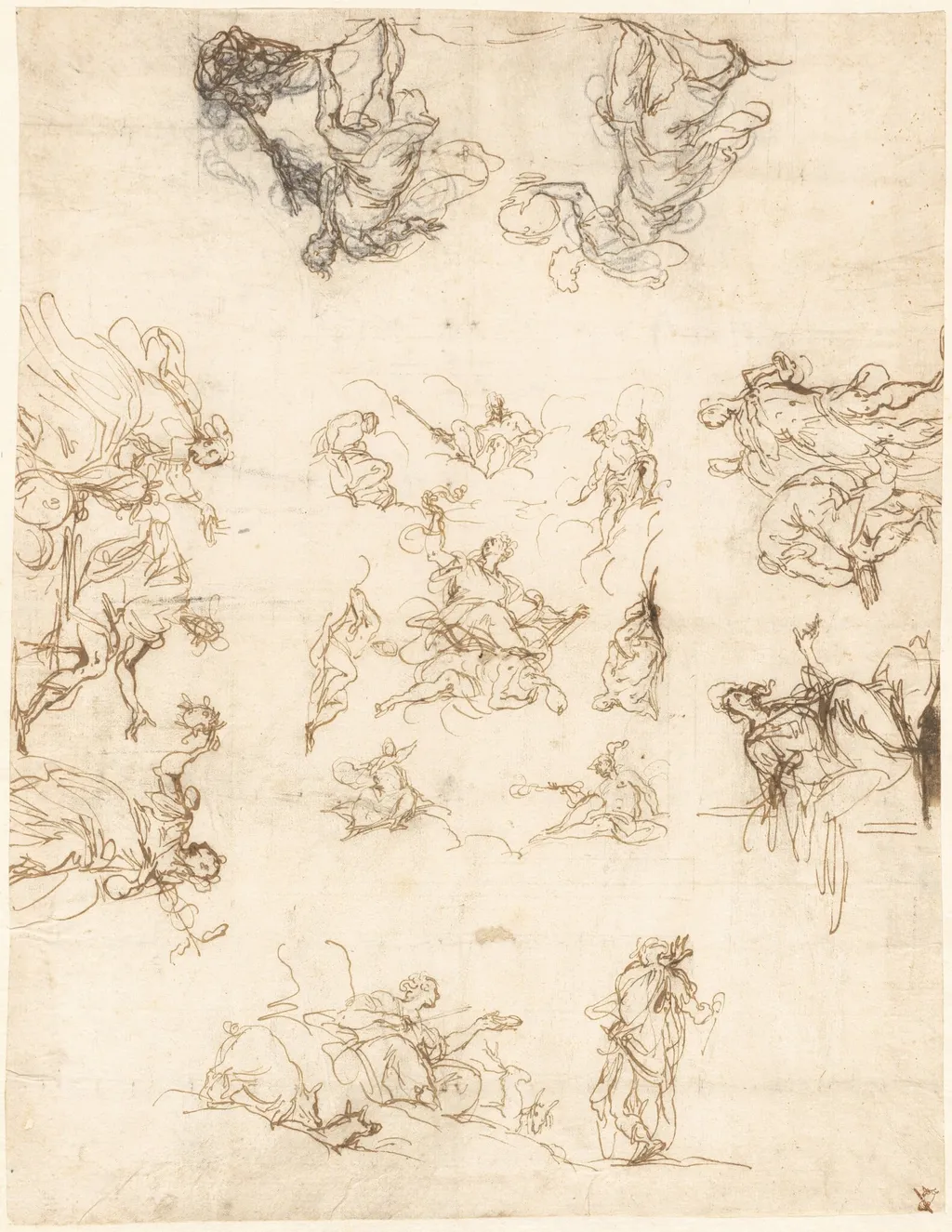
A Compartmented Ceiling with Allegories and Myths is an ink drawing by the Renaissance artist Alessandro Maganza. It dates from 1584 and is held in the collection of the National Gallery of Art.
About this work
Overview
A Compartmented Ceiling with Allegories and Myths is a pen and brown‑ink drawing executed on a sheet of eighteenth‑century Venetian album paper. Attributed to the Veronese painter Alessandro Maganza, it dates to around 1584, placing it in the later phase of his career. The work is presently in the collection of the National Gallery of Art in Washington, D.C.
Technique & Style
Maganza combined pen work with brown ink applied over layers of light and heavy black chalk, creating a nuanced tonal range. The drawing’s compartmentalized composition, populated by mythological figures, reflects the Renaissance interest in classical allegory while the careful handling of chalk suggests preparatory studies for a larger painted ceiling.
Subject & Meaning
The piece presents a series of allegorical and mythological scenes arranged within distinct panels, evoking the decorative schemes typical of ceiling frescoes. Each compartment contains figures drawn from classical mythology, serving both decorative and didactic purposes by illustrating moral or intellectual themes popular in late‑sixteenth‑century courtly environments.
History & Provenance
Created in the late 1580s, the drawing later entered the collection of the National Gallery of Art, where it was acquired as part of the museum’s holdings of Renaissance drawings. Its support—a Venetian album sheet from the eighteenth century—indicates that the paper was repurposed, a common practice for artists reusing high‑quality materials.
Context
Alessandro Maganza worked in the Veneto region during the late Renaissance, a period marked by the diffusion of classical motifs in decorative programs. The drawing reflects the era’s integration of drawing and design, serving as a preparatory study for a ceiling scheme that would have combined architecture, painting, and allegory in a unified visual narrative.
Artist & collection


 The Last Judgment
![Studies for an Annunciation [recto], by Jacopo Palma il Giovane](https://artifactworldgallery.com/img/jacopo-palma-il-giovane--studies-for-an-annunciation-recto--a15d0411b7678b1e-w320.webp) Studies for an Annunciation [recto]
Studies for an Annunciation [recto] St Peter healing the lame man
 Studies of the Virgin and Child with Saints
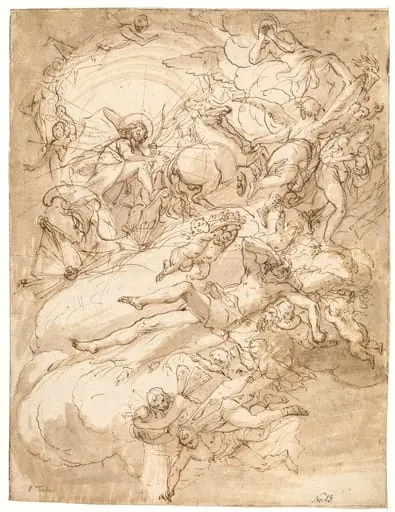 Apollo in his chariot, design for a ceiling painting
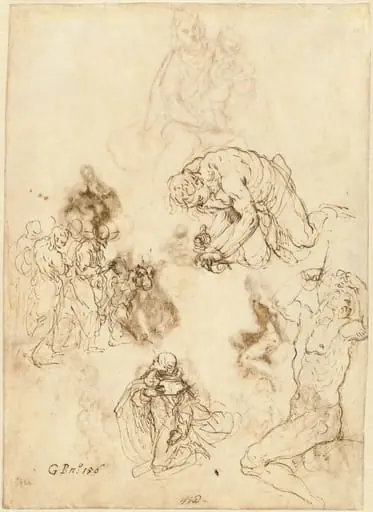 Studies of Christ Healing the Blind Man, Saint Philip Benizzi, and Saint Sebastian
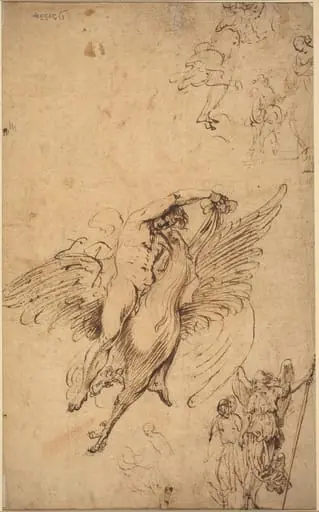 Ganymede
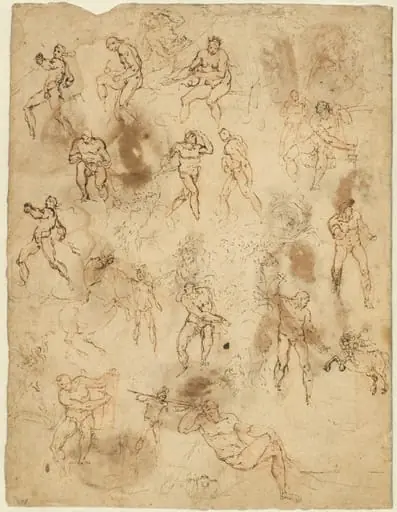 Studies of Figures (verso)
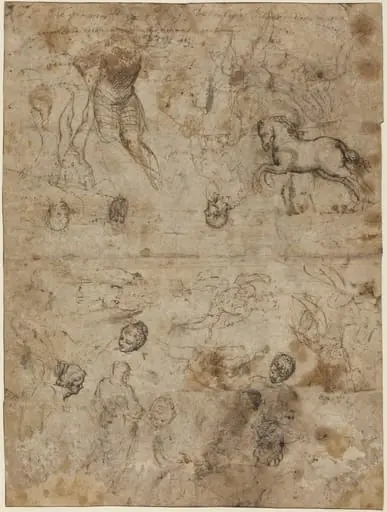 Sheet of Studies
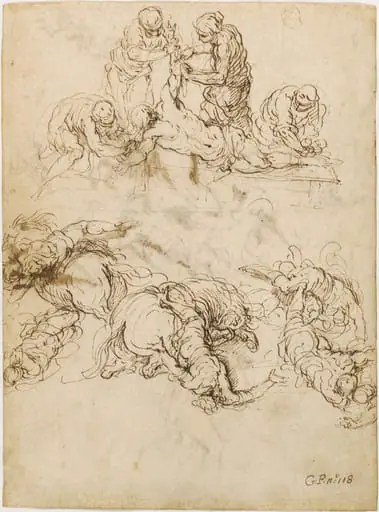 The Martyrdom of Saint Bartholomew; The Conversion of Saint Paul
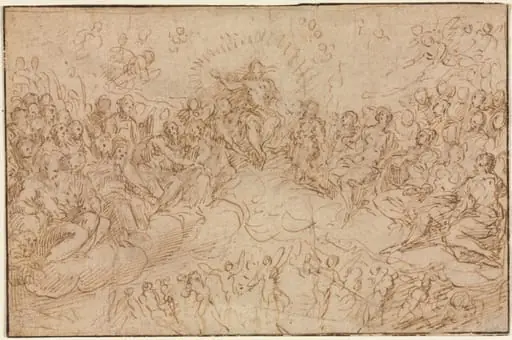 The Last Judgment
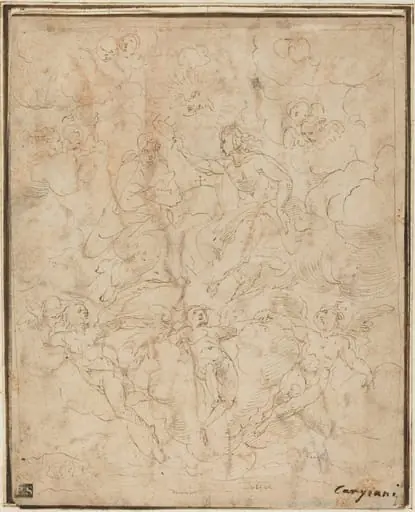 Coronation of the Virgin