Artwork
Studies of a Holy Family
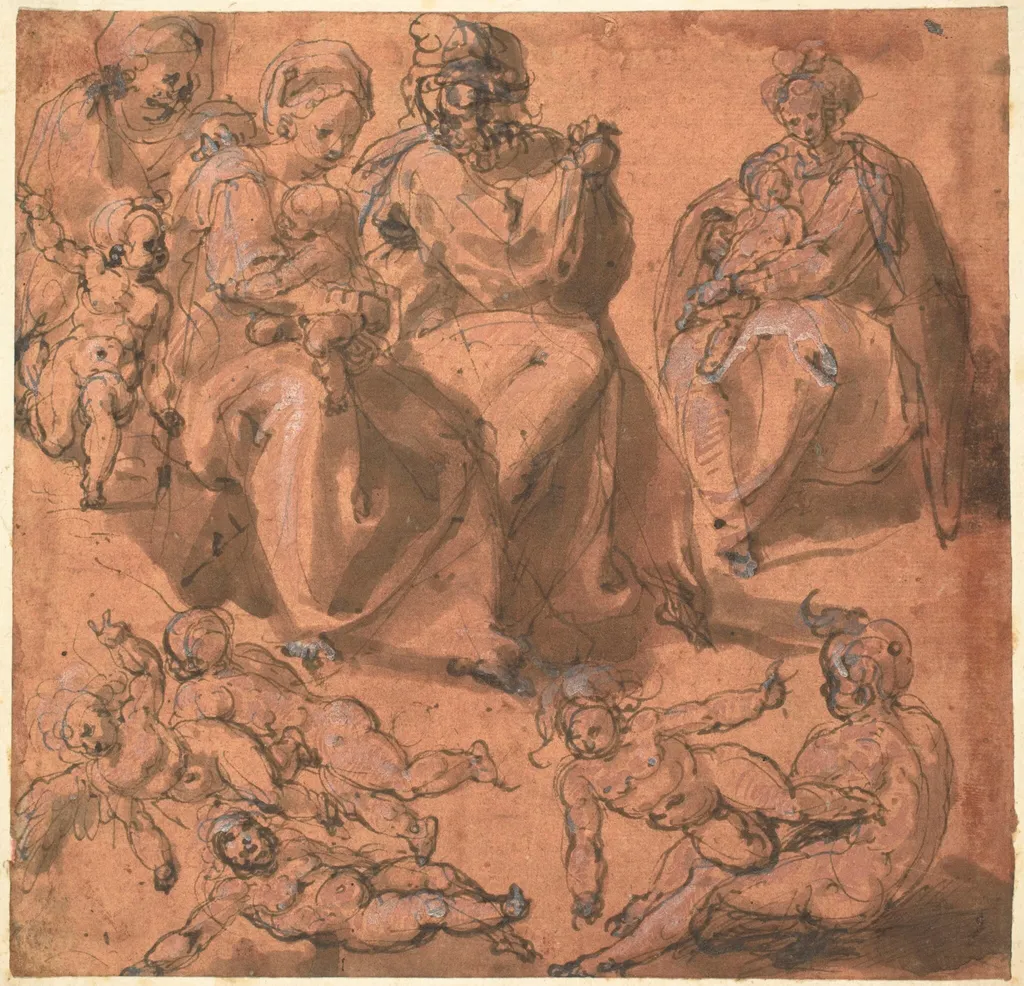
Studies of a Holy Family is an ink drawing by the Renaissance artist Cesare Pollini. It dates from 1595 and is held in the collection of the National Gallery of Art.
About this work
Overview
Created in 1595 by Cesare Pollini, this work is a preparatory drawing for a larger composition depicting the Holy Family. Executed on laid paper that has been washed sanguine, the piece combines pen and brown ink with brown and pink washes, and selective highlights of white gouche to define form and light.
Subject & Meaning
The drawing presents the central trio of the Virgin, Saint Joseph, and the infant Christ, each clothed in flowing robes. Additional infant figures and partially rendered bodies populate the background, suggesting a broader narrative scene that the artist was exploring through multiple compositional options.
Technique & Style
Pollini employs a varied line work, ranging from fine hatching to broader strokes, to model volume. The brown and pink washes create a warm tonal foundation, while touches of white gouache accentuate highlights, giving the figures a subtle luminosity. The use of laid paper and sanguine wash aligns the piece with late‑Renaissance drawing practices.
History & Provenance
The drawing was produced as a study for a larger religious painting, a common practice among Renaissance artists to refine composition and figure placement. Its survival on paper indicates it was likely retained by the workshop or a patron as a record of the creative process.
Context
During the late sixteenth century, Italian artists frequently prepared extensive sketches for biblical subjects, integrating both line and color washes to experiment with narrative density. Pollini’s approach reflects this tradition, balancing detailed figuration with exploratory, loosely rendered background elements.
Legacy
As a surviving example of Pollini’s preparatory work, the drawing offers insight into the methods of composition and color planning employed by lesser‑known Renaissance practitioners, contributing to a fuller understanding of workshop practices of the period.
Artist & collection


 The Holy Family
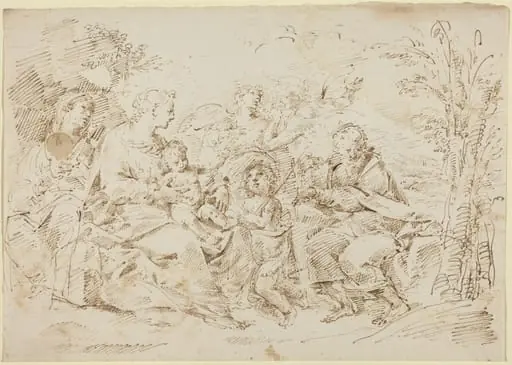 Holy Family with St. Elizabeth, St. John the Baptist, and Two Angels in a Landscape
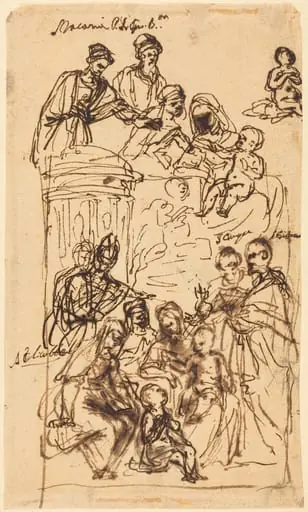 The Madonna and Child with Saints
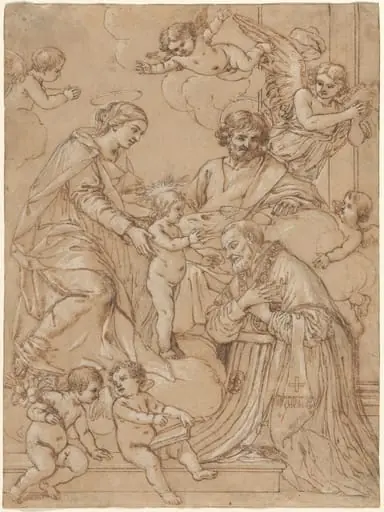 The Holy Family with Saint Philip Neri in Adoration, an Angel, and Putti
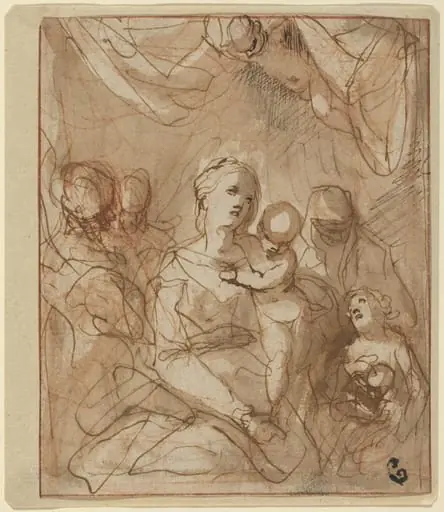 The Virgin and Infant Jesus with Saints
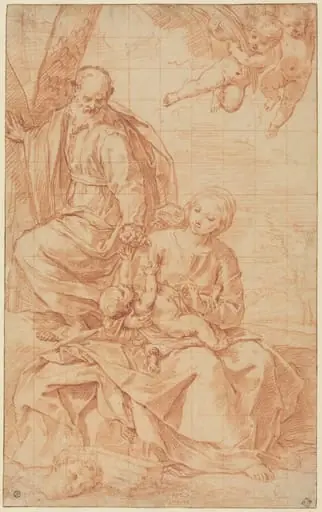 The Rest on the Flight into Egypt, or The Miracle of the Palm Tree
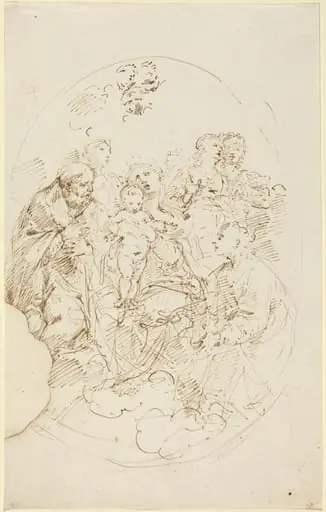 Virgin and Child with Five Saints
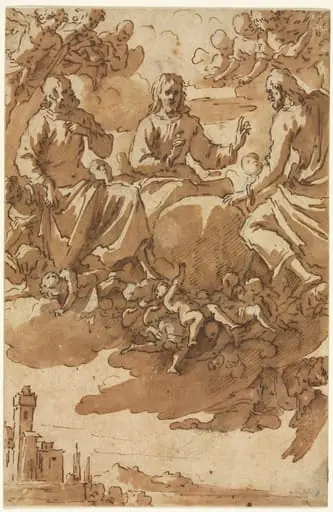 Christ in Glory with Two Saints
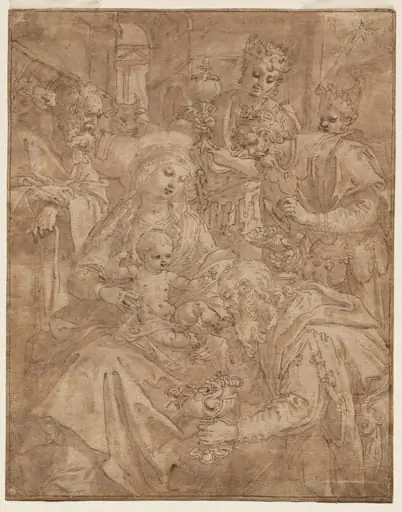 Adoration of the Magi
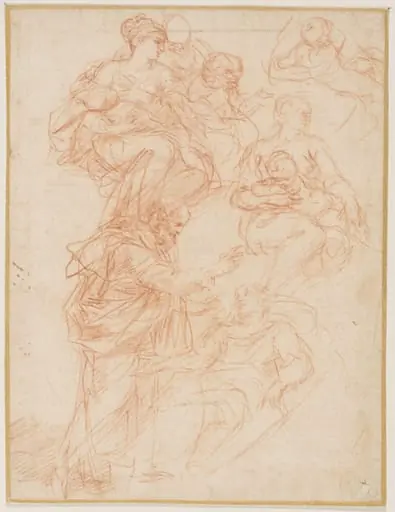 St Peter healing the lame man
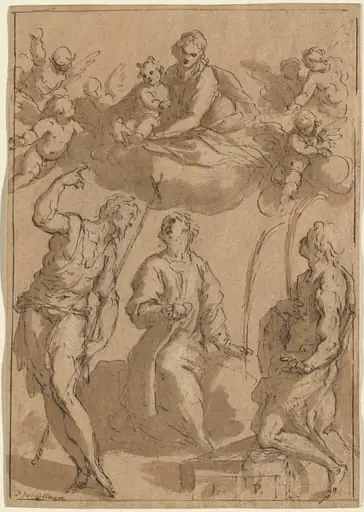 Madonna and Child in Glory with Saints John the Baptist, Stephen, and Lawrence
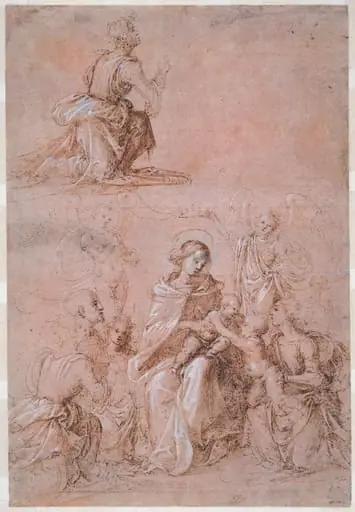 The Virgin and Child Surrounded by Saints and Angels