Artwork
Peisaj IV
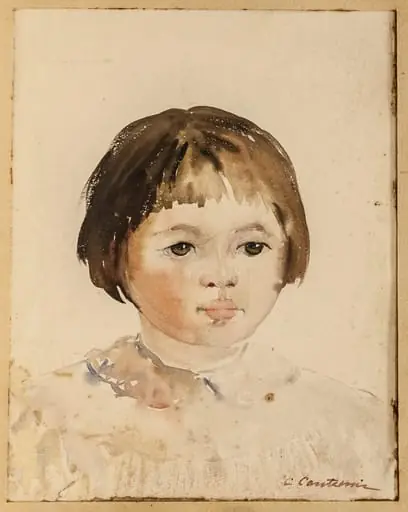
Peisaj IV is an unspecified painting by Clara Cantemir. It dates from 1950 and is held in the collection of the Gavrila Simion Eco-Museum Research Institute Tulcea.
About this work
Overview
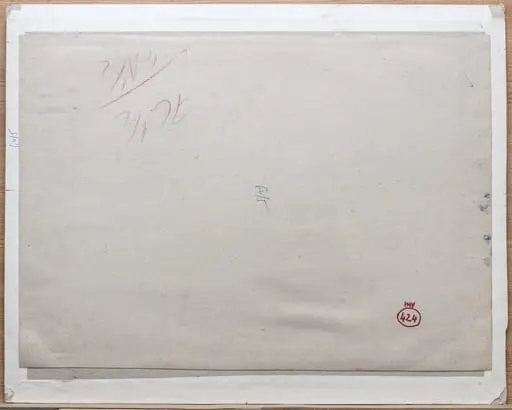
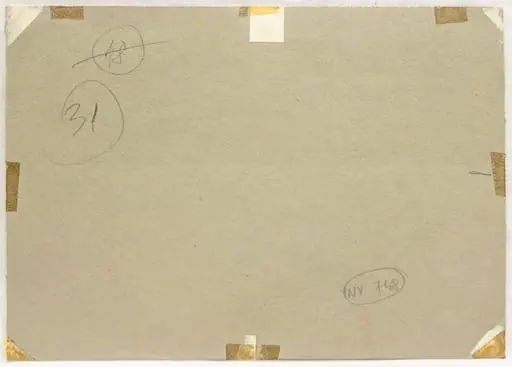
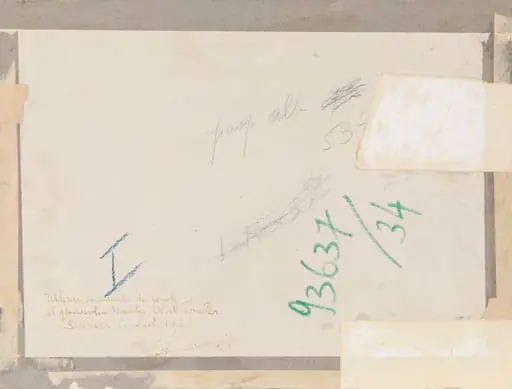
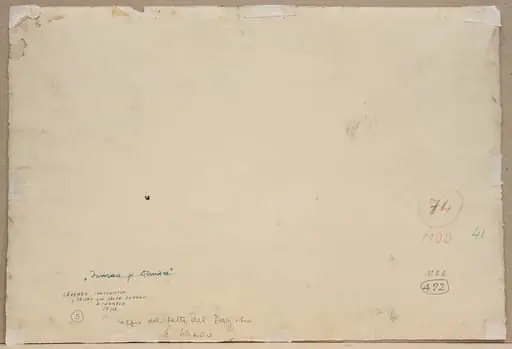
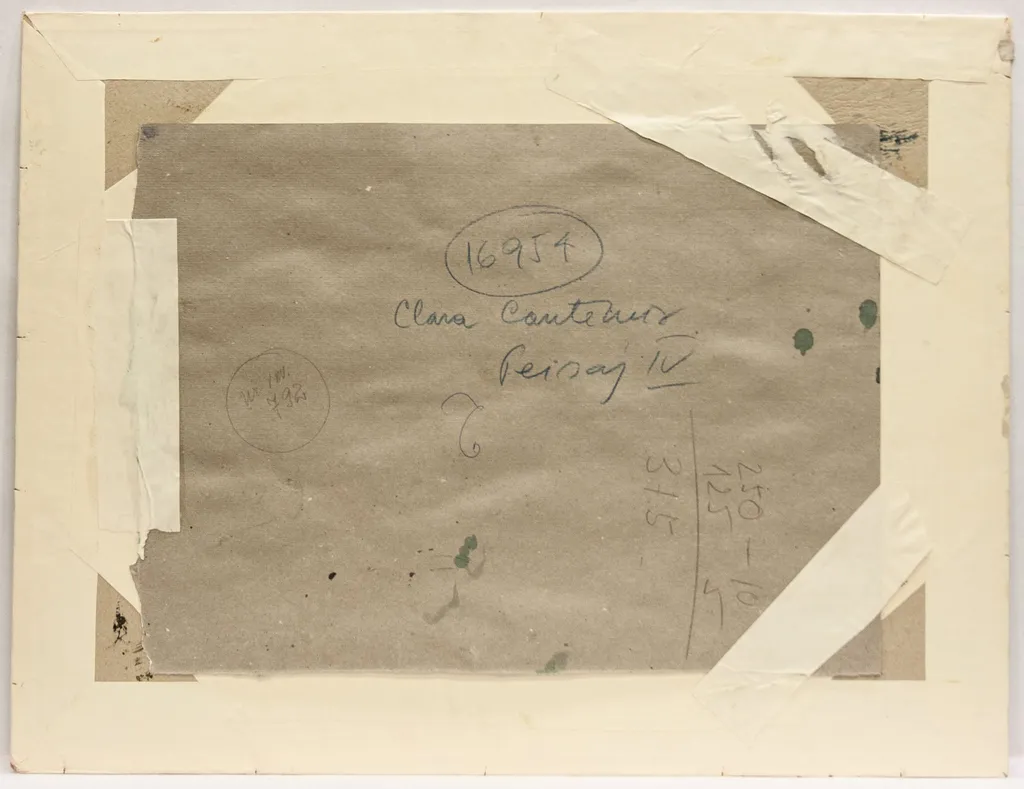
The surface bears handwritten inscriptions, including the title and artist’s name, alongside cryptic notations and discolorations.
Peisaj IV is a fragmentary paper artifact attributed to Clara Cantemir, dated approximately 1950. It is part of the collection at the Museum of Ethnography. The surface bears handwritten inscriptions, including the title and artist’s name, alongside cryptic notations and discolorations. Its physical condition—faded ink, torn edges, and faint green stains—suggests prolonged exposure and handling, though its original form as a visual work remains unclear.
Subject & Meaning
The title Peisaj IV implies a connection to landscape imagery, possibly part of a series. However, no visual composition remains legible on the paper. The handwritten notes and numerical markings may have served as personal references, studio annotations, or cataloging codes. Without surviving imagery, the intended subject is speculative, but the title suggests an interest in natural or regional scenery, common in mid-century Romanian artistic practice.
Technique & Style
No definitive artistic technique can be identified from the surviving fragment. The presence of ink script and stains implies the paper may have once supported a drawing or painting, now lost. The scribbled numbers and letters suggest an informal, working process rather than a polished final product. The material’s fragility and wear indicate it was likely used as a study or preparatory document rather than a finished artwork.
History & Provenance
The object entered the Museum of Ethnography’s collection with minimal documentation. Its origin as part of Cantemir’s personal archive is assumed but unverified. The circled number '16974' may be an internal inventory code or date, though its meaning remains unresolved. The paper’s deterioration suggests it was stored or handled without conservation care, possibly reflecting limited institutional resources at the time of acquisition.
Context
In postwar Romania, many artists produced works under conditions of material scarcity and political constraint. Sketches and notes on fragile paper were common, often serving as private records when formal exhibitions or publications were restricted. Cantemir’s work, like that of contemporaries, may have existed primarily in ephemeral forms, making surviving fragments like this one valuable for understanding artistic practice beyond official channels.
Legacy
Peisaj IV stands as a quiet testament to the provisional nature of artistic production under uncertain conditions. Though it lacks a finished image, its traces offer insight into an artist’s working habits and the fragility of cultural records. As a non-traditional artifact, it challenges conventional notions of what constitutes an artwork, inviting reflection on preservation, memory, and the unseen labor behind creative output.
Artist & collection
Artist
Clara Cantemir made three works we have here—two oil paintings and one print—all titled in Romanian.
Museum
Gavrila Simion Eco-Museum Research Institute Tulcea
Continue through works from the same source collection.