Artwork
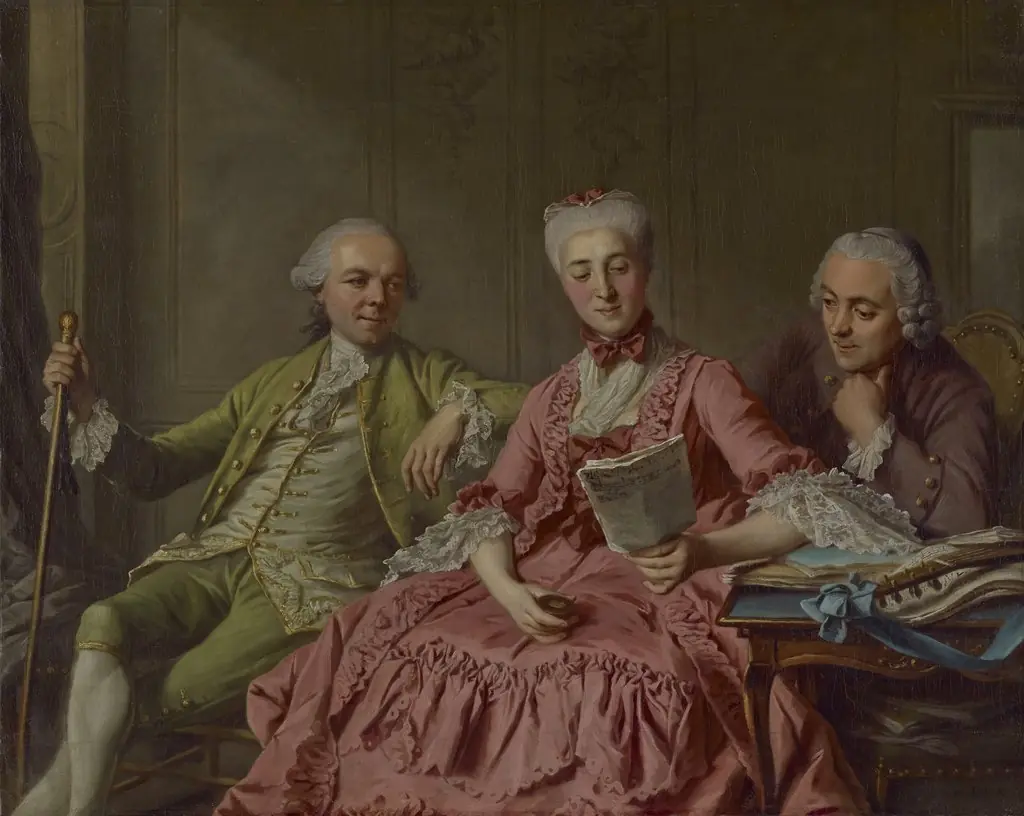
Conversation Piece: Three Men in Eighteenth-Century Costume
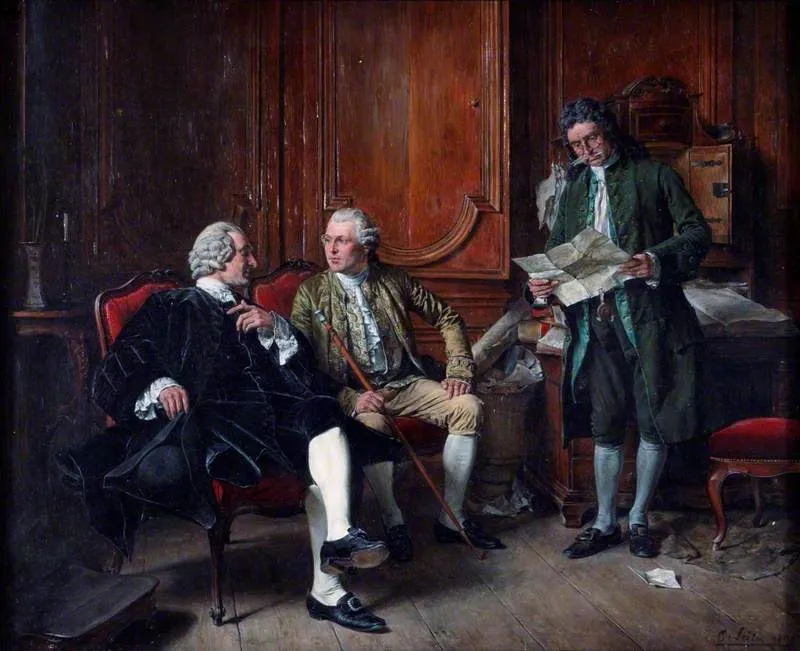
Conversation Piece: Three Men in Eighteenth-Century Costume is an oil painting by the Impressionist artist Carl Seiler. It dates from 1896 and is held in the collection of the Victoria and Albert Museum.
About this work
Overview
Though created in the late nineteenth century, the painting deliberately evokes an earlier era through costume and setting.
Painted in 1896 by Carl Seiler, this oil work presents a staged scene of three men dressed in eighteenth-century garments. Though created in the late nineteenth century, the painting deliberately evokes an earlier era through costume and setting. It resides in the Victoria and Albert Museum, where it is cataloged as a study in historical dress and social posture rather than a portrait of specific individuals.
Subject & Meaning
The three figures are arranged to suggest an informal yet formalized exchange: one seated, one perched, one standing with a document. Their attire—black coat, gold jacket, green coat—signals status and refinement, but no identities are confirmed. The scene implies a moment of intellectual or civic discourse, common in genre paintings that idealize aristocratic sociability, though the context remains deliberately ambiguous.
Technique & Style
Seiler employs chiaroscuro to model the figures against a dimly lit interior, enhancing volume and spatial depth. The textures of velvet, silk, and wood are rendered with precise brushwork, emphasizing material realism. The composition is carefully balanced, with the standing figure anchoring the right side and the seated men forming a stable triangular base, reinforcing the painting’s controlled, theatrical atmosphere.
History & Provenance
The painting entered the Victoria and Albert Museum’s collection in the late nineteenth century, likely acquired as part of a broader interest in historical costume and domestic interiors. No record of prior ownership or commission exists, suggesting it was painted for the open market rather than a private patron. Its preservation reflects institutional interest in 19th-century historical revivalism.
Context
Created during a period when European museums and artists increasingly studied historical dress, Seiler’s work aligns with a trend of reconstructing past fashions for aesthetic and educational purposes. Unlike portraiture, it does not commemorate individuals but rather constructs a generalized vision of 18th-century male sociability, informed by contemporary archaeological and theatrical sources.
Legacy
The painting remains a reference for scholars of costume history and 19th-century historical painting. It exemplifies how late Victorian artists engaged with the past not through nostalgia, but through meticulous reconstruction. While not widely exhibited, it contributes to the museum’s broader collection of works that document the evolving relationship between art and historical identity.
Artist & collection

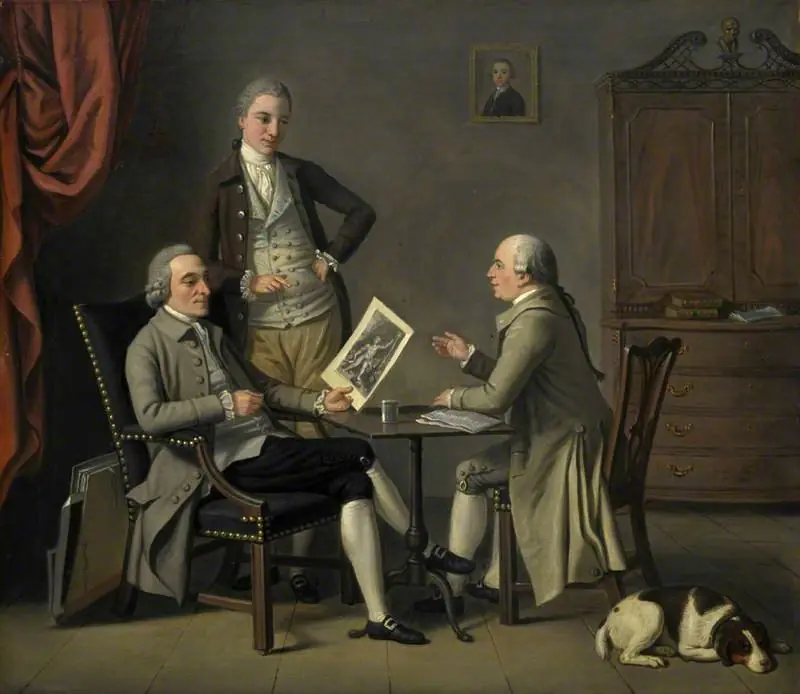 The Connoisseurs: John Caw (died 1784), John Bonar (1747 - 1807) and James Bruce
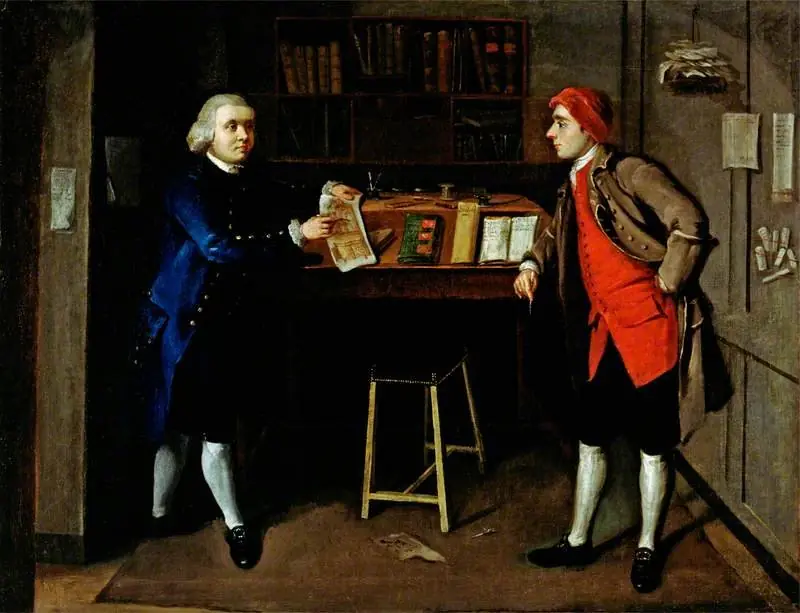 A Cabinet-Maker's Office
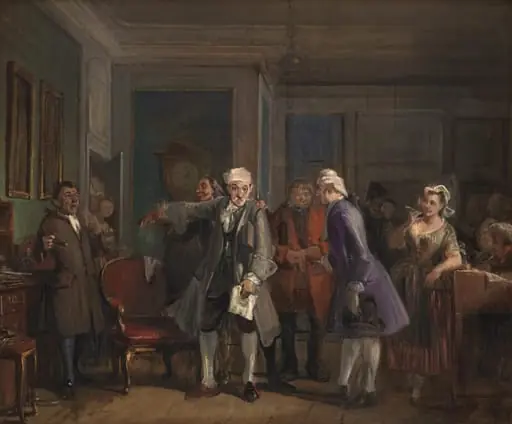 Fra Ludvig Holbergs "Den Stundesløse", I akt, 6. scene
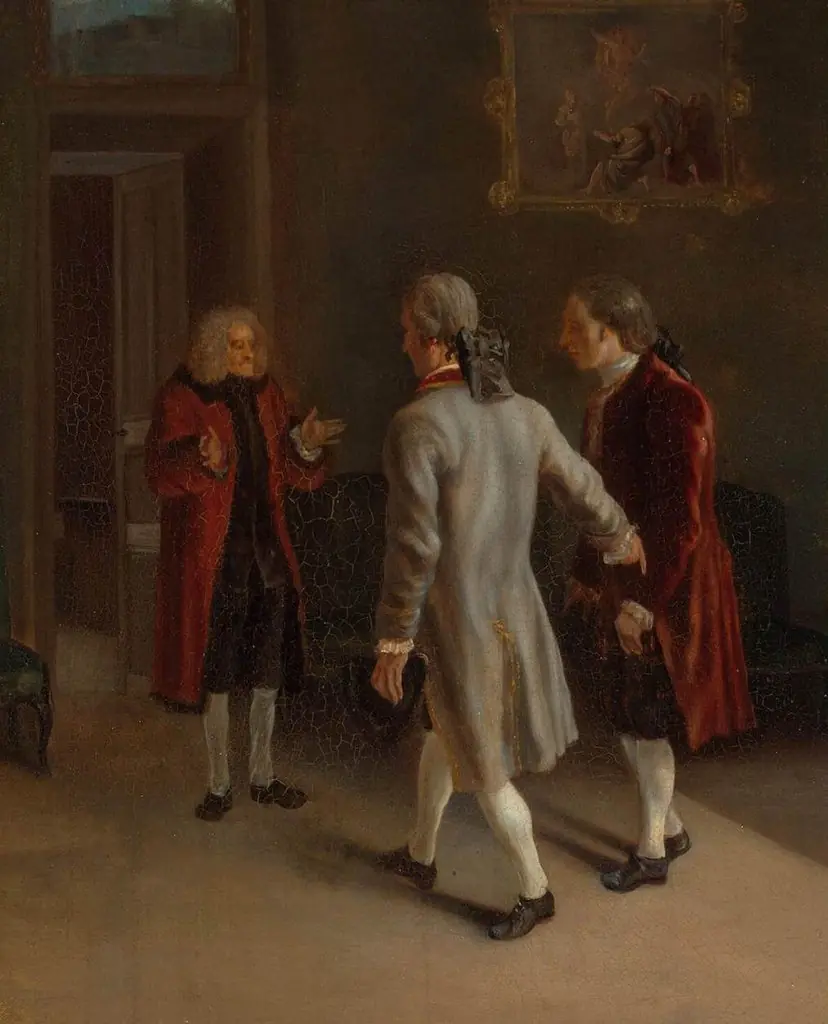 Voltaire Welcoming his Guests
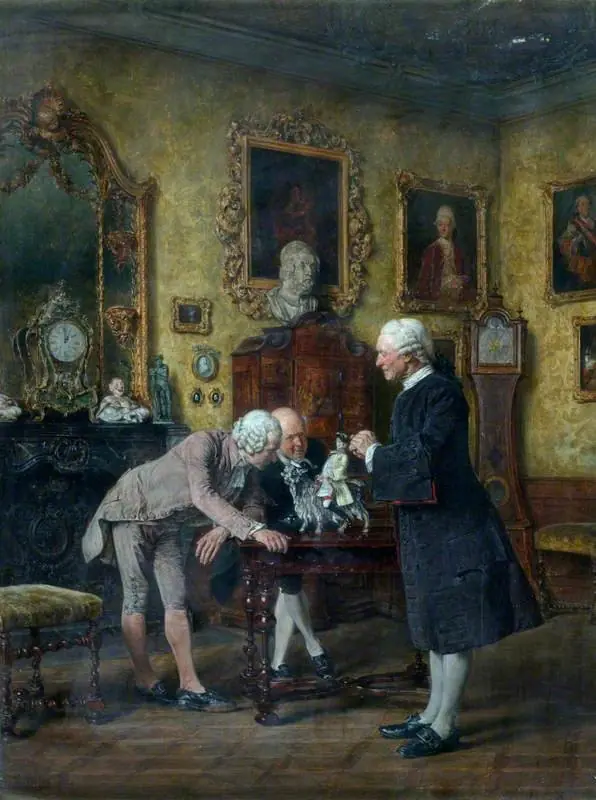 Count Brühl's Goat
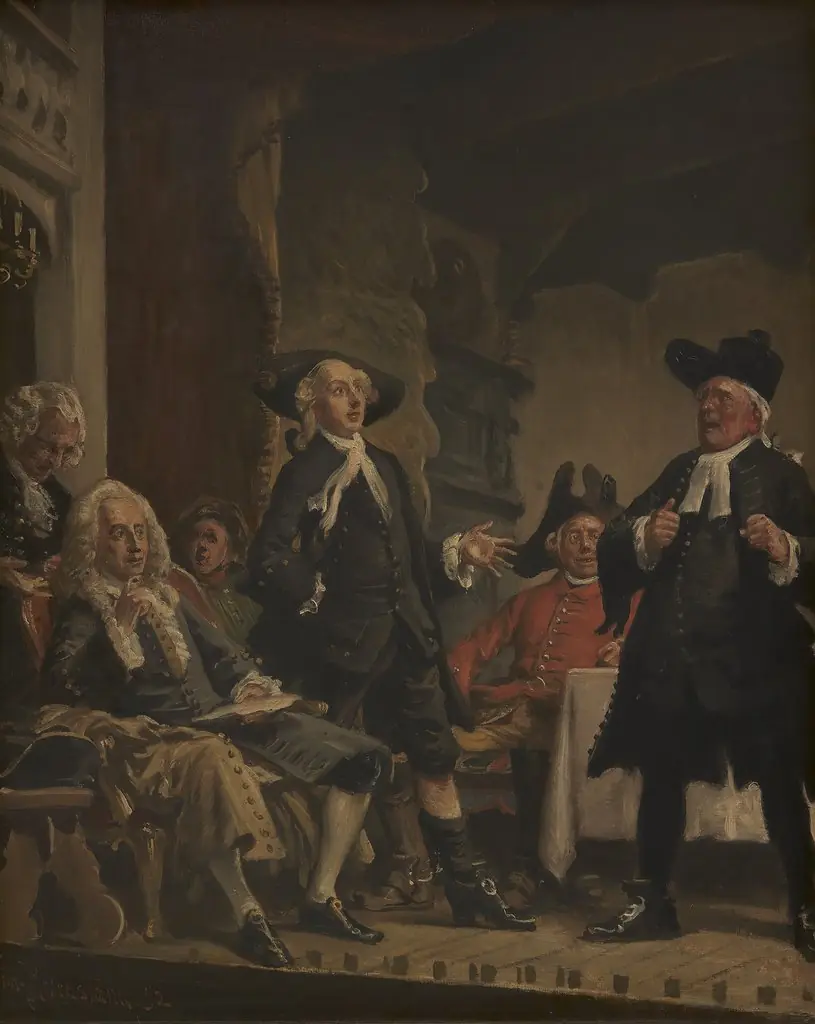 Holberg overværer en prøve på Erasmus Montanus
 Holberg overværer en prøve på Erasmus Montanus
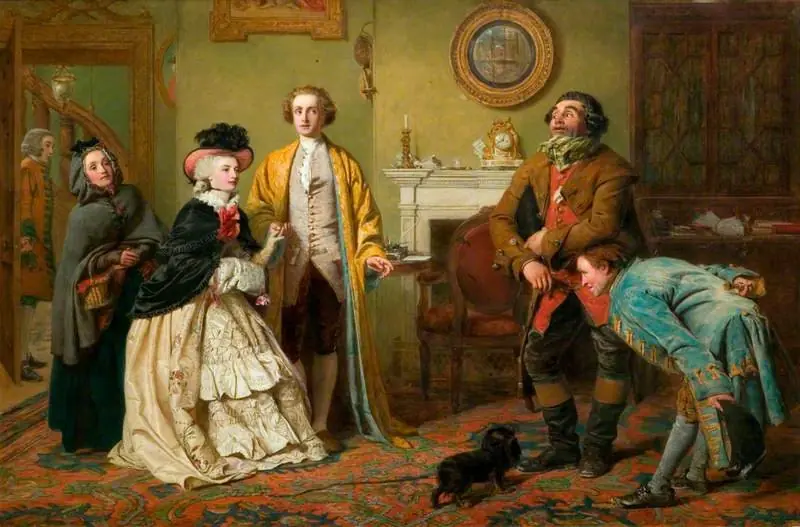 Mr Honeywood Introduces the Bailiffs to Miss Richland as His Friends (from Oliver Goldsmith's 'The Good-Natured Man', Act III, Scene 1)
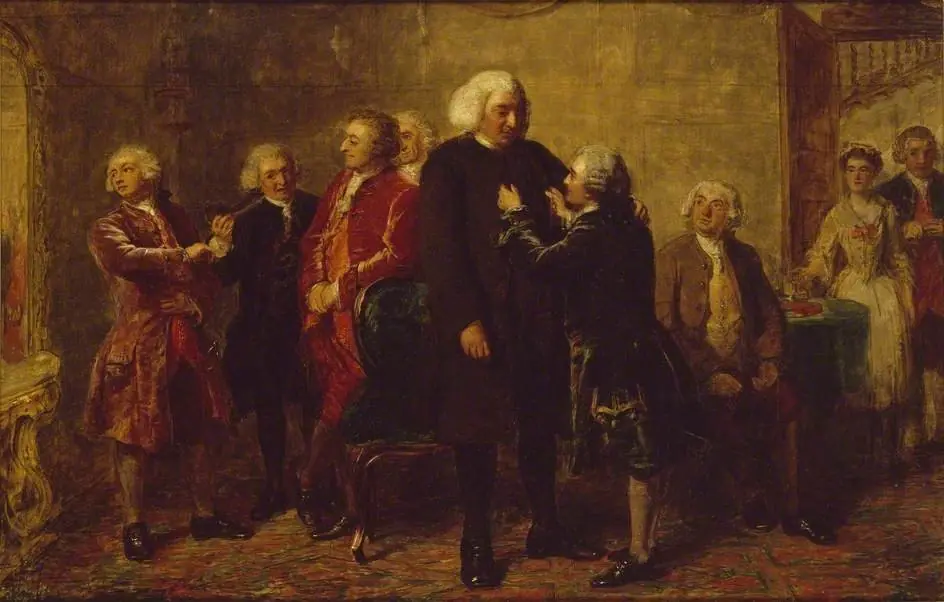 Before Dinner at Boswell's Lodging, 1769
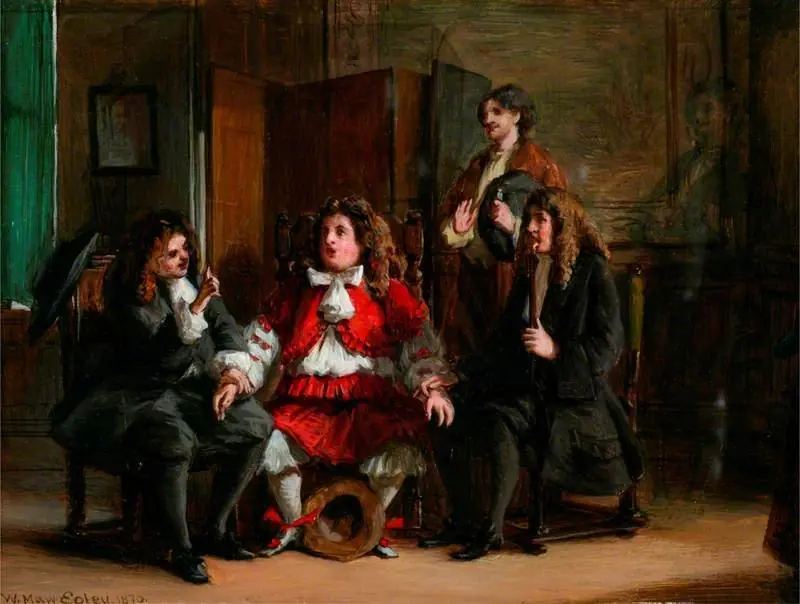 Scene from Molière's 'Monsieur de Pourceaugnac'
 Caricature of Thomas Brudenell, Baron Bruce, the Hon. John Ward, Joseph Leeson, later 2nd Earl of Milltown, and Joseph Henry of Shafford
 Presumed Portrait of the Duc de Choiseul and Two Companions