Artwork
Tourists in the Mountains
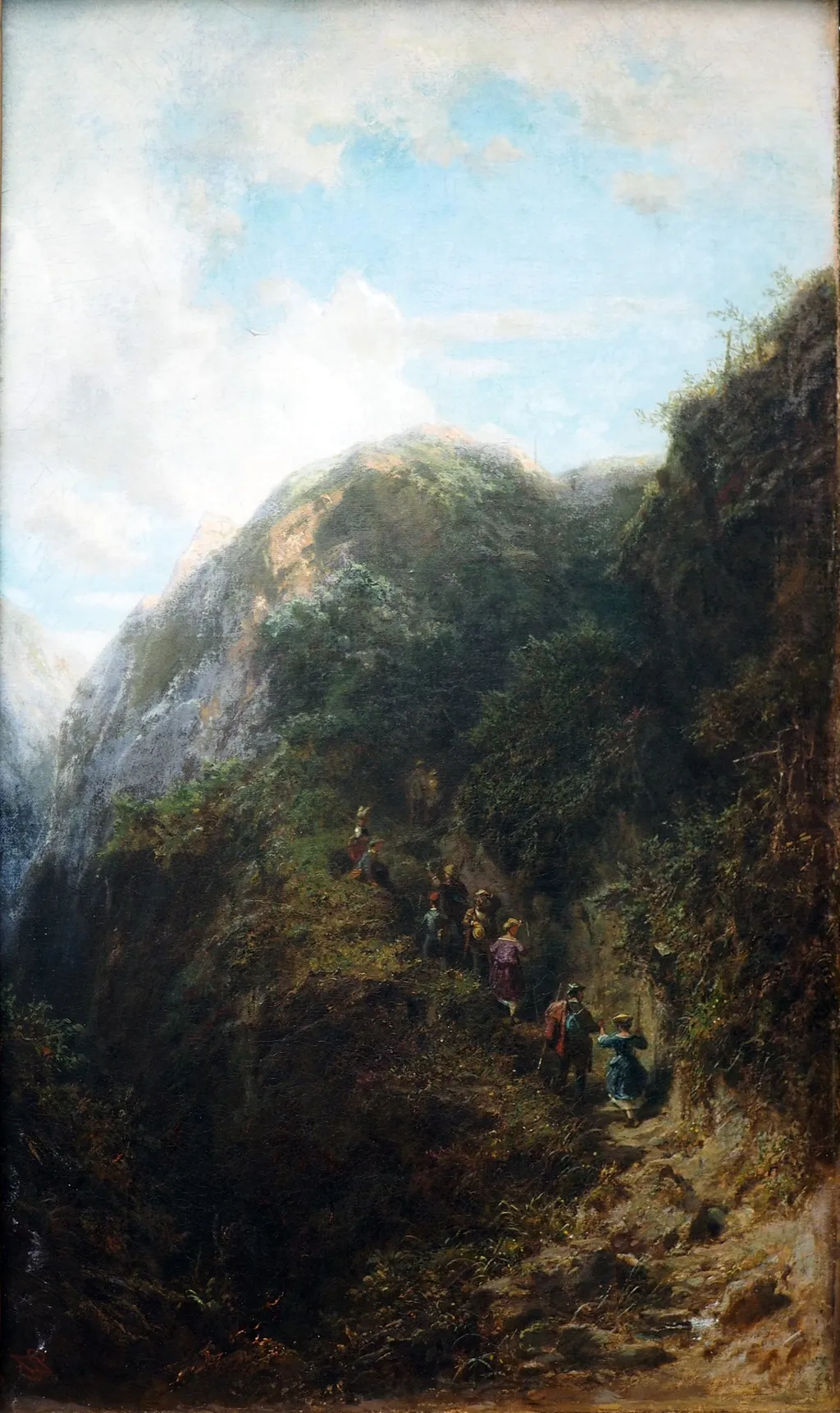
Tourists in the Mountains is an oil painting by the Biedermeier artist Carl Spitzweg. It dates from 1869 and is held in the collection of the Hamburger Kunsthalle.
About this work
Overview
Painted in 1869 by Carl Spitzweg, *Tourists in the Mountains* is an oil-on-canvas work that captures a quiet moment of leisure in the Alpine landscape.
Painted in 1869 by Carl Spitzweg, *Tourists in the Mountains* is an oil-on-canvas work that captures a quiet moment of leisure in the Alpine landscape. As a key figure in the German Biedermeier tradition, Spitzweg focused on ordinary human activities, here portraying travelers engaged in the emerging pastime of mountain tourism. The painting resides in the Hamburger Kunsthalle, where it exemplifies his precise, observational style and gentle humor.
Subject & Meaning
The scene shows a small group of well-dressed visitors traversing a forested slope, their attire suggesting middle-class leisure rather than rugged adventure. Their slow, deliberate movement contrasts with the imposing terrain, subtly commenting on the growing cultural trend of curated nature experiences. Spitzweg does not idealize the landscape but presents it as a backdrop to human behavior, revealing the quiet absurdity and charm of early tourism.
Technique & Style
Spitzweg employs fine brushwork and careful tonal gradations to render the textures of foliage, rock, and fabric. Light falls diagonally across the mountainside, enhancing the sense of depth without dramatic contrast. His use of chiaroscuro is restrained, serving to model form rather than evoke emotion. The composition is deliberately untheatrical, emphasizing quiet observation over spectacle, a hallmark of Biedermeier aesthetics.
History & Provenance
The painting entered the collection of the Hamburger Kunsthalle in the late 19th century, likely acquired during a period of expanding interest in contemporary German art. It has remained in the museum’s holdings since, with no documented changes in ownership. Its preservation reflects the institution’s commitment to documenting the cultural shifts of the Biedermeier era through domestic genre scenes.
Context
In the mid-19th century, improved rail networks and rising urban prosperity enabled the middle class to pursue recreational travel, particularly in the Alps. Spitzweg’s painting responds to this social change, documenting how nature became a destination for leisure rather than merely a backdrop for labor or spiritual retreat. His work aligns with broader European trends of romanticizing the countryside while acknowledging its commodification.
Legacy
Though not widely exhibited outside Germany, *Tourists in the Mountains* remains a representative example of Biedermeier genre painting. It contributes to the understanding of how 19th-century artists recorded the evolving relationship between society and nature. Spitzweg’s unembellished approach influenced later realist traditions in Central European art, particularly in the depiction of everyday life with subtle irony.
Artist & collection
Artist
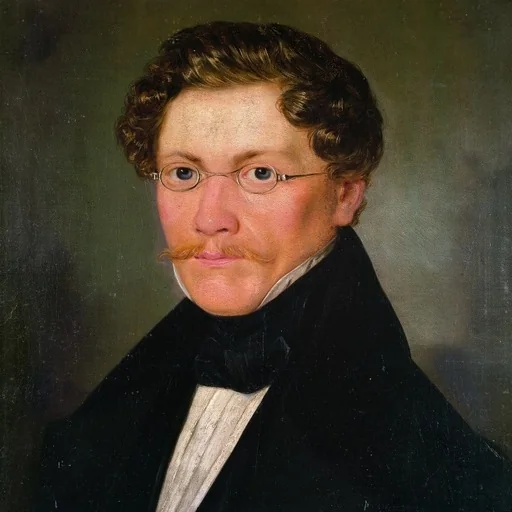
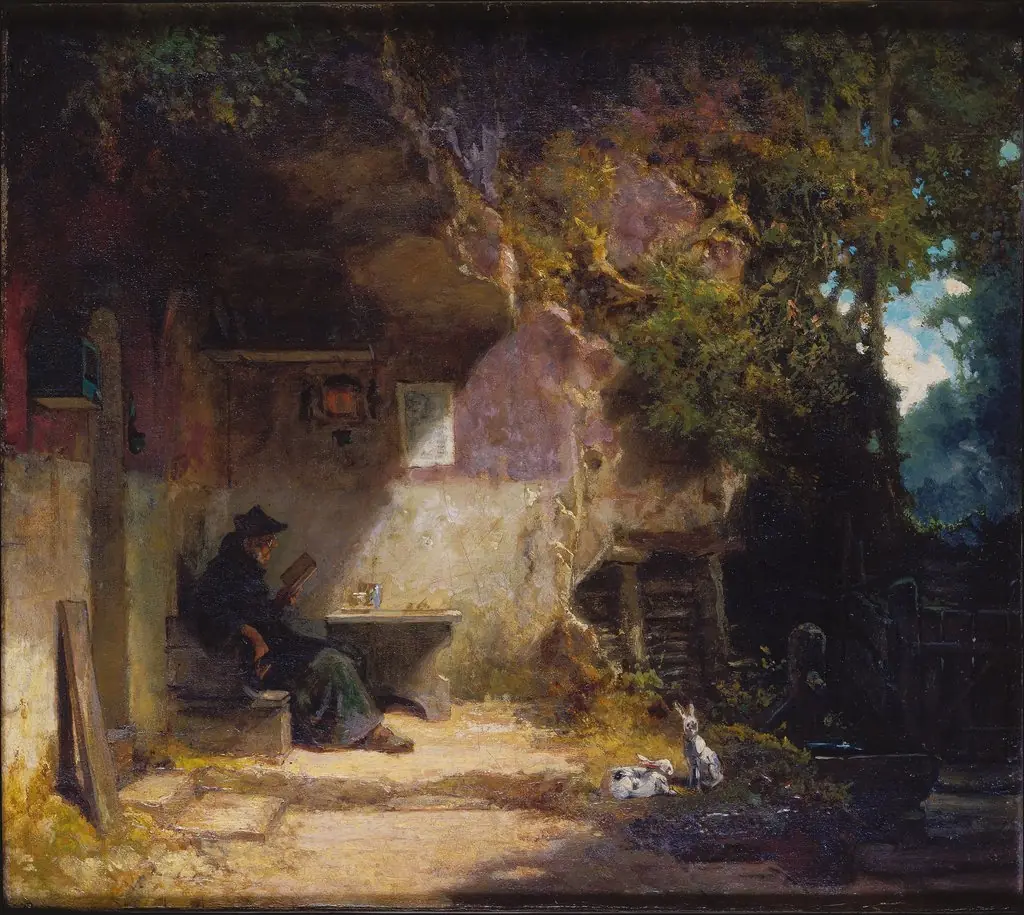
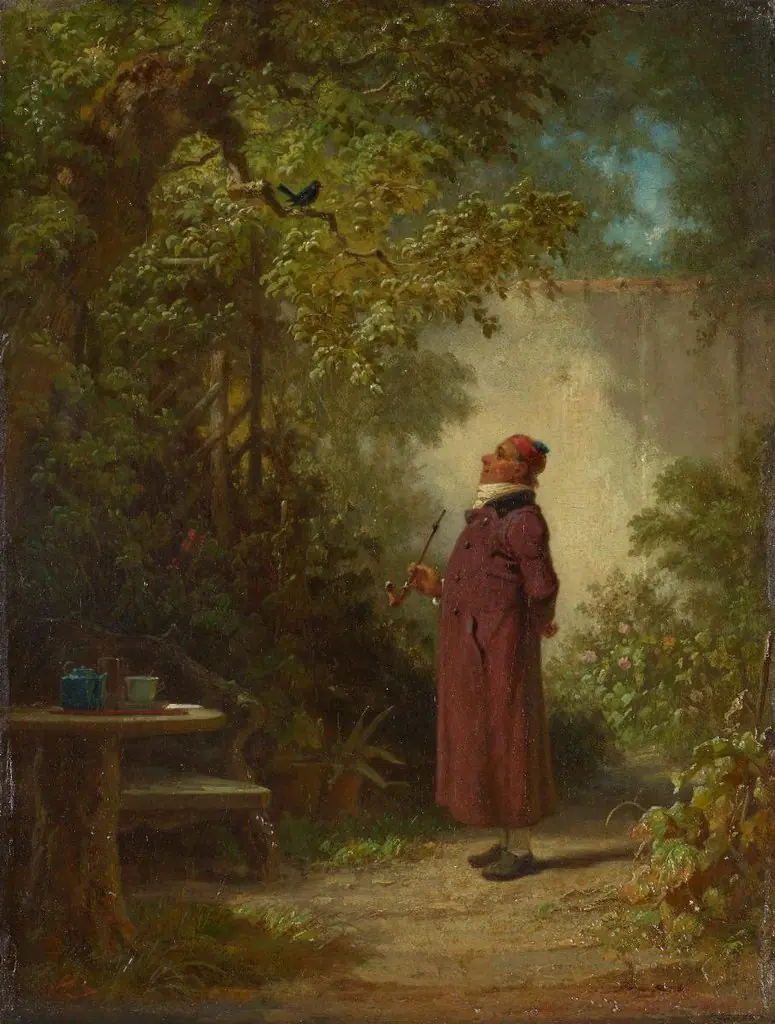
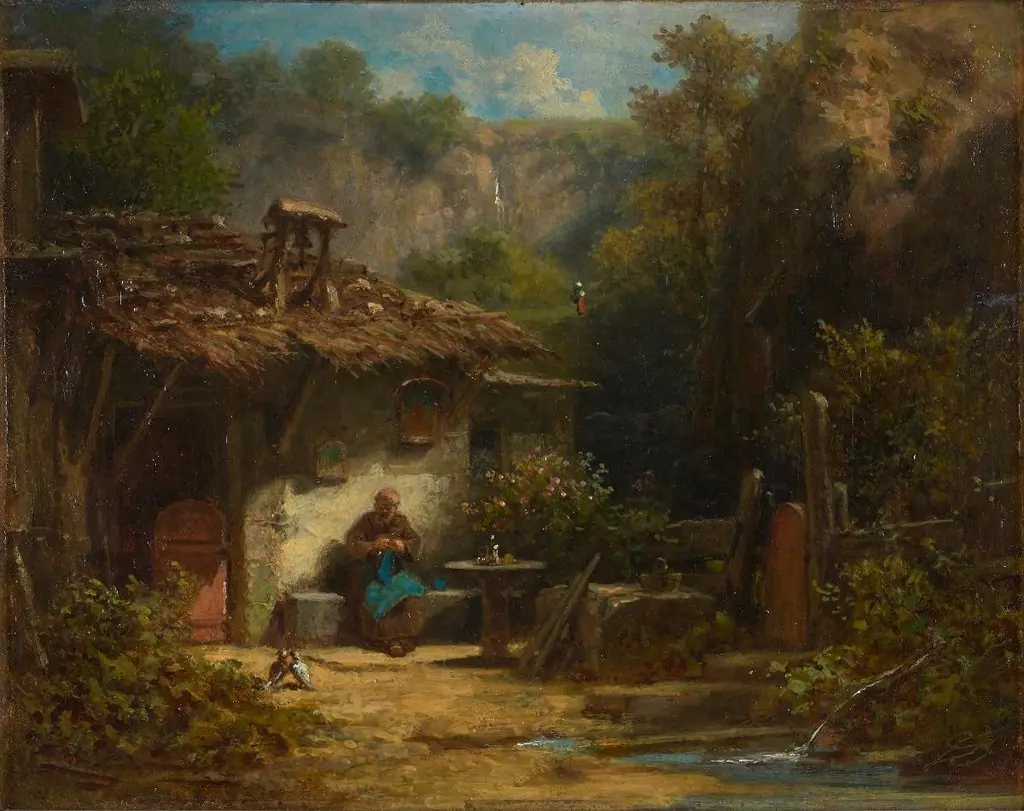
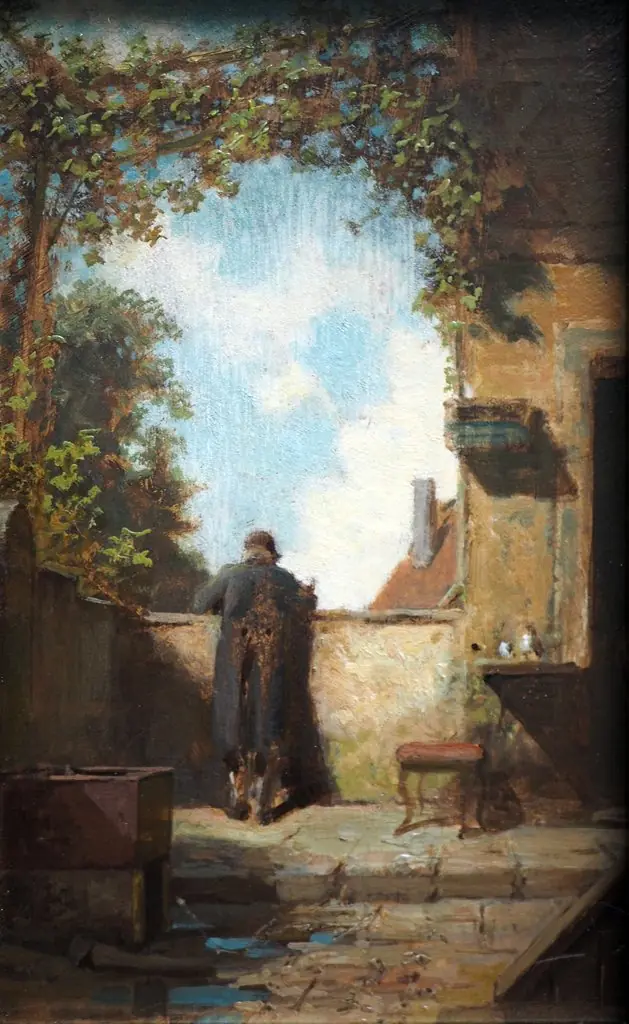
Carl Spitzweg (February 5, 1808 – September 23, 1885) was a German romantic painter, especially of genre subjects. He is considered to be one of the most important artists of the Biedermeier era.

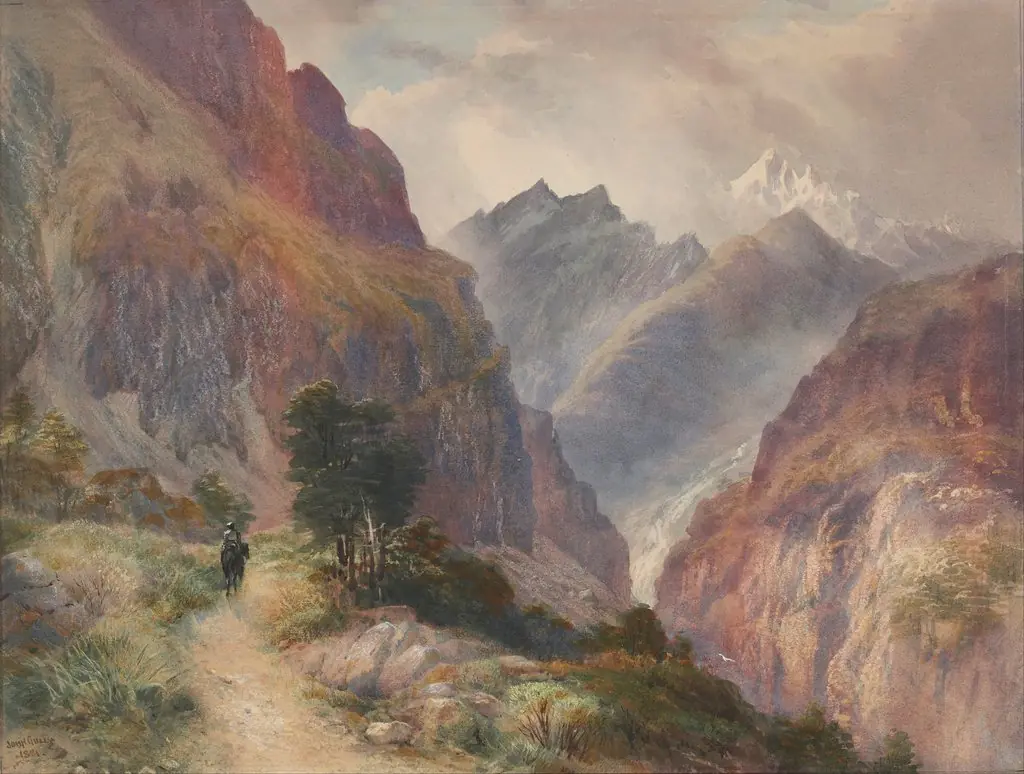 In the Southern Alps
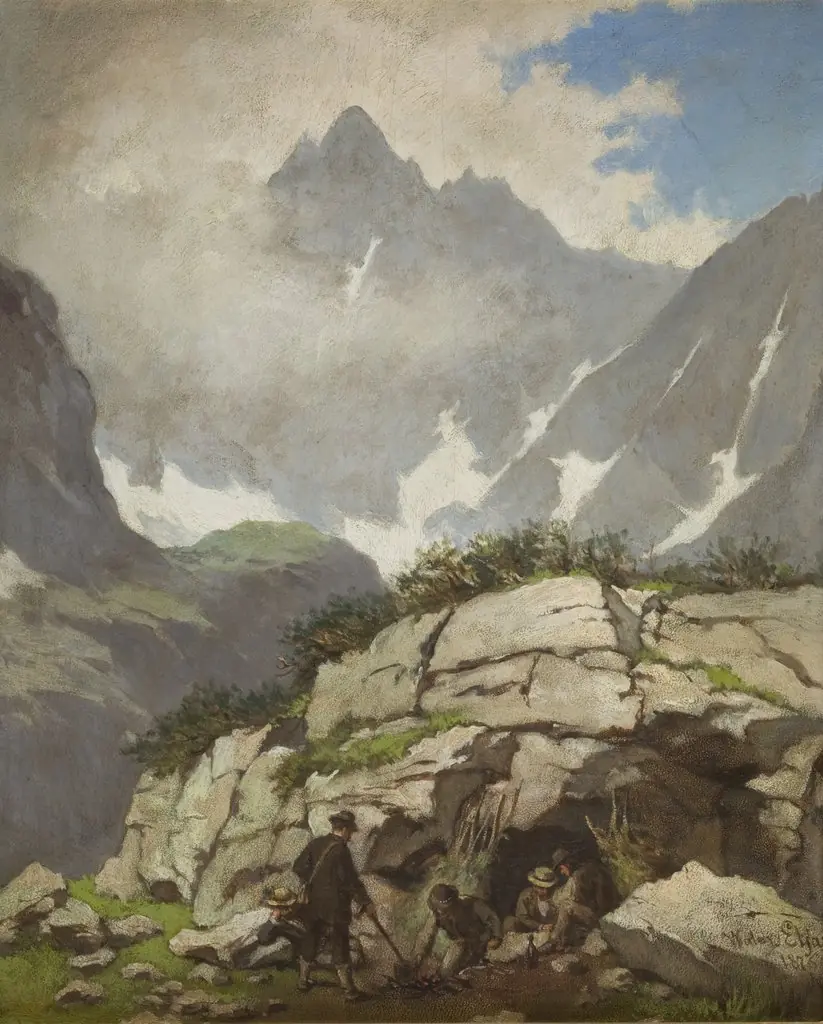 Rock Refuge of Reverend Stolarczyk in the Tatra Mountains
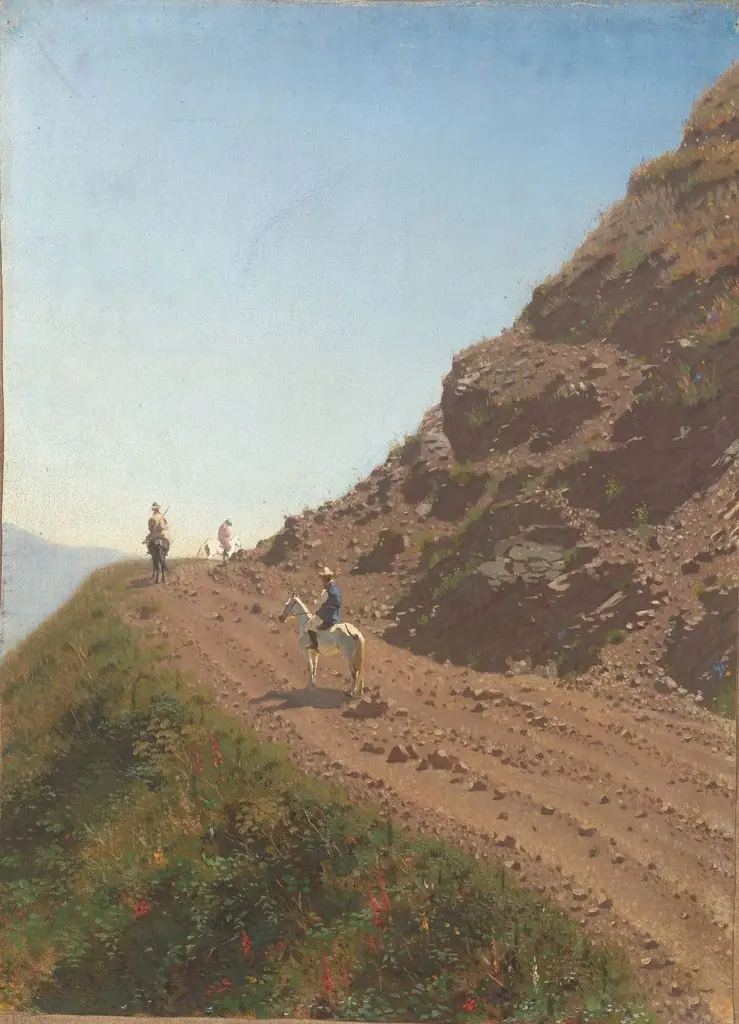 Nomadic road in the Alatau Mountains
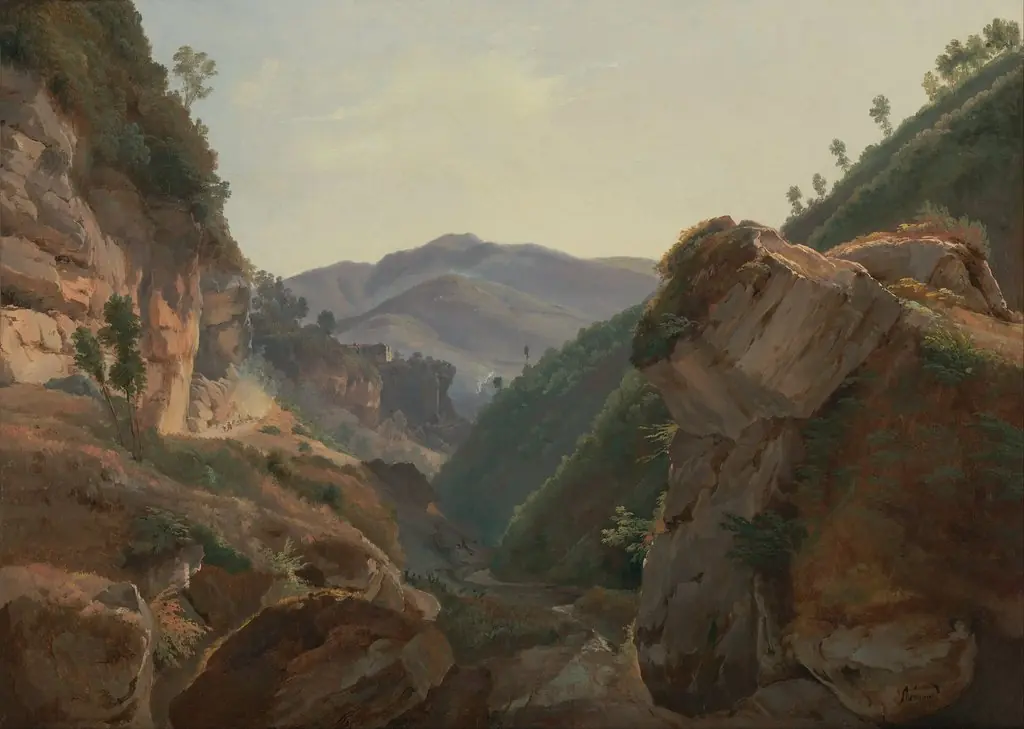 Mountain Landscape with Road to Naples
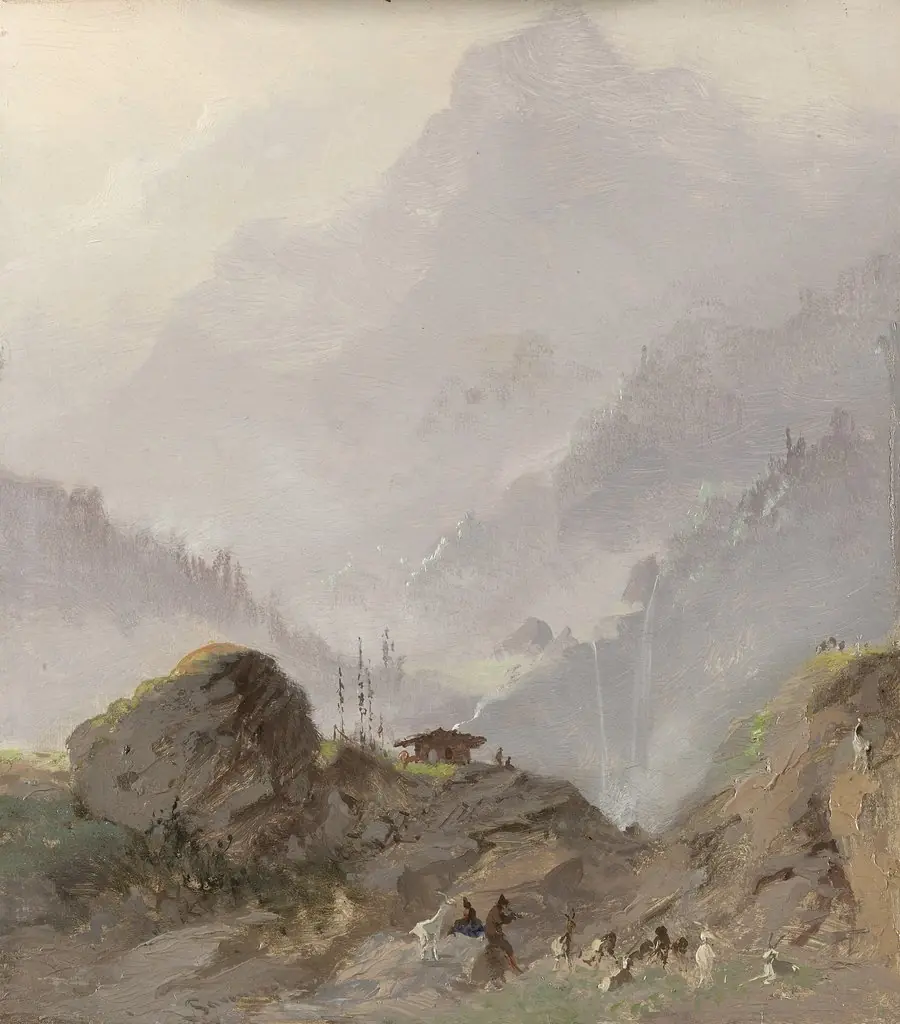 Alpine Landscape in Tyrol with Chamois Herd
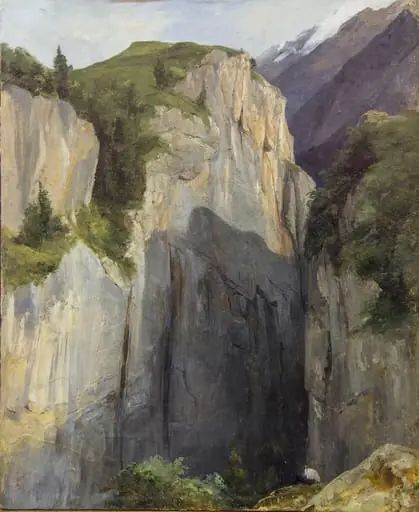 Dâmbovicioara
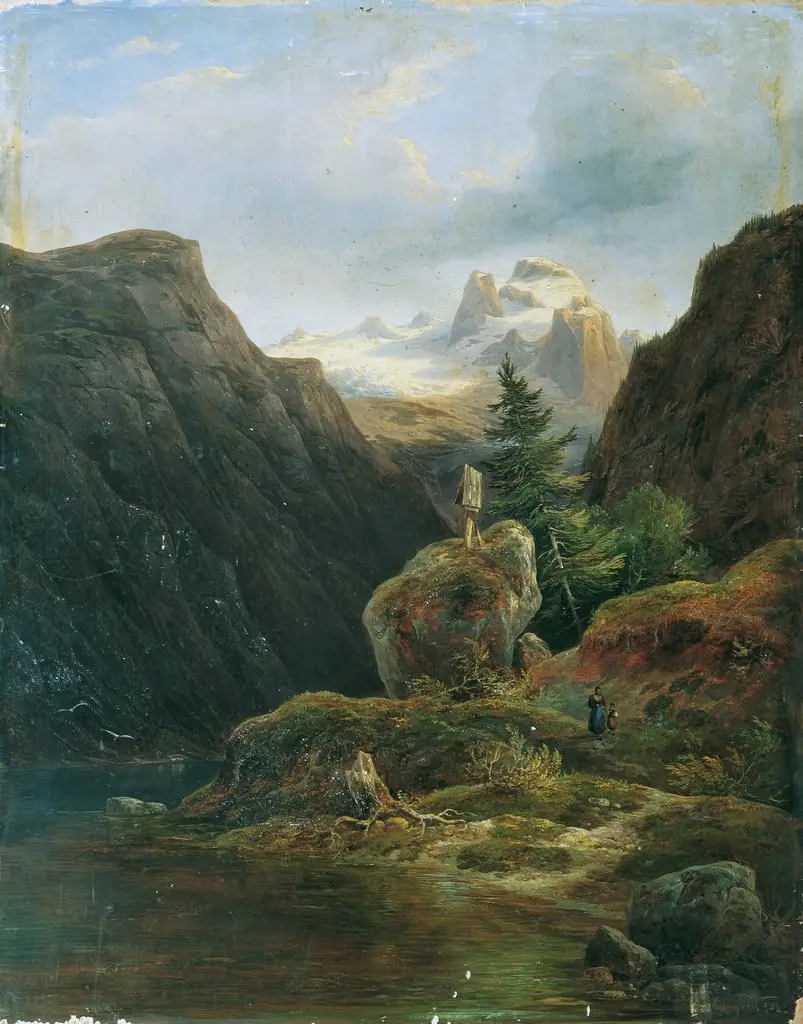 Vorderer Gosausee against Dachstein
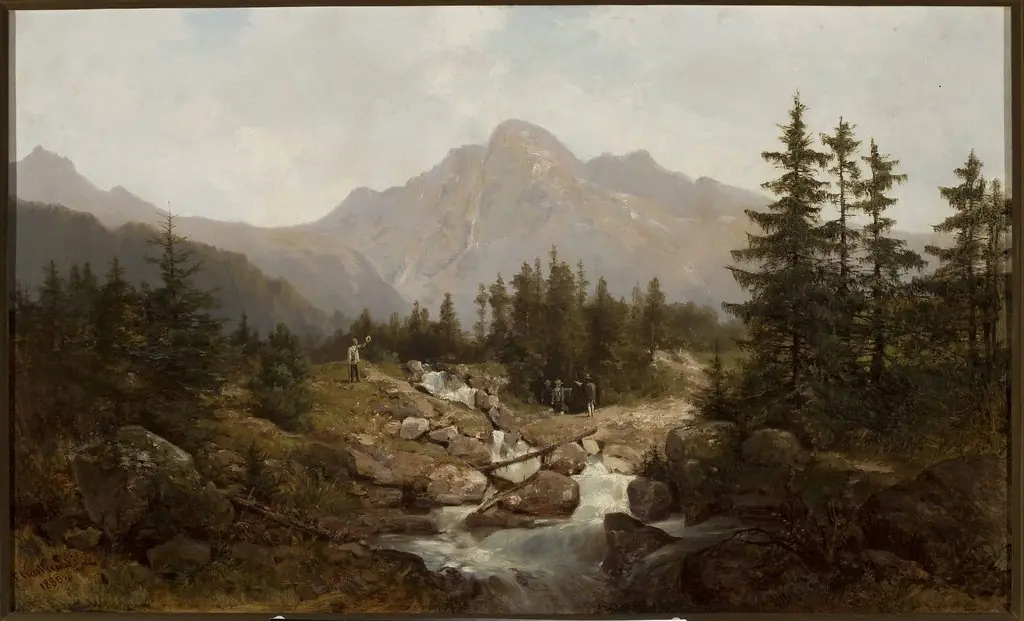 Tatra Mountain landscape
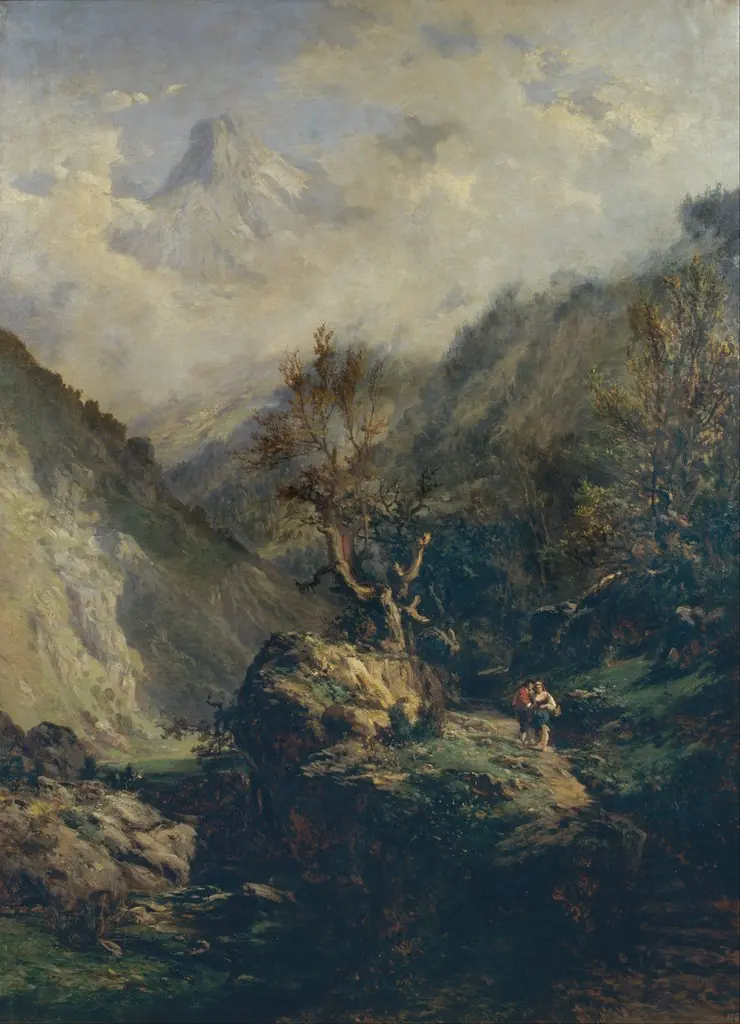 Mountains in Asturias
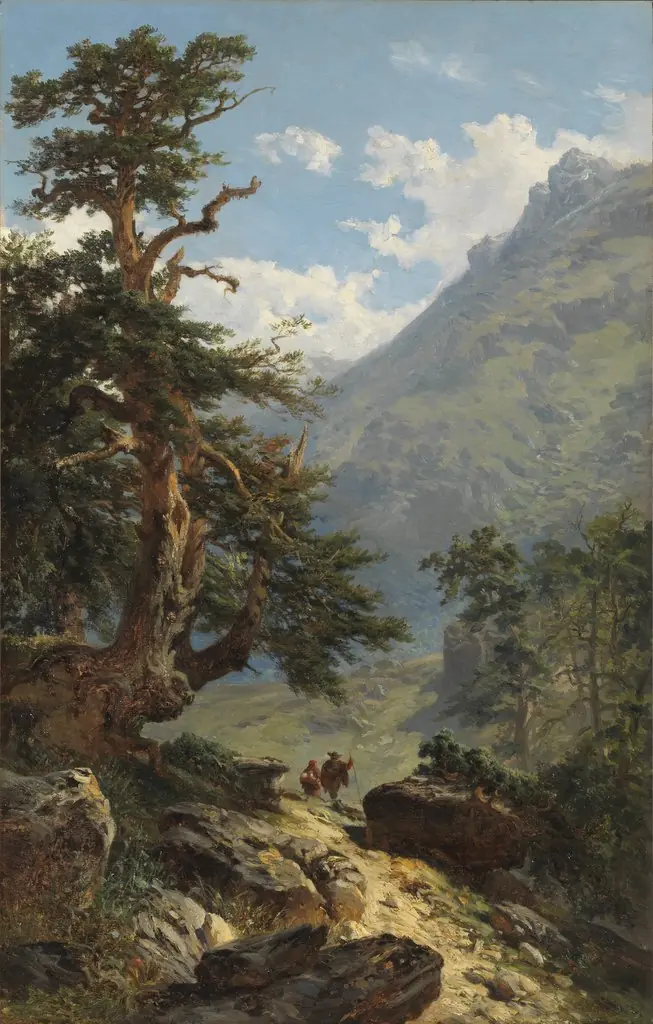 The Lane
 Berglandschap in Tirol met gemzen
 Descent into the Plain of Granada