Artwork
Departure of the goddesses Juno, Venus and Minerva for the judgment of Paris
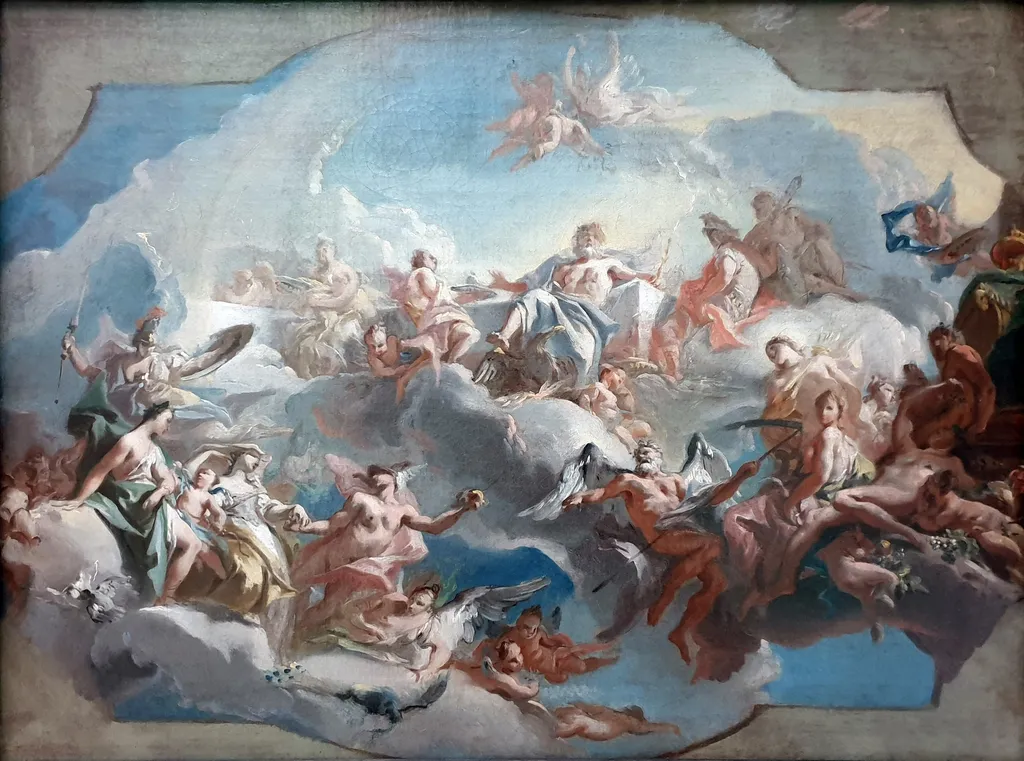
Departure of the goddesses Juno, Venus and Minerva for the judgment of Paris is an oil painting by Carlo Carlone. It dates from 1736 and is held in the collection of the Gemäldegalerie Berlin. Painted around 1736 by Carlo Innocenzo Carlone, this oil work illustrates a moment from Greek myth just before the judgment of Paris.
About this work
Overview
Painted around 1736 by Carlo Innocenzo Carlone, this oil work illustrates a moment from Greek myth just before the judgment of Paris.
Painted around 1736 by Carlo Innocenzo Carlone, this oil work illustrates a moment from Greek myth just before the judgment of Paris. The scene captures Juno, Venus, and Minerva in preparation for their journey to the Trojan prince, framed within a celestial setting. Executed in the tradition of mythological narrative painting, it reflects Carlone’s engagement with Baroque sensibilities during his time in the Holy Roman Empire.
Subject & Meaning
The painting portrays the three goddesses—Juno, Venus, and Minerva—readying themselves to present their claims to Paris, whose decision would determine the fate of divine favor. Their collective departure symbolizes the tension between power, beauty, and wisdom, central themes in the myth. The inclusion of cherubs and drifting clouds elevates the moment beyond mere preparation, suggesting divine intervention and impending consequence.
Technique & Style
Carlone employs oil paint to achieve soft transitions between light and shadow, using chiaroscuro to model the figures with subtle volume. The goddesses are rendered in gentle, muted tones, contrasting with the brighter, airy clouds and fluttering putti above. The composition directs attention upward, emphasizing their celestial ascent while maintaining a serene, balanced rhythm across the canvas.
History & Provenance
The painting entered the collection of the Gemäldegalerie Berlin in the 18th or early 19th century, likely acquired during a period of expanded mythological holdings. Its attribution to Carlone, an Italian artist active in Central Europe, aligns with the gallery’s broader collection of transnational Baroque works. No significant alterations or documented restorations are recorded in its provenance.
Context
Created during the height of Baroque mythological painting in Central Europe, the work reflects the enduring appeal of classical narratives among aristocratic patrons. Carlone’s style bridges Italian compositional clarity with Northern European attention to atmospheric detail, illustrating how mythological subjects remained vital in courtly art despite shifting aesthetic trends.
Legacy
Though not widely exhibited outside institutional circles, the painting remains a representative example of 18th-century mythological narrative in German-speaking regions. It contributes to the understanding of how Italian-trained artists adapted classical themes for Habsburg and Prussian courts, preserving a visual language rooted in antiquity while adapting to local tastes.
Artist & collection
Artist
Carlo Innocenzo Carlone or Carloni (1686–1775) was an Italian painter and engraver, active especially in the Holy Roman Empire.

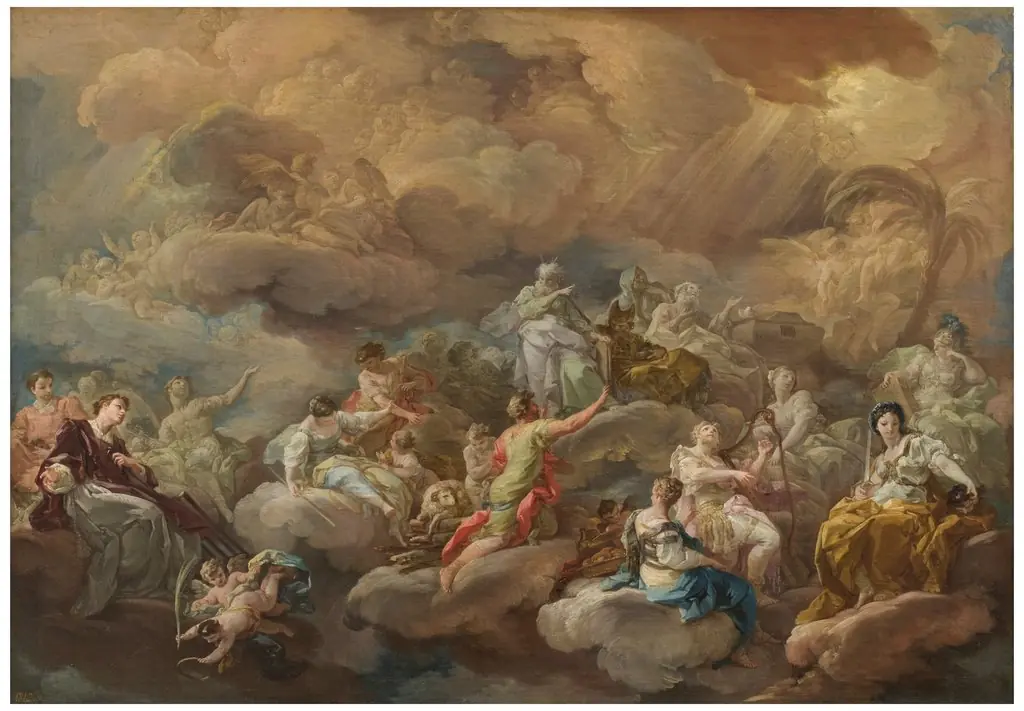 Gloria de santos
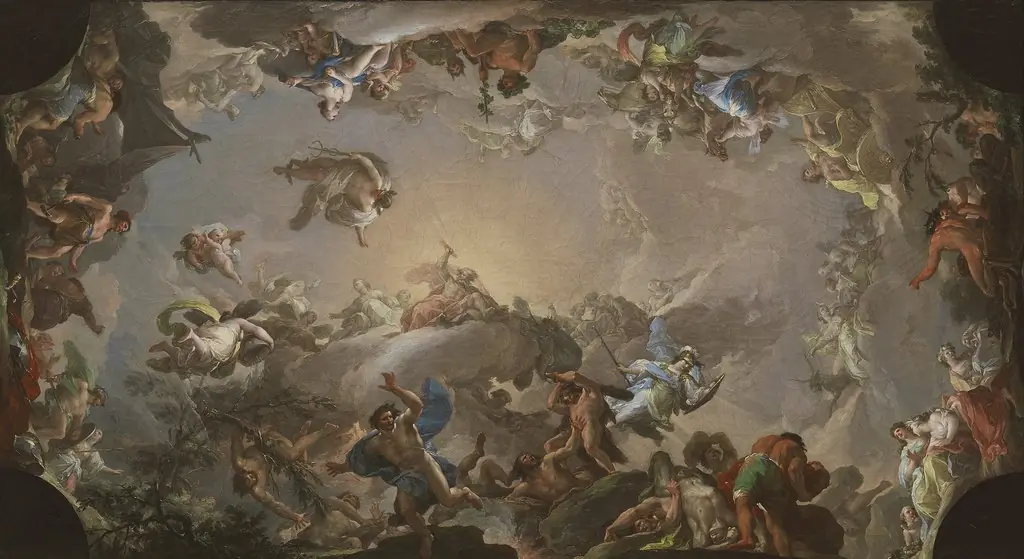 Olympus: The Fall of the Giants
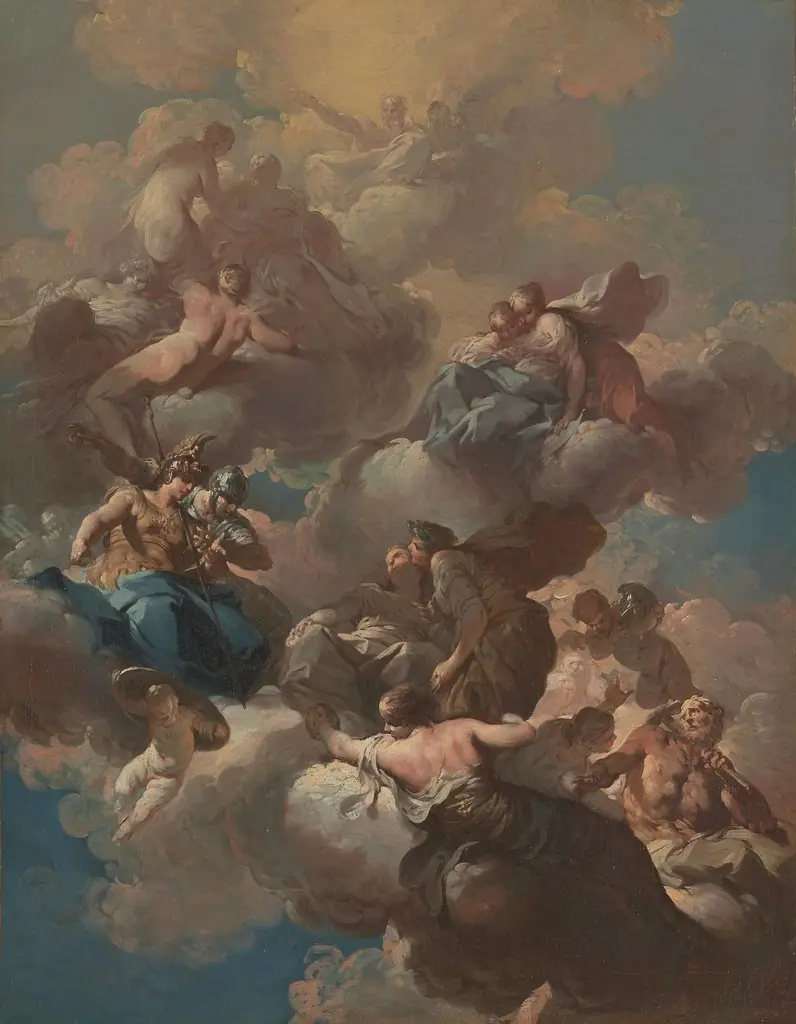 Sketch for a Ceiling Fresco
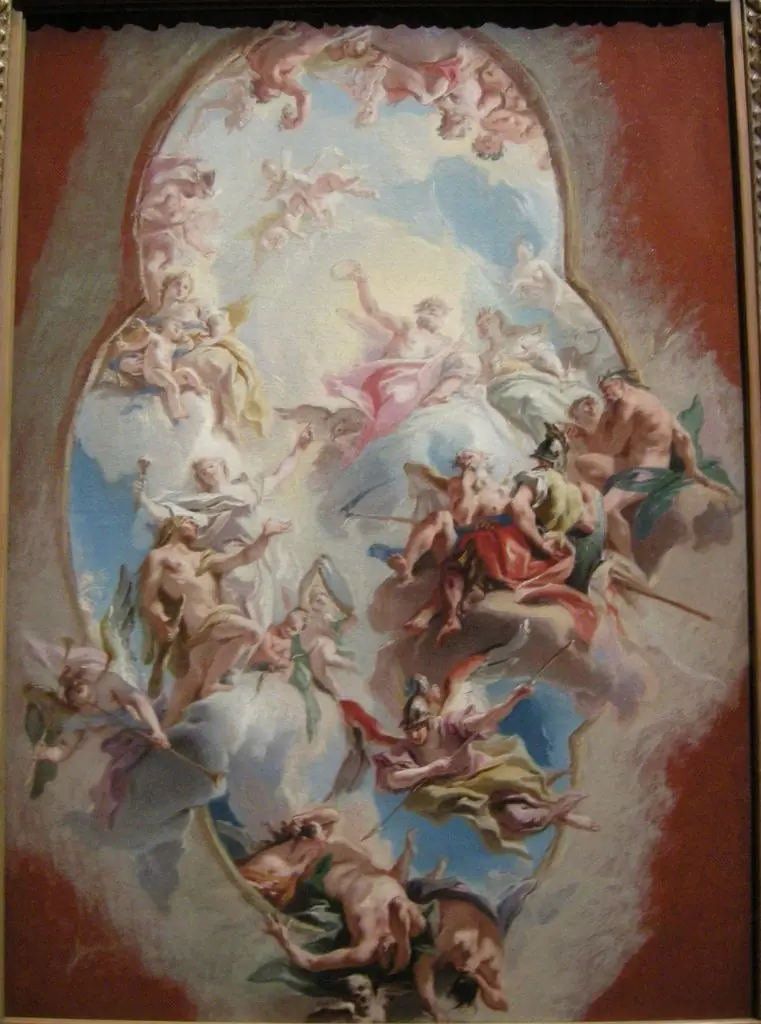 Hercules led by knowledge to immortality
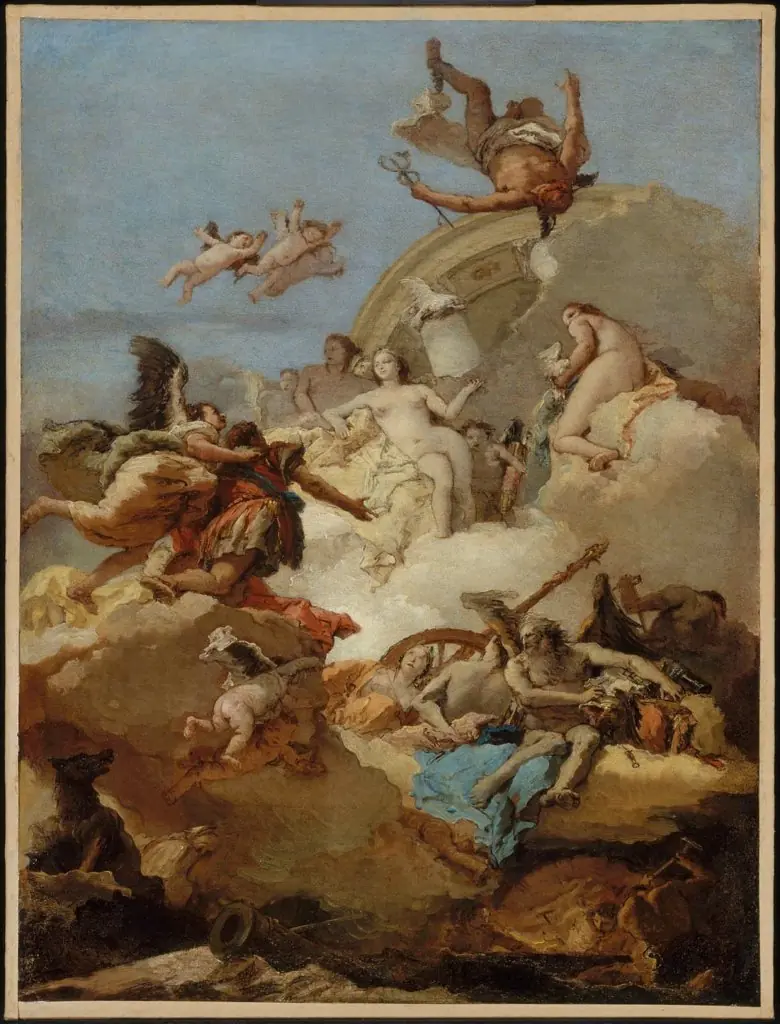 Apotheosis of Aeneas
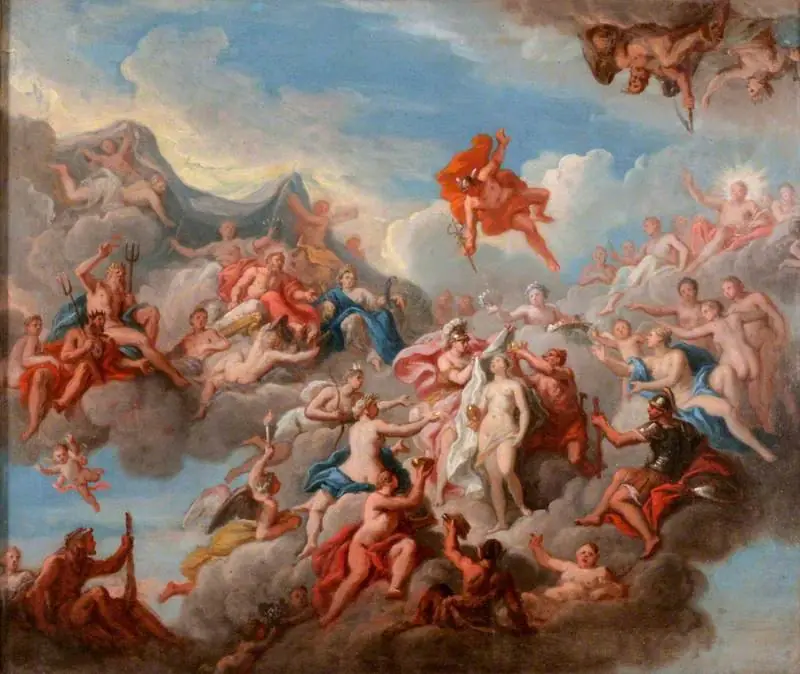 Psyche Being Robed by the Gods for Her Marriage with Cupid (sketch for the ceiling of the stairway at Kiveton)
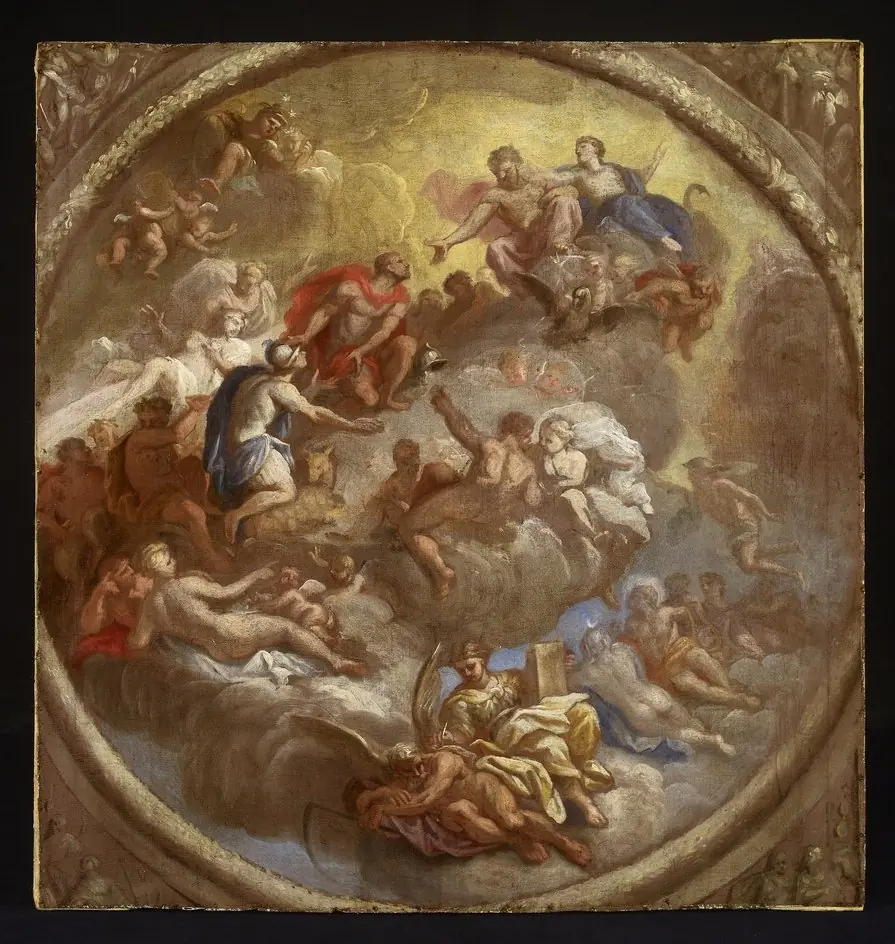 Sketch for a Ceiling Design
 Old Testament Figures in Paradise
 Allegory of the Arts
 Old Testament Figures in Paradise
 Allegory
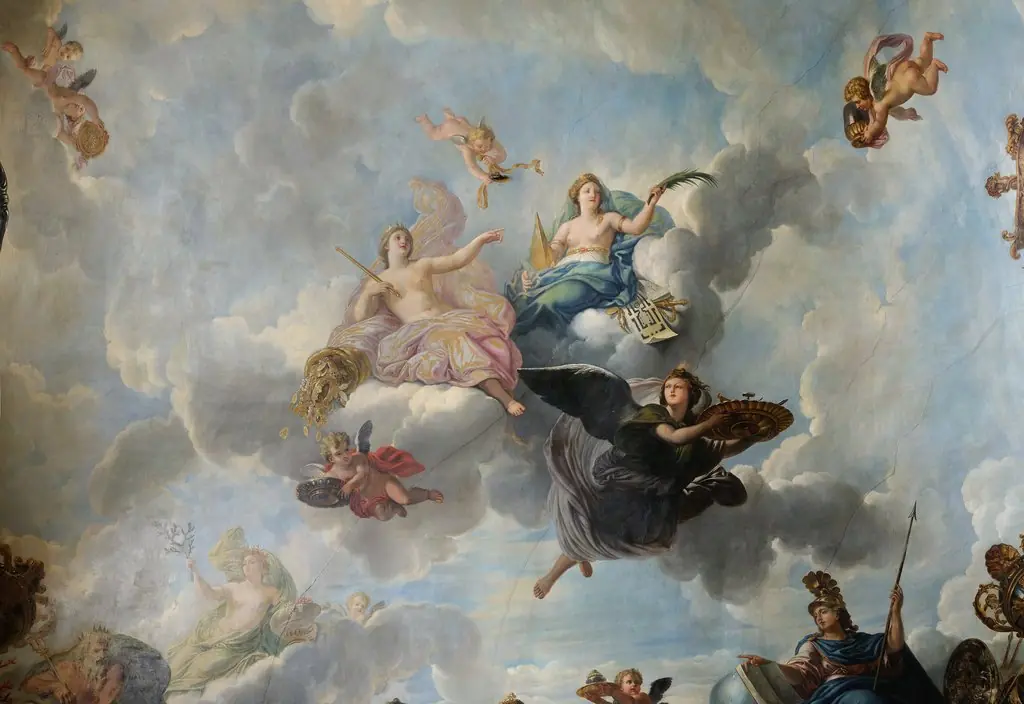 Figure of the Royal Magnificence, Immortality and Progress in the Fine Arts