Artwork
Saint Augustine
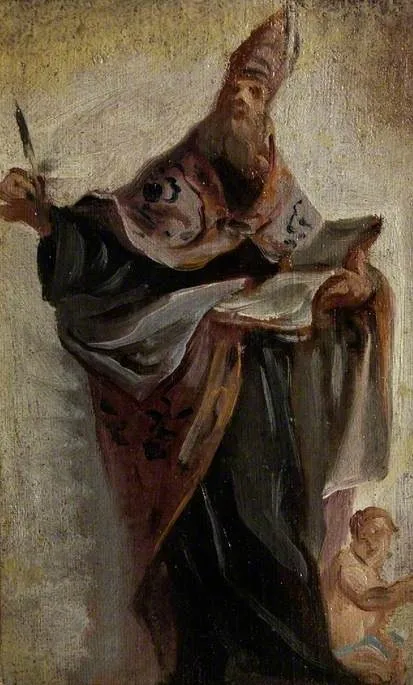
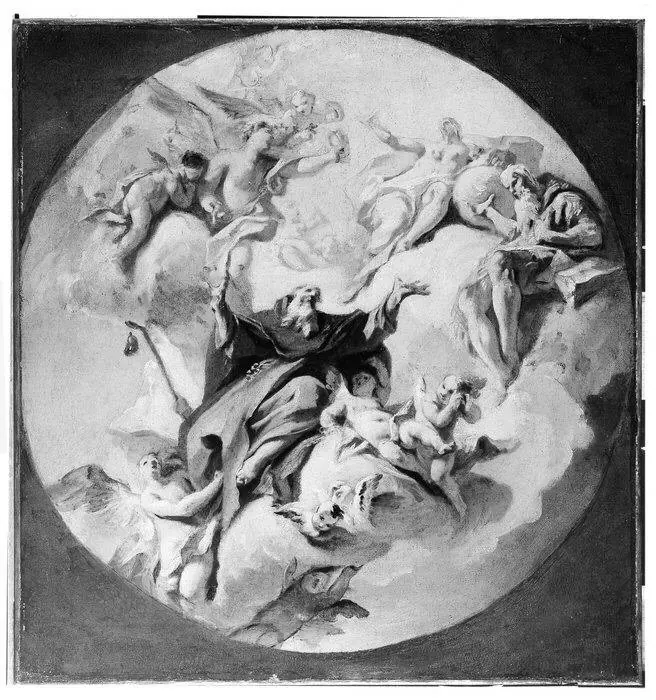
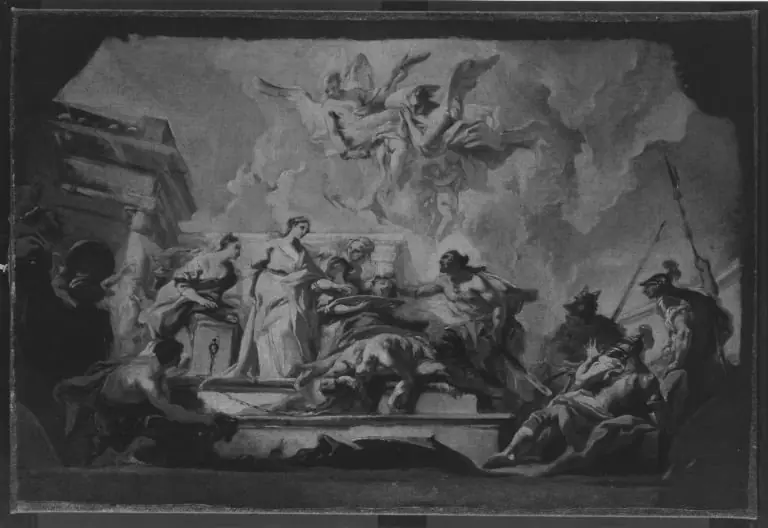
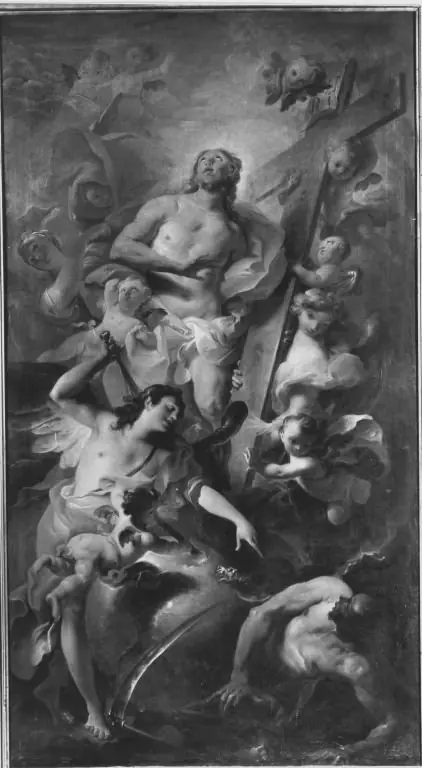
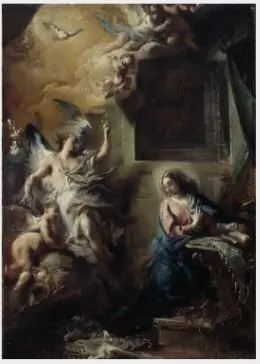
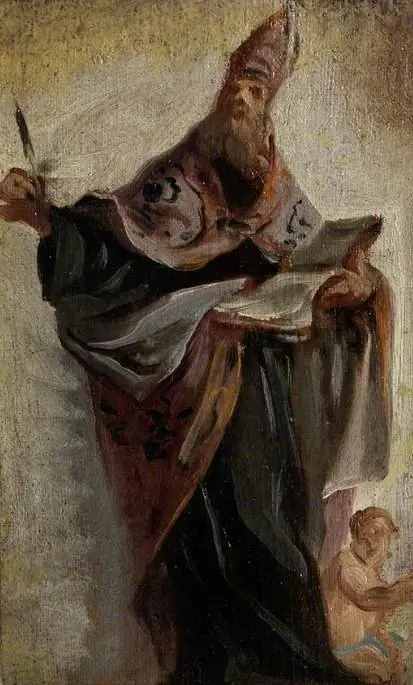
Saint Augustine is an oil painting by Carlo Carlone. It dates from 1736 and is held in the collection of the Fitzwilliam Museum.
About this work
Overview
The painting is part of the Fitzwilliam Museum’s collection, where it stands as an example of 18th-century religious portraiture rooted in Baroque traditions.
Painted around 1736 by Carlo Innocenzo Carlone, this oil-on-canvas portrait depicts Saint Augustine, a prominent early Christian theologian. Carlone, an Italian artist active across the Holy Roman Empire, rendered the figure with restrained elegance. The painting is part of the Fitzwilliam Museum’s collection, where it stands as an example of 18th-century religious portraiture rooted in Baroque traditions.
Subject & Meaning
The figure is identified as Saint Augustine through traditional iconography: a long dark robe, a pointed ecclesiastical hat, and a beard signifying wisdom and age. He holds a quill and a sheet of parchment, alluding to his role as a prolific writer of theological texts. The quiet demeanor and minimal background emphasize introspection, aligning with Augustine’s reputation for deep spiritual contemplation.
Technique & Style
Carlone employed oil paint to create subtle tonal transitions, particularly in the rendering of the saint’s robes and facial features. The light background contrasts with the dark clothing, drawing focus to the figure’s hands and the white parchment. Brushwork is precise but not overly ornate, reflecting a sober, academic approach typical of religious portraiture in the early 18th century.
History & Provenance
The painting was completed during Carlone’s active years in Central Europe, likely commissioned for a religious or scholarly setting. It entered the Fitzwilliam Museum’s collection in the 19th century, though its earlier ownership remains undocumented. Its preservation suggests it was valued as a devotional or educational image rather than a public display piece.
Context
In the early 1700s, depictions of Church Fathers like Augustine remained common in Catholic regions, serving both devotional and intellectual purposes. Carlone’s work aligns with a broader trend of portraying saints as learned figures, emphasizing their literary contributions over miraculous events. This reflects the era’s emphasis on reason and textual authority within religious life.
Legacy
While not among Carlone’s most widely known works, this painting exemplifies his skill in conveying intellectual gravitas through restrained composition. It contributes to the understanding of how religious figures were visualized in the decades before the Enlightenment shifted artistic priorities away from traditional iconography.
Artist & collection
Artist
Carlo Innocenzo Carlone or Carloni (1686–1775) was an Italian painter and engraver, active especially in the Holy Roman Empire.