Artwork
Untitled
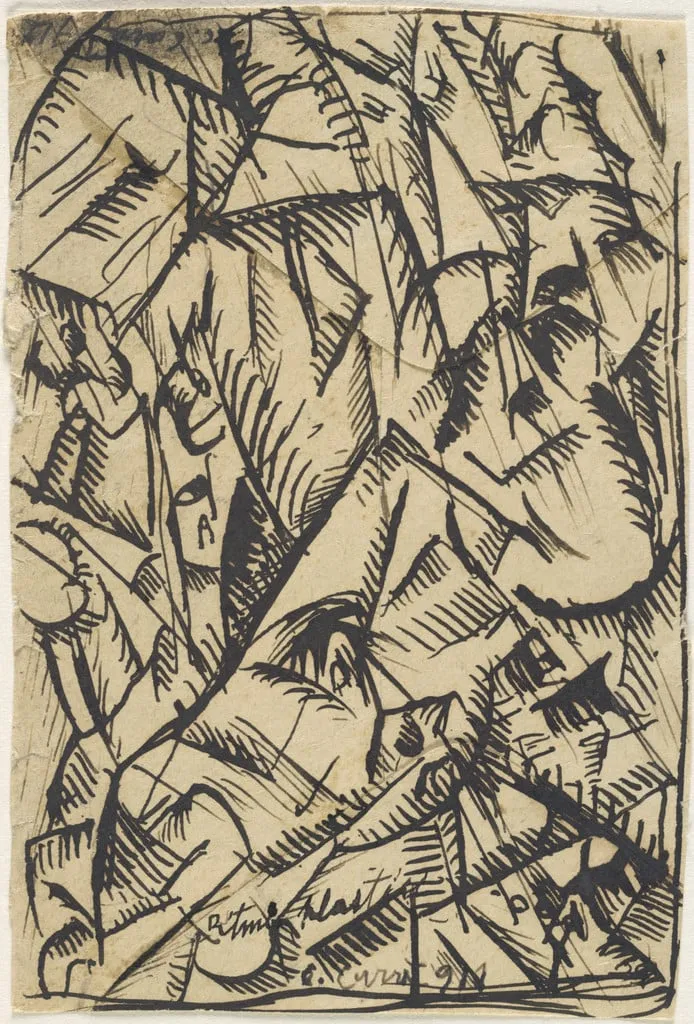
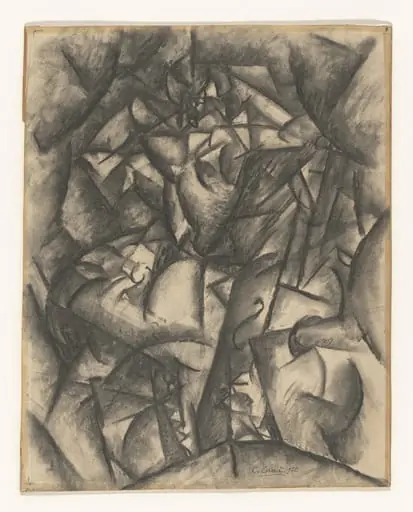
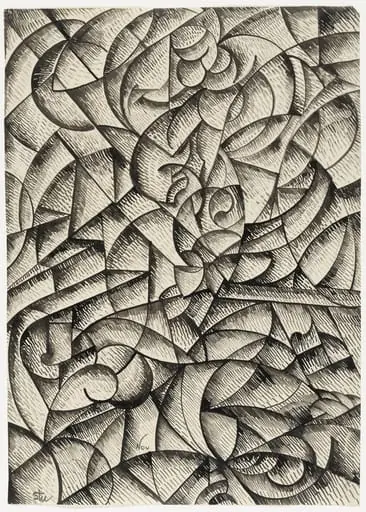
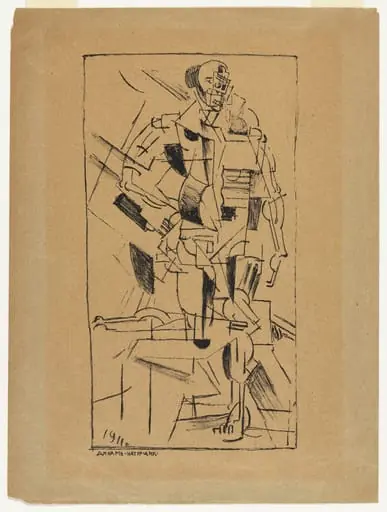
Untitled is an ink drawing by Carlo Carrà. It dates from 1911 and is held in the collection of the Museum of Modern Art.
About this work
Overview
The piece resides in the collection of The Museum of Modern Art, where it contributes to the understanding of early 20th-century Italian avant-garde practices.
Created in 1911, this ink drawing by Carlo Carrà is an early example of his engagement with Futurist principles. Executed on paper with rapid, layered strokes, the work rejects traditional representation in favor of dynamic abstraction. Its energetic composition reflects the movement’s fascination with motion and modernity. The piece resides in the collection of The Museum of Modern Art, where it contributes to the understanding of early 20th-century Italian avant-garde practices.
Subject & Meaning
The drawing does not depict a recognizable scene or figure. Instead, it conveys a sense of visual turbulence, evoking the sensory overload of urban life through abstract marks. Carrà uses density and contrast to suggest movement and energy rather than form. The absence of clear subject matter aligns with Futurist aims to capture the rhythm and chaos of modern experience, prioritizing emotional and kinetic impact over literal depiction.
Technique & Style
Carrà employed ink with aggressive, overlapping strokes, building areas of deep black through repeated layering. Fine, erratic lines contrast with dense, almost solid patches, creating a tactile surface that reads as both chaotic and deliberate. The technique resembles cross-hatching pushed to an extreme, where control and spontaneity coexist. The paper’s texture interacts with the ink’s fluidity, enhancing the drawing’s raw, unpolished quality.
History & Provenance
Produced during Carrà’s active years in the Futurist circle, the work predates his later shift toward metaphysical painting. It was acquired by The Museum of Modern Art as part of its early commitment to documenting European modernism. Its preservation reflects the institution’s interest in non-representational works from the movement’s formative period, offering insight into Carrà’s experimental phase before his stylistic evolution.
Context
In 1911, Italy’s Futurist movement was gaining momentum through manifestos and visual experiments that celebrated speed, technology, and disruption. Carrà, alongside Marinetti and Boccioni, sought to break from academic traditions. This drawing exemplifies the group’s interest in translating the dynamism of industrial life into visual form, using abstraction as a tool to reject static composition and embrace the unpredictability of modern existence.
Legacy
Though Carrà later moved away from Futurism, this drawing remains a significant record of his early radicalism. It influenced subsequent generations exploring non-objective drawing and expressive mark-making. Its presence in MoMA’s collection ensures its role in broader narratives of modern art’s departure from representation, serving as a touchstone for studies on abstraction’s emergence in early 20th-century Europe.
Artist & collection
Artist
Carlo Carrà (Italian: ; February 11, 1881 – April 13, 1966) was an Italian painter and a leading figure of the Futurist movement that flourished in Italy during the beginning of the 20th century.