Artwork
Pala di San Pietro di Muralto
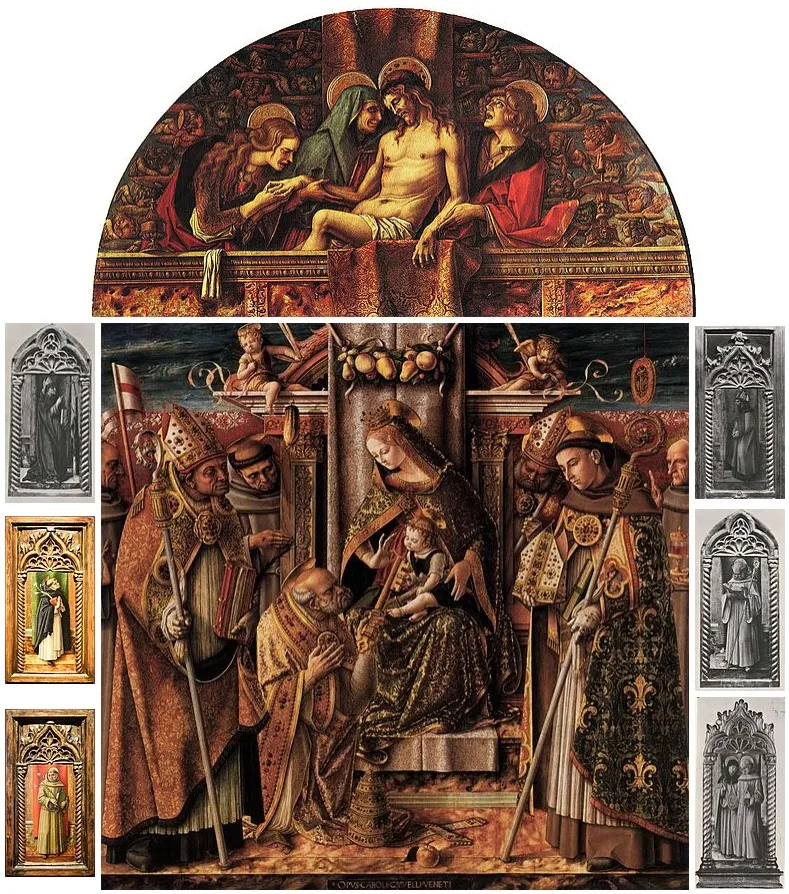
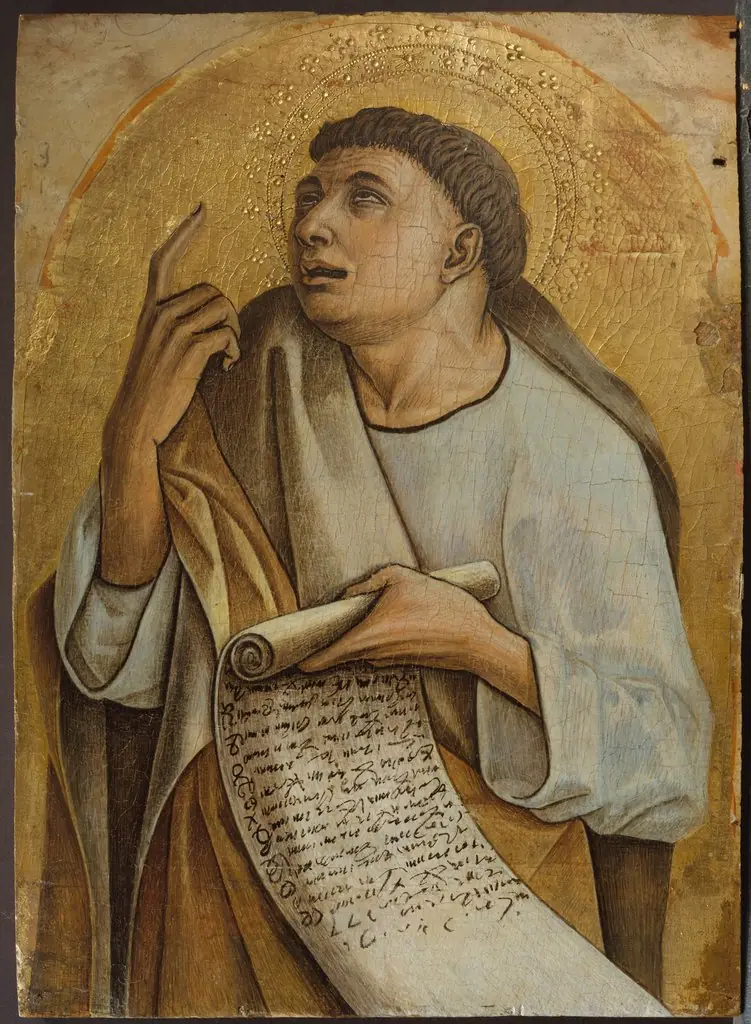
Pala di San Pietro di Muralto is a tempera painting by the Early Renaissance artist Carlo Crivelli. It is held in the collection of the Vatican Museums.
About this work
Overview
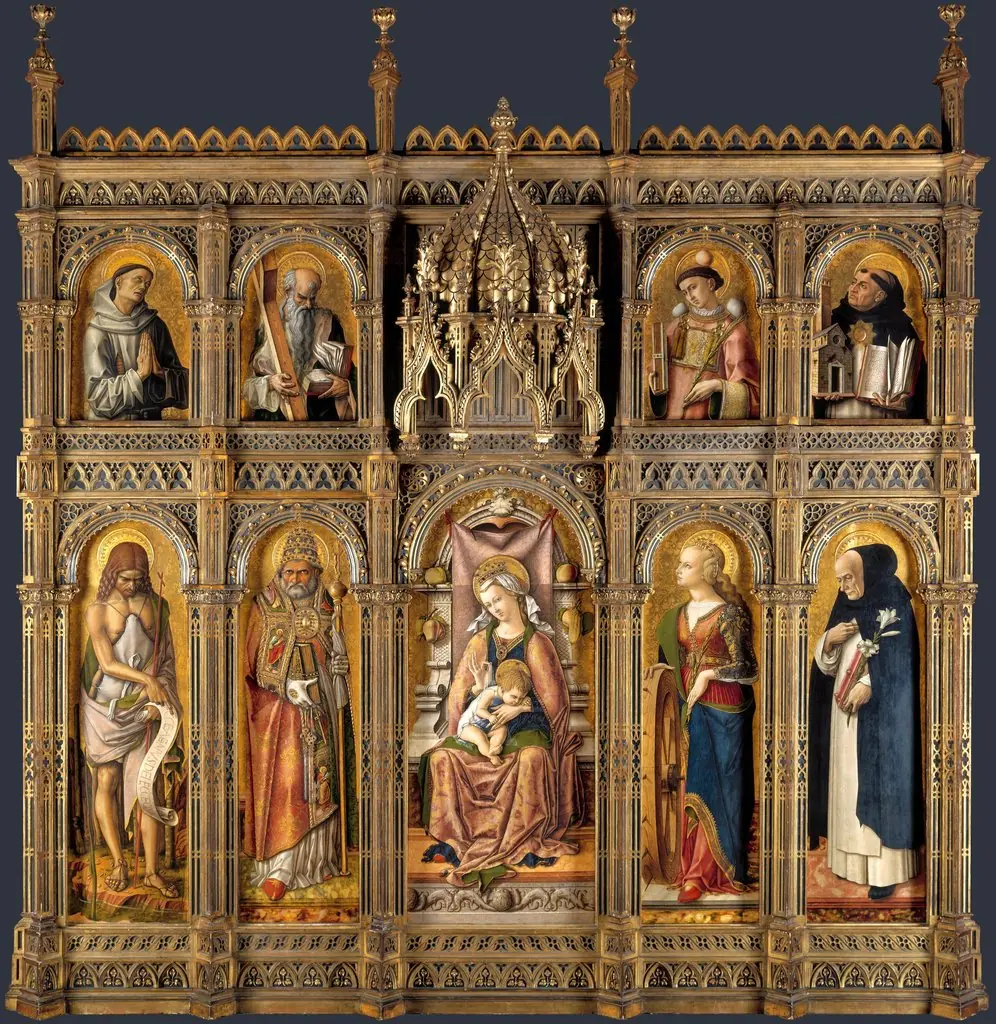
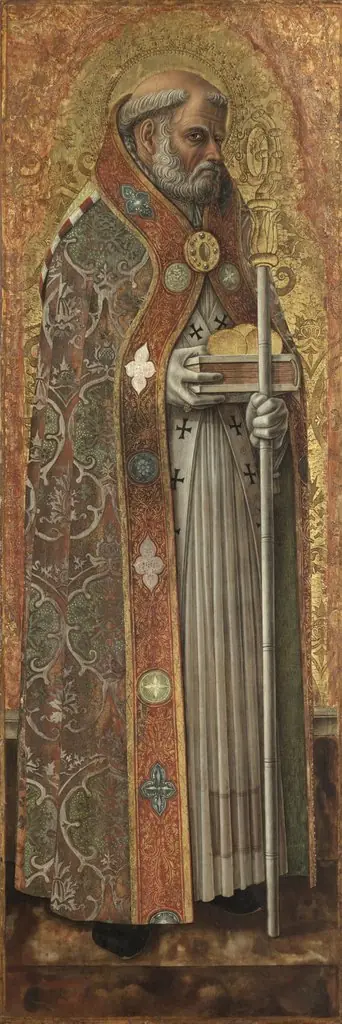
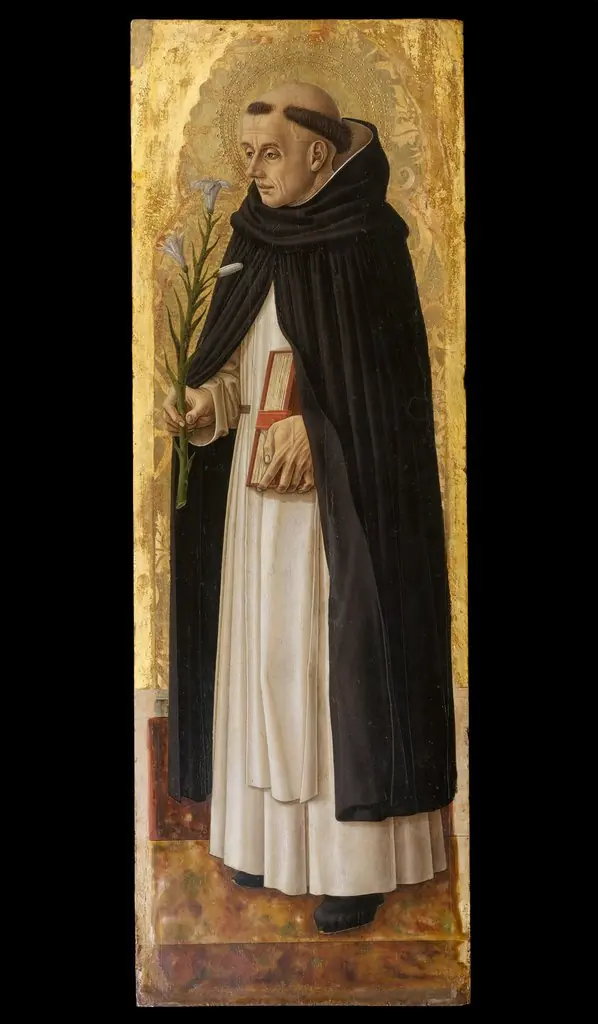
Created between 1488 and 1489, the San Pietro di Muralto Altarpiece is a tempera and gold panel work attributed to Carlo Crivelli and his workshop. Originally installed in the Dominican church of San Pietro degli Osservanti in Camerino, the piece is now fragmented, with its sections held in various museums across the United States and Europe.
Subject & Meaning
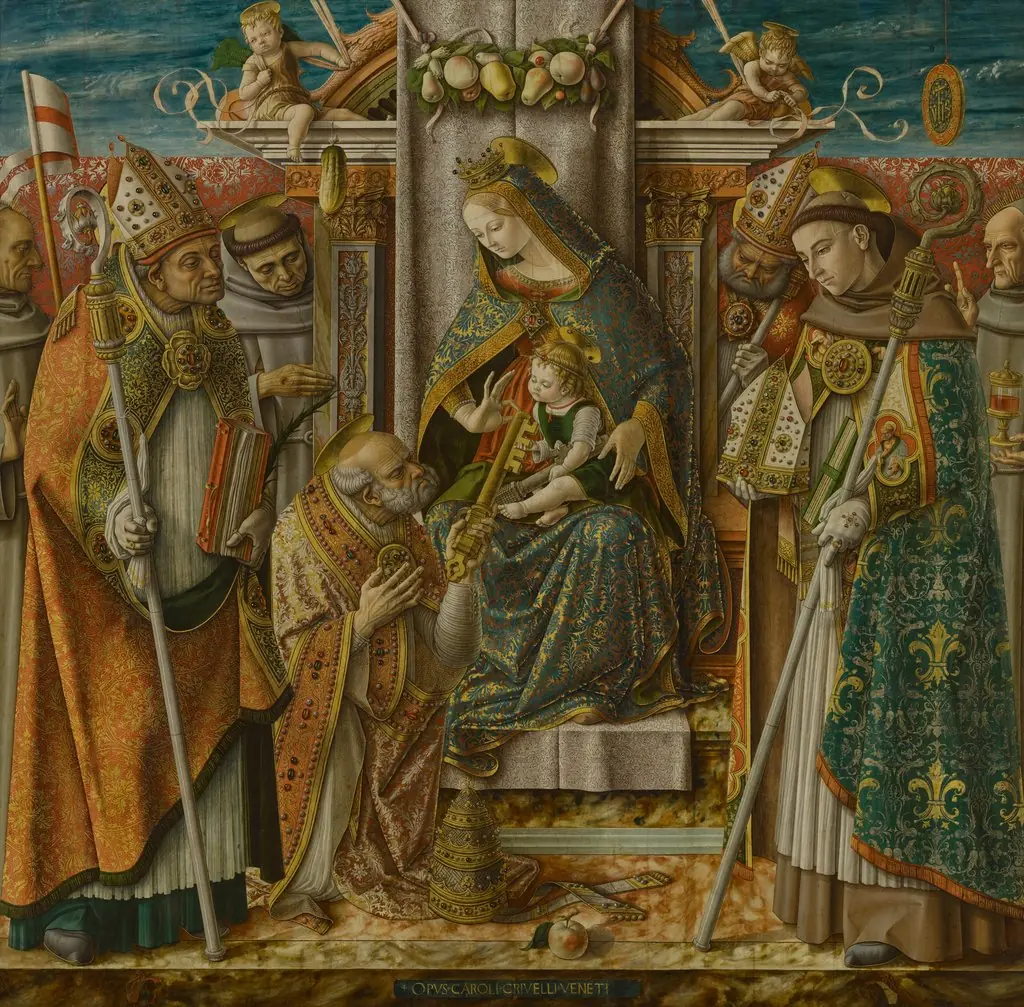
The central scene presents a seated female figure on a throne, cradling an infant, surrounded by a retinue of robed figures who appear to be offering homage. The composition conveys a solemn devotional atmosphere, emphasizing reverence toward the holy mother and child within a liturgical setting.
Technique & Style
Executed in tempera with extensive gold leaf application, the altarpiece showcases Crivelli’s characteristic attention to detail. Intricate patterns adorn the garments and background, while a restrained palette of earthy hues underscores the work’s contemplative tone. The half‑round format enhances the sense of a sacred enclosure.
History & Provenance
After serving its original function in the Dominican church, the altarpiece was dismantled and its panels entered the art market. Over the centuries, individual sections were acquired by institutions in both America and Europe, resulting in the present dispersed state of the work.
Context
The altarpiece reflects the late‑15th‑century Italian tradition of richly ornamented devotional panels, a period when tempera and gilding were still prevalent before the widespread adoption of oil paint. Its creation coincides with Crivelli’s mature phase, during which he produced elaborate works for ecclesiastical patrons in the Marche region.
Artist & collection

Artist
Carlo Crivelli (c. 1430 – c. 1495) was an Italian Renaissance painter of conservative Late Gothic decorative sensibility, who spent his early years in the Veneto, where he absorbed influences from the Vivarini,…

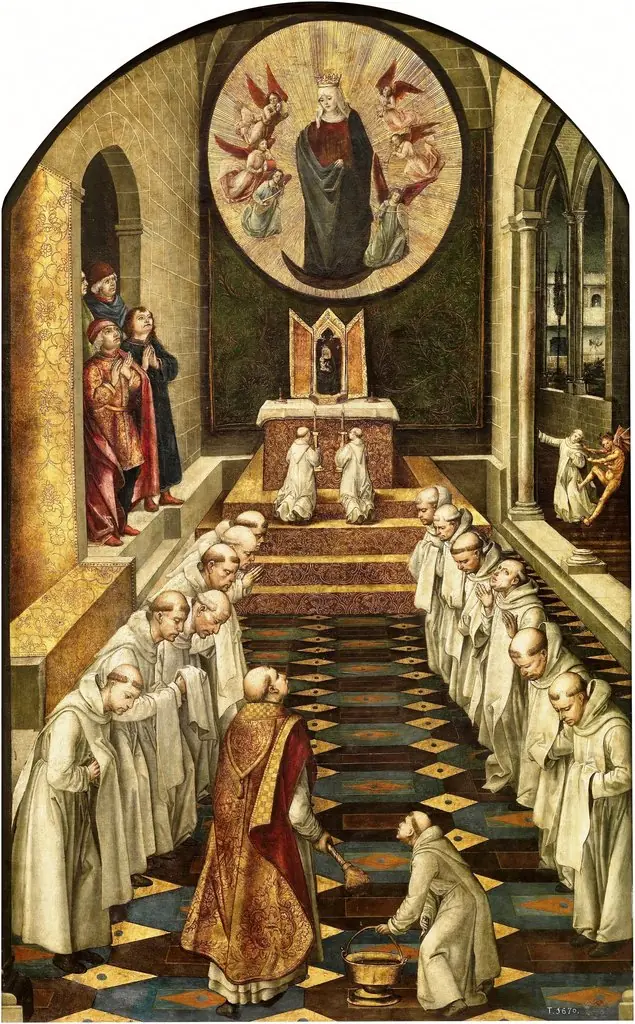 Apparition of the Virgin to a Community of Dominicans
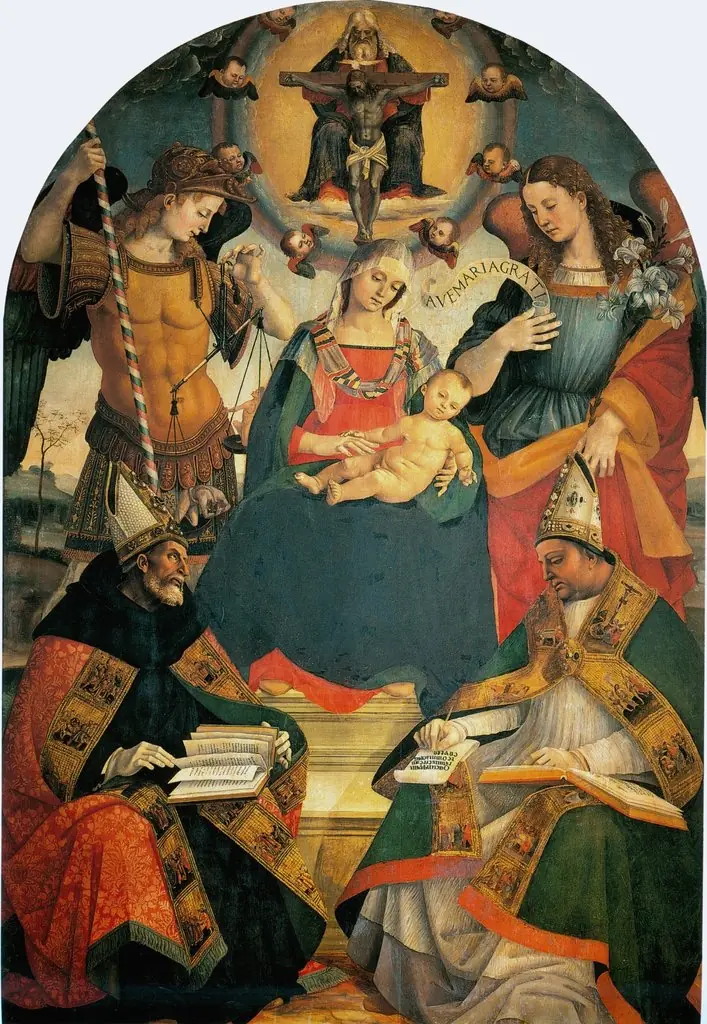 Trinity, the Virgin, and Two Saints
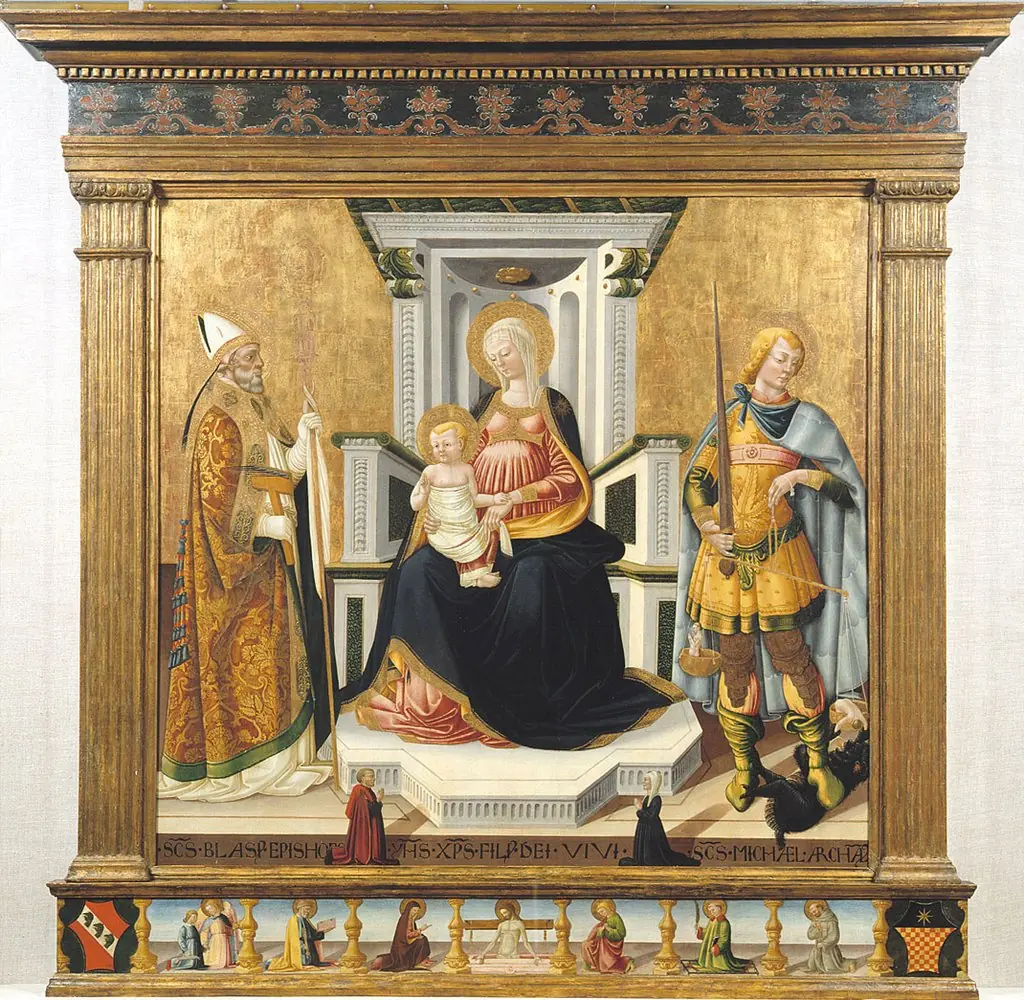 Madonna and Child with Two Saints (Bicci)
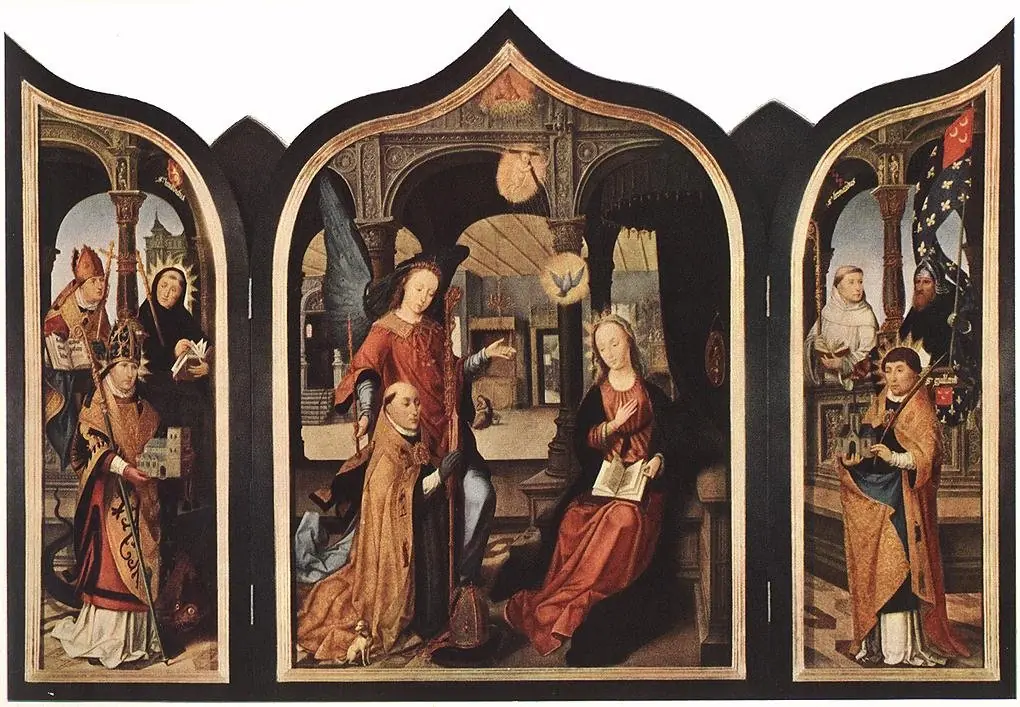 Annunciation
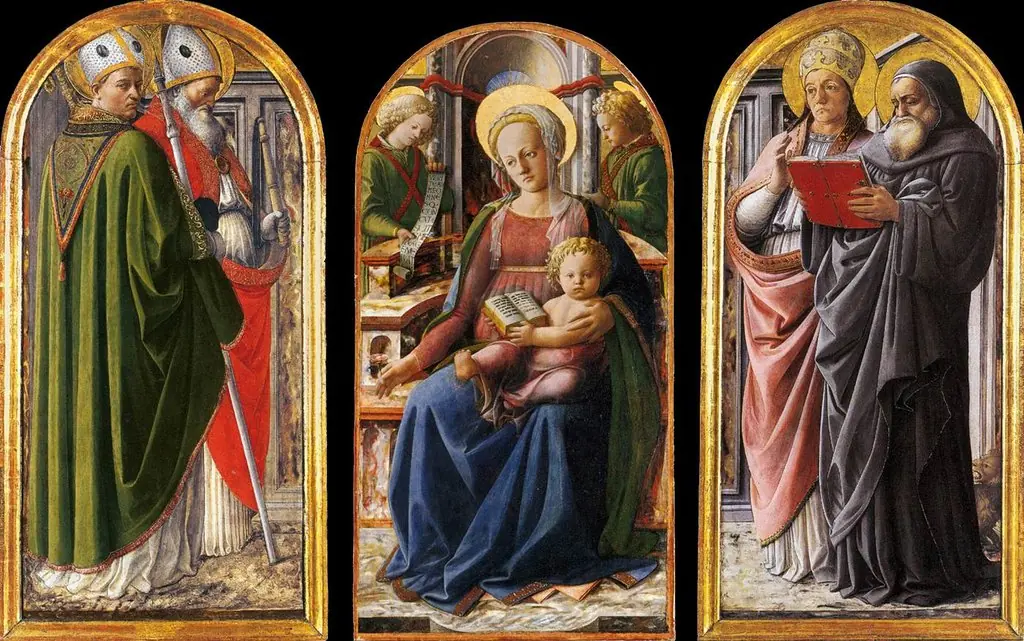 Madonna and Child with Angels and Saints
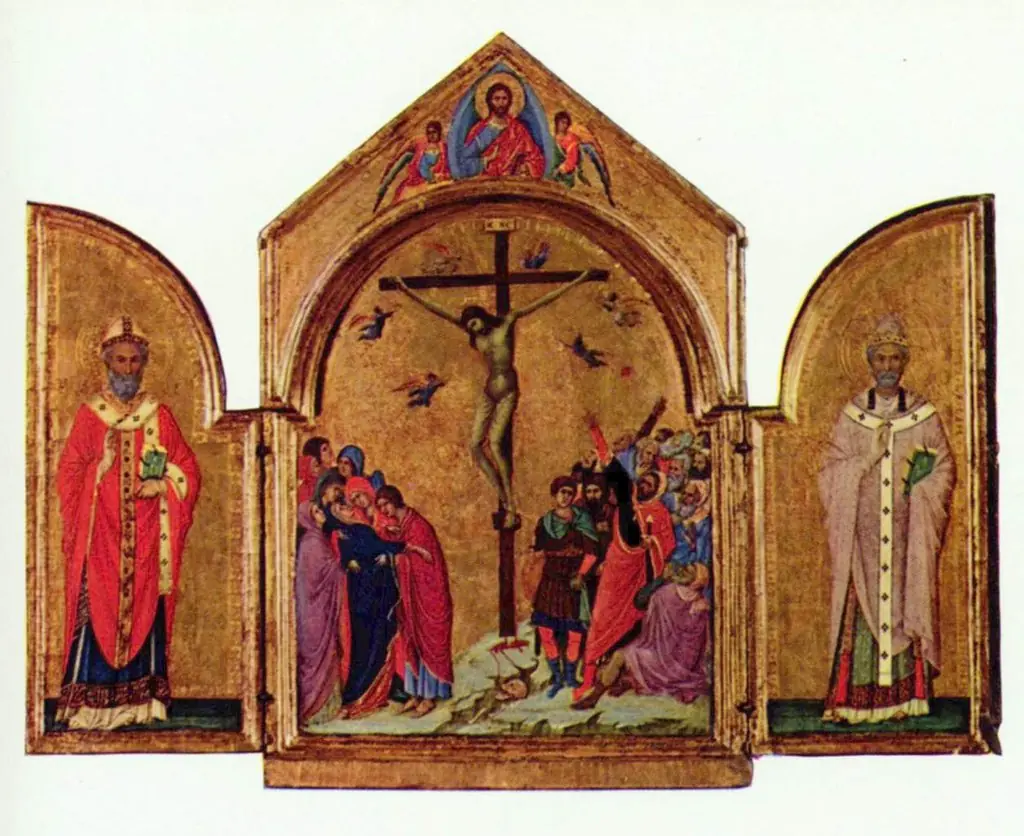 Triptych: the Crucifixion; the Redeemer with Angels; Saint Nicholas; Saint Gregory
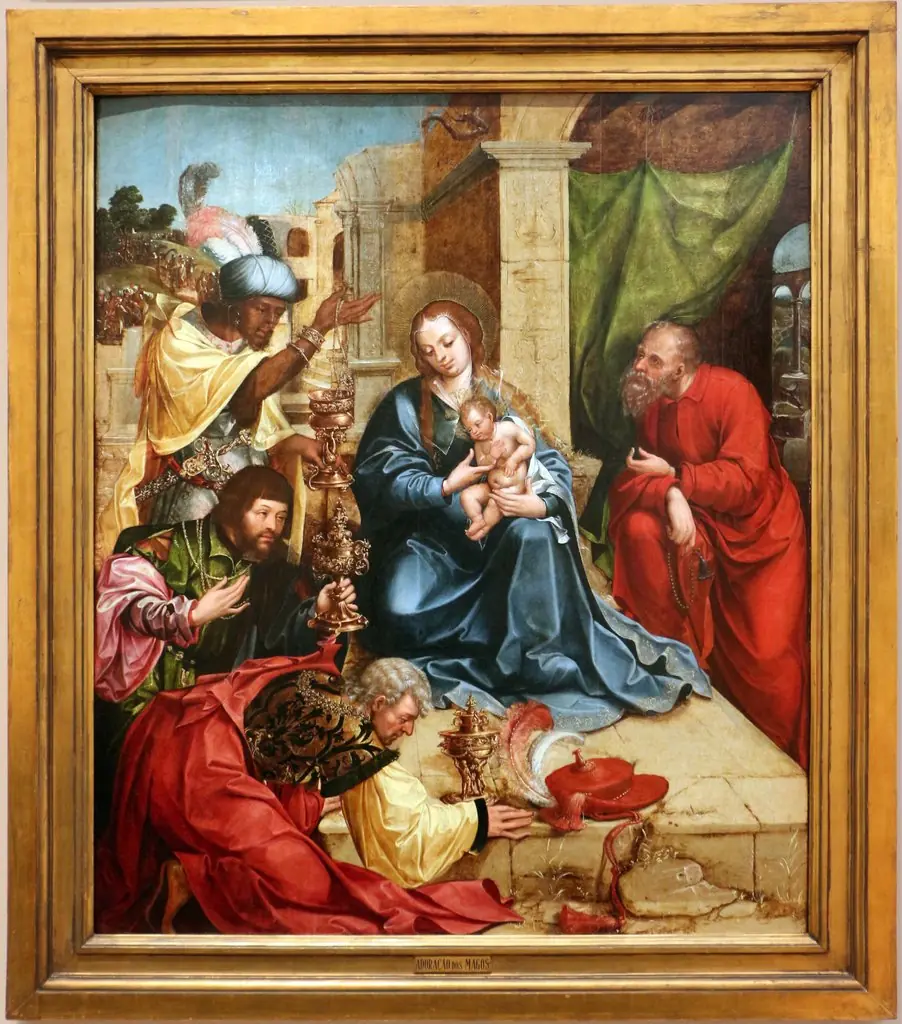 Adoração dos Reis Magos
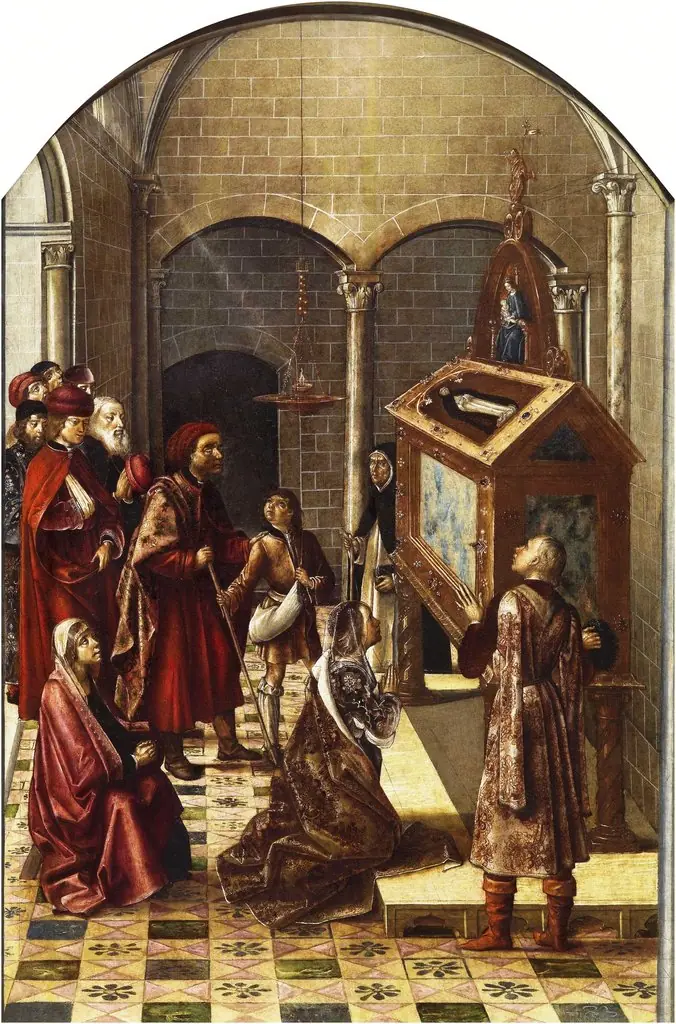 The Adoration of the Tomb of Saint Peter Martyr
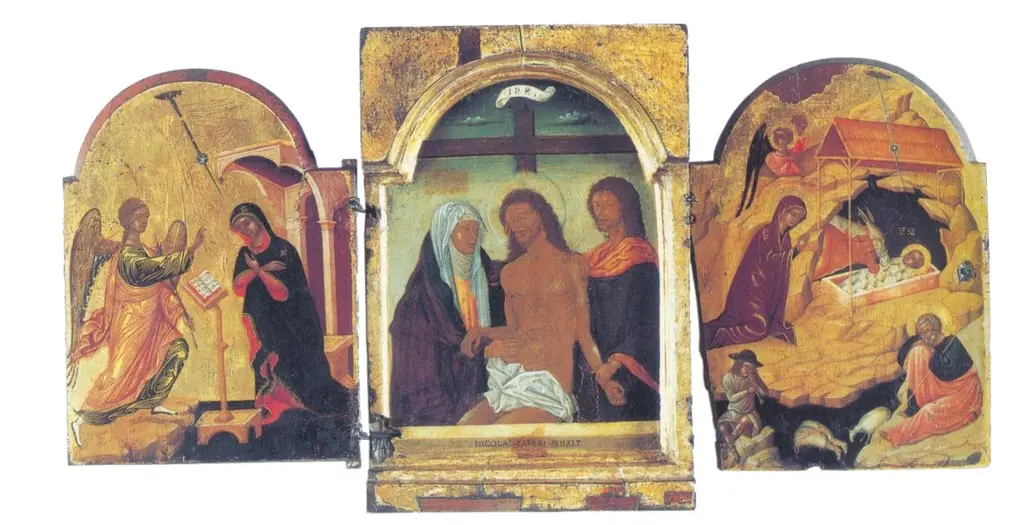 Triptych Pieta (Tzafouris)
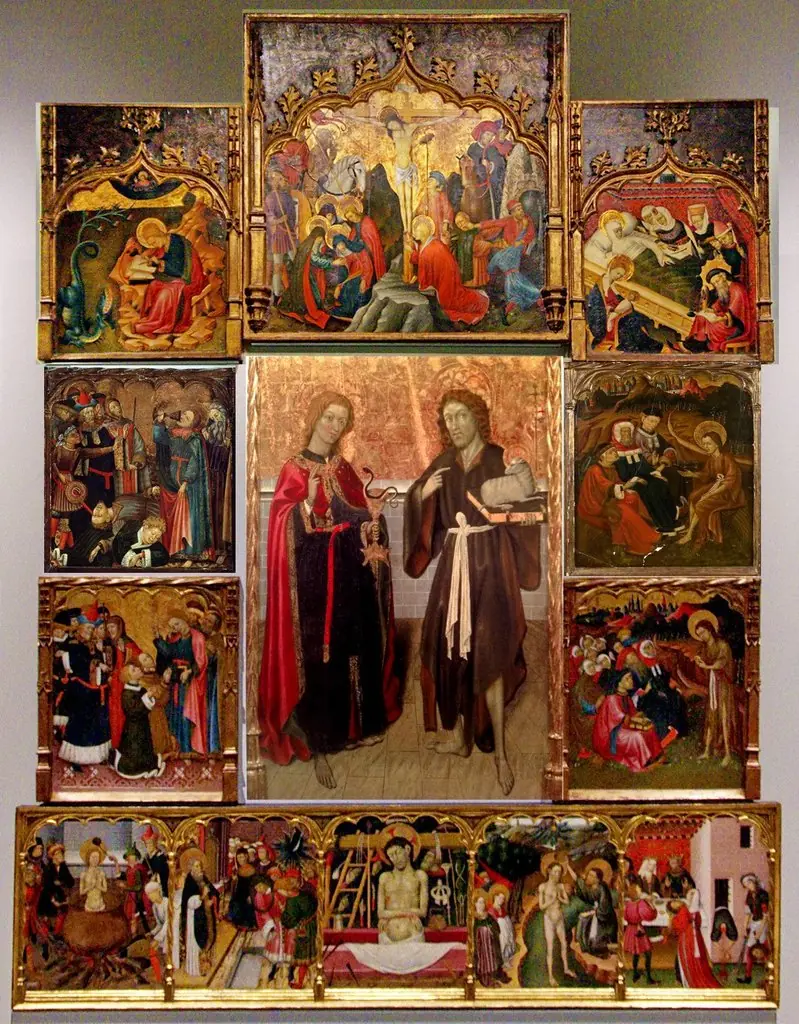 Altarpiece of the Saints John
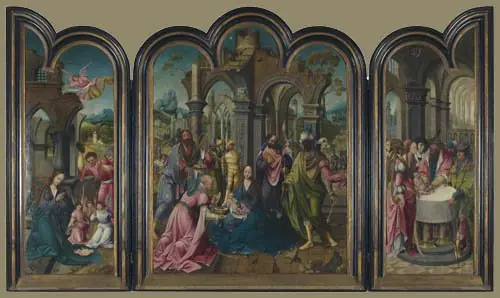 Triptych with adoration by the Magi