Artwork
Triptych: the Crucifixion; the Redeemer with Angels; Saint Nicholas; Saint Gregory
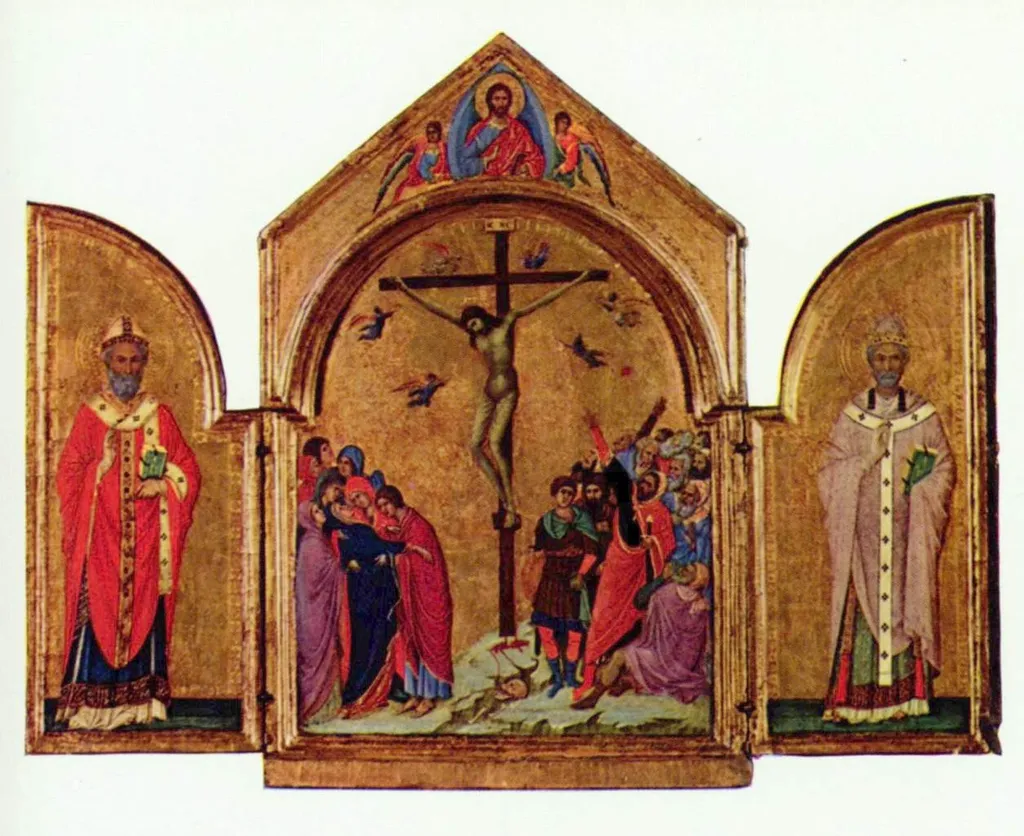
Triptych: the Crucifixion; the Redeemer with Angels; Saint Nicholas; Saint Gregory is a tempera painting by the Byzantine icon painting artist Duccio di Buoninsegna. It dates from 1305 and is held in the collection of the Museum of Fine Arts Boston.
About this work
Overview
Created around 1305, this tempera triptych by Duccio di Buoninsegna presents a three‑panel wooden altarpiece now in the collection of the Museum of Fine Arts, Boston. The central panel portrays the Crucifixion, flanked by two vertical sections that each feature a standing saint. The work is distinguished by its gold ground and vivid coloration, characteristic of early Italian devotional painting.
Subject & Meaning
The central scene gathers a crowded group of onlookers beneath the cross, where Christ hangs between two angels suspended in the heavens. To the left, a robed figure in red—identified as Saint Nicholas—holds a book, while the right panel shows Saint Gregory in white, also with a book, underscoring their roles as learned intercessors within the Christian narrative.
Technique & Style
Executed in egg tempera on wooden panels, the painting employs a luminous gold background that amplifies the bright reds, blues, and whites of the figures. The figures are rendered with a linear, somewhat flattened modeling, giving them a stylized, two‑dimensional appearance typical of the Sienese school in the early fourteenth century.
History & Provenance
Duccio’s triptych was produced in the early 1300s for a religious setting, likely a chapel or altar. It entered the Museum of Fine Arts, Boston, as part of the museum’s European holdings, where it remains on display as an example of the artist’s devotional output and the tempera technique of the period.
Artist & collection


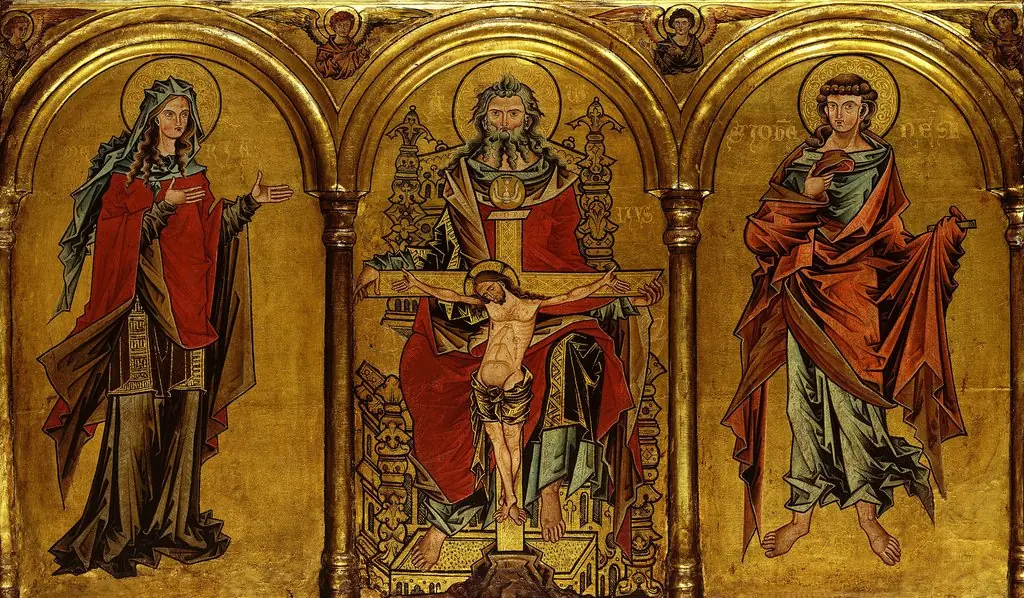 Retable with the seat of mercy
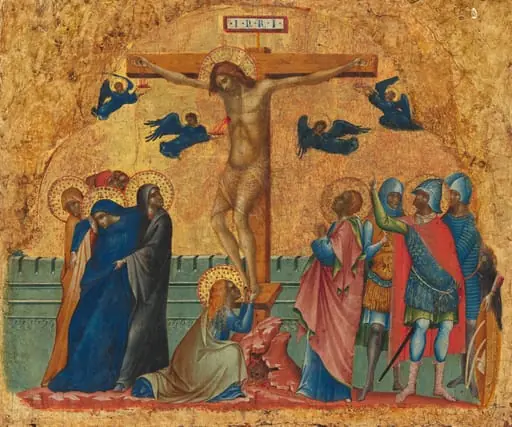 The Crucifixion
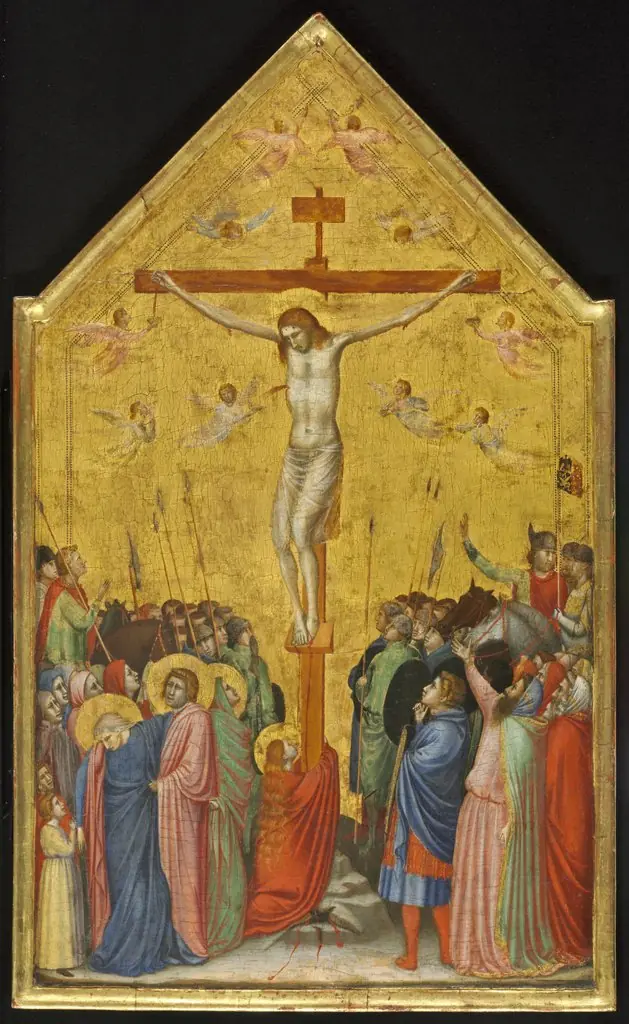 The Crucifixion of Christ
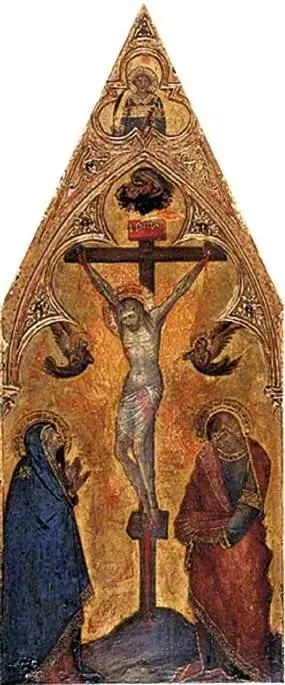 The Crucifixion
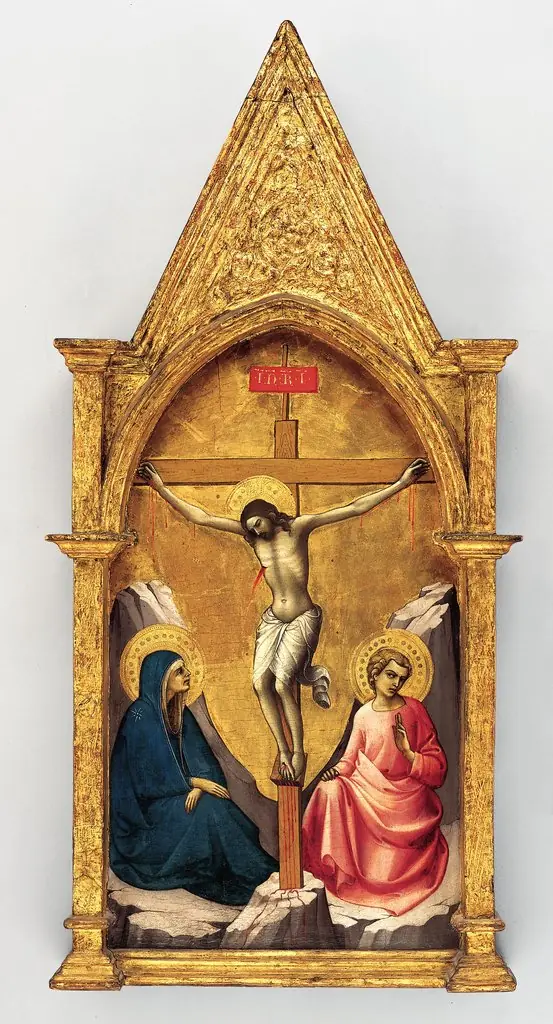 Tabernacle frame
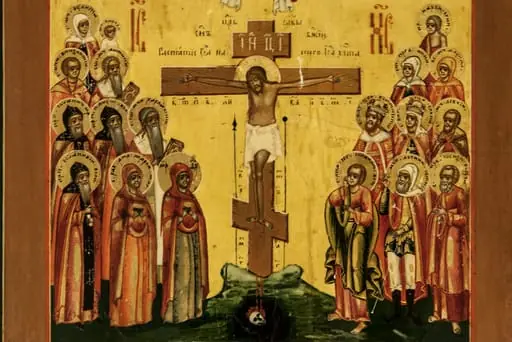 CompГавр
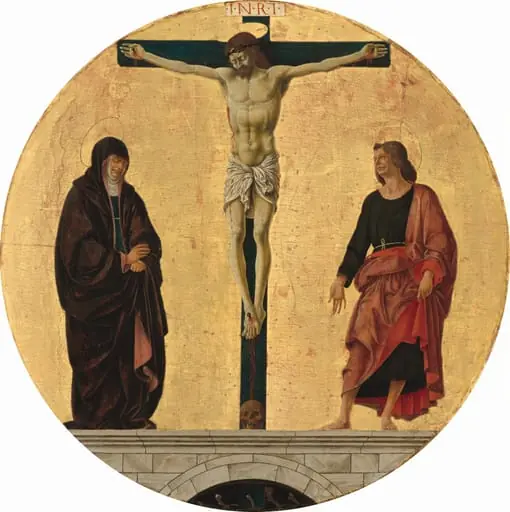 The Crucifixion
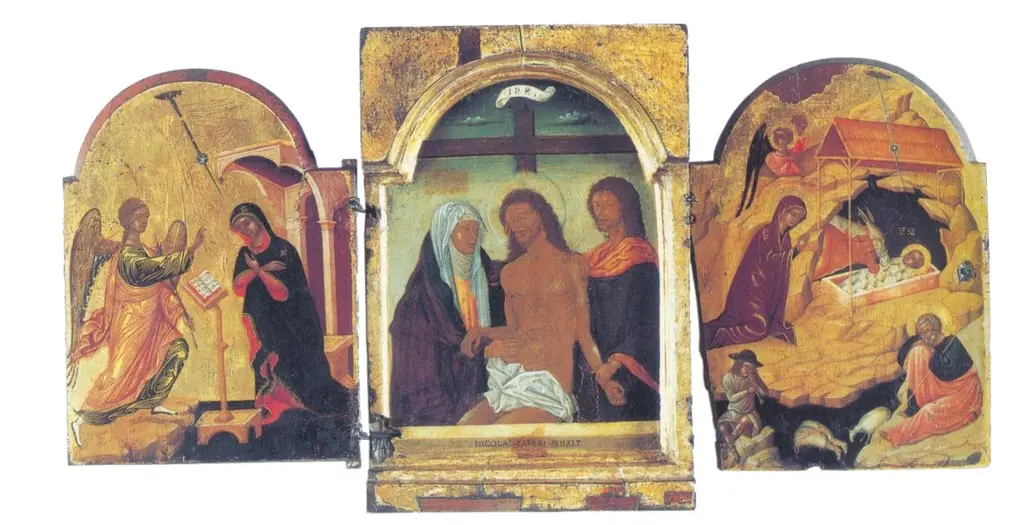 Triptych Pieta (Tzafouris)
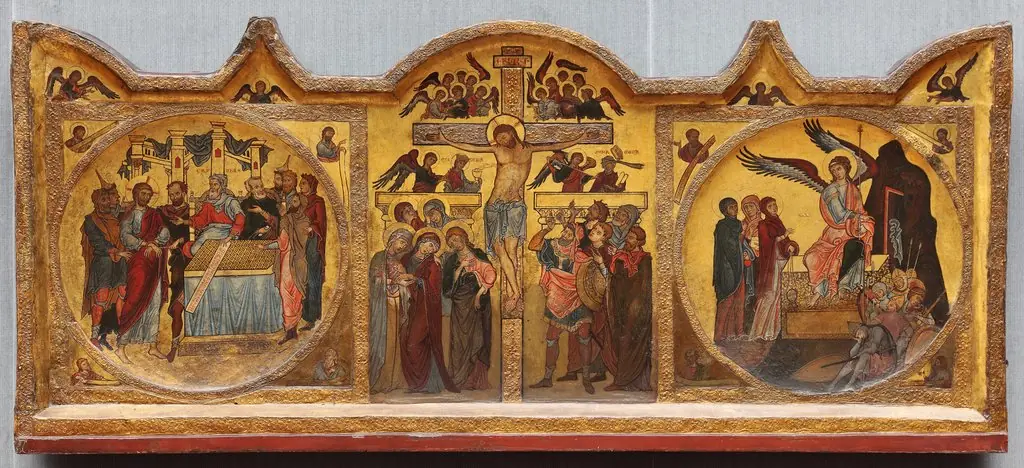 Crucifixion retable from Soest
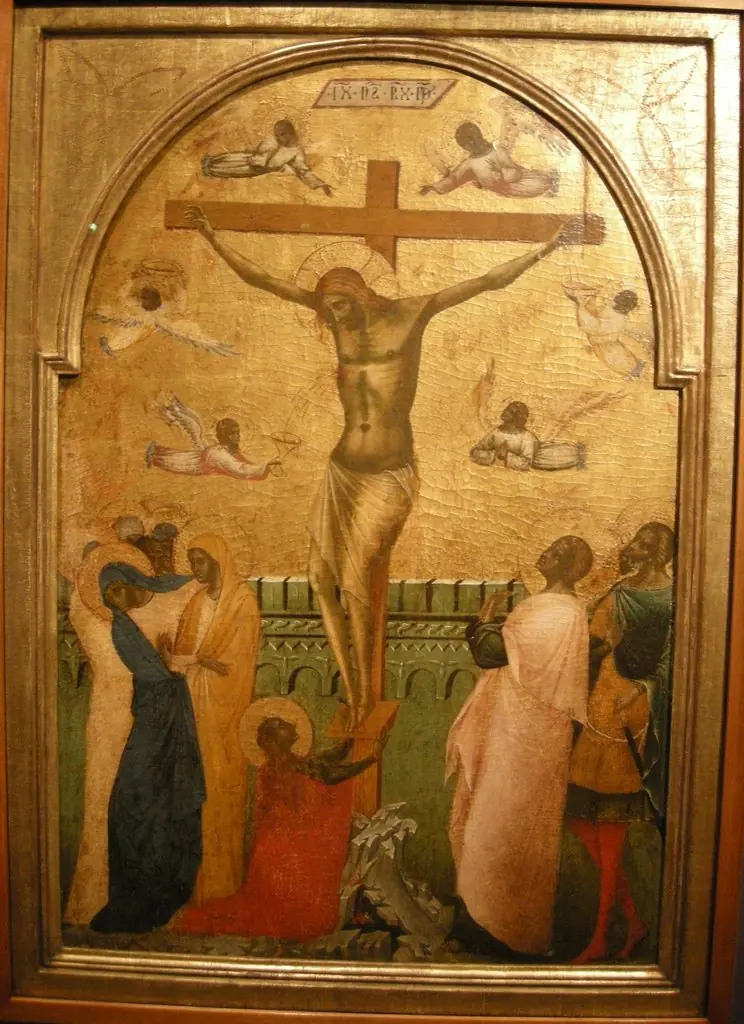 The Crucifixion
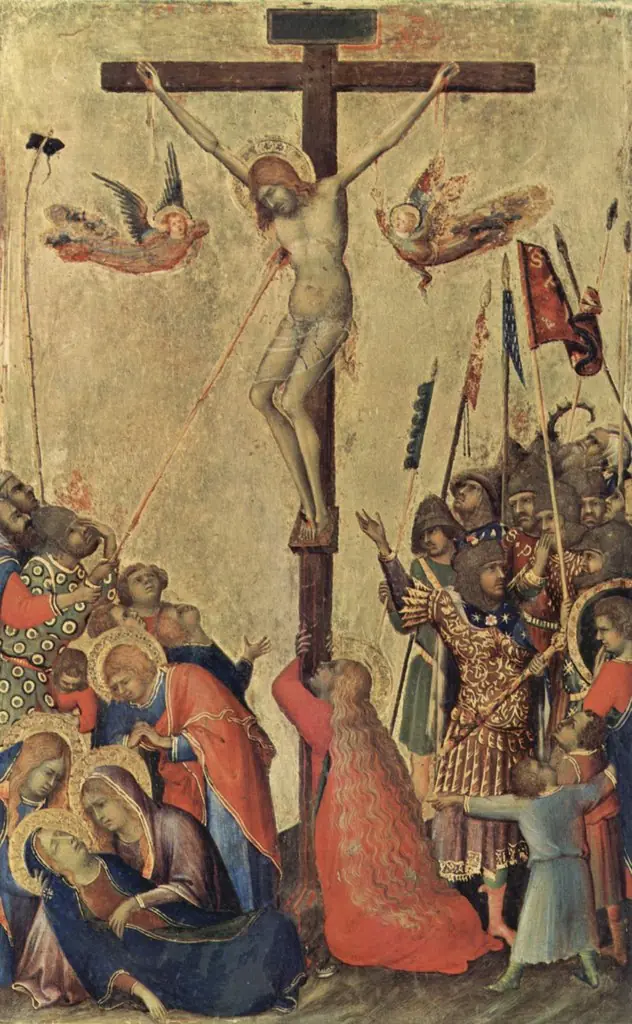 Christ on the Cross
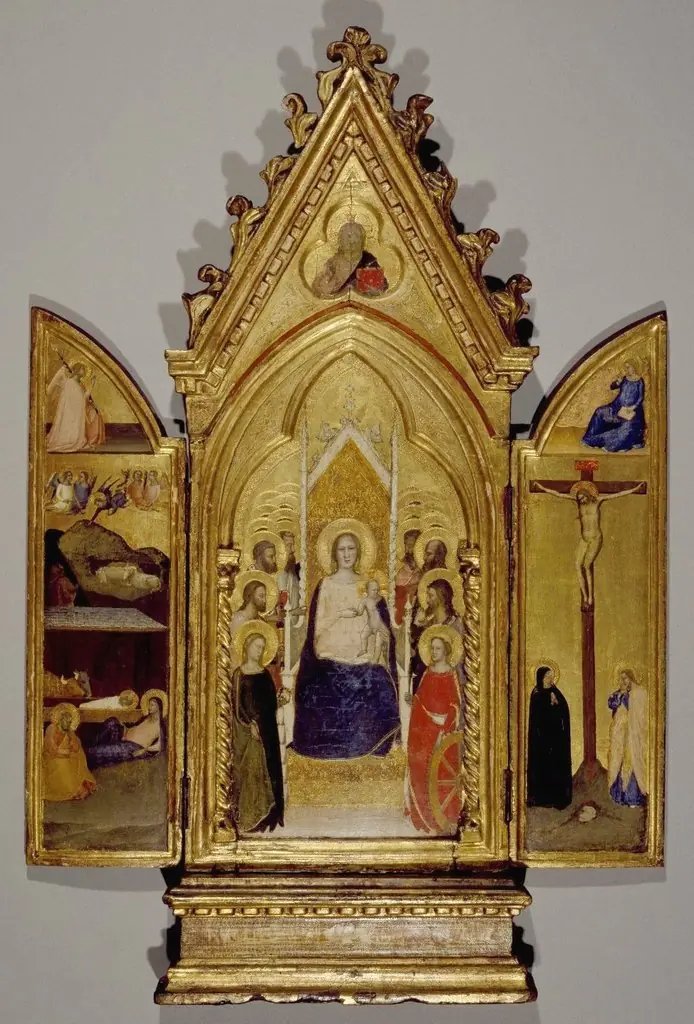 Triptych: Madonna with Saints and Christ Blessing (Center); The Nativity and the Annunciate Angel (Left Wing); Crucifixion and the Virgin Annunciate (Right Wing)