Artwork
Der Tod Mariä
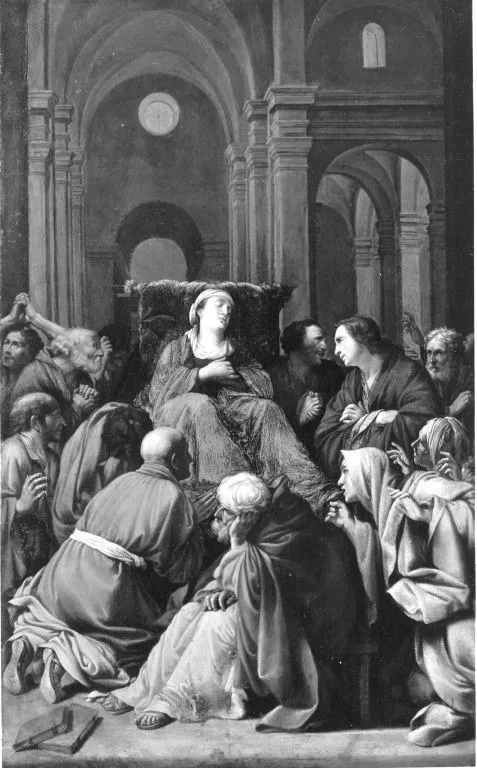
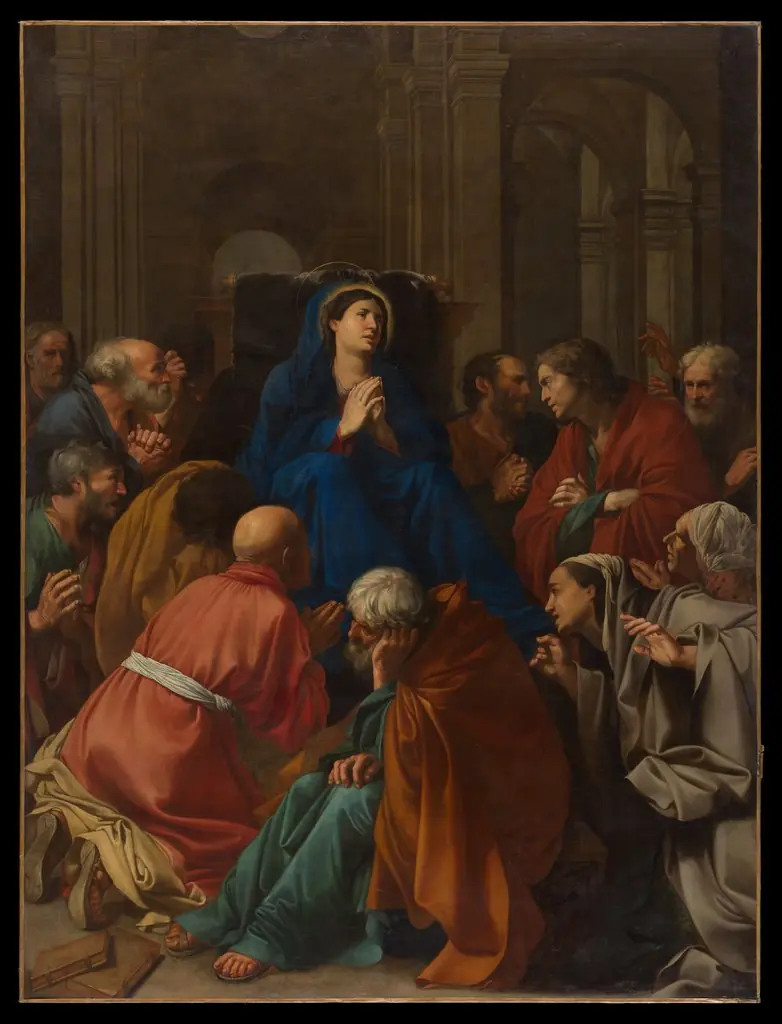
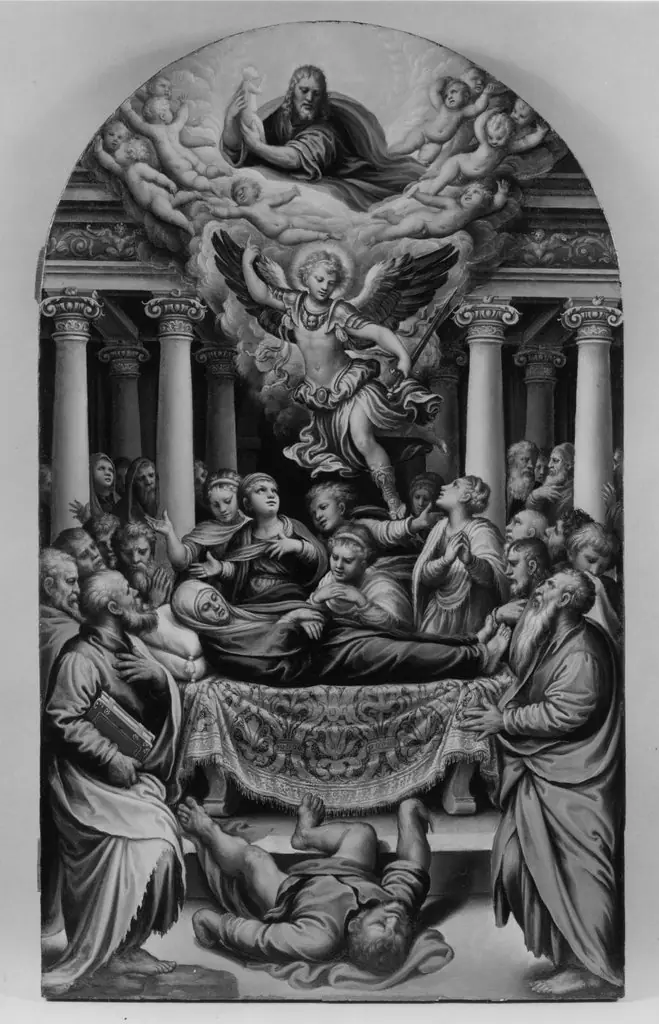
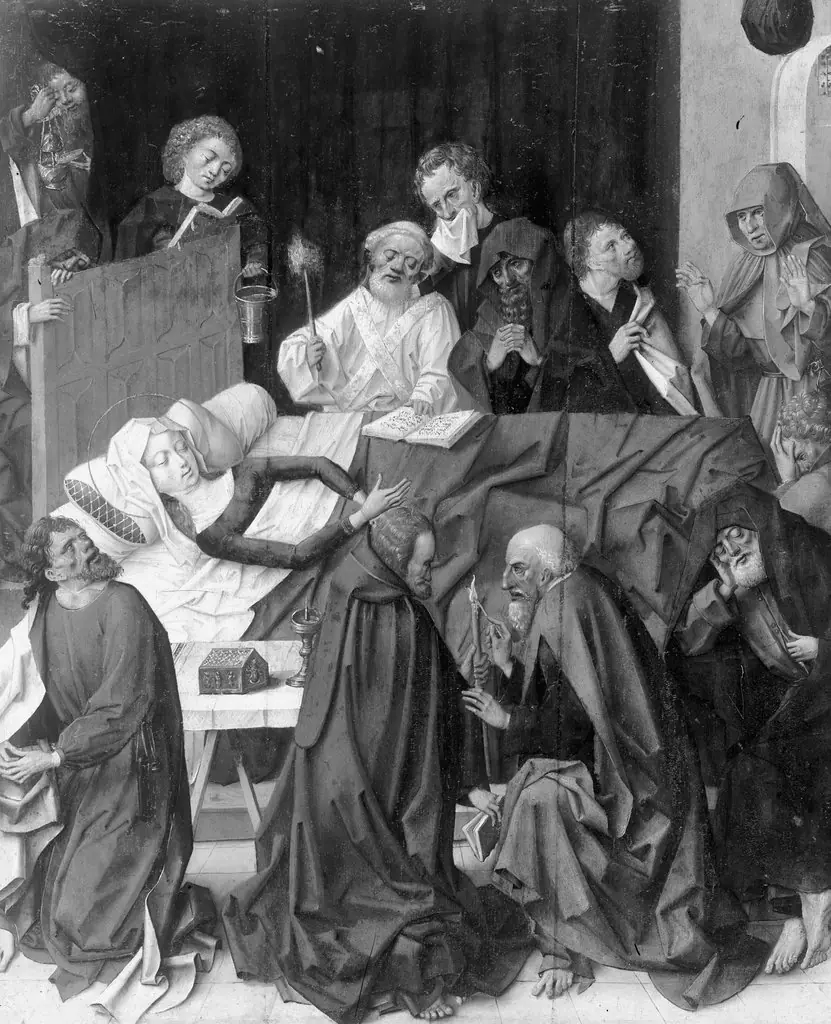
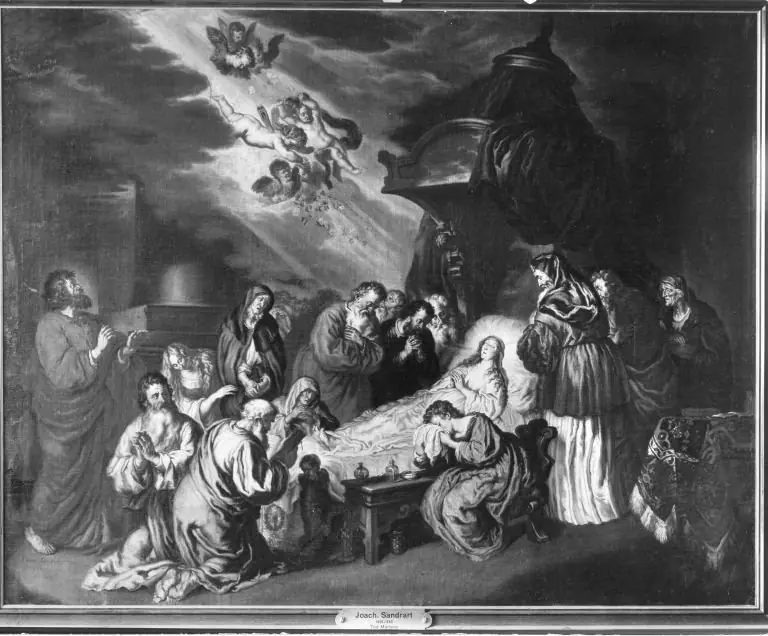
Der Tod Mariä is an unspecified painting by the Early Baroque Italian artist Carlo Saraceni. It dates from 1617 and is held in the collection of the Bavarian State Painting Collections.
About this work
Overview
Carlo Saraceni’s 1617 oil painting *Der Tod Mariä* belongs to the early Italian Baroque. Executed during the artist’s mature period, the work is part of the Alte Pinakothek’s collection in Munich. It presents a solemn religious tableau rendered with the dramatic lighting and compositional clarity typical of the era.
Subject & Meaning
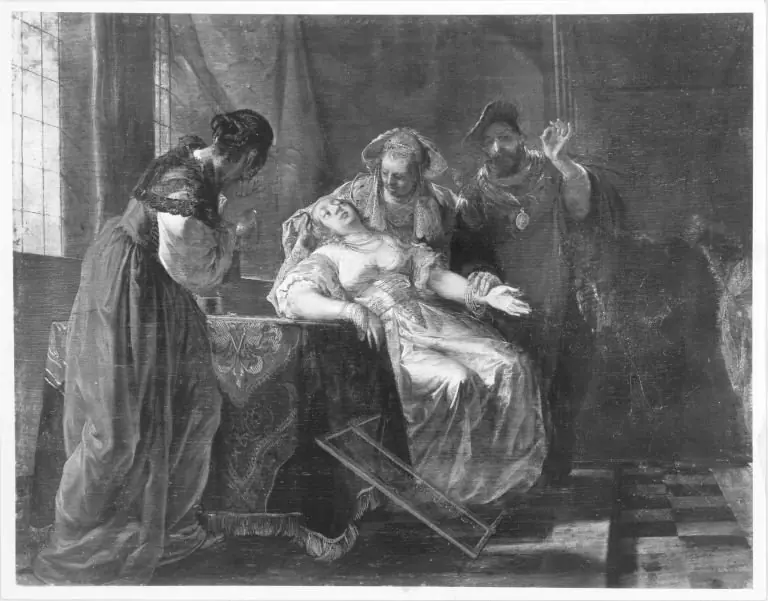
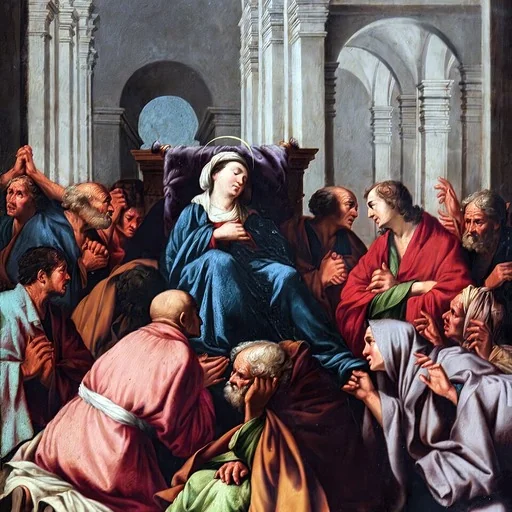
The central figure is a seated woman, likely the Virgin Mary, whose head is covered with a modest veil. She is surrounded by a small group of robed onlookers whose concerned gazes suggest she is suffering or approaching death. The surrounding architecture frames the scene as a sacred interior, emphasizing themes of mortality and devotion.
Technique & Style
Saraceni employs a pronounced chiaroscuro, juxtaposing bright illumination on the figures with deep shadows in the surrounding arches and columns. This contrast heightens the emotional tension and directs attention to the central figure. The brushwork is smooth, and the color palette is restrained, reinforcing the solemn atmosphere.
History & Provenance
Painted in 1617, the work entered the Alte Pinakothek’s holdings at an early stage of the museum’s formation, though the precise acquisition path is not fully documented. Its presence in a major German collection reflects the broader 19th‑century interest in Italian Baroque art.
Context
Saraceni, a Venetian‑born painter who spent much of his career in Rome, was influenced by Caravaggio’s dramatic lighting and by the naturalism of the Roman school. *Der Tod Mariä* illustrates his synthesis of these influences, situating the piece within the transition from Mannerist elegance to the more visceral Baroque expression.
Artist & collection
Artist
Carlo Saraceni (1579 – 16 June 1620) was an Italian early-Baroque painter, whose reputation as a "first-class painter of the second rank" was improved with the publication of a modern monograph in 1968.