Artwork
Rear View of Seated Man
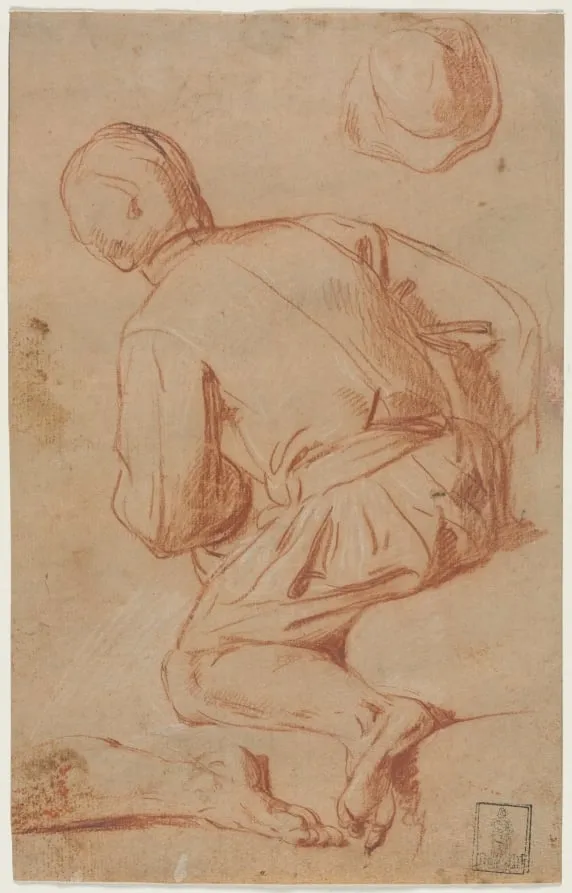
Rear View of Seated Man is a drawing by the Baroque artist Carlo Vimercati. It dates from 1604 and is held in the collection of the Cleveland Museum of Art. This drawing, a preparatory study from the late seventeenth century, depicts a seated male figure viewed from behind.
About this work
Overview
This drawing, a preparatory study from the late seventeenth century, depicts a seated male figure viewed from behind.
This drawing, a preparatory study from the late seventeenth century, depicts a seated male figure viewed from behind. The subject rests on a simple stool, his torso turned slightly, allowing the artist to record the anatomy of the back, the drapery of his clothing, and the subtle shift of weight. The work is executed in quick, confident lines, characteristic of a study intended for later compositional use.
Subject & Meaning
The figure represents an ordinary individual, likely a studio assistant, rather than a mythic or biblical character. By rendering a commonplace person, the artist could later transpose the observed posture and garment folds into larger religious narratives, lending those scenes a tangible, human presence that would resonate with congregants.
Technique & Style
Rendered in a single medium of ink or charcoal, the drawing employs swift, gestural strokes that capture the play of light and shadow across the body—a practice aligned with chiaroscuro principles. The emphasis on accurate anatomy and the careful observation of fabric drapery reflect the period’s shift toward naturalism in preparatory work.
History & Provenance
Attributed to the workshop of Carlo Vimercati, a painter active in the late 1600s, the study was likely produced as a reference for larger altarpieces or frescoes. It remained within the artist’s studio inventory before entering a private collection in the nineteenth century, where it was eventually acquired by the museum.
Context
During this era, Italian artists increasingly employed figure studies to bridge the gap between idealized religious iconography and the lived experience of parishioners. Such sketches served as a bridge between observation of everyday life and the grand narratives that adorned church interiors, reinforcing the Counter‑Reformation’s aim of making sacred stories more immediate.
Artist & collection

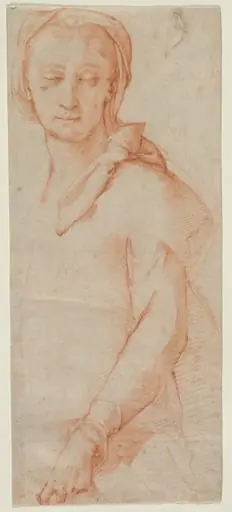 Half-Length Figure Study of a Woman
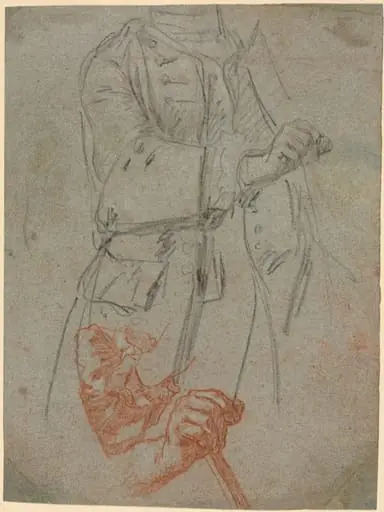 Studies of a Costume, Sleeve, and Hand
![Man Leaning on a Rail [verso], by Matteo Rosselli](https://artifactworldgallery.com/img/matteo-rosselli--man-leaning-on-a-rail-verso--c9936b6777df930d-w320.webp) Man Leaning on a Rail [verso]
Man Leaning on a Rail [verso]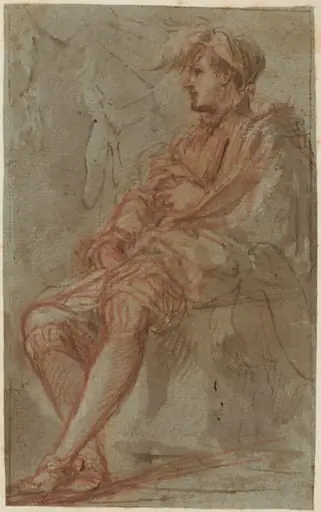 A Young Man
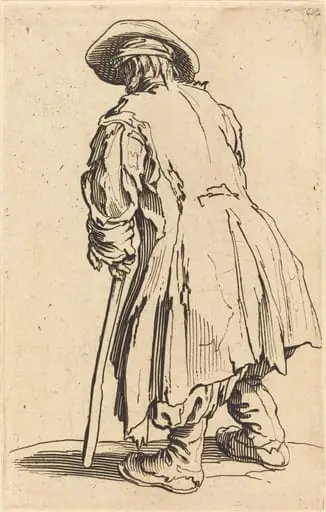 Old Beggar with One Crutch
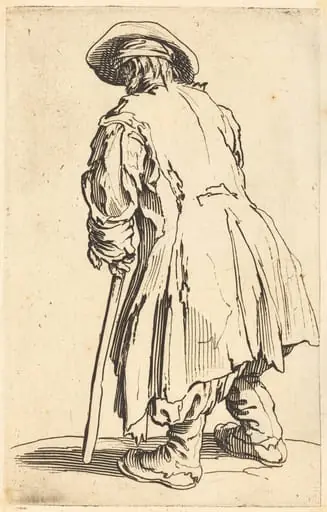 Old Beggar with One Crutch
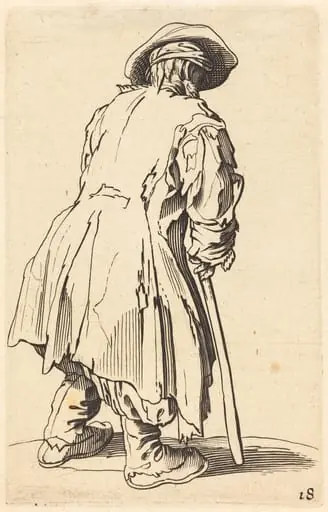 Old Beggar with One Crutch
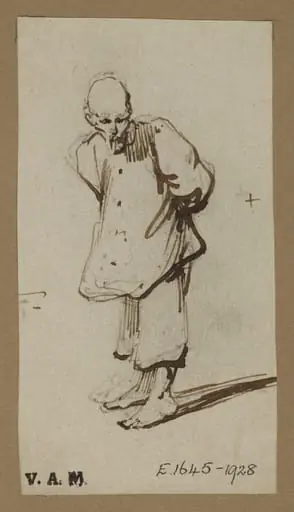 A stooping Chinese man
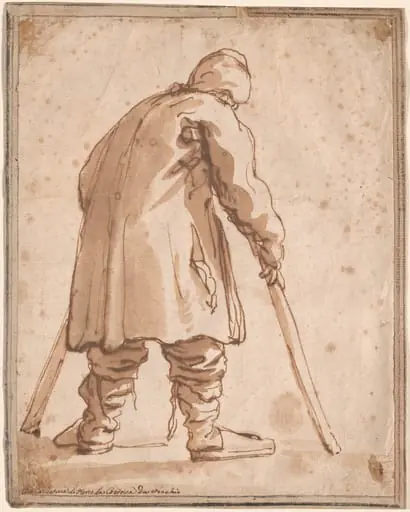 Caricature of a Man, Said to Be Pietro da Cortona
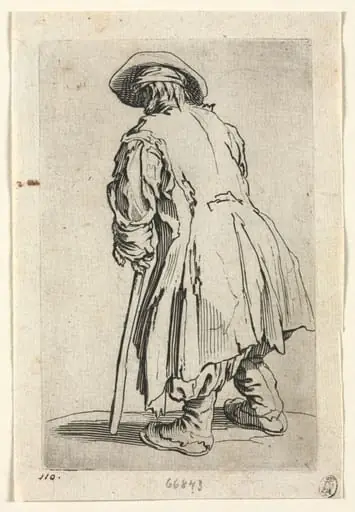 The Beggars: Old Beggar on One Single Crutch