Artwork
Caricature of a Man, Said to Be Pietro da Cortona
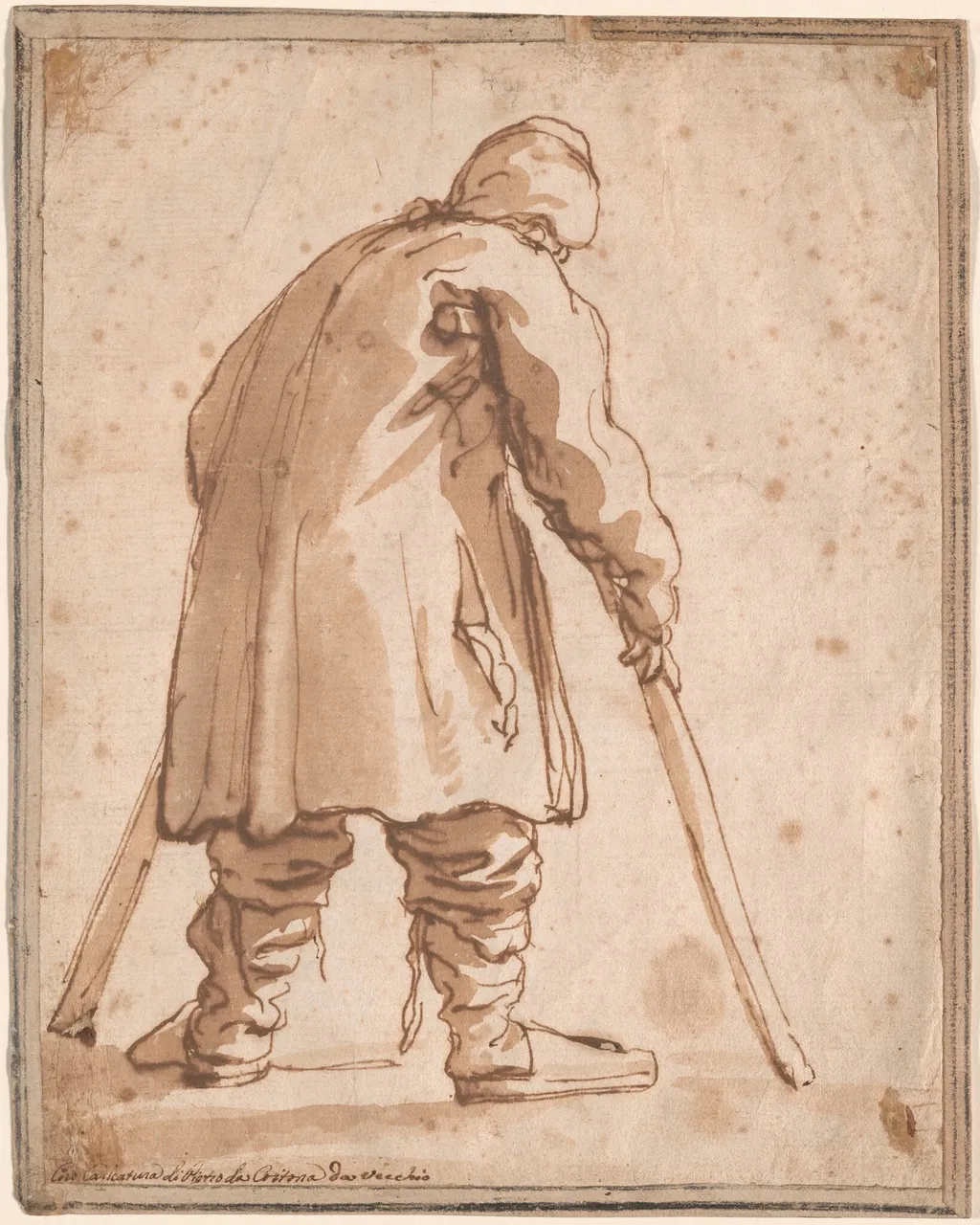
Caricature of a Man, Said to Be Pietro da Cortona is an ink drawing by the Baroque artist Pier Francesco Mola. It dates from 1639 and is held in the collection of the National Gallery of Art.
About this work
Overview
Though labeled as a portrait of Pietro da Cortona, its primary function appears to be observational humor rather than formal likeness.
Created in 1639, this ink drawing by Pier Francesco Mola captures a seated figure in loose, expressive strokes. Executed on laid paper with a faint yellow hue, the work combines pen and brown wash to suggest form and shadow. Though labeled as a portrait of Pietro da Cortona, its primary function appears to be observational humor rather than formal likeness. Mola, known as Il Ticinese, used such sketches to explore character and movement outside his larger fresco commissions.
Subject & Meaning
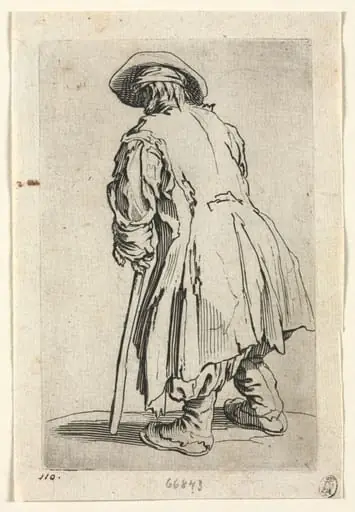
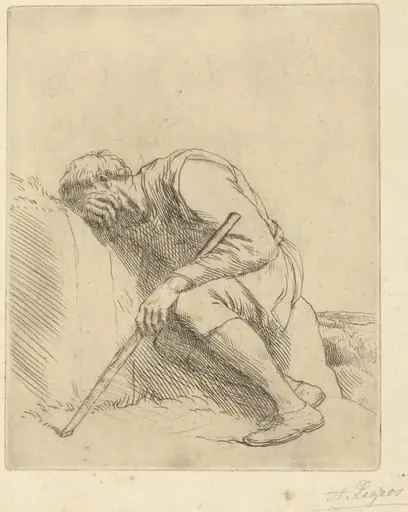
The figure is depicted from behind, hunched and leaning on a staff, dressed in oversized garments that amplify a sense of physical awkwardness. The exaggerated proportions and casual posture suggest a satirical intent, aligning with Roman artistic traditions of caricature. Rather than honoring a specific individual, the drawing likely mocks the pomposity or physicality associated with certain figures in the art world, using humor to comment on social or professional pretensions.
Technique & Style
Mola employed rapid, uneven ink lines to define the figure’s posture and clothing folds, avoiding precise contours in favor of suggestive strokes. Brown wash adds subtle tonal depth, particularly around the shoulders and legs, enhancing the sense of volume without overrefinement. The loose handling reflects a spontaneous, working method typical of preparatory sketches, emphasizing immediacy over polish. The paper’s texture and aging tone contribute to the drawing’s intimate, unpolished character.
History & Provenance
The drawing’s early ownership is undocumented, but its survival suggests it was preserved within Mola’s circle or among collectors of Roman draftsmanship. Unlike his monumental frescoes, such small-scale works were rarely commissioned, making them rare survivals. Its attribution to Pietro da Cortona likely emerged later, possibly as a speculative label to enhance interest, rather than from contemporary evidence.
Context
In mid-17th-century Rome, caricature flourished as a form of visual wit among artists and intellectuals. Mola’s sketch participates in this trend, echoing the playful distortions found in the work of contemporaries like Giovanni Battista Gaulli. While Baroque art often emphasized grandeur, these informal drawings reveal a parallel tradition of observation and satire, offering insight into the informal culture of artistic communities.
Legacy
This drawing exemplifies how Baroque artists engaged with informal modes of expression beyond official commissions. Mola’s sketch contributed to the recognition of drawing as a vehicle for personal observation and humor. Though not widely exhibited in his lifetime, such works later informed scholarly interest in the everyday practices of artists, revealing the human dimension behind formal Baroque aesthetics.
Artist & collection

Artist
Pier Francesco Mola, called Il Ticinese was an Italian painter of the High Baroque, mainly active around Rome.

 The Beggars: Old Beggar on One Single Crutch
 Beggar with Crutches and Hat, Back View
 Beggar with Crutches and Hat, Back View
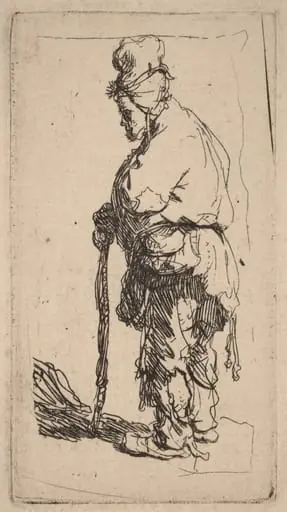 Beggar Leaning on a Stick, Facing Left
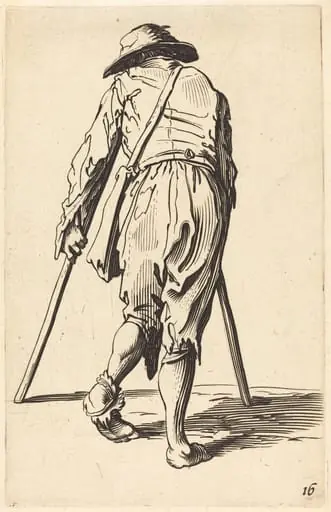 Beggar with Crutches and Hat, Back View
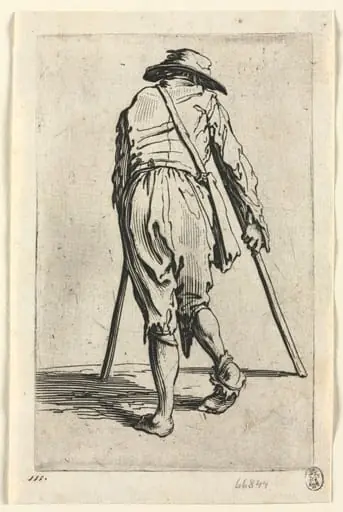 The Beggars: Beggar on Crutches, Wearing a Hat
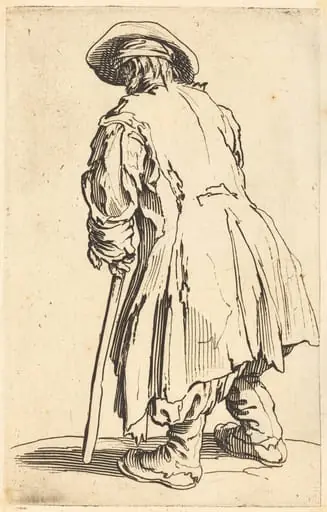 Old Beggar with One Crutch
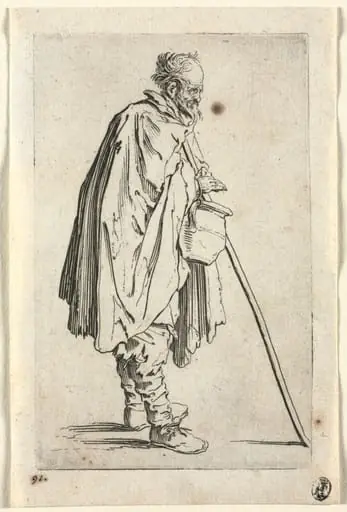 The Beggars: Beggar with Pot
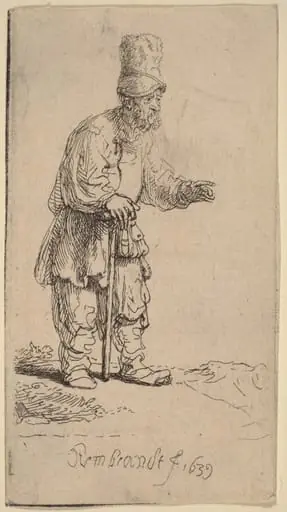 A Peasant in a High Cap, Standing Leaning on a Stick
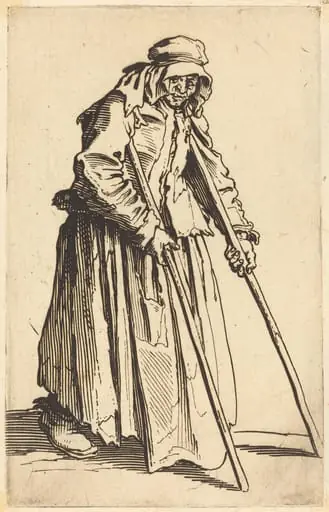 Beggar Woman with Crutches
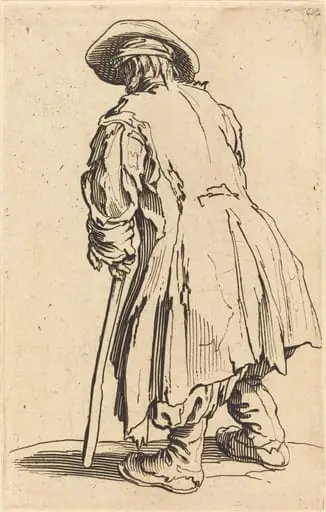 Old Beggar with One Crutch
 Sinbad the Sailor (Sinbad le marin)