Artwork
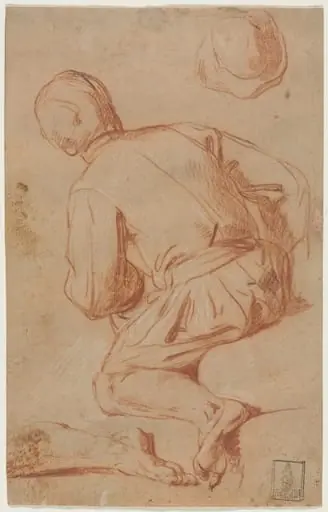
Half-Length Figure Study of a Woman
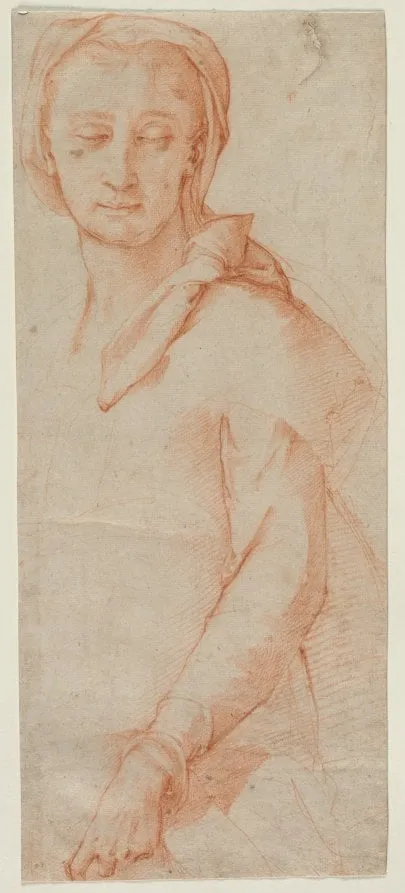
Half-Length Figure Study of a Woman is a drawing by the Renaissance artist Cigoli. It dates from 1504 and is held in the collection of the Cleveland Museum of Art.
About this work
Overview
The work belongs to a series of figure studies intended to capture human form with clarity, likely serving as preparatory material for larger compositions.
Created around 1604, this drawing by Ludovico Cardi, known as Cigoli, is a study of a woman rendered in pen and ink. A Florentine artist active during the shift from Mannerism to early Baroque, Cigoli focused on anatomical precision and quiet observation. The work belongs to a series of figure studies intended to capture human form with clarity, likely serving as preparatory material for larger compositions.
Subject & Meaning
The subject is a woman with closed eyes and a lowered head, her expression introspective and still. She wears a headscarf and a loose garment, suggesting modesty or labor. Her bent right arm and resting hand imply an unseen object or gesture, leaving the narrative ambiguous. The pose evokes contemplation rather than action, emphasizing inner presence over external drama.
Technique & Style
Cigoli employed bold, confident pen strokes to define the contours of the figure and fabric, with subtle hatching to suggest volume and shadow. The background is left unmodeled, directing attention to the form. The drawing reflects Renaissance ideals of naturalism, prioritizing anatomical accuracy and restrained elegance over ornamentation, aligning with Florentine draftsmanship traditions.
History & Provenance
The drawing is attributed to Cigoli’s early period in Florence, before his move to Rome in 1598. It likely originated as part of his academic practice, used to refine figure studies for altarpieces or frescoes. Its survival suggests it was valued within his studio or by later collectors interested in preparatory works, though its exact provenance before the 20th century remains undocumented.
Context
In early 17th-century Florence, artists increasingly turned to direct observation of the human figure as a foundation for religious and mythological painting. Cigoli’s study reflects this shift, aligning with the broader Renaissance emphasis on empirical observation. Unlike Mannerist exaggeration, his approach favors calm realism, anticipating the naturalism that would define Baroque art in Rome.
Legacy
This drawing exemplifies the role of preparatory studies in Renaissance and Baroque practice, where sketches were essential to mastering form. While Cigoli is less known today than contemporaries like Caravaggio, such works underscore his contribution to the transition toward greater naturalism. The piece remains a quiet testament to the discipline of observation that underpinned much of early modern Italian art.
Artist & collection
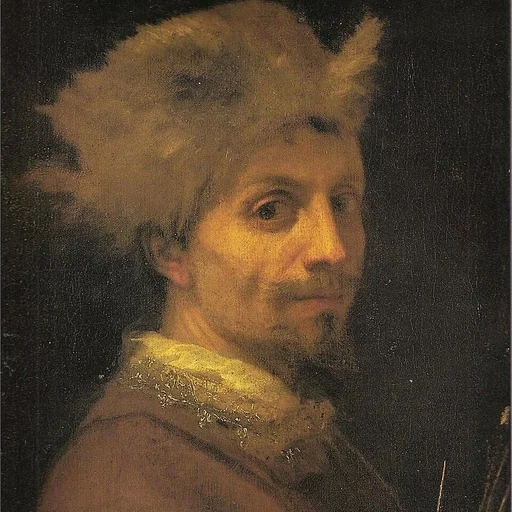
Artist
Lodovico or Ludovico Cardi (21 September 1559 – 8 June 1613), also known as Cigoli, was an Italian painter and architect of the late Mannerist and early Baroque period, trained and active in his early career in…

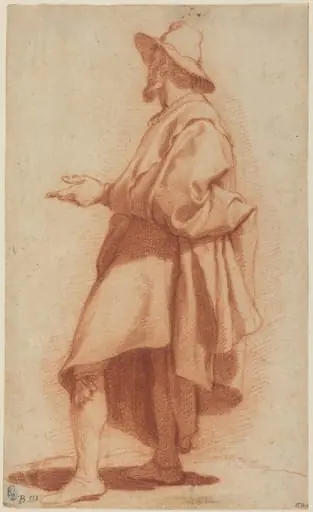 Standing Man Wearing a Cloak and Hat
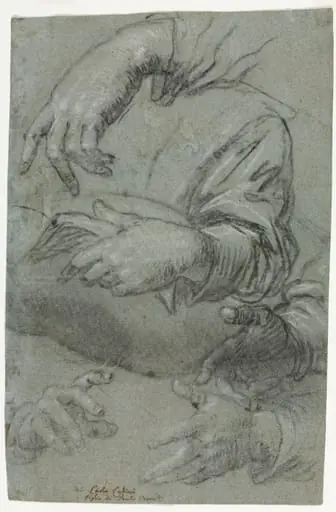 Studies of Hands (recto)
![Standing Draped Man [recto], by Jacopo da Empoli](https://artifactworldgallery.com/img/jacopo-da-empoli--standing-draped-man-recto--b3cdc92a1134339d-w320.webp) Standing Draped Man [recto]
Standing Draped Man [recto]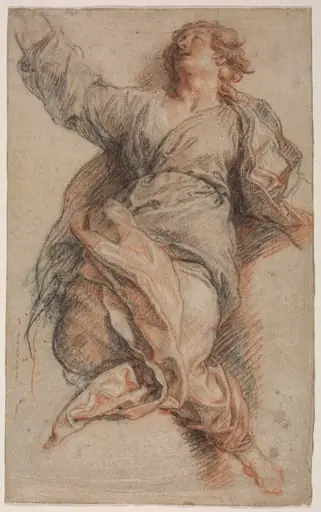 St. John the Evangelist
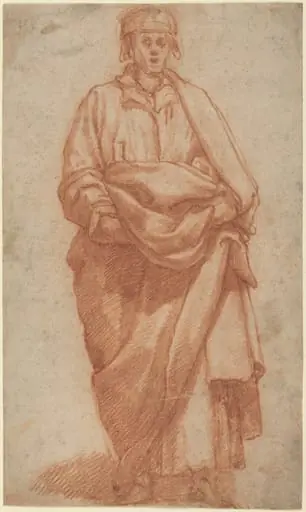 Standing Man
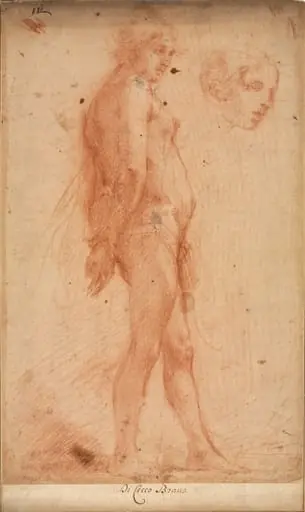 Study of a Standing Male Nude, with a Study of Head in Three-Quarter Profile
![Studies of Legs and Drapery [recto], by Abraham Bloemaert](https://artifactworldgallery.com/img/abraham-bloemaert--studies-of-legs-and-drapery-recto--93eb35075fbdb28d-w320.webp) Studies of Legs and Drapery [recto]
Studies of Legs and Drapery [recto]![Prudence [verso], by Giovanni Alberti](https://artifactworldgallery.com/img/giovanni-alberti--prudence-verso--8518f1793a33df97-w320.webp) Prudence [verso]
Prudence [verso]![Prudence [recto], by Cherubino Alberti](https://artifactworldgallery.com/img/cherubino-alberti--prudence-recto--3f44e6d72db5eb8c-w320.webp) Prudence [recto]
Prudence [recto]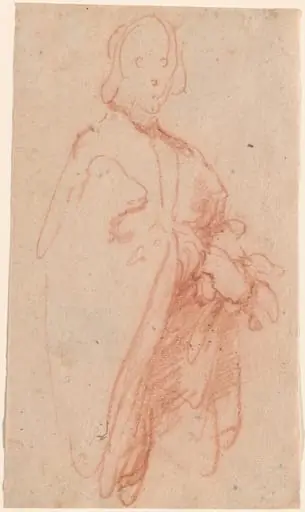 A Standing Man with Cloak and Gloves
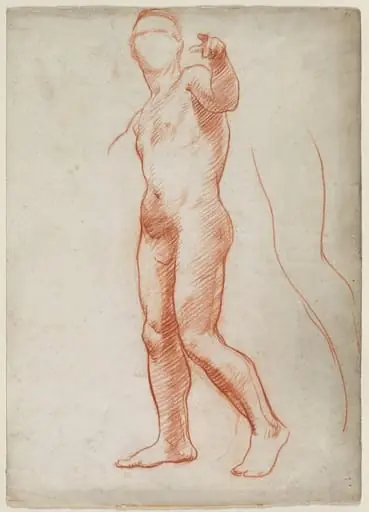 Standing Male Nude
 Rear View of Seated Man