Artwork
Ecce Homo
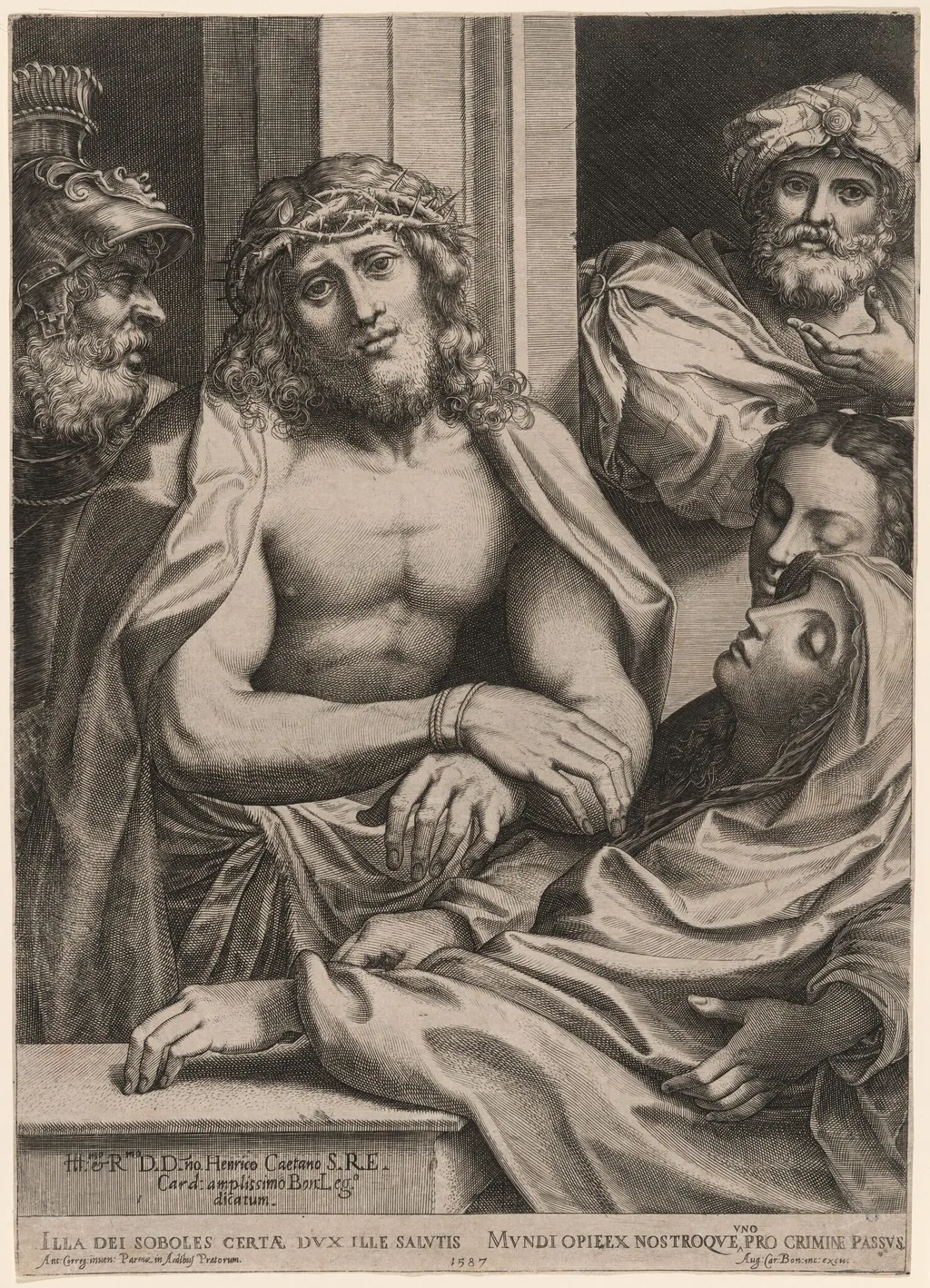
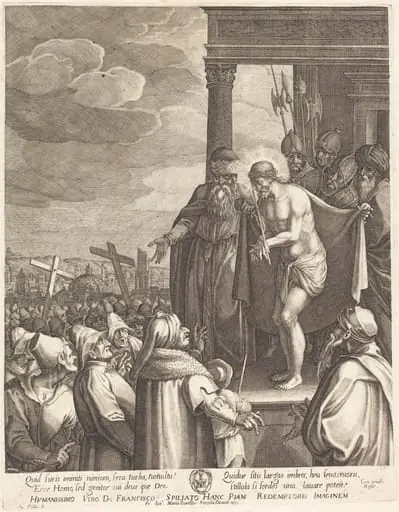
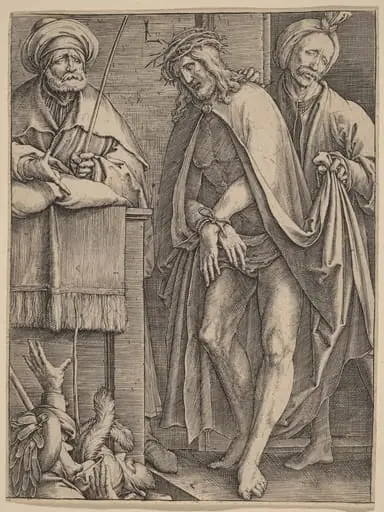
Ecce Homo is an ink print by the Renaissance artist Agostino Carracci. It dates from 1587 and is held in the collection of the National Gallery of Art.
About this work
Overview
Agostino Carracci's *Ecce Homo* (1587) is an engraving on laid paper, created during the late 16th century by the Bolognese artist, who was also a painter, printmaker, and co-founder of the Accademia degli Incamminati.
Subject & Meaning
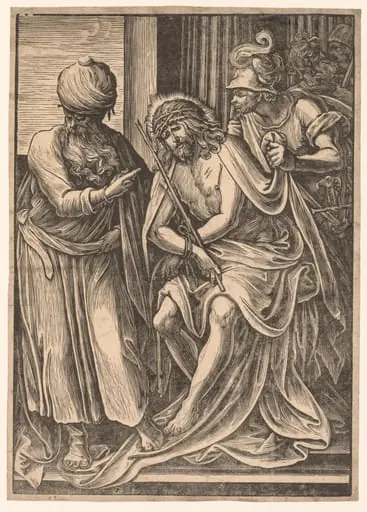
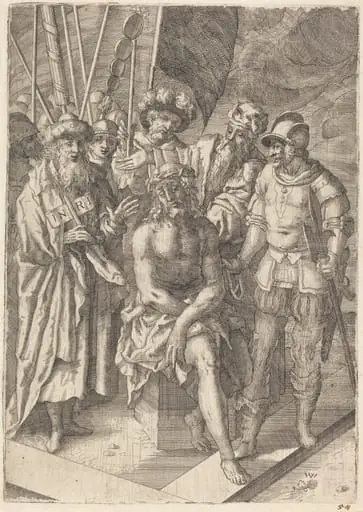
The print illustrates the biblical moment when Pontius Pilate presents Christ, crowned with thorns, to the crowd. Christ's sorrowful expression and upward gaze are conveyed through simple, expressive lines.
Technique & Style
Executed in engraving, the work features easily discernible lines that effectively communicate emotion, characteristic of the School of Bologna's reformist approach, which sought to counter Mannerist complexity with simplicity.
History & Provenance
Produced in 1587 as part of the School of Bologna's efforts to promote artistic reform, the engraving's provenance is not detailed here, focusing instead on its creation context.
Context
*Ecce Homo* reflects the artist's involvement with the Accademia degli Incamminati, which advocated for a return to classical ideals and emotional sincerity in art, contrasting with the prevailing Mannerist tendencies.
Legacy
While specific lasting impacts of *Ecce Homo* are not highlighted, it contributes to the broader legacy of the School of Bologna in influencing late Renaissance artistic values towards greater simplicity and emotional depth.
Artist & collection
Artist
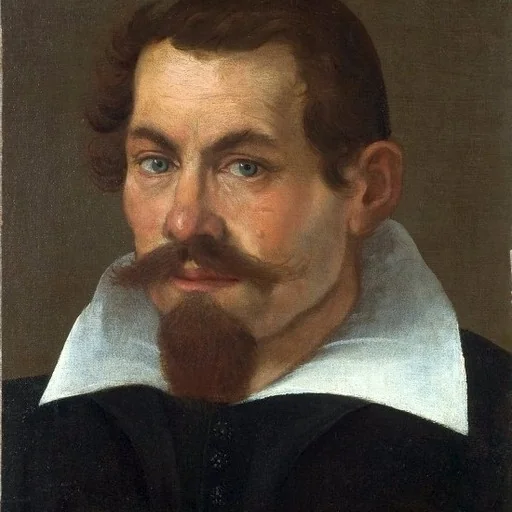
Agostino Carracci ( kə-RAH-chee, UK also kə-RATCH-ee, Italian: ; also Caracci; 16 August 1557 – 22 March 1602) was an Italian painter, printmaker, tapestry designer, and art teacher.