Artwork
Ecce Homo
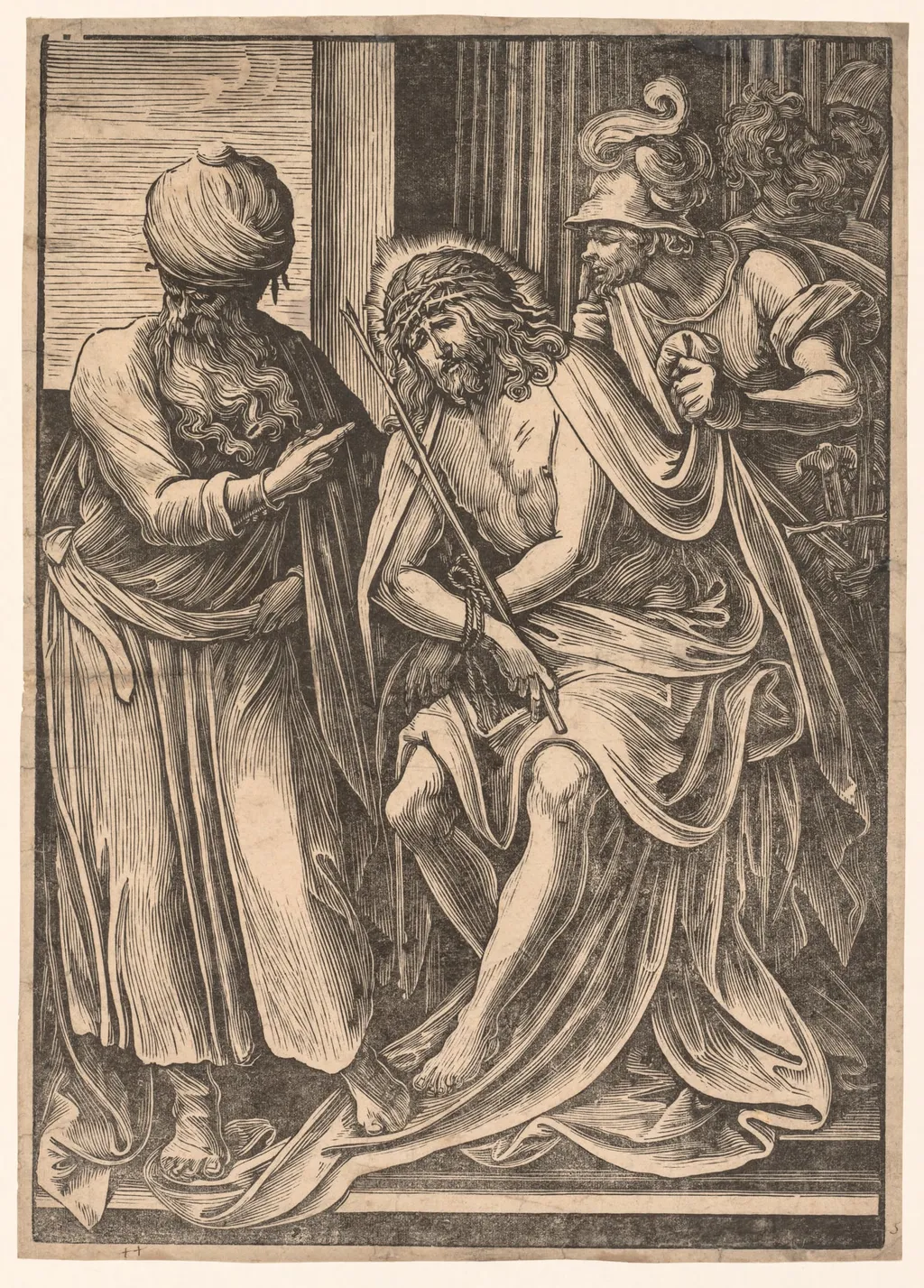
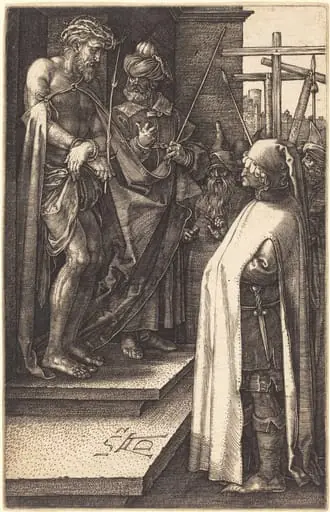
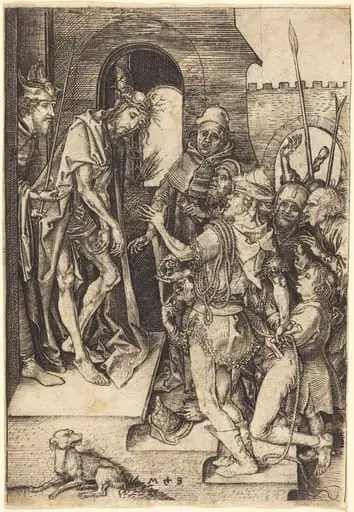
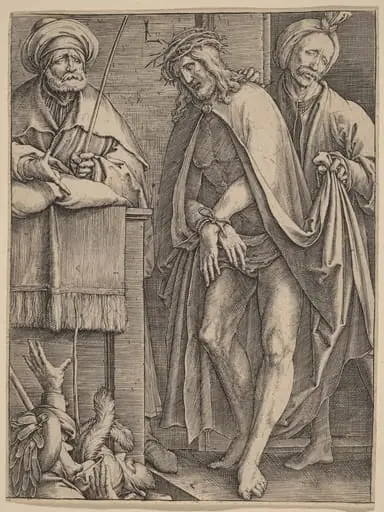
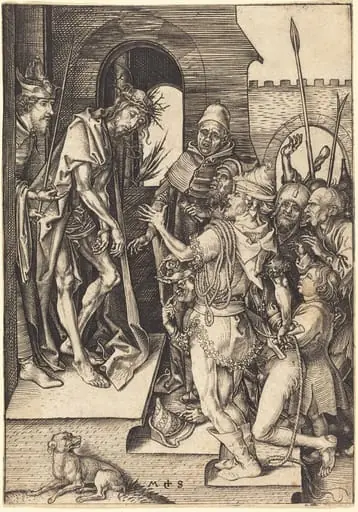
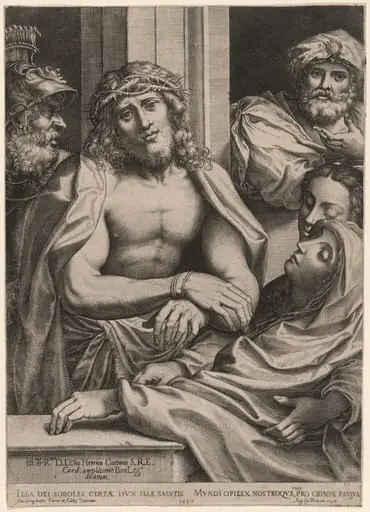
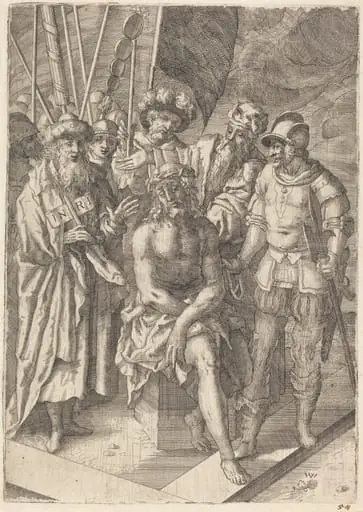
Ecce Homo is a print by the Renaissance artist Giuseppe Scolari. It dates from 1600 and is held in the collection of the Cleveland Museum of Art.
About this work
Overview
The composition relies on dramatic lighting to define form and spatial depth, characteristic of early Baroque printmaking.
Created around 1600 by Giuseppe Scolari, this print is part of the collection at The Cleveland Museum of Art. It depicts a moment from the Passion of Christ with three figures in a confined, dimly lit interior. The composition relies on dramatic lighting to define form and spatial depth, characteristic of early Baroque printmaking. The scene is rendered in monochrome, emphasizing tone over color to heighten emotional gravity.
Subject & Meaning
The central figure, crowned with thorns and draped loosely, represents Christ before Pilate, as referenced by the title 'Ecce Homo'—Latin for 'Behold the Man.' To his left, a figure in a turban gestures toward him, possibly symbolizing a judicial authority. On the right, another figure holds a sponge on a reed and a spear, alluding to the moments before the crucifixion. The imagery conveys suffering and judgment, rooted in Gospel narratives.
Technique & Style
Scolari employed chiaroscuro through bold contrasts of light and dark to model the figures with sculptural weight. The deep shadows define musculature and fabric folds, while highlights carve out facial features and textures. The print’s linear precision and tonal gradations suggest mastery of etching or engraving, techniques common in early 17th-century Italian printmaking for conveying emotional intensity through minimal means.
History & Provenance
The print was produced in Italy around 1600, during a period when religious imagery remained central to artistic production. It entered the Cleveland Museum of Art’s collection through documented acquisition, though its earlier ownership history is not fully traceable. Its preservation reflects its significance as an example of devotional printmaking from the late Renaissance to early Baroque transition.
Context
In the early 1600s, Italian artists increasingly used printmaking to disseminate religious scenes to a broader audience, especially amid Counter-Reformation efforts to reinforce Catholic doctrine. Scolari’s work aligns with contemporaries who emphasized emotional realism and dramatic lighting. The intimate scale and focused composition suggest it was intended for private devotion rather than public display.
Legacy
Though Scolari is not among the most widely recognized printmakers of his era, this work exemplifies the technical and emotional rigor of small-scale religious prints from the period. It contributes to the understanding of how chiaroscuro was adapted in print to evoke spiritual gravity. The piece remains a quiet but potent example of how printmaking served both artistic and devotional ends in early modern Europe.
Artist & collection