Artwork
The Passion: The Entombment
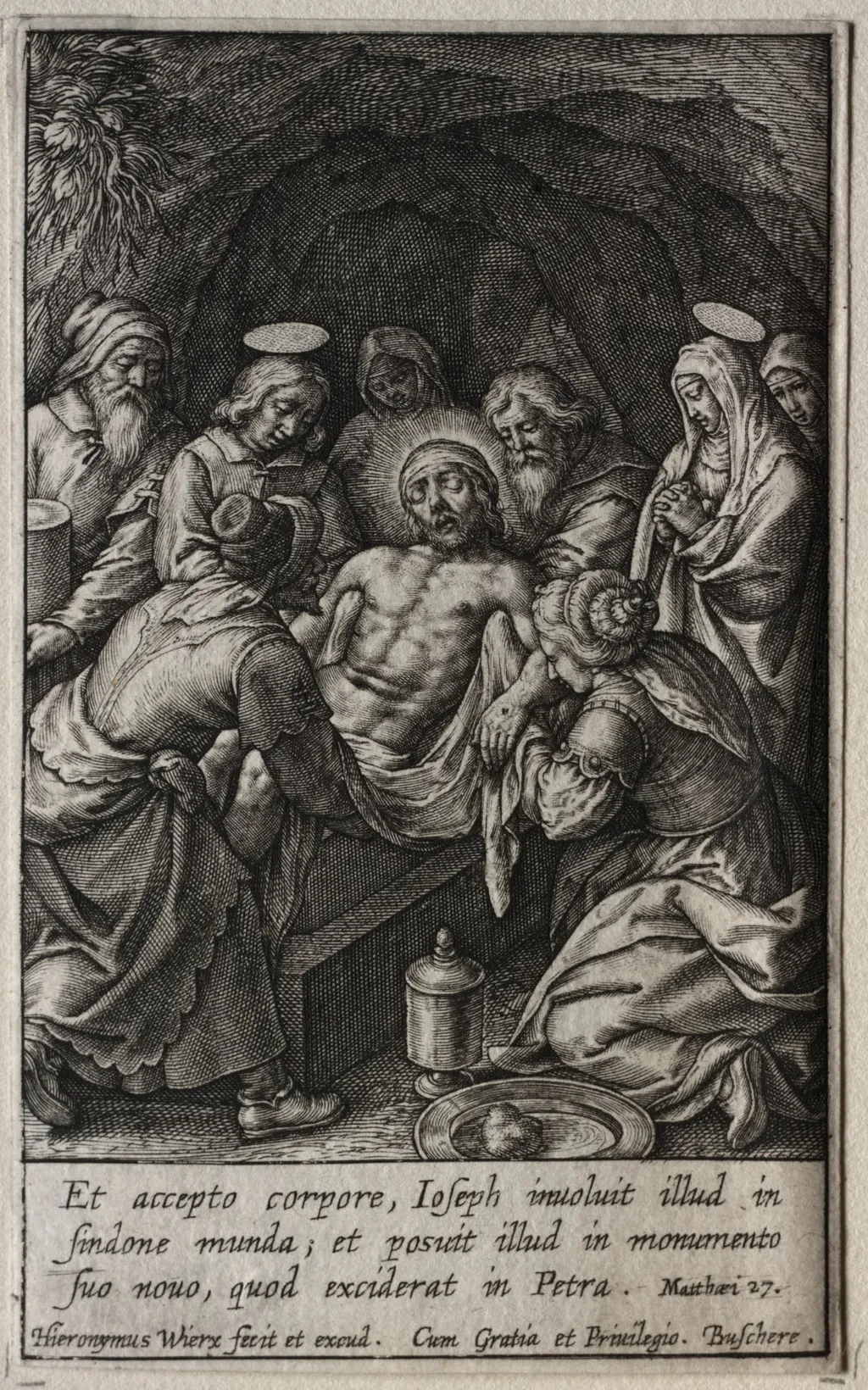
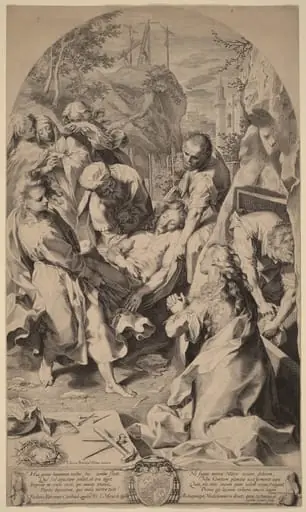
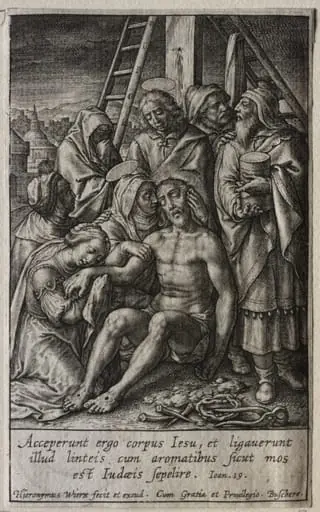
The Passion: The Entombment is a print by the Baroque artist Hieronymus Wierix. It dates from 1619 and is held in the collection of the Cleveland Museum of Art.
About this work
Overview
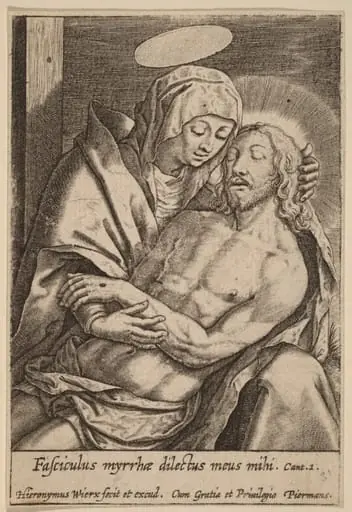
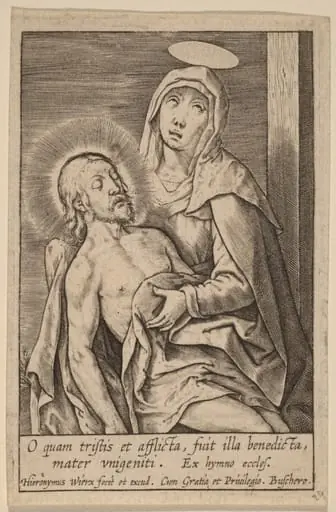
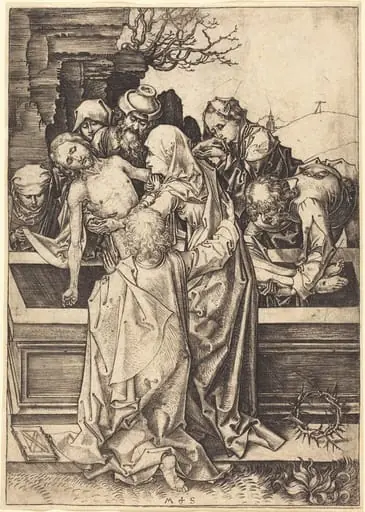
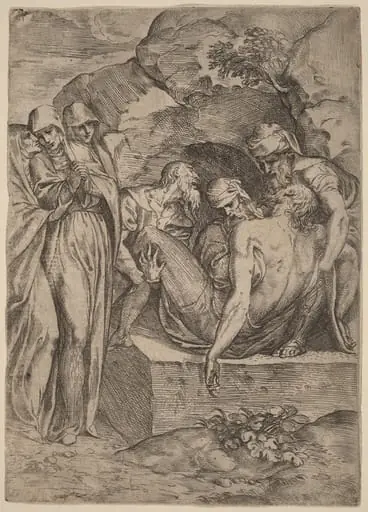
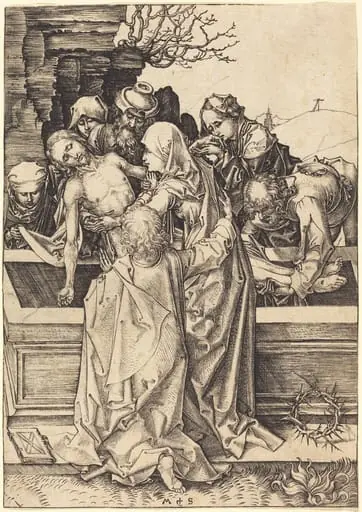
Created in 1619 by Hieronymus Wierix, this print is part of a series depicting scenes from the Passion of Christ. Executed in engraving, it captures the moment Christ’s body is placed in the tomb. The work is held in the collection of The Cleveland Museum of Art, where it serves as an example of late Renaissance religious printmaking in the Northern European tradition.
Subject & Meaning
The scene portrays the quiet solemnity following Christ’s crucifixion, as his body is lowered into a stone tomb by Joseph of Arimathea and other followers. The absence of dramatic action emphasizes contemplation and grief, aligning with devotional practices that encouraged meditation on Christ’s sacrifice. The composition invites quiet reverence rather than emotional spectacle.
Technique & Style
Wierix employed fine, controlled engraving lines to model form and depth. Subtle contrasts of light and shadow, though restrained, guide the viewer’s eye toward the central figures. The minimal use of tone and precise hatching create a sense of stillness, reinforcing the scene’s mournful atmosphere without relying on overt chiaroscuro effects.
History & Provenance
The print was produced during the final years of Wierix’s career, when he was active in Antwerp as a reproductive engraver for religious publishers. It entered the Cleveland Museum of Art’s collection in the 20th century, likely through a donation or acquisition of European prints. Its preservation reflects continued interest in early 17th-century devotional imagery.
Context
Produced in the wake of the Counter-Reformation, such prints served as tools for private devotion among Catholics in the Low Countries. Wierix’s work responded to the Church’s emphasis on emotional engagement with sacred narratives. His prints circulated widely, making biblical scenes accessible beyond the reach of painted altarpieces.
Legacy
Wierix’s prints, including this one, influenced later generations of engravers through their clarity and emotional restraint. Though less celebrated than his contemporaries, his contributions helped sustain the tradition of religious printmaking in the early Baroque period, bridging late Mannerist precision with emerging naturalism.
Artist & collection

Artist
Hieronymus Wierix (1553–1619) was a Flemish engraver, draughtsman and publisher. He is known for his reproductive engravings after the work of well-known local and foreign artists including Albrecht Dürer. Together with…