Artwork
Ecce Homo
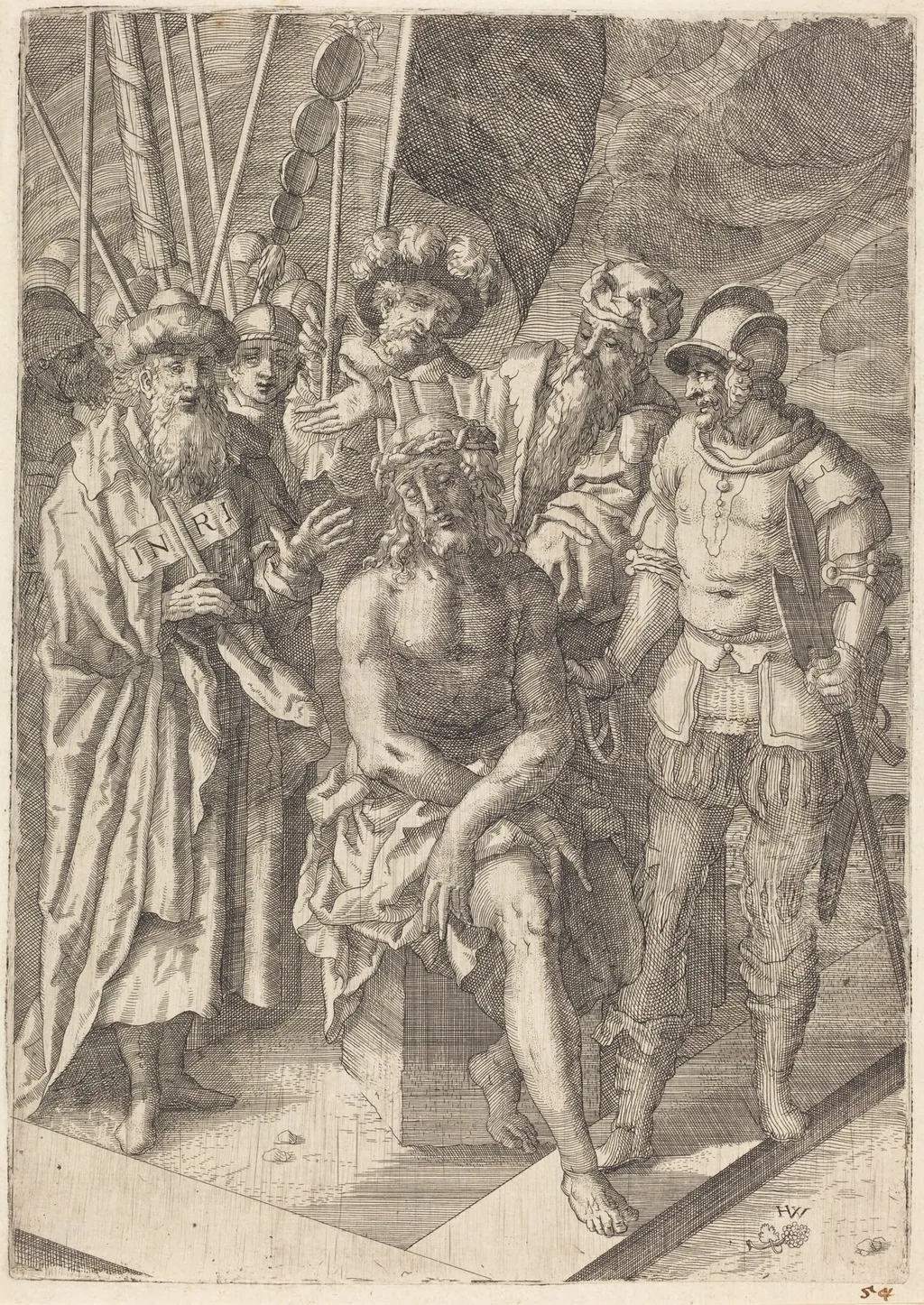
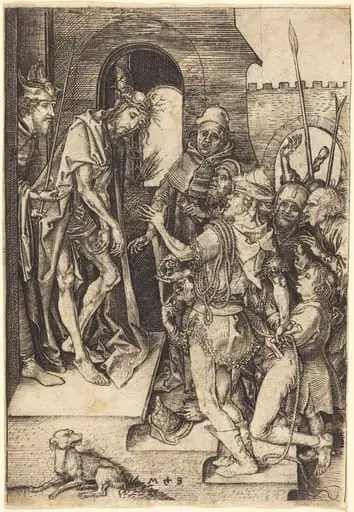
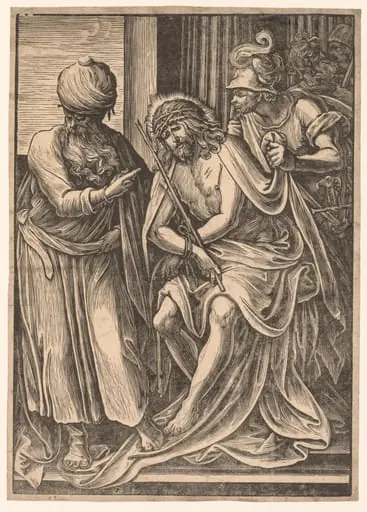
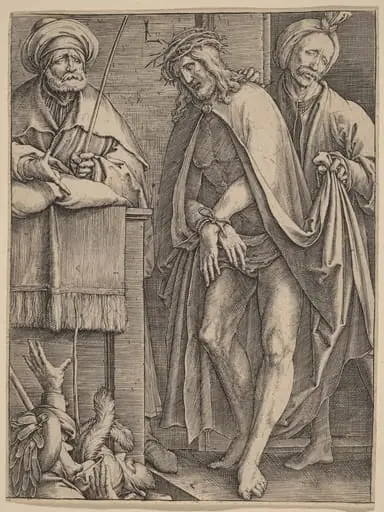
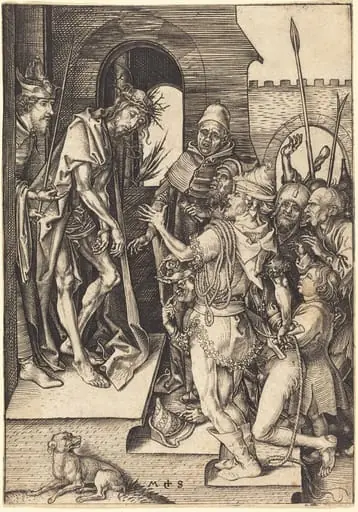
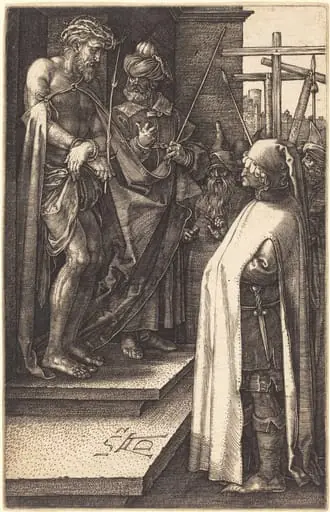
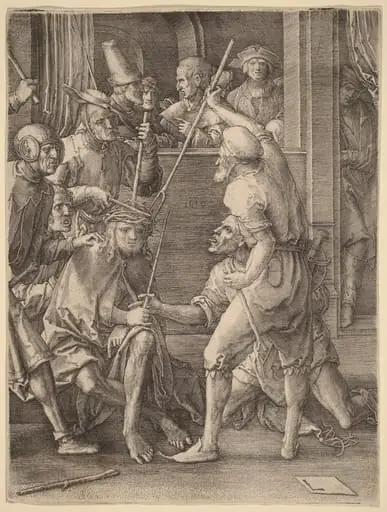
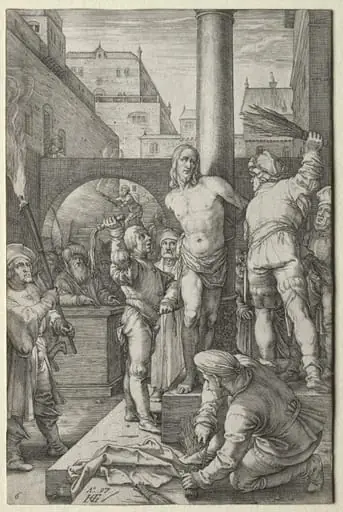
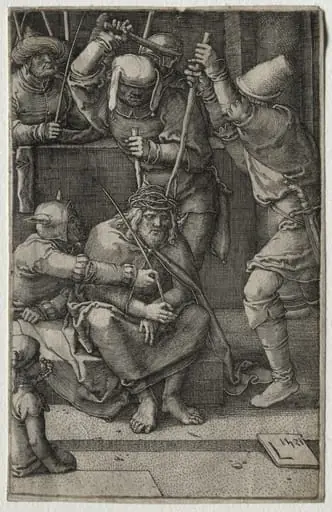
Ecce Homo is an ink print by the Renaissance artist Hans Weiner. It dates from 1596 and is held in the collection of the National Gallery of Art.
About this work
Overview
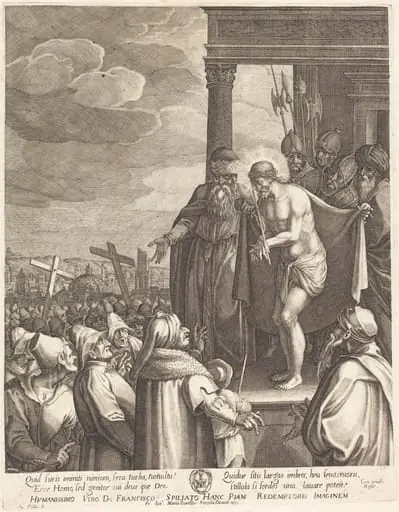
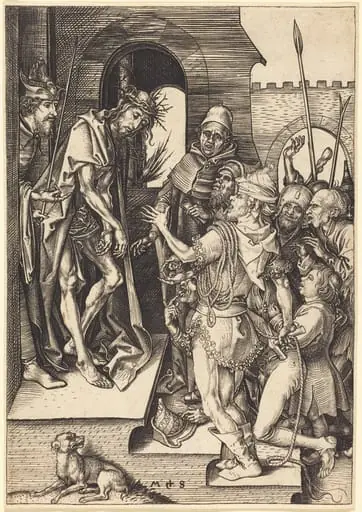
Hans Weiner’s 1596 engraving titled Ecce Homo presents a stark, nocturnal scene of the crucifixion narrative. Executed on laid paper with a hand‑made texture, the print captures the moment when Christ is presented to the crowd, his figure rendered in stark contrast against a dark background.
Subject & Meaning
The work depicts Jesus bound and crowned with thorns, clothed in deep‑purple drapery that signifies royalty and suffering. His exposed skin and restrained hands emphasize vulnerability, while the surrounding gloom underscores the gravity of the moment and invites contemplation of sacrifice and public humiliation.
Technique & Style
Weiner employs an intricate network of fine, intersecting lines to model form, a method known as cross‑hatching. This approach builds subtle tonal gradations, allowing dark shadows to recede and light to define the flesh. The precision of the minute strokes reflects a late‑sixteenth‑century shift toward heightened realism in printmaking.
History & Provenance
Created in 1596, the engraving was produced during a period of flourishing religious imagery in Northern Europe. While specific ownership records are sparse, the piece survives in several museum collections, attesting to its circulation among collectors of devotional prints in the early modern era.
Artist & collection