Artwork
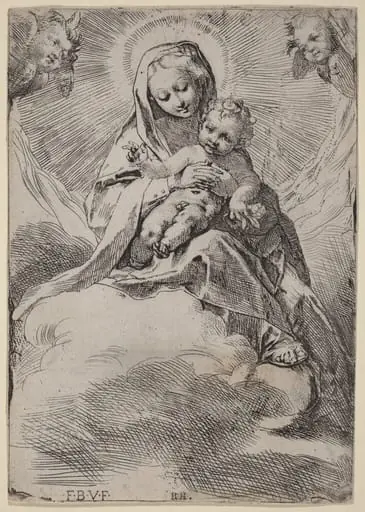
Madonna and Child with an Angel
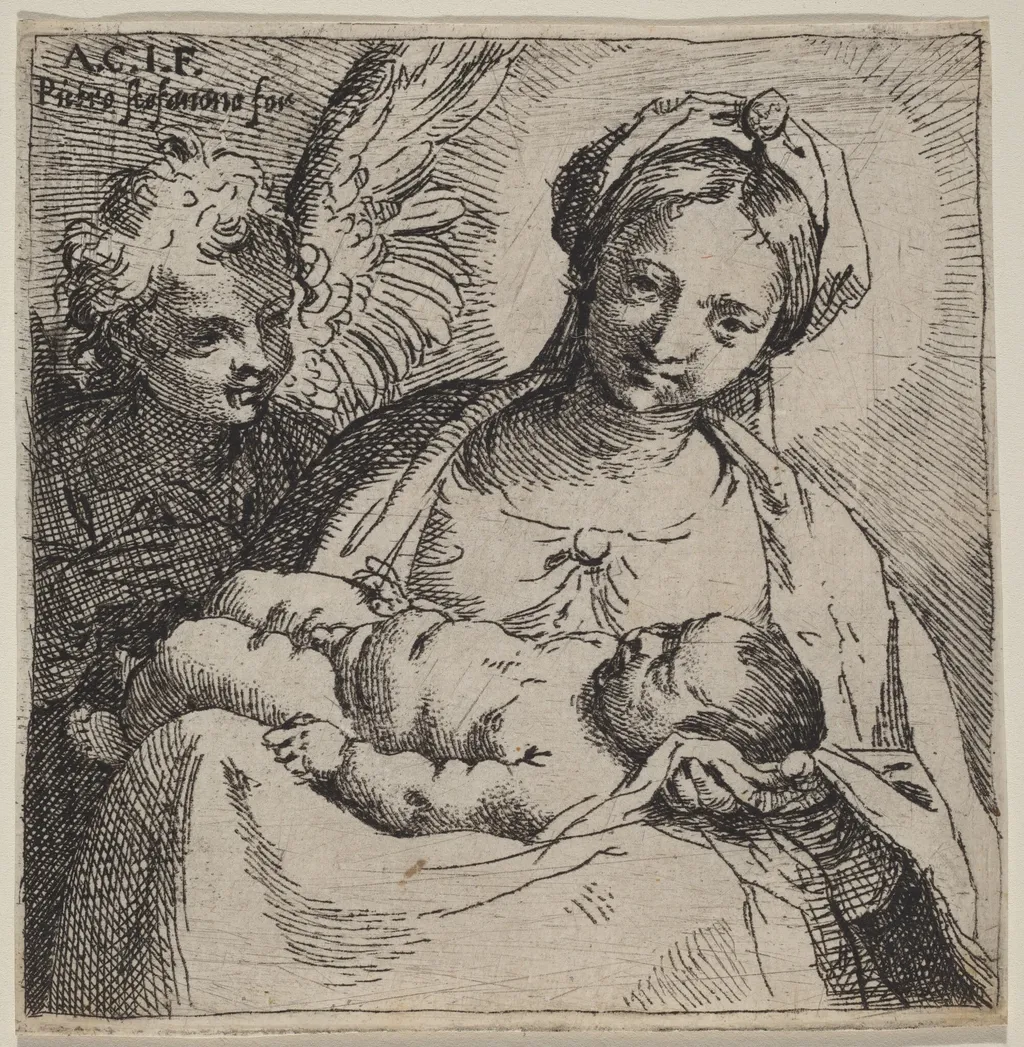
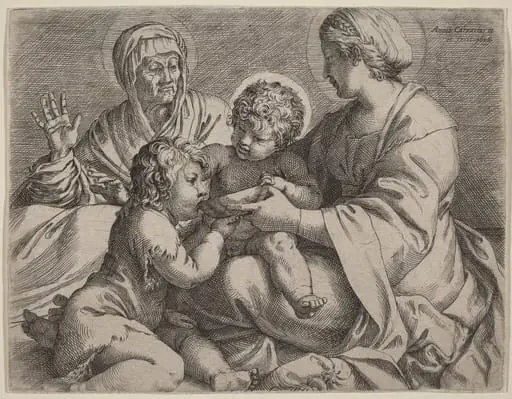
Madonna and Child with an Angel is an ink print by the Renaissance artist Annibale Carracci. It dates from 1592 and is held in the collection of the National Gallery of Art.
About this work
Overview
Carracci, trained in Bologna, was already developing a style that moved beyond Mannerist conventions toward greater naturalism and emotional immediacy.
Annibale Carracci produced this etching in 1592, capturing a tender moment between the Virgin Mary, the Christ Child, and a hovering angel. Executed on laid paper, the work is part of a small body of prints that reflect his engagement with religious imagery during his early career. Carracci, trained in Bologna, was already developing a style that moved beyond Mannerist conventions toward greater naturalism and emotional immediacy.
Subject & Meaning
The composition centers on the Virgin Mary, her hair loosely arranged, cradling the infant Jesus, who appears serene and grounded. An angel, wings slightly spread, leans in as if in quiet adoration. The scene avoids theatricality, emphasizing intimacy and quiet devotion. This portrayal aligns with Counter-Reformation ideals that favored accessible, humanized religious figures to inspire personal piety.
Technique & Style
Carracci employed etching, incising lines into a metal plate with acid to create the image. The resulting print features dense, expressive strokes with uneven edges, lending a hand-drawn quality. Unlike polished engravings, the work embraces texture and spontaneity, suggesting direct observation rather than idealized form. The contrast of dark lines against the paper enhances the sculptural presence of the figures.
History & Provenance
Created during Carracci’s formative years, shortly before his move to Rome, this print likely circulated among artists and collectors in Bologna. It reflects his experimentation with printmaking as a medium for disseminating his compositional ideas. While no definitive early ownership records survive, its survival in multiple institutional collections suggests early recognition of its artistic value.
Context
In the early 1590s, Carracci was part of a movement in Bologna seeking to reform painting by returning to nature and classical balance. His etchings, including this one, served as studies and teaching tools, bridging drawing and printmaking. This work stands apart from the ornate styles of the late Renaissance, anticipating the Baroque emphasis on emotional clarity and physical presence.
Legacy
Though less known than his paintings, this etching exemplifies Carracci’s influence on the development of Baroque graphic arts. His use of expressive line and naturalistic composition inspired later printmakers and students at the Accademia degli Incamminati, which he co-founded. The work remains a quiet but significant example of how printmaking could convey spiritual depth through direct, unembellished means.
Artist & collection
Artist
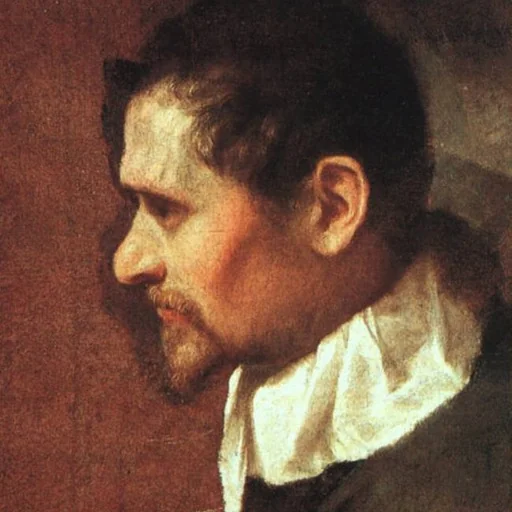
Annibale Carracci ( kə-RAH-chee, UK also kə-RATCH-ee, Italian: ; November 3, 1560 – July 15, 1609) was an Italian painter and instructor, active in Bologna and later in Rome.