Artwork
Virgin and Child
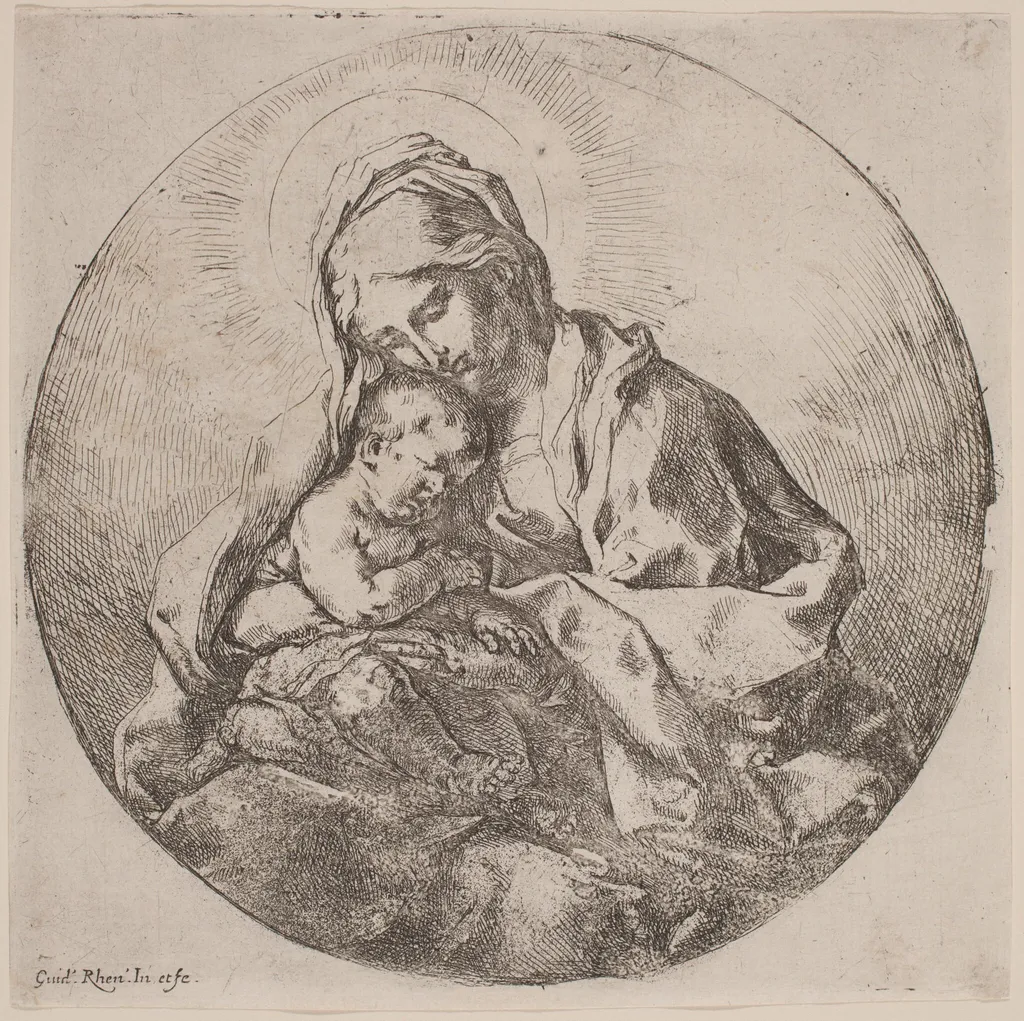
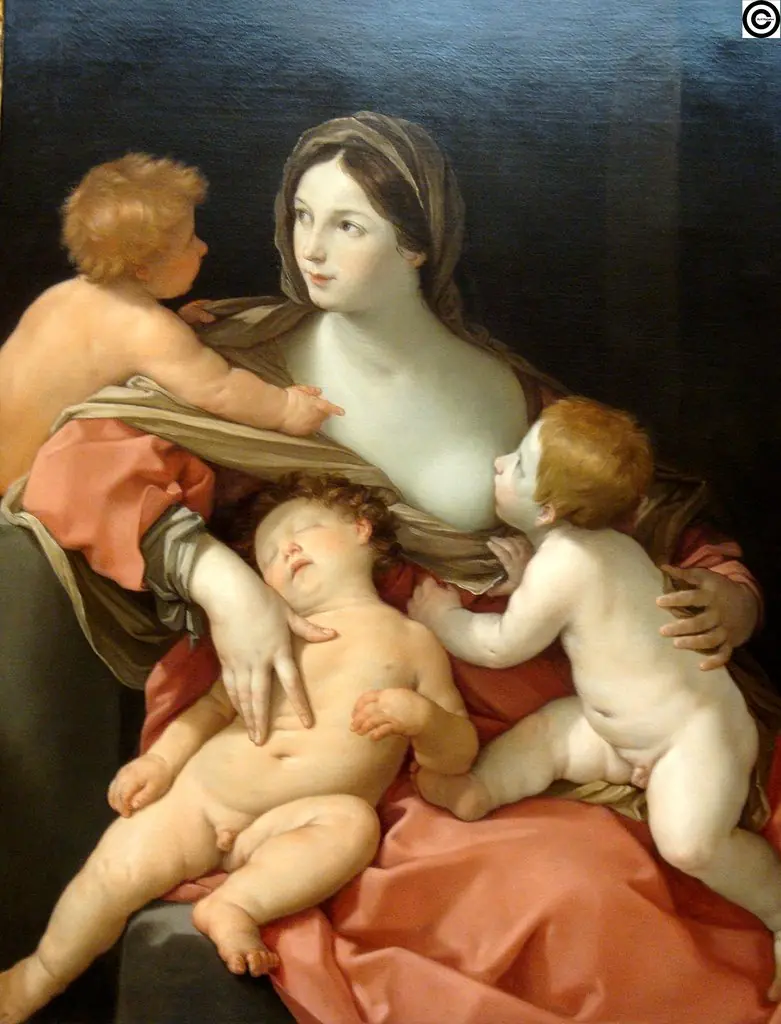
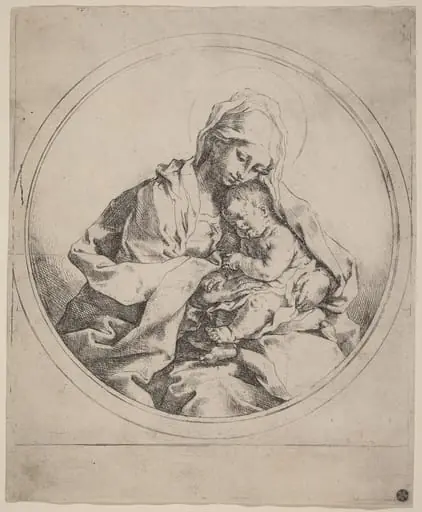
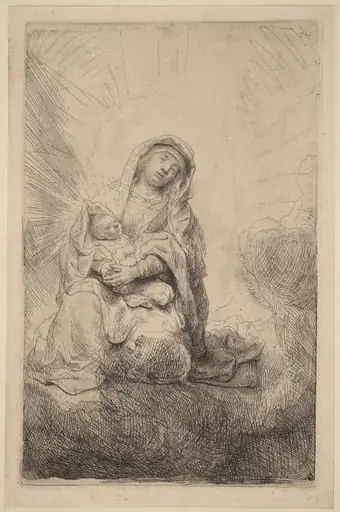
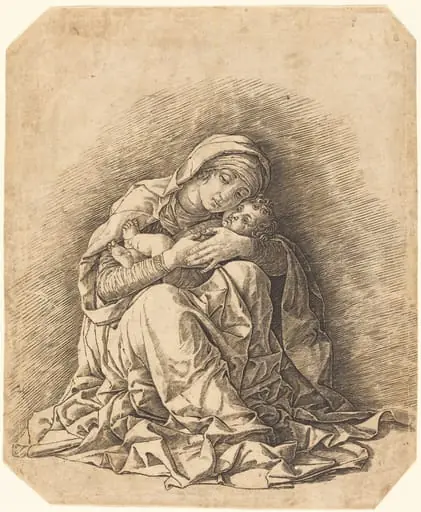
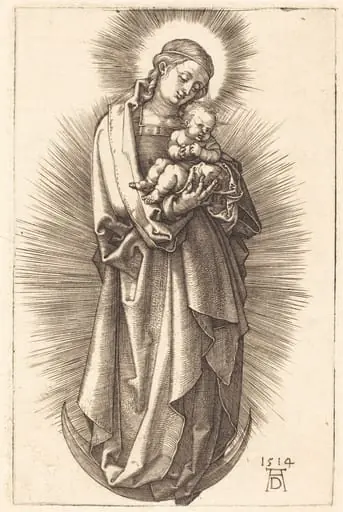
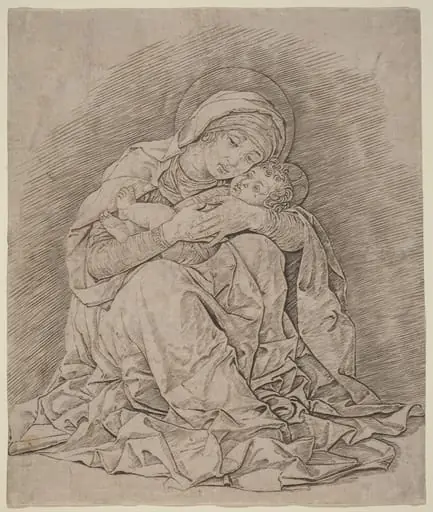
Virgin and Child is an ink print by the Renaissance artist Guido Reni. It dates from 1608 and is held in the collection of the National Gallery of Art. Created in 1608, this etching presents a quiet encounter between a mother and her infant.
About this work
Overview
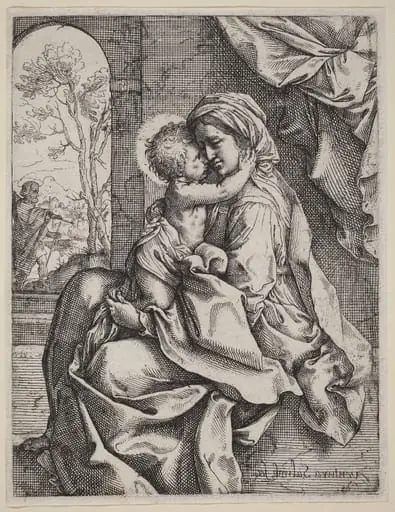
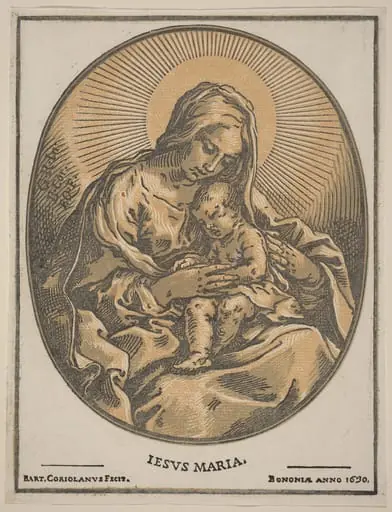
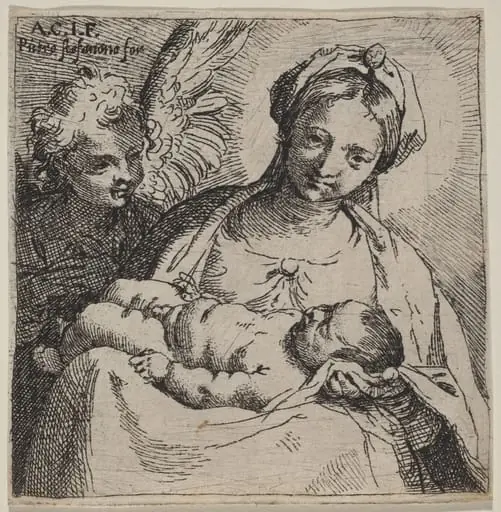
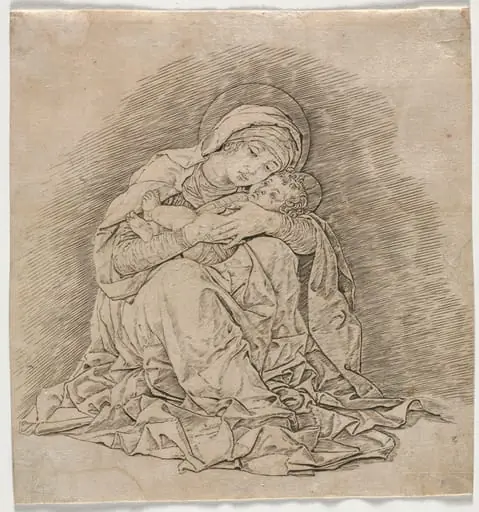
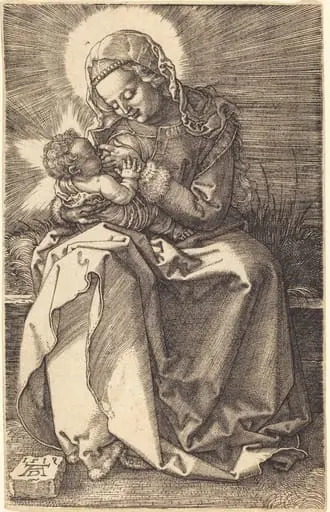
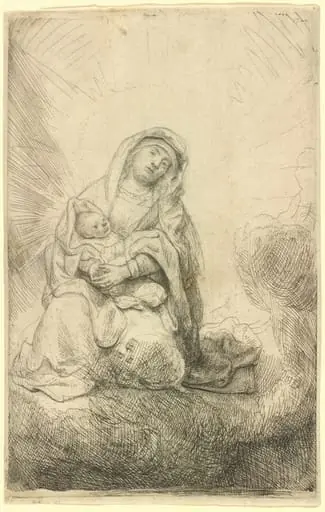
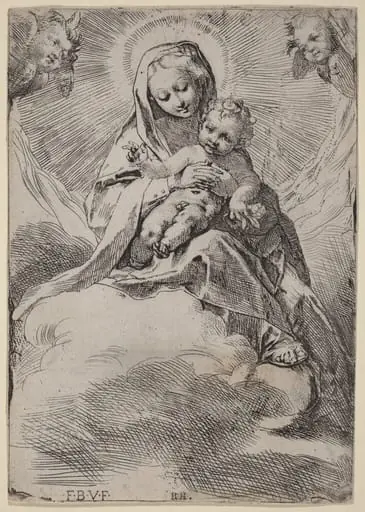
Created in 1608, this etching presents a quiet encounter between a mother and her infant. The composition centers on the Virgin, modestly attired and holding the child, whose gaze meets hers with gentle curiosity. A simple circular backdrop, accented by radiating lines, suggests a halo, reinforcing the devotional atmosphere of the image.
Subject & Meaning
The work illustrates the traditional Christian theme of the Virgin and Child, emphasizing maternal tenderness and spiritual intimacy. The figures are rendered with calm expressions; the mother’s downward eyes convey reverence, while the child’s softened features evoke innocence. The halo-like radiance underscores the sacred nature of the scene without overt narrative detail.
Technique & Style
Executed as an etching, the piece relies on fine, flowing lines and subtle gradations of tone to model form. Reni’s handling of the medium yields a delicate shading that conveys flesh and fabric with warmth. The restrained composition and classical restraint reflect the artist’s Baroque sensibility tempered by the Bolognese School’s emphasis on clarity and balance.
History & Provenance
The print originates from Guido Reni, a prominent figure of the early 17th‑century Bolognese School, whose career spanned Rome, Naples, and his native Bologna. Produced during a period when Reni was consolidating his reputation for religious subjects, the etching exemplifies his engagement with printmaking as a means of disseminating devotional imagery.
Artist & collection
Artist
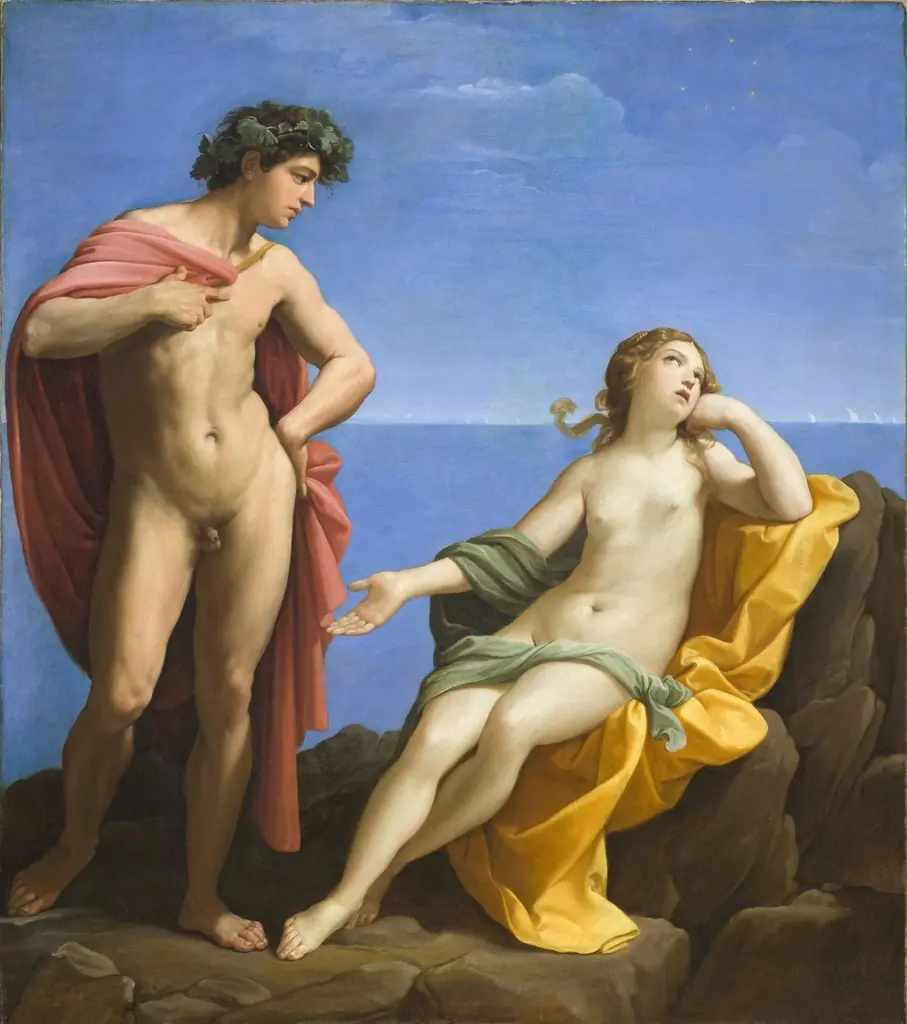
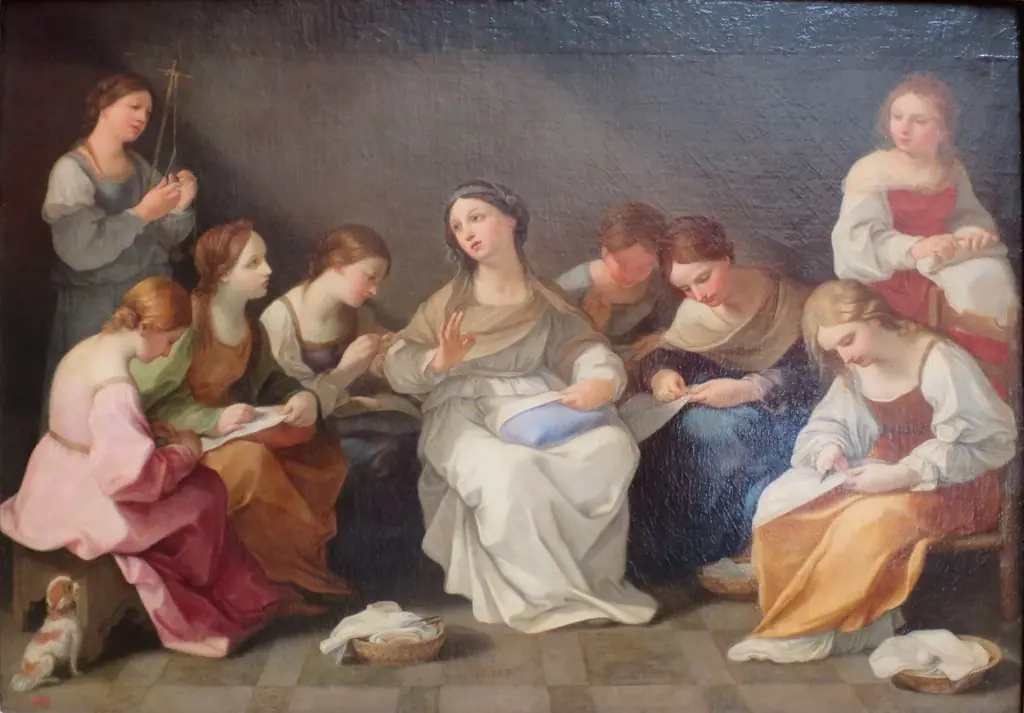
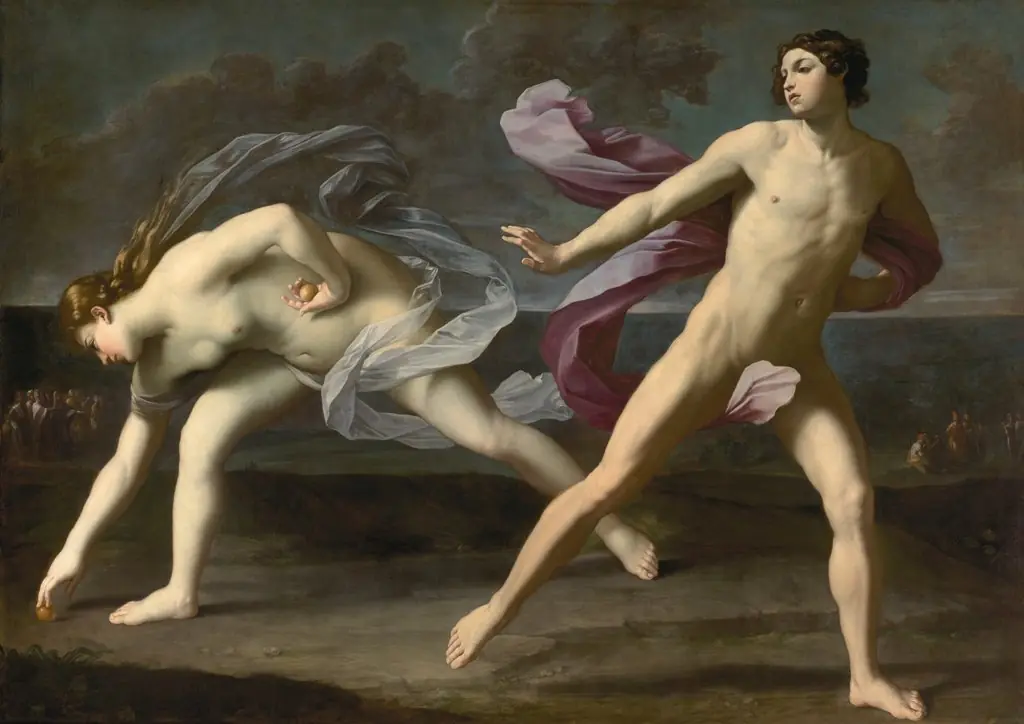
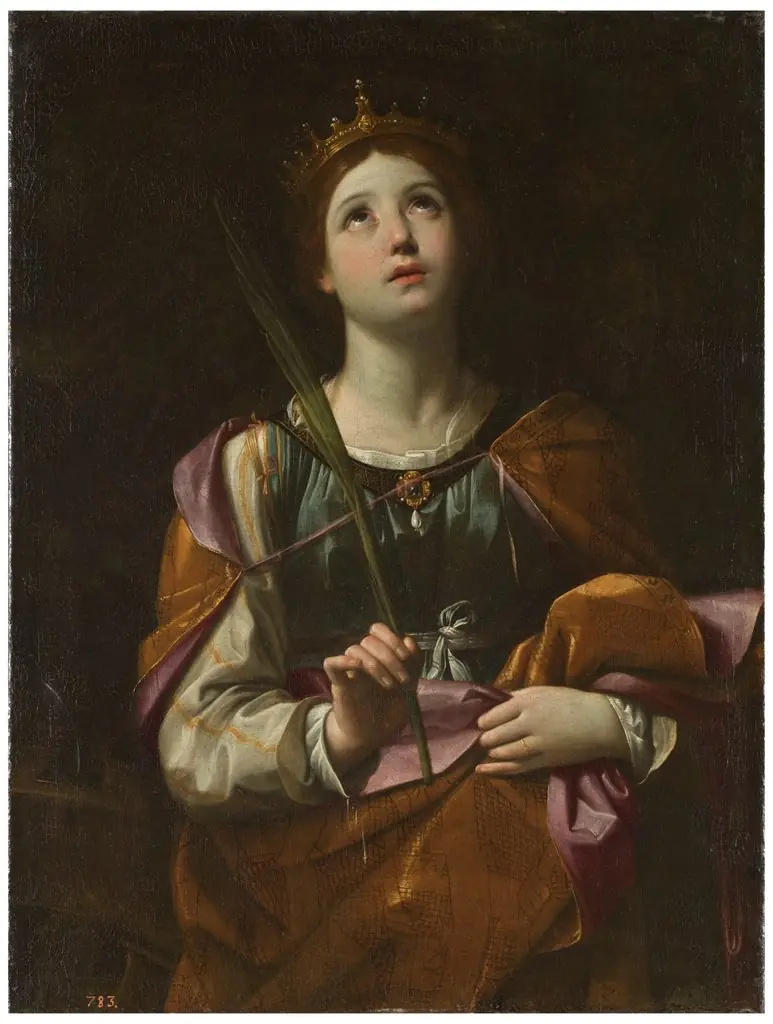
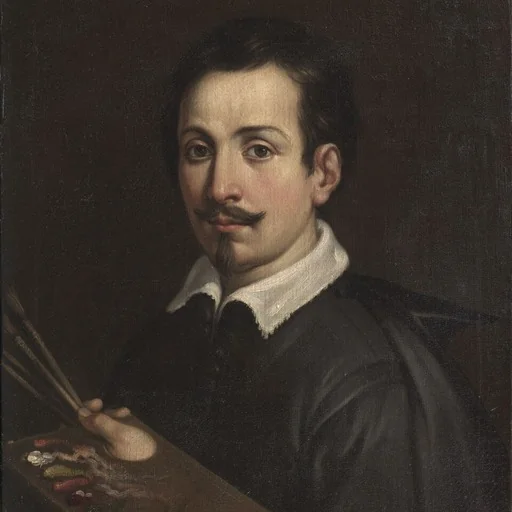
Guido Reni was an Italian Baroque painter, although his works showed a classical manner, similar to Simon Vouet, Nicolas Poussin, and Philippe de Champaigne.