Artwork
Saint Jerome in the Wilderness
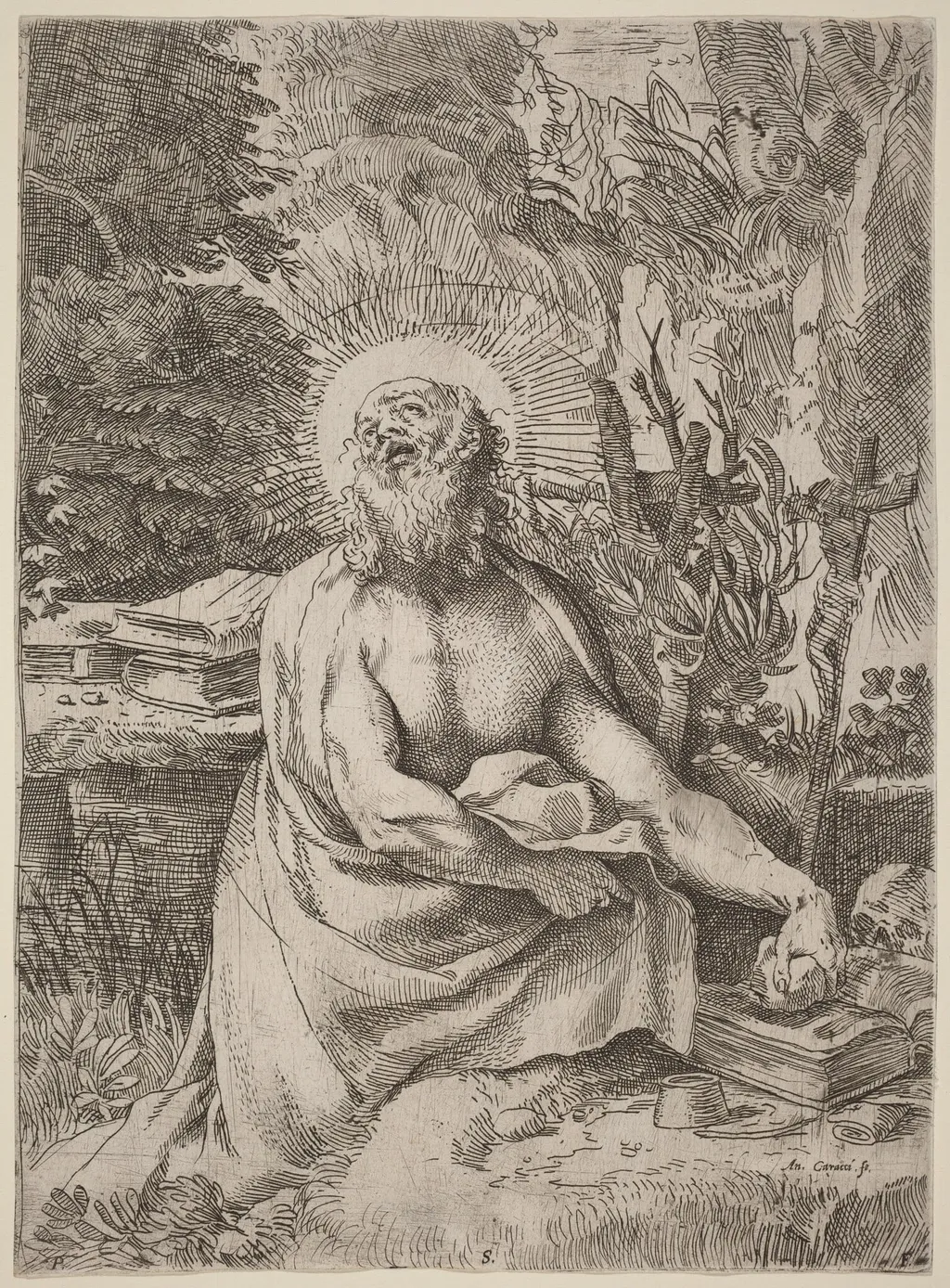
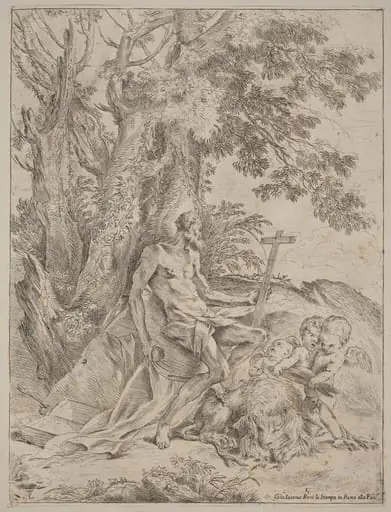
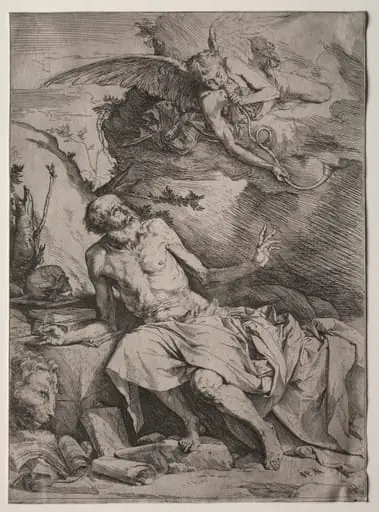
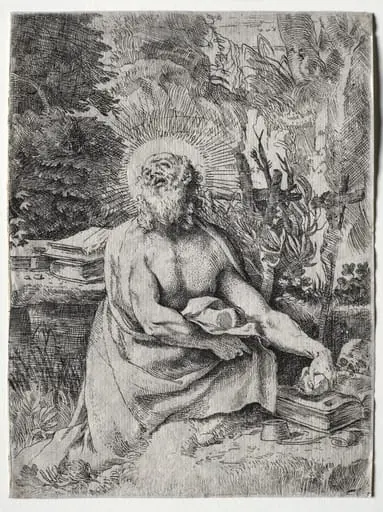
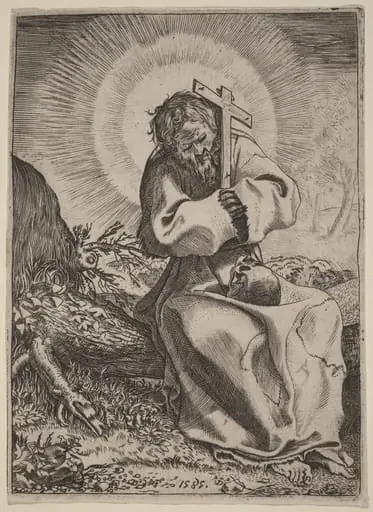
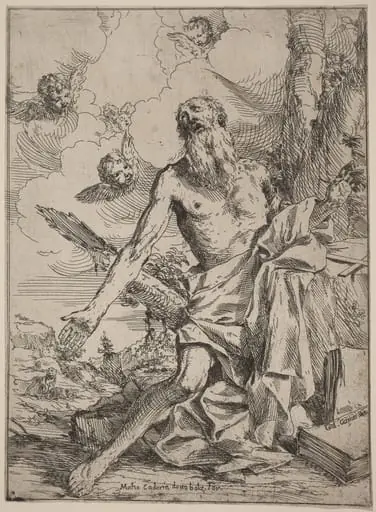
Saint Jerome in the Wilderness is an ink print by the Renaissance artist Annibale Carracci. It dates from 1591 and is held in the collection of the National Gallery of Art.
About this work
Overview
Annibine Carracci’s print *Saint Jerome in the Wilderness* dates from around 1591. Executed on laid paper with both etching and engraving, the work presents a solitary, aged figure seated among rocks and scrub, his head bowed and a stone in hand. The composition is restrained, emphasizing the saint’s withdrawal from the world.
Subject & Meaning
The image portrays Saint Jerome as a penitent hermit, a motif common in Counter‑Reformation art. By showing the saint in a barren, untamed setting, Carracci underscores themes of asceticism and contemplation, inviting the viewer to consider the spiritual solitude that Jerome embraced while translating the Bible.
Technique & Style
Carracci combined the fluid lines of etching with the sharper incisions of engraving, allowing a range of textures from the roughness of skin to the delicate foliage. The use of fine, cross‑hatching creates depth and a muted tonal palette, while the overall composition balances classical restraint with a nascent Baroque dynamism.
Context
Working in Bologna before moving to Rome, Carracci was instrumental in shifting Italian art toward naturalism and emotional immediacy. This print reflects his early engagement with those ideas, merging a learned classical sensibility with a direct, observational approach to the human figure and landscape.
Legacy
*Saint Jerome in the Wilderness* exemplifies Carracci’s role in laying the groundwork for the Baroque movement. The work’s nuanced handling of line and its contemplative subject matter influenced later printmakers who sought to combine technical virtuosity with devotional intensity.
Artist & collection
Artist
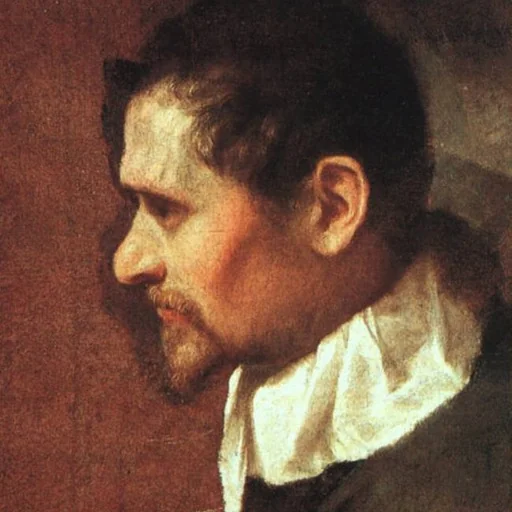
Annibale Carracci ( kə-RAH-chee, UK also kə-RATCH-ee, Italian: ; November 3, 1560 – July 15, 1609) was an Italian painter and instructor, active in Bologna and later in Rome.