Artwork
St. Jerome
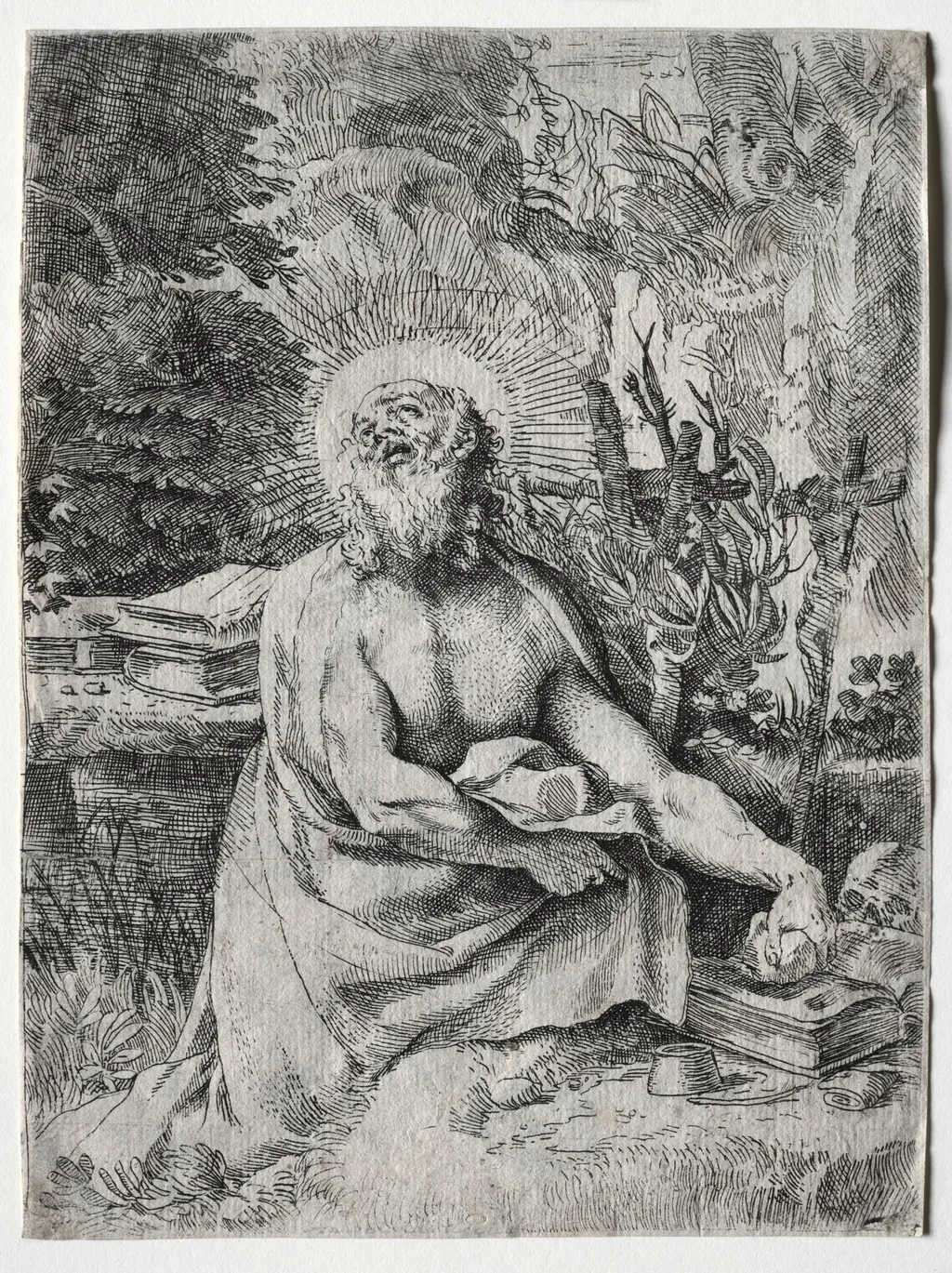
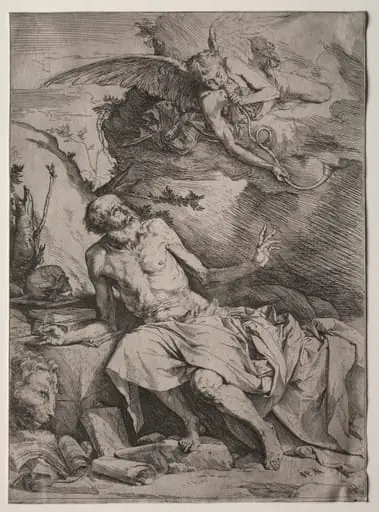
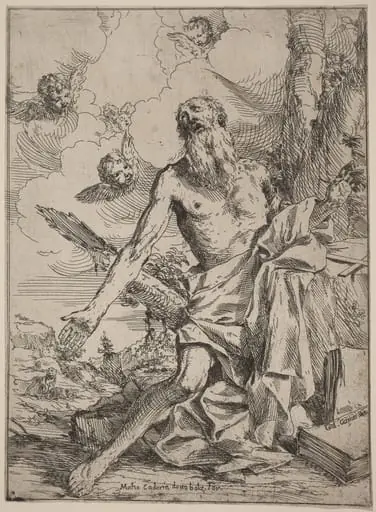
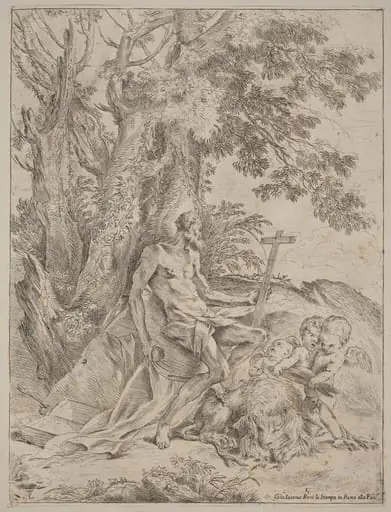
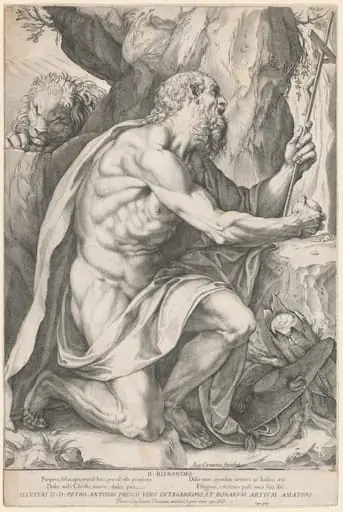
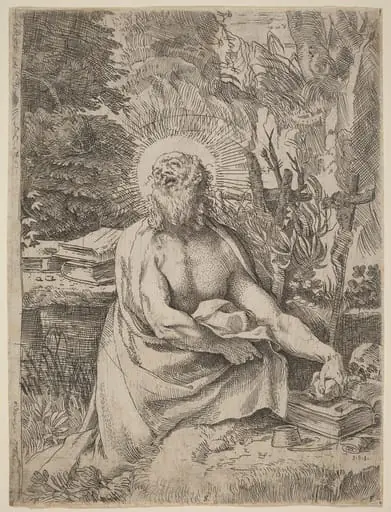
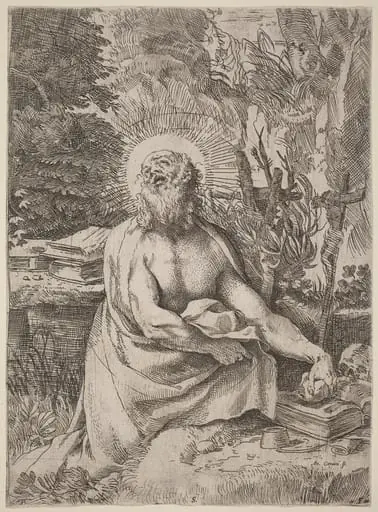
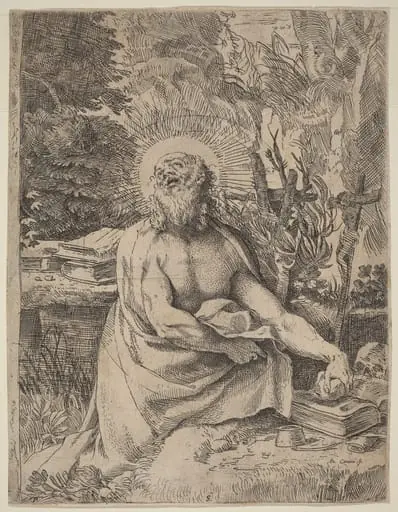
St. Jerome is a print by the Renaissance artist Annibale Carracci. It dates from 1591 and is held in the collection of the Cleveland Museum of Art.
About this work
Overview
Executed during his early career in Bologna, it anticipates the emotional intensity and structural clarity that would define his later Baroque works.
Created around 1591, this etching by Annibale Carracci depicts St. Jerome in a contemplative moment within a rugged natural setting. Though Carracci is better known for his paintings, this print reveals his mastery of linear expression and tonal contrast. Executed during his early career in Bologna, it anticipates the emotional intensity and structural clarity that would define his later Baroque works.
Subject & Meaning
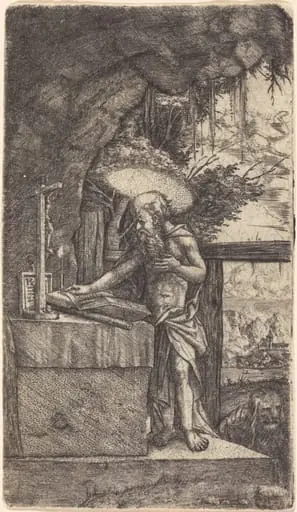
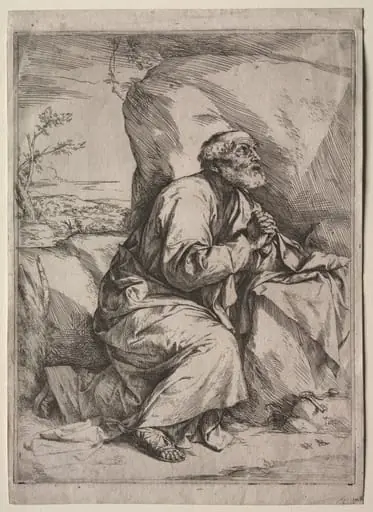
The figure of St. Jerome, the scholar-saint who translated the Bible into Latin, is shown in solitude, holding a stone as if in penitence or meditation. His aged face, marked by deep wrinkles and a wild beard, conveys spiritual introspection. The rocky cave, a traditional symbol of ascetic life, frames him as a figure of intellectual and religious devotion, emphasizing the quiet dignity of scholarly labor.
Technique & Style
Carracci employed sharp, incised lines and dense hatching to model the saint’s form against the textured cave walls. The contrast between the finely detailed face and the loosely rendered foliage creates visual focus. Heavy chiaroscuro enhances the three-dimensionality of the figure, while the intricate background suggests a natural world both wild and orderly, reflecting Carracci’s balance of observation and idealization.
History & Provenance
The print entered the Cleveland Museum of Art’s collection through established acquisition channels, though its exact early ownership remains undocumented. As a work from Carracci’s formative years, it reflects his engagement with printmaking before his move to Rome. Its preservation offers insight into the circulation of his designs among collectors and artists in late 16th-century Italy.
Context
In the 1590s, Carracci was part of a Bolognese circle seeking to reform painting by returning to nature and classical principles. This etching aligns with broader efforts to revive religious subjects with psychological depth and physical presence. It stands apart from Mannerist excess, favoring clarity and emotional restraint, foreshadowing the direction of Baroque art in Rome.
Legacy
Though less celebrated than his paintings, this print exemplifies Carracci’s influence on the graphic arts. His use of light, texture, and expressive line informed later printmakers and helped bridge the gap between drawing and finished composition. The work remains a quiet but significant document of his artistic evolution and the transition toward Baroque sensibilities.
Artist & collection
Artist
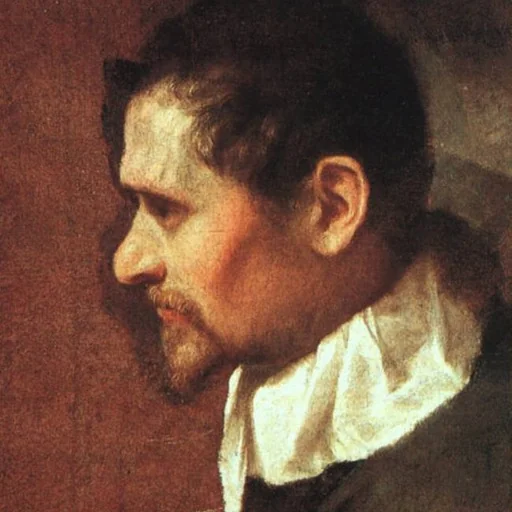
Annibale Carracci ( kə-RAH-chee, UK also kə-RATCH-ee, Italian: ; November 3, 1560 – July 15, 1609) was an Italian painter and instructor, active in Bologna and later in Rome.